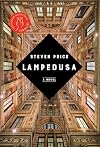
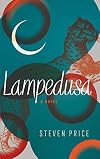
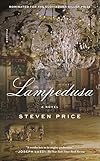
Lampedusa
by Steven Price
On This Page
Description
"Set in a sun-drenched Sicily, among the decadent Italian aristocracy of the late 1950s, Steven Price's Lampedusa explores the final years of Giuseppe Tomasi, the last prince of Lampedusa, as he struggles to complete his only novel, The Leopard. In 1955, Tomasi was diagnosed with advanced emphysema; shortly after, he began work on a novel that would fail to be published before his death four years later. When The Leopard at last appeared, it won Italy's Strega Prize and became the greatest show more Italian novel of the century" -- show lessTags
Recommendations






















Member Reviews
At age fifty-eight in 1955, Giuseppe di Tomasi learns that he has emphysema, and it’s incurable. Give up cigarettes, his doctor tells him. Eat less; exercise more. Follow that regimen, and you’ll have some years left.
But Giuseppe can’t, not because he’s stubborn or addicted to his ways, though he is. (He’s so stuck in his diffidence, he wrestles for months with how to tell his wife he's dying.) Rather, he’s the prince of Lampedusa, the last of his line, and, like many Sicilians of his generation, he believes that the world in which he grew up has gone forever. So why stay in it?
He bears no anger or ill will, only sadness for what has happened to his country since Mussolini took power, the ensuing war, and the striving but show more damaged Italy that has emerged. Is his acquiescence to his fate passivity or an act of suicide?
No. It’s an existential choice, a key part of which involves writing a book, a testament to leave behind. All his life, Giuseppe has loved literature but written nothing except an article or two. However, in his final months, he pens The Leopard, a novel about an aristocrat who witnesses the Risorgimento, the unification of Italy in the midnineteenth century, and realizes his world is dying.
Years ago, I read and thoroughly enjoyed The Leopard, as clear and penetrating a psychological study of a man, time, and place as you could ask for. Following its posthumous publication, the book became a runaway bestseller, the subject of a film directed by Luchino Visconti, and has earned at least a mention in discussions of great twentieth-century world literature. So when I saw that Price, the author of By Gaslight, a Victorian thriller par excellence, had written a biographical novel about Giuseppe di Tomasi, I had to read it.
I’ve come away impressed by Price’s artistic range and the way he’s rendered his subject as acutely as Giuseppe portrayed his Risorgimento prince. I also salute the courage to write about death, that singular event we all think about but dislike talking about or, heaven forfend, reading about in a novel.
But as someone who has wondered what our world is coming to — and what, if anything I’ll leave behind when I depart it — I can tell you that Lampedusa speaks to me. It’s not only about literature and its creation; it is literature.
To be sure, the narrative is what publishing folk would call “quiet” (about as far a cry from By Gaslight as you can figure), but that leaves room for contemplation. Price brings across his protagonist’s withdrawn nature, his delicacy in not wishing to offend, the tremendous influence his mother had, especially after family tragedies robbed her of her natural vivaciousness, and the First World War, which left psychic wounds in Giuseppe that never healed.
Price is a gifted poet, and it shows in how he weighs every word, not overwhelming the reader with images but carefully selecting the right ones. For instance: “He was a man who had left middle age the way other men will exit a room, without a thought, as if he might go back any moment.” But, if you prefer descriptions of the Sicilian landscape or city life, there are plenty to choose from.
The only thing I dislike about Lampedusa concerns the character of Giuseppe’s wife, Alessandra, known as Licy. (She’s the only female psychoanalyst in Sicily, a fact that Price deploys only occasionally, with great care.) She’s fierce, domineering, slow to forgive, and Giuseppe lives in fear of her.
I get that her remoteness offers part of her appeal to him, and how her controlled passion makes her interesting to someone who wishes to provoke it. But I’m not sure I understand how the bond between the two can be so strong and yet so distant.
Still, I admire Lampedusa, the kind of novel that leaves a deep, firm impression. show less
But Giuseppe can’t, not because he’s stubborn or addicted to his ways, though he is. (He’s so stuck in his diffidence, he wrestles for months with how to tell his wife he's dying.) Rather, he’s the prince of Lampedusa, the last of his line, and, like many Sicilians of his generation, he believes that the world in which he grew up has gone forever. So why stay in it?
He bears no anger or ill will, only sadness for what has happened to his country since Mussolini took power, the ensuing war, and the striving but show more damaged Italy that has emerged. Is his acquiescence to his fate passivity or an act of suicide?
No. It’s an existential choice, a key part of which involves writing a book, a testament to leave behind. All his life, Giuseppe has loved literature but written nothing except an article or two. However, in his final months, he pens The Leopard, a novel about an aristocrat who witnesses the Risorgimento, the unification of Italy in the midnineteenth century, and realizes his world is dying.
Years ago, I read and thoroughly enjoyed The Leopard, as clear and penetrating a psychological study of a man, time, and place as you could ask for. Following its posthumous publication, the book became a runaway bestseller, the subject of a film directed by Luchino Visconti, and has earned at least a mention in discussions of great twentieth-century world literature. So when I saw that Price, the author of By Gaslight, a Victorian thriller par excellence, had written a biographical novel about Giuseppe di Tomasi, I had to read it.
I’ve come away impressed by Price’s artistic range and the way he’s rendered his subject as acutely as Giuseppe portrayed his Risorgimento prince. I also salute the courage to write about death, that singular event we all think about but dislike talking about or, heaven forfend, reading about in a novel.
But as someone who has wondered what our world is coming to — and what, if anything I’ll leave behind when I depart it — I can tell you that Lampedusa speaks to me. It’s not only about literature and its creation; it is literature.
To be sure, the narrative is what publishing folk would call “quiet” (about as far a cry from By Gaslight as you can figure), but that leaves room for contemplation. Price brings across his protagonist’s withdrawn nature, his delicacy in not wishing to offend, the tremendous influence his mother had, especially after family tragedies robbed her of her natural vivaciousness, and the First World War, which left psychic wounds in Giuseppe that never healed.
Price is a gifted poet, and it shows in how he weighs every word, not overwhelming the reader with images but carefully selecting the right ones. For instance: “He was a man who had left middle age the way other men will exit a room, without a thought, as if he might go back any moment.” But, if you prefer descriptions of the Sicilian landscape or city life, there are plenty to choose from.
The only thing I dislike about Lampedusa concerns the character of Giuseppe’s wife, Alessandra, known as Licy. (She’s the only female psychoanalyst in Sicily, a fact that Price deploys only occasionally, with great care.) She’s fierce, domineering, slow to forgive, and Giuseppe lives in fear of her.
I get that her remoteness offers part of her appeal to him, and how her controlled passion makes her interesting to someone who wishes to provoke it. But I’m not sure I understand how the bond between the two can be so strong and yet so distant.
Still, I admire Lampedusa, the kind of novel that leaves a deep, firm impression. show less
It is such a pleasure to read prose that is so evocative of the time and the people in this novel. Price imagines the life of Giuseppe Tomasi.The real Tomasi writes one book at the end of his life. His novel, The Leopard was published after he died and became very popular. Tomasi was the last prince of Lampedusa. He lived through two world wars and saw the once influential and extensive holdings of his family in Sicily decline. The reader learns about Tomasi's life and that of his family. His controlling mother, and his strong wife play important roles in Tomasi's life. However, the 19th century attitudes to nobility have no place in post-war Italy. The time periods shift between the 1950's and the beginning of the 20th century. I show more really enjoyed reading this novel and was sad to finish the book. Price's novel has been shortlisted for the 2019 Giller Prize and I see why! show less
Beautiful, poetic and immersive novel about the author of one of my favorite books. Bittersweet, end-of-life story full of magic and memories, loves and losses too great to count or bear. But somehow something lives on even when all hope is lost.
This may be the only shortlisted book for the Giller Prize that I read before the ceremony. There are a few others that I would be interested in but they have huge hold lists at the library and I'm not wealthy enough to buy 5 new hardcover books. So I can't compare this book to the rest of the candidates but it is wonderfully written and I hope it wins.
Giuseppe Tomasi di Lampedusa was an Italian Prince who grew up on Sicily not on the island of Lampedusa that was his family's birthright. Lampedusa doesn't sound like it was very hospitable being composed of volcanic rock with no source of fresh water on the island. The family's fortunes declined from year to year and when several villas were destroyed in World War II hardly anything was show more left. Guiseppe had fought for Italy in World War I, was taken prisoner and then escaped just before the Armistice. He made his way back to Sicily where he seemed to spend his time reading and reviewing books, particularly English literature. He travelled with his mother and alone until he met Alessandra Wolff von Stomersee, a Baltic German noblewoman. She was married at the time but the marriage was unhappy; Price hints that the husband was a homosexual. Eventually Guiseppe and Alessandra (nicknamed Licey) married but she continued to live in Riga and Guiseppe mostly stayed in Sicily with his mother. During World War II Licey made her way across war-torn Europe to Sicily. Licey and her mother-in-law did not get along. After the war was over the Princess insisted on living in the bombed out villa where she died. An idea for a book came to Guiseppe after his doctor told him he had emphysema (now it would be called COPD) and that if he wanted to have a longer life he should stop smoking. Instead of following this advice he kept smoking and wrote a book which he called Il Gattopardo. In English the title has been translated as The Leopard and the book is considered one of the finest works of modern Italian literature. But Guiseppe got rejections from two publishers that he submitted it to and he died before it was finally accepted by another publisher.
I have not read The Leopard but after reading this book I feel like I should. Price is obviously a fan and the structure of this book follows the structure of the Leopard. The writing is marvelous and the plot has some interesting devlopments. As a side note Price is married to Esi Eduygan who won the Giller Prize in 2011 for Half-Blood Blues. I hope their mantel piece is big enough to hold all the awards these two win. show less
Giuseppe Tomasi di Lampedusa was an Italian Prince who grew up on Sicily not on the island of Lampedusa that was his family's birthright. Lampedusa doesn't sound like it was very hospitable being composed of volcanic rock with no source of fresh water on the island. The family's fortunes declined from year to year and when several villas were destroyed in World War II hardly anything was show more left. Guiseppe had fought for Italy in World War I, was taken prisoner and then escaped just before the Armistice. He made his way back to Sicily where he seemed to spend his time reading and reviewing books, particularly English literature. He travelled with his mother and alone until he met Alessandra Wolff von Stomersee, a Baltic German noblewoman. She was married at the time but the marriage was unhappy; Price hints that the husband was a homosexual. Eventually Guiseppe and Alessandra (nicknamed Licey) married but she continued to live in Riga and Guiseppe mostly stayed in Sicily with his mother. During World War II Licey made her way across war-torn Europe to Sicily. Licey and her mother-in-law did not get along. After the war was over the Princess insisted on living in the bombed out villa where she died. An idea for a book came to Guiseppe after his doctor told him he had emphysema (now it would be called COPD) and that if he wanted to have a longer life he should stop smoking. Instead of following this advice he kept smoking and wrote a book which he called Il Gattopardo. In English the title has been translated as The Leopard and the book is considered one of the finest works of modern Italian literature. But Guiseppe got rejections from two publishers that he submitted it to and he died before it was finally accepted by another publisher.
I have not read The Leopard but after reading this book I feel like I should. Price is obviously a fan and the structure of this book follows the structure of the Leopard. The writing is marvelous and the plot has some interesting devlopments. As a side note Price is married to Esi Eduygan who won the Giller Prize in 2011 for Half-Blood Blues. I hope their mantel piece is big enough to hold all the awards these two win. show less
Steven Price is becoming one of my favourite authors. I love his writing which I find so elegant, and he is a master at creating setting and atmosphere. He has the ability to transport me right into the book and he did that many times over the course of this novel. Lampedusa is one of the reading hi-lights of my year.
This is an interesting novelized version of the last years of Giuseppe Tomasi, the last prince of Lampedusa and author of "The Leopard". He is diagnosed with emphysema and begins thinking about his legacy. The book explores his early life, his time in World War II, his lifelong recovery from war, and his later life after he married. The descriptions are vivid and the tone is sombre.
Quite good
Members
- Recently Added By
Published Reviews
Price (By Gaslight) illuminates in fine fictionalized fashion the last years of Giuseppe Tomasi di Lampedusa as he struggles to write one of the glories of Italian literature, his only novel, The Leopard. In January 1955, Lampedusa is diagnosed with advanced emphysema. His marriage childless, Lampedusa wants to leave something behind after his death and comes up with the idea of a novel that show more takes place during Garibaldi’s invasion of Sicily in 1860. The result is The Leopard, an intimate epic of the dying social order in 19th-century Sicily, mirrored by Lampedusa’s observations about his own dying social order in the 20th. While writing, Lampedusa visits the remains of the family estate in Palma, considers adopting a young friend in order to pass on his title of duke, and reminisces about fighting on the Italian Front during WWI and meeting his wife, Alessandra, in London in 1925. Though light on plot, Price vividly recreates an Italy transitioning from postwar austerity to the beginnings of La Dolce Vita, juxtaposing crumbling palazzos with sleek, supercharged sports cars. Price makes Lampedusa as compelling a figure as Lampedusa’s hero, Prince Don Fabrizio Salina. Readers will savor this rich look at Italian history. show less
added by VivienneR
Author Information

5+ Works 690 Members
Awards and Honors
Awards
Distinctions
Common Knowledge
- Canonical title
- Lampedusa
- Important places
- Sicily, Italy
Classifications
Statistics
- Members
- 151
- Popularity
- 213,080
- Reviews
- 7
- Rating
- (4.19)
- Languages
- English, German, Italian
- Media
- Paper, Audiobook, Ebook
- ISBNs
- 22
- ASINs
- 4