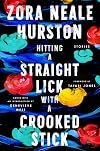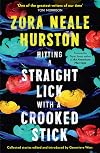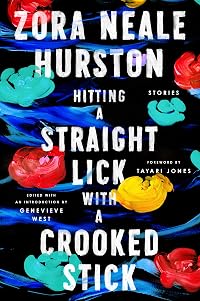
Hitting a Straight Lick with a Crooked Stick: Stories from the Harlem Renaissance
by Zora Neale Hurston
On This Page
Description
From "one of the greatest writers of our time" (Toni Morrison)—the author of Barracoon and Their Eyes Were Watching God—a collection of remarkable stories, including eight "lost" Harlem Renaissance tales now available to a wide audience for the first time.New York Times' Books to Watch for
Buzzfeed's Most Anticipated Books of 2020
Newsweek's Most Anticipated Books
Forbes.com's Most Anticipated Books of 2020
E!'s Top 2020 Books to Read
Glamour's Best Books
In 1925, Barnard student Zora show more Neale Hurston—the sole black student at the college—was living in New York, "desperately striving for a toe-hold on the world." During this period, she began writing short works that captured the zeitgeist of African American life and transformed her into one of the central figures of the Harlem Renaissance. Nearly a century later, this singular talent is recognized as one of the most influential and revered American artists of the modern period.
Hitting a Straight Lick with a Crooked Stick is an outstanding collection of stories about love and migration, gender and class, racism and sexism that proudly reflect African American folk culture. Brought together for the first time in one volume, they include eight of Hurston's "lost" Harlem stories, which were found in forgotten periodicals and archives. These stories challenge conceptions of Hurston as an author of rural fiction and include gems that flash with her biting, satiric humor, as well as more serious tales reflective of the cultural currents of Hurston's world. All are timeless classics that enrich our understanding and appreciation of this exceptional writer's voice and her contributions to America's literary traditions.
. show less
Tags
Recommendations



Member Reviews
Zora Neale Hurston is a unique writer. This collection of stories displays her talents as a story-teller, her socio-anthropological eye, and her sense of humor.
The stories read like parables, with iconic characters and often ambiguous morals.
As with her later and more famous novel, Their Eyes Were Watching God, she focuses in these stories on gender roles and male/female relationships. The settings move between Hurston’s hometown of Eatonville, Florida and her adopted home of Harlem, New York. Men and women, husbands and wives, players and the played all spar, showing their virtues, vices, strengths, and weaknesses. The characters are primarily African-American, giving us a look at gender and relationship through the eyes of a sharp show more observer with a gift for taking it all in with a light heart.
The characters are iconic in the sense that they represent more than themselves. And yet, they feel real — Hurston walks that fine line in her characters between the generality of types and the specificity of real-life people. So you get engaged in the stories and the people, but you are drawn back out into a broader view, both historical (the 1920s and 30s) and timely for the present.
One of the more interesting themes in several of the stories is that of the young rural southern black woman arriving in Harlem, suddenly in a very different world — so many more people, so many more games going on, so many more opportunities and temptations. Of course, you have to think that this is Hurston’s own experience in reflection, as she draws back to the distance of a parable or story teller. It’s great stuff.
This is not just for students of Hurston. The stories are entertaining and revealing. I learned from them. The experiences of her characters show what the days of the northern migration for southern black people, especially women, must have been like. And that sparring between husbands and wives, or men and women in general, feels like a struggle over the rules of relationship and the evolution of roles to come.
A few things about style — part of what gives Hurston’s characters that iconic but real feel is that she writes in dialect. You hear and feel the speech of her characters. Even if much of the dialect is unfamiliar to you, as it is to me, it doesn’t take long to catch on.
And there are several examples of stories written in pseudo-King-James-Bible style. These are beautiful — they have a tongue-in-cheek lightness about them, but the high sense of parable that the language carries with it. Some of these are my favorites from the book, taking the Harlem of the 20s and 30s into the land of the Bible but without any leaden seriousness.
To be honest, I’m little surprised how entertaining and provocative the book is, given that it’s a kind of unearthing of little known stories by Hurston, stories often published once in journals or newspapers of the time and forgotten. But nobody’s scraping the bottom of the barrel in her output with these — they are great stories. show less
The stories read like parables, with iconic characters and often ambiguous morals.
As with her later and more famous novel, Their Eyes Were Watching God, she focuses in these stories on gender roles and male/female relationships. The settings move between Hurston’s hometown of Eatonville, Florida and her adopted home of Harlem, New York. Men and women, husbands and wives, players and the played all spar, showing their virtues, vices, strengths, and weaknesses. The characters are primarily African-American, giving us a look at gender and relationship through the eyes of a sharp show more observer with a gift for taking it all in with a light heart.
The characters are iconic in the sense that they represent more than themselves. And yet, they feel real — Hurston walks that fine line in her characters between the generality of types and the specificity of real-life people. So you get engaged in the stories and the people, but you are drawn back out into a broader view, both historical (the 1920s and 30s) and timely for the present.
One of the more interesting themes in several of the stories is that of the young rural southern black woman arriving in Harlem, suddenly in a very different world — so many more people, so many more games going on, so many more opportunities and temptations. Of course, you have to think that this is Hurston’s own experience in reflection, as she draws back to the distance of a parable or story teller. It’s great stuff.
This is not just for students of Hurston. The stories are entertaining and revealing. I learned from them. The experiences of her characters show what the days of the northern migration for southern black people, especially women, must have been like. And that sparring between husbands and wives, or men and women in general, feels like a struggle over the rules of relationship and the evolution of roles to come.
A few things about style — part of what gives Hurston’s characters that iconic but real feel is that she writes in dialect. You hear and feel the speech of her characters. Even if much of the dialect is unfamiliar to you, as it is to me, it doesn’t take long to catch on.
And there are several examples of stories written in pseudo-King-James-Bible style. These are beautiful — they have a tongue-in-cheek lightness about them, but the high sense of parable that the language carries with it. Some of these are my favorites from the book, taking the Harlem of the 20s and 30s into the land of the Bible but without any leaden seriousness.
To be honest, I’m little surprised how entertaining and provocative the book is, given that it’s a kind of unearthing of little known stories by Hurston, stories often published once in journals or newspapers of the time and forgotten. But nobody’s scraping the bottom of the barrel in her output with these — they are great stories. show less
These rediscovered stories show the talent of Hurston the author and Hurston the anthropologist. The rural stories originate from her home in Eatonville, FL, the first town successfully established by African American freedmen. She turns an eye, at times jaundiced, at times hopeful, all times so warmly expressed and laugh-out-loud hilarious, to domestic situations primarily ruled by abusive husbands. The city stories are from Harlem, and it's almost like another woman has taken over Hurston’s pen via biblical recitations of similar domestic strife, with these created by country men who seek to take advantage of the vastness of the sophisticated female population. I prefer the tales from Eatonville, but all are enjoyable and filled show more with wisdom and charm.
Quotes:
"Ah got to shave Gran'ma."
"Who say so?", Joel asked, surprised.
"Nobody doan hafta tell me. Look at her chin. No ladies don't weah no whiskers if they kin help it."
"Brazzle's yellow mule, his Yaller Highness, was always mentioned before the weather, the misery of the back or leg, or the hard times."
"Joe Clarke's store porch was full of chewing men. Some chewed tobacco, some chewed cane, some chewed straws, for the villager is a ruminant in his leisure." show less
Quotes:
"Ah got to shave Gran'ma."
"Who say so?", Joel asked, surprised.
"Nobody doan hafta tell me. Look at her chin. No ladies don't weah no whiskers if they kin help it."
"Brazzle's yellow mule, his Yaller Highness, was always mentioned before the weather, the misery of the back or leg, or the hard times."
"Joe Clarke's store porch was full of chewing men. Some chewed tobacco, some chewed cane, some chewed straws, for the villager is a ruminant in his leisure." show less
Zora Neale Hurston is a brilliant writer, and these stories showcase a broad range of skill. She satirizes, writes folklore, and uses black vernacular English in lyrical and original ways. If you like folk stories, sly humor, or Harlem Renaissance writing, this collection is a must-read.
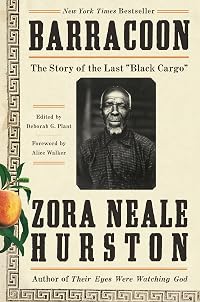
This was my second read by Zora Neale Hurston. I read Barracoon and enjoyed reading that novel, which felt more like an anthology. My book group AAABDG picked Hitting a Straight Lick with a Crooked Stick for discussion. I listened to the audiobook version read by Aunjanue Ellis, which I highly recommend, because she does a wonderful narration in differentiating the characters. First and distinguishable is the eye catching colorful artwork on the cover. The introduction by Genevieve West was long, detailed and informative, but I was anxious to get to the stories. A beautiful forward by Tayari Jones (another great author). This is a book that requires you to take your time reading to understand the dialect of the time and to follow the show more changes in her writing styles that progressed and grew as written in chronological order.
Written in the 1920s and most of the stories took place in Eatonville, Florida and Harlem with colorful characters like Muttsy, Bluefoot, Spunk and Pinkie. I didn't love all of the twenty one stories, but I favored a few. "John Redding Goes to Sea" was depicting men v women and the desire to venture other places was heartbreaking. "The Conversion of Sam" depicts class and race division that tugs at your emotions. "Sweat" entails domestic abuse and infidelity, it was gut wrenching. "Under The Bridge," a sad but tender tale of love between a father, wife and son. "The Country in the Woman" brings Cal'line and Mitchell Potts to revisit with a hilarious outcome to the story, which should have been part ll to the previous story in The Eatonville Anthology titled "Pants and Cal'line." The final favorite was "The Gilded Six-Bits” that addressed infidelity and greed, but love triumphed.
"The Eatonville Anthology" were snippets of various stories and felt incomplete, but interesting just the same. The re-mention of Sykes Jones, in "Tippy" and womanizing Joe Clarke in "Coon Taylor,"and "The Head of the Nail," Brazzle in "Village Fiction" are characters from previous stories, which brought me familiarity. "Possum or Pig?" was the shortest story in the book (2 pages), but was humorous. Cal'line with her axe once again makes an appearance in "She Rock." I was not fond of the stories that were written in bible verses.
Overall, I enjoyed the read with its southern drawl vernacular, skillful use of idioms, class, gender, sexism, folklore and identity. Hurston explored the African American culture in these stories, as well as adultery and infidelity in a marriage. I'm proud to include this book into my collection. show less
Written in the 1920s and most of the stories took place in Eatonville, Florida and Harlem with colorful characters like Muttsy, Bluefoot, Spunk and Pinkie. I didn't love all of the twenty one stories, but I favored a few. "John Redding Goes to Sea" was depicting men v women and the desire to venture other places was heartbreaking. "The Conversion of Sam" depicts class and race division that tugs at your emotions. "Sweat" entails domestic abuse and infidelity, it was gut wrenching. "Under The Bridge," a sad but tender tale of love between a father, wife and son. "The Country in the Woman" brings Cal'line and Mitchell Potts to revisit with a hilarious outcome to the story, which should have been part ll to the previous story in The Eatonville Anthology titled "Pants and Cal'line." The final favorite was "The Gilded Six-Bits” that addressed infidelity and greed, but love triumphed.
"The Eatonville Anthology" were snippets of various stories and felt incomplete, but interesting just the same. The re-mention of Sykes Jones, in "Tippy" and womanizing Joe Clarke in "Coon Taylor,"and "The Head of the Nail," Brazzle in "Village Fiction" are characters from previous stories, which brought me familiarity. "Possum or Pig?" was the shortest story in the book (2 pages), but was humorous. Cal'line with her axe once again makes an appearance in "She Rock." I was not fond of the stories that were written in bible verses.
Overall, I enjoyed the read with its southern drawl vernacular, skillful use of idioms, class, gender, sexism, folklore and identity. Hurston explored the African American culture in these stories, as well as adultery and infidelity in a marriage. I'm proud to include this book into my collection. show less
Zora Neale Hurston was one of the pioneering authors during the Harlem Renaissance and is most well-known for the novel Their Eyes Were Watching God. This work is a compilation of short stories published during her life. Many of these short stories are previously unavailable to a wider audience. Together, they open a tall and wide window to African American life in Eatonville, Florida, Hurston’s hometown, and Harlem, New York, in the early twentieth century.
Hurston beautifully depicts a dialect of African American speech in Eatonville, consistent with most of her other works. Although this speech can be a difficult barrier at first, reading it gets better with practice. In the twenty-first century that I write, such indigenous show more dialects are falling by the wayside due to the pervasive influence of television. The capture of these patterns in written language is simply ingenious. They add another layer to her writing – and to the reader’s imagination.
The stories are humorous and intriguing in how the depict the culture in which Hurston was raised. They are also intriguing from the sociological perspective. They portray marriages and family life in a respectful yet insightful style. Hurston never demeans nor mocks but often touches upon difficult subjects like sexuality and domestic violence. In this work, there is not one character that I remember being white; instead, she focuses upon black culture among blacks. No doubt that her skill stems in no small part from her advanced education in anthropology.
Her writing style in this volume falls into three categories: First, traditional Eatonville stories with their unique dialect; second, the Harlem stories without a recast dialect and with themes of trying to reestablish lives after the Great Migration; third and finally, stories with a dialect similar to the King James Version of the Bible that harken contemporary stories back to the Christian narrative. Each story is filled with human dignity, humor, and an ain’t-that-so-true approach to life.
Fellow author Alice Walker famously rediscovered Hurston’s gravesite over a decade after a death in anonymity. Hurston’s stories have grown in influence since. It is now almost fifty years since that rediscovery. This work provides a small but unique contribution to Hurston’s now-famous literature. Fans of African American culture and literature will enjoy this collection that vividly relates her seminal style. Thanks to West and Amistad publishing house for the research to provide us with these short stories! show less
Hurston beautifully depicts a dialect of African American speech in Eatonville, consistent with most of her other works. Although this speech can be a difficult barrier at first, reading it gets better with practice. In the twenty-first century that I write, such indigenous show more dialects are falling by the wayside due to the pervasive influence of television. The capture of these patterns in written language is simply ingenious. They add another layer to her writing – and to the reader’s imagination.
The stories are humorous and intriguing in how the depict the culture in which Hurston was raised. They are also intriguing from the sociological perspective. They portray marriages and family life in a respectful yet insightful style. Hurston never demeans nor mocks but often touches upon difficult subjects like sexuality and domestic violence. In this work, there is not one character that I remember being white; instead, she focuses upon black culture among blacks. No doubt that her skill stems in no small part from her advanced education in anthropology.
Her writing style in this volume falls into three categories: First, traditional Eatonville stories with their unique dialect; second, the Harlem stories without a recast dialect and with themes of trying to reestablish lives after the Great Migration; third and finally, stories with a dialect similar to the King James Version of the Bible that harken contemporary stories back to the Christian narrative. Each story is filled with human dignity, humor, and an ain’t-that-so-true approach to life.
Fellow author Alice Walker famously rediscovered Hurston’s gravesite over a decade after a death in anonymity. Hurston’s stories have grown in influence since. It is now almost fifty years since that rediscovery. This work provides a small but unique contribution to Hurston’s now-famous literature. Fans of African American culture and literature will enjoy this collection that vividly relates her seminal style. Thanks to West and Amistad publishing house for the research to provide us with these short stories! show less
Hitting a Straight Lick With A Crooked Stick: Stories From The Harlem Renaissance, Zora Neale Hurston, author, Aunjanue Ellis, narrator
Hurston is one of the most prominent African-American authors who wrote during the period of time from 1917-1937, the time of the Harlem Renaissance. These authors wrote books focused on social issues, like assimilation, faith, racism, black pride, and the atmosphere in the home between husbands and wives, parents and siblings, lovers and friends, in short, they wrote about all aspects of black life.
In this book, featuring several newly discovered short stories by Hurston, love and loss, relationships, drug addiction, racism, infidelity, physical and sexual abuse, injustice and a lack of women’s show more rights are featured. Some stories featured, education issues, religious issues, spiritual, superstitious or magical themes. They featured jealousy and greed, as well as kindness and joy. While some of the characters were loving, loyal, gentle, moral, well educated, grateful for their achievements, and grounded in their faith, others were hateful. They were liars, boasters, connivers, violent and even possibly downright evil. The stories, therefore, represented a microcosm of the world, during the time of the Harlem Renaissance, even though the particular focus is absolutely on the struggles of the black community. The evils presented existed in all communities, across color lines and religions, at that time, and perhaps, still today. The strong in society, who are sometimes evil, prey upon those who are weaker.
The stories do capture the times and the people very authentically, using the dialect they would use to communicate with each other. Some of the language may be offensive to the reader, since today, it is really frowned upon to use many of the terms in the book. There were times that I even thought I glimpsed what might be a bit of anti-Semitism or hostility toward the Jews, in some of the stories, because of references to the Sadducces and the Pharisees, both major historic influences in Jewish history, which sometimes seemed to be double entendres.
I love the author’s writing style. Listening to the audio, which was excellently performed, creating characters that were real and unique, I felt like I was viewing each story on a stage, but it was really the theater of my mind. Some of the stories were strange, some I didn’t quite understand, but each was so uniquely creative that I could not stop listening, completing it in one day. There was humor and there was tension, and I never lost interest.
On the negative side, the Editor’s Note, Foreward and Introduction were distracting and probably took up too much of the book, although learning about her background was inspiring and informative. The title essentially means, accomplishing something surprisingly, in a way that was thought to be unsuccessful, and perhaps that is the message. Although the Black community is still struggling to gain equality, they have struggled throughout their history in America to gain full recognition and respect often gained or thwarted, by unexpected means. Certainly, Hurston, did not get the recognition she deserved during her own lifetime. show less
Hurston is one of the most prominent African-American authors who wrote during the period of time from 1917-1937, the time of the Harlem Renaissance. These authors wrote books focused on social issues, like assimilation, faith, racism, black pride, and the atmosphere in the home between husbands and wives, parents and siblings, lovers and friends, in short, they wrote about all aspects of black life.
In this book, featuring several newly discovered short stories by Hurston, love and loss, relationships, drug addiction, racism, infidelity, physical and sexual abuse, injustice and a lack of women’s show more rights are featured. Some stories featured, education issues, religious issues, spiritual, superstitious or magical themes. They featured jealousy and greed, as well as kindness and joy. While some of the characters were loving, loyal, gentle, moral, well educated, grateful for their achievements, and grounded in their faith, others were hateful. They were liars, boasters, connivers, violent and even possibly downright evil. The stories, therefore, represented a microcosm of the world, during the time of the Harlem Renaissance, even though the particular focus is absolutely on the struggles of the black community. The evils presented existed in all communities, across color lines and religions, at that time, and perhaps, still today. The strong in society, who are sometimes evil, prey upon those who are weaker.
The stories do capture the times and the people very authentically, using the dialect they would use to communicate with each other. Some of the language may be offensive to the reader, since today, it is really frowned upon to use many of the terms in the book. There were times that I even thought I glimpsed what might be a bit of anti-Semitism or hostility toward the Jews, in some of the stories, because of references to the Sadducces and the Pharisees, both major historic influences in Jewish history, which sometimes seemed to be double entendres.
I love the author’s writing style. Listening to the audio, which was excellently performed, creating characters that were real and unique, I felt like I was viewing each story on a stage, but it was really the theater of my mind. Some of the stories were strange, some I didn’t quite understand, but each was so uniquely creative that I could not stop listening, completing it in one day. There was humor and there was tension, and I never lost interest.
On the negative side, the Editor’s Note, Foreward and Introduction were distracting and probably took up too much of the book, although learning about her background was inspiring and informative. The title essentially means, accomplishing something surprisingly, in a way that was thought to be unsuccessful, and perhaps that is the message. Although the Black community is still struggling to gain equality, they have struggled throughout their history in America to gain full recognition and respect often gained or thwarted, by unexpected means. Certainly, Hurston, did not get the recognition she deserved during her own lifetime. show less
I'm not, generally, a fan of short stories, so this rating is unusually high for me. I didn't like all of the stories equally. The writing, though. . . .
Members
- Recently Added By
Lists

Fiction: BLM
60 works; 1 member
Author Information

112+ Works 34,734 Members
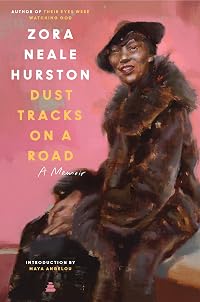
Zora Neale Hurston was born in 1901 in Eatonville, Fla. She left home at the age of 17, finished high school in Baltimore, and went on to study at Howard University, Barnard College, and Columbia University before becoming one of the most prolific writers in the Harlem Renaissance. Her works included novels, essays, plays, and studies in folklore show more and anthropology. Her most productive years were the 1930s and early 1940s. It was during those years that she wrote her autobiography Dust Tracks on a Road, worked with the Federal Writers Project in Florida, received a Guggenheim fellowship, and wrote four novels. She is most remembered for her novel Their Eyes Were Watching God, published in 1937. In 2018, her previously unpublished work, Barracoon: The Story of the Last Black Cargo, was published. She died penniless and in obscurity in 1960 and was buried in an unmarked grave. In 1973, her grave was rediscovered and marked and her novels and autobiography have since been reprinted. (Bowker Author Biography) show less
All Editions
Some Editions
Awards and Honors
Awards
Distinctions
Common Knowledge
- Important events
- Harlem Renaissance
- First words
- Zora Neale Hurston is in that rare category of writer who reached the type of notoriety that gives her one name status. -Tayari Jones, Foreward: Love Letter and Testimony
For Zora Neale Hurston, the Harlem Renaissance began in 1921, when she published her first short story, and it ended in 1937 with the publication of her masterpiece, Their Eyes Were Watching God. -Introduction, Genevieve West - Original language
- English
- Canonical DDC/MDS
- 813.52
- Canonical LCC
- PS3515.U789
Classifications
Statistics
- Members
- 491
- Popularity
- 61,585
- Reviews
- 11
- Rating
- (3.87)
- Languages
- English
- Media
- Paper, Audiobook, Ebook
- ISBNs
- 15
- ASINs
- 3