On This Page
Description
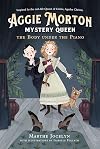
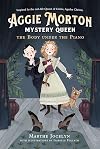
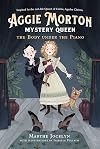
"A smart and charming middle-grade mystery series starring young detective Aggie Morton and her friend Hector, inspired by the imagined life of Agatha Christie as a child and her most popular creation, Hercule Poirot. For fans of Lemony Snicket and The Wollstonecraft Detective Agency. Aggie Morton lives in a small town on the coast of England in 1902. Adventurous and imaginative but deeply shy, Aggie hasn't got much to do since the death of her beloved father . . . until the fateful day when show more she crosses paths with twelve-year-old Belgian immigrant Hector Perot and discovers a dead body on the floor of the Mermaid Dance Room! As the number of suspects grows and the murder threatens to tear the town apart, Aggie and her new friend will need every tool at their disposal -- including their insatiable curiosity, deductive skills and not a little help from their friends -- to solve the case before Aggie's beloved dance instructor is charged with a crime she didn't commit. Filled with mystery, adventure, an unforgettable heroine and several helpings of tea and sweets, The Body Under the Piano is the clever debut of a new series for middle-grade readers and Christie and Poirot fans everywhere, from a Governor General's Award--winning author of historical fiction for children."-- show lessTags
Recommendations











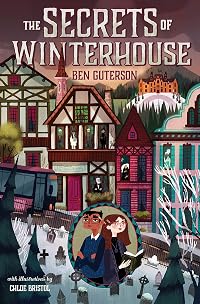
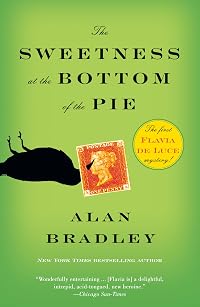

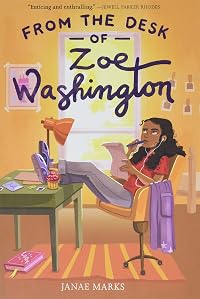


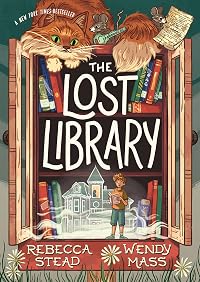
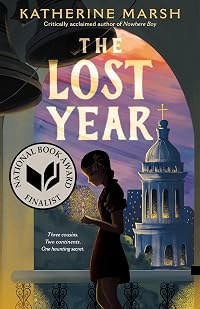
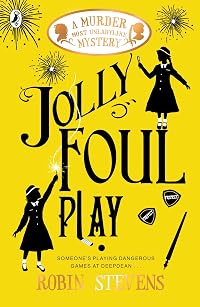
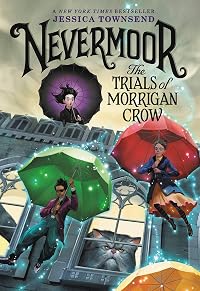

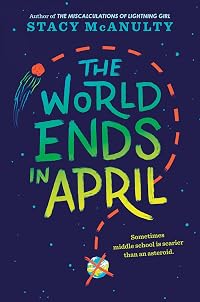

Member Recommendations
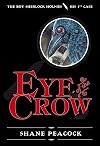
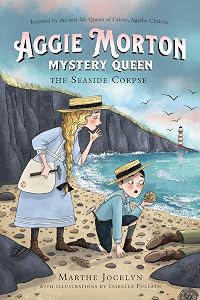
fountainoverflows Peacock does for Sherlock Holmes what Jocelyn does for Agatha Christie. I think his writing is much stronger and more compelling and atmospheric than hers, however. This is the first in Peacock's very worthwhile series.
Member Reviews
A delightful mystery, in the vein of Agatha Christie and Sherlock Holmes (and, more recently, Flavia de Luce), set in Torquay in the early 1900s, when the real Agatha Christie would have been about twelve, the same age as our protagonist, Aggie Morton. When Aggie discovers a body under the piano in her dance studio, she wants to get to the bottom of the mystery - and especially to clear the name of her dance teacher, Miss Marianne, and Marianne's niece Rose. Unfortunately, both Marianne and Rose - the victim's sister-in-law and daughter, respectively - both had motive and opportunity (the victim was poisoned). While the police pursue the case, Aggie and her new friend Hector, a French- and English-speaking Belgian immigrant, investigate show more as well.
See also: The Sweetness at the Bottom of the Pie by Alan Bradley, The Mysterious Howling by Maryrose Wood
Quotes
I will tell first about making a new friend and save the dead body for later. (first sentence)
At the time, I did not see that a sequence was unfolding. One never does. Afterward, it was clear how the moments piled up, each leading naturally to the next, quietly altering the course of things. (ch. 1)
"Children often make the best witnesses. They report what they see instead of making assumptions about what we want them to have seen." (Inspector Locke, ch. 6)
Having a pencil in my hand was part of the machine that kept thoughts flowing from my brain to the page. (ch. 11)
"A woman is rarely trusted to decide the path of her own life." (Marianne to Aggie, ch. 24)
A person will hear far more by listening than by talking. (ch. 24)
Everyone, I supposed, had pieces to hide or to offer as we dared, or did not dare, to face other people. (ch. 27)
"A hero sometimes faces danger....But don't you think a hero might also be a person who does what no one else wants to do?" (Aggie to Hector, ch. 30)
"It's extraordinary how different the world looks when a person can breathe." (Mr. Augustus Fibbley to Aggie, ch. 30)
On no single morning could a person wake up confident about what might happen that day. (ch. 30)
"I am not untidy," I objected. "I merely surround myself with a plethora of possibilities." (Aggie, ch. 32) show less
See also: The Sweetness at the Bottom of the Pie by Alan Bradley, The Mysterious Howling by Maryrose Wood
Quotes
I will tell first about making a new friend and save the dead body for later. (first sentence)
At the time, I did not see that a sequence was unfolding. One never does. Afterward, it was clear how the moments piled up, each leading naturally to the next, quietly altering the course of things. (ch. 1)
"Children often make the best witnesses. They report what they see instead of making assumptions about what we want them to have seen." (Inspector Locke, ch. 6)
Having a pencil in my hand was part of the machine that kept thoughts flowing from my brain to the page. (ch. 11)
"A woman is rarely trusted to decide the path of her own life." (Marianne to Aggie, ch. 24)
A person will hear far more by listening than by talking. (ch. 24)
Everyone, I supposed, had pieces to hide or to offer as we dared, or did not dare, to face other people. (ch. 27)
"A hero sometimes faces danger....But don't you think a hero might also be a person who does what no one else wants to do?" (Aggie to Hector, ch. 30)
"It's extraordinary how different the world looks when a person can breathe." (Mr. Augustus Fibbley to Aggie, ch. 30)
On no single morning could a person wake up confident about what might happen that day. (ch. 30)
"I am not untidy," I objected. "I merely surround myself with a plethora of possibilities." (Aggie, ch. 32) show less
I received an advance copy of the book from the publisher via NetGalley.
I need a time machine so I can go back to 1990 to hand my 10-year-old self this book. Almost-40-year-old me ADORED this novel, and I know my 10-year-old self would love it even more. Why? Because the book is smart, savvy historical fiction with an honest depiction of the era, and a heroine with a morbid bent that reminds me lot of myself--though Aggie is actually inspired by the childhood of the Queen of Mystery Writers herself, Agatha Christie.
Aggie is a young girl in 1902, growing up in a small British coastal town. She has a wild imagination and a taste for the macabre, and she can't help but get involved when her music teacher's cruel mother is found dead--dead show more of poison! Aggie and her friend Hector set out to investigate. Their methods are smart, but they also cause a lot of problems along the way, especially when a meddlesome local reporter gets tangled up in everything.
The characters are fantastic and fun, just as you expect in a cozy British mystery village; plus, they have fun portraits at the front of the book. One of the things I loved most was the honest depiction of the past. It was not sugar-coated. The book deftly addresses bigotry (Hector is a "foreigner," a Belgian refugee inspired by Hercule Poirot), sexism (girls can't/shouldn't do many things), and the complications that arise in this period from a child born out of wedlock. The book feels quite cozy with its fun mystery and whimsical characters, but also grounded in realism because of how these other issues are handled. The balance is so well done.
I highly recommend this book for kids and their parents. If the child isn't already into classic whodunits, this novel could very well be what kicks off a life-long love of the genre. show less
I need a time machine so I can go back to 1990 to hand my 10-year-old self this book. Almost-40-year-old me ADORED this novel, and I know my 10-year-old self would love it even more. Why? Because the book is smart, savvy historical fiction with an honest depiction of the era, and a heroine with a morbid bent that reminds me lot of myself--though Aggie is actually inspired by the childhood of the Queen of Mystery Writers herself, Agatha Christie.
Aggie is a young girl in 1902, growing up in a small British coastal town. She has a wild imagination and a taste for the macabre, and she can't help but get involved when her music teacher's cruel mother is found dead--dead show more of poison! Aggie and her friend Hector set out to investigate. Their methods are smart, but they also cause a lot of problems along the way, especially when a meddlesome local reporter gets tangled up in everything.
The characters are fantastic and fun, just as you expect in a cozy British mystery village; plus, they have fun portraits at the front of the book. One of the things I loved most was the honest depiction of the past. It was not sugar-coated. The book deftly addresses bigotry (Hector is a "foreigner," a Belgian refugee inspired by Hercule Poirot), sexism (girls can't/shouldn't do many things), and the complications that arise in this period from a child born out of wedlock. The book feels quite cozy with its fun mystery and whimsical characters, but also grounded in realism because of how these other issues are handled. The balance is so well done.
I highly recommend this book for kids and their parents. If the child isn't already into classic whodunits, this novel could very well be what kicks off a life-long love of the genre. show less
This was such a delight. It is extremely charming and fun, and the character of Aggie is absolutely delightful. She is a very thinly veiled 11-year old Agatha Christie, and I enjoyed learning about the young Agatha Christie. The author made a few changes to her biography, but you still get a good sense of what she might have been like as a child. The mystery was well done, but the real joy here is the character of Aggie, who is of course precocious and a bit morbid, but also mourning the loss of her beloved father. This book was reminiscent in tone of the Murder Most Unladylike series by Robin Stevens, which I highly recommend. There was a bit a Flavia de Luce in the character of Aggie as well, although Aggie is much less sharp-tongued.
 This review was written for LibraryThing Early Reviewers.
I received this book through LibraryThing to review, and I'm so glad. I absolutely loved it! The cover and illustrations of the characters in the story are perfect, and as a diehard Agatha Christie reader, I was delighted by the premise of a middle grade story about a young Agatha solving a murder mystery along with her new young friend, the Belgian refugee Hector Perot, who has come to stay in Aggie's small seaside town of Torquay in 1902. The 12 year olds bond over their love of crime, mystery, and the logic of gathering clues and detecting. After a chance meeting in a candy shop, the new friends find themselves working together to solve the poisoning of a woman whose corpse Aggie discovers on the floor of her dance studio. As the show more victim was not particularly well loved in the community, due to her disagreeable nature,. there are more than a few suspects.
Using historical research of Agatha Christie's own real life, the author creates a charming tale of how the Great Dame of Murder Mysteries might have got her start. With a pencil and writing pad always near by, and constantly viewing her world as a writer, composing small snippets in her head as she ponders the various clues that she and Hector discover, Aggie is a delight, and easily could be seen as the young version of the writer we all know and love, Insatiable curiosity, and working with Hector's logic and style to narrow down the suspect pool and uncover clues, she is a fierce and fiesty character that, despite the time period the story is set in, is still easy to relate to, and admire, even for young girls in today's modern world. Her spirit is matched only by her intelligence and empathy, and she rightly feels anger and outrage when she sees her friend mocked by rude adults, and is not afraid to politely put them in their place, as best as a 12 year old can. Her confidence in her own, and Hector's abilities, are inspiring.
The story also raises some interesting issues for thought and discussion about women, their roles in society and being treated as second class citizens who were not even allowed to vote, and the lengths some women would go to in order to try to fulfill their dreams. It also touches on subjects like immigration, refugees, prejudice and class structure at the time. For instance, Aggie notes that the gardener they have helping around her family's large home is living in a garden shed with no heat, brning rolled up newspaper in a metal bucket for heat, and sleeping wrapped in scarves for warmth, while she enjoys the comforts of her family's wealthy upper-middle-class estate. She is also bothered by rude comments that Hector receives about his accent and being a refugree. Such small discoveries disturb Agatha, her sense of what is right and just, and her soft heart. She sees things other people don't, and she thinks about them in ways most people didn't at that time, especially those in her social standing.
It was fun to read about her and Hector, so in sync, passing each other coded messages to relay their thoughts and ideas in a time when it was not socially appropriate for a young lady of 12 to sit on a bench in public with a male refugee without any adult to oversee them. Aggier has to find ways to not only ferret out information and clues, but also to share them with her sleuthing partner. Her sheer joy at finding a like-minded spirit, especially as she is quite shy in many ways, allows her to grow more independent and daring, and find the courage to do what need to be done to expose the murderer and solve the mystery.
I can't wait to read more of Aggie's adventures! An enjoyable and fun read for anyone, child or adult, especially if the latter enjoys the Flavia de Luce books by Alan Bradley. These are titch younger in theme, but with a very similar vibe. Highly recommended! show less
Using historical research of Agatha Christie's own real life, the author creates a charming tale of how the Great Dame of Murder Mysteries might have got her start. With a pencil and writing pad always near by, and constantly viewing her world as a writer, composing small snippets in her head as she ponders the various clues that she and Hector discover, Aggie is a delight, and easily could be seen as the young version of the writer we all know and love, Insatiable curiosity, and working with Hector's logic and style to narrow down the suspect pool and uncover clues, she is a fierce and fiesty character that, despite the time period the story is set in, is still easy to relate to, and admire, even for young girls in today's modern world. Her spirit is matched only by her intelligence and empathy, and she rightly feels anger and outrage when she sees her friend mocked by rude adults, and is not afraid to politely put them in their place, as best as a 12 year old can. Her confidence in her own, and Hector's abilities, are inspiring.
The story also raises some interesting issues for thought and discussion about women, their roles in society and being treated as second class citizens who were not even allowed to vote, and the lengths some women would go to in order to try to fulfill their dreams. It also touches on subjects like immigration, refugees, prejudice and class structure at the time. For instance, Aggie notes that the gardener they have helping around her family's large home is living in a garden shed with no heat, brning rolled up newspaper in a metal bucket for heat, and sleeping wrapped in scarves for warmth, while she enjoys the comforts of her family's wealthy upper-middle-class estate. She is also bothered by rude comments that Hector receives about his accent and being a refugree. Such small discoveries disturb Agatha, her sense of what is right and just, and her soft heart. She sees things other people don't, and she thinks about them in ways most people didn't at that time, especially those in her social standing.
It was fun to read about her and Hector, so in sync, passing each other coded messages to relay their thoughts and ideas in a time when it was not socially appropriate for a young lady of 12 to sit on a bench in public with a male refugee without any adult to oversee them. Aggier has to find ways to not only ferret out information and clues, but also to share them with her sleuthing partner. Her sheer joy at finding a like-minded spirit, especially as she is quite shy in many ways, allows her to grow more independent and daring, and find the courage to do what need to be done to expose the murderer and solve the mystery.
I can't wait to read more of Aggie's adventures! An enjoyable and fun read for anyone, child or adult, especially if the latter enjoys the Flavia de Luce books by Alan Bradley. These are titch younger in theme, but with a very similar vibe. Highly recommended! show less
This review was written for LibraryThing Early Reviewers.Marthe Jocelyn’s mystery novel for older children, set in early-twentieth-century Torquay, Cornwall, focuses on twelve-year-old girl-detective Aggie Morton — modelled on Agatha Christie as a child — as she goes about solving her first case. To aid her is her new friend, a Belgian boy refugee, Hector Perot, based on Christie’s sleuth, Hercule Poirot. With her literary aspirations and inclination to morbid musings, Aggie supplies the imagination required to understand the motivation of various suspects while Hector, her Sherlock-Holmes-admiring friend, brings his razor-sharp rationality to the pair’s first challenge.
The mystery concerns a suspicious death at Aggie’s dance studio the morning after a fund-raising event, a show more concert to “Befriend the Foreigners,” an influx of immigrants from Russia and Belgium. Aggie is among the first to come on “the crime scene” when she shows up early for her Saturday dance lesson. Wanting to retrieve the writer’s notebook she left behind the evening before, she opens the door to the Mermaid Dance Room only to make a “ghastly discovery”: the corpse of Mrs. Irma Eversham, the widowed, grumpy-dog-faced sister-in-law of Aggie’s dance instructor, Miss Marianne, is lying between the legs of the piano. Beside her, in a puddle of tea, lie the pieces of a shattered tea cup. The much-disliked woman has apparently been poisoned. Could Miss Marianne actually be responsible? Aggie is determined to work her way through all the other suspects — including Mrs. Eversham’s beautiful young daughter, Rose; Roddy Fusswell, one of Rose’s many admirers and an indebted gambler; Mr. Augustus Fibbley, an oddly clad and strangely behaved reporter for the local paper; and Leonard Cable, the Morton’s young delivery boy and gardener — before she will allow herself to even consider that her beloved suffragette dance teacher might be the perpetrator. The key to the mystery seems to lie in a cryptic note, apparently meant for Rose, that Aggie later finds in her notebook.The note states that Rose is not, in fact, her parents’ first child.
Jocelyn initially suggests that the mysterious death is likely not a murder at all, but an accident of sorts. It’s October; winter’s coming, and the dance studio and the hotel that supplied many of the refreshments for the previous evening’s fundraiser have both recently had trouble with mice. The rodenticide bears a remarkable resemblance to sugar. Aggie and Hector remain convinced that there is indeed a villain, however, and their amateur sleuthing ultimately enables the local police to apprehend the guilty person. In their efforts at getting to the bottom of the matter, Aggie and Hector also expose some some of the Eversham family’s secrets.
Years ago, I read Marthe Jocelyn’s middle-grade novel featuring the eccentric girl protagonist Mable Riley. The book was a nominee for one of the Ontario Library Association’s young readers’ choice awards. In some ways Aggie is a resurrection of Mable Riley—quirky, eccentric, prone to melodrama and flights of fancy. For kids who need to be propelled forward by a fast-moving plot, this more recent novel (like Mable Riley: A Reliable Record of Humdrum, Peril, and Romance) may not wholly satisfy. However, if they take to Aggie, they’ll probably enjoy reading about her first case and be eager to advance to her next two sleuthing adventures, which are already in print. Jocelyn’s writing is accomplished and the period details are well researched, but, as an adult reader without any particular interest in mystery stories, I am unlikely to read further titles in the series.
Thank you to the publisher and Library Thing’s Early Reviewers/Member Giveaway programme for providing me with a copy of this novel. show less
The mystery concerns a suspicious death at Aggie’s dance studio the morning after a fund-raising event, a show more concert to “Befriend the Foreigners,” an influx of immigrants from Russia and Belgium. Aggie is among the first to come on “the crime scene” when she shows up early for her Saturday dance lesson. Wanting to retrieve the writer’s notebook she left behind the evening before, she opens the door to the Mermaid Dance Room only to make a “ghastly discovery”: the corpse of Mrs. Irma Eversham, the widowed, grumpy-dog-faced sister-in-law of Aggie’s dance instructor, Miss Marianne, is lying between the legs of the piano. Beside her, in a puddle of tea, lie the pieces of a shattered tea cup. The much-disliked woman has apparently been poisoned. Could Miss Marianne actually be responsible? Aggie is determined to work her way through all the other suspects — including Mrs. Eversham’s beautiful young daughter, Rose; Roddy Fusswell, one of Rose’s many admirers and an indebted gambler; Mr. Augustus Fibbley, an oddly clad and strangely behaved reporter for the local paper; and Leonard Cable, the Morton’s young delivery boy and gardener — before she will allow herself to even consider that her beloved suffragette dance teacher might be the perpetrator. The key to the mystery seems to lie in a cryptic note, apparently meant for Rose, that Aggie later finds in her notebook.
Jocelyn initially suggests that the mysterious death is likely not a murder at all, but an accident of sorts. It’s October; winter’s coming, and the dance studio and the hotel that supplied many of the refreshments for the previous evening’s fundraiser have both recently had trouble with mice. The rodenticide bears a remarkable resemblance to sugar. Aggie and Hector remain convinced that there is indeed a villain, however, and their amateur sleuthing ultimately enables the local police to apprehend the guilty person. In their efforts at getting to the bottom of the matter, Aggie and Hector also expose some some of the Eversham family’s secrets.
Years ago, I read Marthe Jocelyn’s middle-grade novel featuring the eccentric girl protagonist Mable Riley. The book was a nominee for one of the Ontario Library Association’s young readers’ choice awards. In some ways Aggie is a resurrection of Mable Riley—quirky, eccentric, prone to melodrama and flights of fancy. For kids who need to be propelled forward by a fast-moving plot, this more recent novel (like Mable Riley: A Reliable Record of Humdrum, Peril, and Romance) may not wholly satisfy. However, if they take to Aggie, they’ll probably enjoy reading about her first case and be eager to advance to her next two sleuthing adventures, which are already in print. Jocelyn’s writing is accomplished and the period details are well researched, but, as an adult reader without any particular interest in mystery stories, I am unlikely to read further titles in the series.
Thank you to the publisher and Library Thing’s Early Reviewers/Member Giveaway programme for providing me with a copy of this novel. show less
This review was written for LibraryThing Early Reviewers.Twelve-year-old Aggie Morton discovers a body under a piano at the dance studio. She meets a Belgian boy named Hector Perot who helps her investigate. Hector's skill lies in his deductive work. Aggie enjoys writing her thoughts down. The characters are obviously a young Agatha Christie and her detective Hercule Perot. The mystery involving Aggie is certain to draw some comparison to the Flavia de Luce series by Alan Bradley because of the sleuth's age; however, the interests of the two sleuths run in different directions so the age is really the only similarity. The novel, intended for middle schoolers, may be a good introduction to the Poirot series. The book offers a bibliography of resources utilized in building the historical show more context for the story. I might read future installments. I received a copy through LibraryThing Early Reviewers program with the expectation of an honest review. show less
This review was written for LibraryThing Early Reviewers.12-year-old Aggie Morton is thrilled that her original poem has been selected for the Befriend the Foreigners program to benefit the refugees in Torquay. Aggie doesn’t have long to revel in her achievement. The next morning, Aggie and her companion are the first to arrive at the dance studio, where a woman’s dead body lies under the piano. It’s well-known that the victim, the widow Irma Eversham, didn’t get along with her suffragette sister-in-law, dance teacher Marianne Eversham. Aggie knows Miss Eversham well enough to be certain that she couldn’t have murdered her sister-in-law. With the help of young Belgian refugee Hector Perot, Aggie sets out to find the true murderer.
Aggie is a (purposefully) thinly-disguised young show more Agatha Christie, who really did live in Torquay as a child. The secondary characters, including Hector, aren’t developed quite as well as Aggie. Readers familiar with Christie’s detective novels will recognize Hector Perot as a young Hercule Poirot. Aggie’s Grannie Jane displays some of the characteristics of Christie’s Miss Jane Marple. Although the book targets middle grade readers, some of its themes seem more appropriate for YA or adult readers. Aggie’s character is similar enough to Flavia de Luce that many Flavia fans might want to turn to Aggie Morton once they’ve finished reading all of Flavia’s adventures.
This review is based on a complimentary copy provided by the publisher through LibraryThing’s Early Reviewers program. show less
Aggie is a (purposefully) thinly-disguised young show more Agatha Christie, who really did live in Torquay as a child. The secondary characters, including Hector, aren’t developed quite as well as Aggie. Readers familiar with Christie’s detective novels will recognize Hector Perot as a young Hercule Poirot. Aggie’s Grannie Jane displays some of the characteristics of Christie’s Miss Jane Marple. Although the book targets middle grade readers, some of its themes seem more appropriate for YA or adult readers. Aggie’s character is similar enough to Flavia de Luce that many Flavia fans might want to turn to Aggie Morton once they’ve finished reading all of Flavia’s adventures.
This review is based on a complimentary copy provided by the publisher through LibraryThing’s Early Reviewers program. show less
This review was written for LibraryThing Early Reviewers.Members
- Recently Added By
Lists

Recommended Young Adult Books
12 works; 1 member
Author Information

47+ Works 2,318 Members
Marthe Jocelyn is a children's clothing and toy designer. Marth Jocelyn divides her time between Manhattan and Stratford, Ontario, where she lives with her husband, artist Tom Slaughter, and daughters Hannah and Nell.
Awards and Honors
Awards
Series

Common Knowledge
- Canonical title
- The Body Under the Piano
- Original publication date
- 2020-02-04
- People/Characters
- Aggie Morton; Hector Perot
- Important places
- Torquay, Devon, England, UK
- Dedication
- for Tara
- First words
- I will tell first about making a new friend and save the dead body for later.
- Last words
- (Click to show. Warning: May contain spoilers.)"Bodies can show up anywhere."
- Original language
- English
Classifications
Statistics
- Members
- 168
- Popularity
- 194,413
- Reviews
- 24
- Rating
- (4.05)
- Languages
- English, French
- Media
- Paper, Audiobook, Ebook
- ISBNs
- 10
- ASINs
- 2