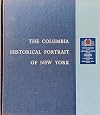
The Columbia Historical Portrait of New York: An Essay in Graphic History
by John Atlee Kouwenhoven
On This Page
Description
A portrait of New York City from 1626 to the mid-1950's describing its growth and evolution from a village to a metropolis in visual terms.Tags
Recommendations






























Member Reviews
There have been Kouwenhovens on Manhattan since the early 1600s and appropriately the book starts with the first maps of the newly colonized island that would later become New York City. Before photography there were the drawings and artwork of scenes, people, buildings and advertising. We follow the progression of the landscape from isolated farms to village, to clusters of industrial age buildings and then on to the high rises that we think of today when we think of NYC.
One of the most interesting pictures is the statue of Abraham De Peyster. The first photo, taken about 1896 when the statue was first erected, has a background of gardens, trees and buildings that stand about eight stories high. The second photo, taken around 1948, has show more a few remaining plants but the trees are gone and the statue is almost completely overshadowed by the skyscrapers that seem to block out the sunlight. There are other photos of the past being crowded out by the up-and-coming future. Streets and landscapes move from horse and rider to carriage, to automobiles and finally to mass transit.
This might be what you could call a coffee table book, except it is softcover and great reading, just too interesting to flip through in a hurry. The author sticks to Manhattan and does not even stray into nearby Brooklyn, Queens or New Jersey, except to take pictures of the island from these vantage points.You don't have to know the city to enjoy this book but the author's love and knowledge of his subject comes through, bringing us on a journey through three centuries. show less
One of the most interesting pictures is the statue of Abraham De Peyster. The first photo, taken about 1896 when the statue was first erected, has a background of gardens, trees and buildings that stand about eight stories high. The second photo, taken around 1948, has show more a few remaining plants but the trees are gone and the statue is almost completely overshadowed by the skyscrapers that seem to block out the sunlight. There are other photos of the past being crowded out by the up-and-coming future. Streets and landscapes move from horse and rider to carriage, to automobiles and finally to mass transit.
This might be what you could call a coffee table book, except it is softcover and great reading, just too interesting to flip through in a hurry. The author sticks to Manhattan and does not even stray into nearby Brooklyn, Queens or New Jersey, except to take pictures of the island from these vantage points.You don't have to know the city to enjoy this book but the author's love and knowledge of his subject comes through, bringing us on a journey through three centuries. show less
Ratings
Members
- Recently Added By
Author Information

11+ Works 282 Members
Some Editions
Awards and Honors
Distinctions
Common Knowledge
- Original publication date
- 1953
- Important places
- New York, New York, USA
- Original language
- English
Classifications
- Genres
- Nonfiction, History, Travel, General Nonfiction, Art & Design
- DDC/MDS
- 917.47 — History & geography Geography & travel Geography of and travel in North America Northeastern U.S. New York State
- LCC
- F128.3 .K6 — Local History of the United States, Canada and Latin America United States local history New York
Statistics
- Members
- 99
- Popularity
- 326,644
- Reviews
- 1
- Rating
- (4.50)
- Languages
- English
- Media
- Paper
- ISBNs
- 2
- ASINs
- 3