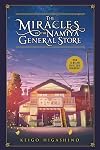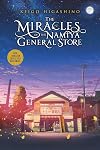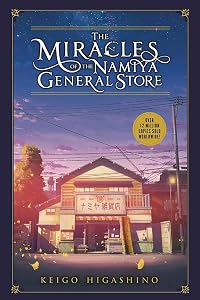
The Miracles of the Namiya General Store
by Keigo Higashino
On This Page
Description
"When three delinquents hole up in an abandoned general store after their most recent robbery, to their great surprise, a letter drops through the mail slot in the store's shutter. This seemingly simple request for advice sets the trio on a journey of discovery as, over the course of a single night, they step into the role of the kindhearted former shopkeeper who devoted his waning years to offering thoughtful counsel to his correspondents. Through the lens of time, they share insight with show more those seeking guidance, and by morning, none of their lives will ever be the same. By acclaimed author Keigo Higashino, The Miracles of the Namiya General Store is a work that has touched the hearts of readers around the world"-- show lessTags
Recommendations






















Member Reviews
Translated by Sam Bett, The Miracles of the Namiya General Store by Japanese author Keigo Higashino has an enticing premise. Three youths seek a place to lay low after carrying out a robbery and they break into the Namiya General Store. Seemingly abandoned and run down, they're surprised when a letter asking the previous shopkeeper for advice drops through the mail slot.
The young men quickly realise this isn't an ordinary shop, but what advice could they possibly have to give? They're certainly not upstanding citizens leading a successful and rewarding life are they? What should they do? And if they choose to answer the letter, what advice should they give?
The narrative expands as new and old letters are referred to and advice is both show more sought and received. The plot does get a little timey wimey in that time stops inside the general store and a connection between past and present is established although never adequately explained. This reader hardly cared (see my review of Under The Dome to see how I can ignore the 'why' of the premise and just enjoy the fallout), instead delighting in the various interconnecting characters in a cleverly spun narrative web.
In fact, I'd love to see a character map representing the interconnecting characters and their various overlapping narrative arcs, I think it'd be a beautiful sight indeed. It certainly seemed as though the entire plot was connected with silvery gossamer thread and Higashino took the reader around the web pointing out different patterns and individual stories.
In assessing the advice requested and the advice provided, we're given a glimpse into how that advice was or wasn't followed and how it all turned out. In doing so, the author raises the notion that many people are experiencing challenges in their lives, facing choices they don't want to make or decisions they can't seem to reach or make their peace with.
Similarly, the author seems to suggest that even a lowly delinquent may have advice worth considering to offer a fellow human being in crisis. Every individual has value to contribute and the innate ability to make a positive difference in the life of a stranger.
Employing a combination of magical realism, urban fantasy and science fiction, The Miracles of the Namiya General Store is a heartwarming, uplifting, positive feel-good read and I highly recommend it! show less
The young men quickly realise this isn't an ordinary shop, but what advice could they possibly have to give? They're certainly not upstanding citizens leading a successful and rewarding life are they? What should they do? And if they choose to answer the letter, what advice should they give?
The narrative expands as new and old letters are referred to and advice is both show more sought and received. The plot does get a little timey wimey in that time stops inside the general store and a connection between past and present is established although never adequately explained. This reader hardly cared (see my review of Under The Dome to see how I can ignore the 'why' of the premise and just enjoy the fallout), instead delighting in the various interconnecting characters in a cleverly spun narrative web.
In fact, I'd love to see a character map representing the interconnecting characters and their various overlapping narrative arcs, I think it'd be a beautiful sight indeed. It certainly seemed as though the entire plot was connected with silvery gossamer thread and Higashino took the reader around the web pointing out different patterns and individual stories.
In assessing the advice requested and the advice provided, we're given a glimpse into how that advice was or wasn't followed and how it all turned out. In doing so, the author raises the notion that many people are experiencing challenges in their lives, facing choices they don't want to make or decisions they can't seem to reach or make their peace with.
Similarly, the author seems to suggest that even a lowly delinquent may have advice worth considering to offer a fellow human being in crisis. Every individual has value to contribute and the innate ability to make a positive difference in the life of a stranger.
Employing a combination of magical realism, urban fantasy and science fiction, The Miracles of the Namiya General Store is a heartwarming, uplifting, positive feel-good read and I highly recommend it! show less
I am conflicted
Keigo Higashino writes mysteries that I love. Here he does something different: a feel-good novel with magical realism.
A getaway car breaks down and three small-time crooks have to hide in an abandoned general store. Just for one night. Then someone pushes a letter through the mail slot. Someone desperate is asking the Namiya General Store for advice…
”When was the last time someone came to us looking for advice? Oh, that’s right, never. And it won’t ever happen again. This is our first and only chance. We might as well take it, just this once.”
Very strange things begin to happen after that. Letters come. They reply. More letters come. If you ask me, our crooks are not that great at giving advice. They are show more tactless and rude! At least they are earnest and quite sweet. They are trying to help! Also, people asking for advice only hear what they want to hear and mostly want to make sure that they are making the right decision. It was nicely spelled out in this book.
There are many stories, which are all interconnected. The reader understands this gradually, as we jump back and forth between stories and timelines. There are many tragedies, and some critique of the Japanese society.
“Healing fiction” can be simplistic, and it is certainly the case here. I think that simplistic does not equal untrue, though. I was hooked, I was often touched. Unfortunately, the translation was very clunky and strange. I didn’t recognise Higashino. Reading felt like walking through treacle very slowly. I finished this book in two days, yet it seemed very long, it dragged and dragged. The ending was lovely, but I was happy to be done.
I will still read everything I can by Higashino, no worries. show less
Keigo Higashino writes mysteries that I love. Here he does something different: a feel-good novel with magical realism.
A getaway car breaks down and three small-time crooks have to hide in an abandoned general store. Just for one night. Then someone pushes a letter through the mail slot. Someone desperate is asking the Namiya General Store for advice…
”When was the last time someone came to us looking for advice? Oh, that’s right, never. And it won’t ever happen again. This is our first and only chance. We might as well take it, just this once.”
Very strange things begin to happen after that. Letters come. They reply. More letters come. If you ask me, our crooks are not that great at giving advice. They are show more tactless and rude! At least they are earnest and quite sweet. They are trying to help! Also, people asking for advice only hear what they want to hear and mostly want to make sure that they are making the right decision. It was nicely spelled out in this book.
There are many stories, which are all interconnected. The reader understands this gradually, as we jump back and forth between stories and timelines. There are many tragedies, and some critique of the Japanese society.
“Healing fiction” can be simplistic, and it is certainly the case here. I think that simplistic does not equal untrue, though. I was hooked, I was often touched. Unfortunately, the translation was very clunky and strange. I didn’t recognise Higashino. Reading felt like walking through treacle very slowly. I finished this book in two days, yet it seemed very long, it dragged and dragged. The ending was lovely, but I was happy to be done.
I will still read everything I can by Higashino, no worries. show less
This book is a puzzler. Every time I'd surface from it, I'd think something like, "It's a bit YA," or, "It's clumsy in places," or "A little sappy." Yet, every time I resumed reading, I immediately got sucked under. It's not that I think it's great literature. It's emotionally manipulative and, yes, a bit YA and clumsy. But it worked for me ... so well, that I read it straight through.
If you're wondering what it's about, three juvenile delinquents take refuge in an abandoned store. A letter drops through the mail slot asking for advice. And then another. What follows is a magical realism tale in which they find themselves answering those letters in what, at first, seems to be a haphazard set of stories, but eventually isn't.
If you're wondering what it's about, three juvenile delinquents take refuge in an abandoned store. A letter drops through the mail slot asking for advice. And then another. What follows is a magical realism tale in which they find themselves answering those letters in what, at first, seems to be a haphazard set of stories, but eventually isn't.
It’s an easy read, but the characters leave a bad taste in my mouth, and the story feels thematically incongruent. Serendipitously and knowingly profiting off the Japanese real estate pump and dump in the 80s is a weird look as well, especially since its economic consequences were still felt 30 years later by our thieving trio and the initial Japanese readers of this book.
Content warnings for this book: suicide, child abuse and neglect, multiple deaths due to cancer.
In the late 1960s, the Namiya General Store became known for its particular gimmick: the owner would write serious replies to any letters asking for advice, even those that were clearly intended to be pranks. People would slide their letters through the store's mail slot after it closed for the night, and in the morning they'd find a response in the store's milk crate. This continued for about a decade, until the owner was no longer able to run the store.
In the book's present (probably about the same time it was published, 2012), three delinquents named Shota, Kohei, and Atsuya have completed their first big theft and need a place to show more hide out until morning. The hideout they select is the abandoned Namiya General Store. A short while after they arrive, someone drops a letter into the store's mail slot. Scared that they've been found out, but also curious, they open the letter. It's written by someone going by the name "Moon Rabbit," a female athlete who's faced with a serious dilemma. Her boyfriend is dying of cancer and she wants to be by his side, but both she and her boyfriend also want her to qualify for the Olympics. She can't train at the level and amount required and also be by his side, and she wants to know what she should do.
The three guys quickly find themselves emotionally invested in the letter writer's problems, but as they attempt to help her, and the other letter writers after her, they realize that there's something odd going on at the Namiya General Store. Somehow the letters coming through the mail slot are arriving from decades in the past.
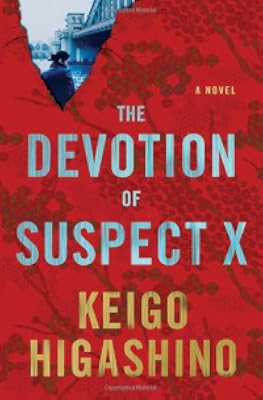
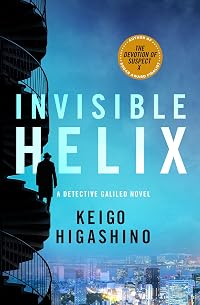
If I hadn't already known it, I would never have guessed that this book was written by the same author who wrote the Detective Galileo mysteries. The tone and genre were so completely different. By the end, though, I suppose I could see some similarities between The Miracles of the Namiya General Store and, say, The Devotion of Suspect X. Both novels eventually took a bunch of little details and tied them all together into one intricate whole.
Initially, it seemed like this book would be a series of stories connected only by the Namiya General Store and the three delinquents. They'd get a new letter asking for advice, do their best to answer, and so on, until they finally left the store in the morning.
And it sort of was like that, at first. The first chapter dealt with the female athlete whose boyfriend was dying. The second chapter took place entirely in the past, focusing on the letter writer, a young man trying to decide between taking over his family's fish shop and pursuing his dream of becoming a famous musician, rather than on the three delinquents. The third chapter went deeper into the past, when the owner of the Namiya General Store was still alive and answering letters. The fourth chapter followed the structure established in the second chapter and focused on one of the letter writers, a young man who'd written the Namiya General Store's first serious request for advice.
It's around Chapter 4, but definitely Chapter 5, that Higashino starts tying things together. The characters in this book were much more interconnected than was immediately apparent. The interconnectedness of everything got to be a bit much for me, and aspects of the story became incredibly sappy. Like, "angels watching over us" kind of sappy, only not so religious.
I don't know how I feel about how certain things worked out. Both Mr. Namiya and the delinquents eventually realized that they weren't necessarily giving the letter writers answers but rather helping them feel better about the choices they were going to make regardless. The one part that made me unhappy was the end of Chapter 4, the things he discovered, and the conclusions that the author seemed to be nudging the readers towards. It looked as though the author believed that the letter writer, a teenager at the time, had been faced with two choices, a right one and a wrong one, and had made the wrong choice. However, I'm not sure that any choice could have been the right one in that situation. He had been at the mercy of his parents' decisions.
As far as emotionally manipulative books go, this wasn't bad, but I've read better. I found myself repeatedly thinking of A Man Called Ove - similar efforts to draw you into characters' lives and make you cry about them, although the stories and character types were completely different.
(Original review posted on A Library Girl's Familiar Diversions.) show less
In the late 1960s, the Namiya General Store became known for its particular gimmick: the owner would write serious replies to any letters asking for advice, even those that were clearly intended to be pranks. People would slide their letters through the store's mail slot after it closed for the night, and in the morning they'd find a response in the store's milk crate. This continued for about a decade, until the owner was no longer able to run the store.
In the book's present (probably about the same time it was published, 2012), three delinquents named Shota, Kohei, and Atsuya have completed their first big theft and need a place to show more hide out until morning. The hideout they select is the abandoned Namiya General Store. A short while after they arrive, someone drops a letter into the store's mail slot. Scared that they've been found out, but also curious, they open the letter. It's written by someone going by the name "Moon Rabbit," a female athlete who's faced with a serious dilemma. Her boyfriend is dying of cancer and she wants to be by his side, but both she and her boyfriend also want her to qualify for the Olympics. She can't train at the level and amount required and also be by his side, and she wants to know what she should do.
The three guys quickly find themselves emotionally invested in the letter writer's problems, but as they attempt to help her, and the other letter writers after her, they realize that there's something odd going on at the Namiya General Store. Somehow the letters coming through the mail slot are arriving from decades in the past.
If I hadn't already known it, I would never have guessed that this book was written by the same author who wrote the Detective Galileo mysteries. The tone and genre were so completely different. By the end, though, I suppose I could see some similarities between The Miracles of the Namiya General Store and, say, The Devotion of Suspect X. Both novels eventually took a bunch of little details and tied them all together into one intricate whole.
Initially, it seemed like this book would be a series of stories connected only by the Namiya General Store and the three delinquents. They'd get a new letter asking for advice, do their best to answer, and so on, until they finally left the store in the morning.
And it sort of was like that, at first. The first chapter dealt with the female athlete whose boyfriend was dying. The second chapter took place entirely in the past, focusing on the letter writer, a young man trying to decide between taking over his family's fish shop and pursuing his dream of becoming a famous musician, rather than on the three delinquents. The third chapter went deeper into the past, when the owner of the Namiya General Store was still alive and answering letters. The fourth chapter followed the structure established in the second chapter and focused on one of the letter writers, a young man who'd written the Namiya General Store's first serious request for advice.
It's around Chapter 4, but definitely Chapter 5, that Higashino starts tying things together. The characters in this book were much more interconnected than was immediately apparent. The interconnectedness of everything got to be a bit much for me, and aspects of the story became incredibly sappy. Like, "angels watching over us" kind of sappy, only not so religious.
I don't know how I feel about how certain things worked out. Both Mr. Namiya and the delinquents eventually realized that they weren't necessarily giving the letter writers answers but rather helping them feel better about the choices they were going to make regardless. The one part that made me unhappy was the end of Chapter 4, the things he discovered, and the conclusions that the author seemed to be nudging the readers towards. It looked as though the author believed that the letter writer, a teenager at the time, had been faced with two choices, a right one and a wrong one, and had made the wrong choice. However, I'm not sure that any choice could have been the right one in that situation. He had been at the mercy of his parents' decisions.
As far as emotionally manipulative books go, this wasn't bad, but I've read better. I found myself repeatedly thinking of A Man Called Ove - similar efforts to draw you into characters' lives and make you cry about them, although the stories and character types were completely different.
(Original review posted on A Library Girl's Familiar Diversions.) show less
This is a very different genre from the crime thrillers that Keigo usually writes. Reading the synopsis and the first chapter, I wondered how Keigo would develop the plot without making it dull. He achieved it by telling the story from different perspectives - from the 3 boys to the owner of the Namiya General Store to the letter-writers. Keigo also managed to cleverly link all the characters together. What will stay with me is the dedication of old Mr. Namiya, the owner of the General Store. He gives 100 percent to all replies, even a blank letter.
When three petty thieves take refuge in an old abandoned general store, they think they are in for a quiet night. However, when a letter falls through the door’s mail slot, the trio is concerned and intrigued. The letter asks for advice from the former shopkeeper who offered thoughtful guidance to those seeking help. In his absence, the trio steps into his role. As the night slowly moves on, the correspondence they provide through their unique perspective of modern time proves life changing for everyone involved. By morning, the trio emerge to a different world than what they knew before.
The Bottom Line: With shifting time, this book is magical. The interwoven layers of plot in this novel submerses you into a rich world full of show more unexpected twists and turns. It makes you realize that people may be connected somehow even if they don’t realize it. Enthusiastically recommended for fans of Japanese literature with a bit of magic sprinkled in.
This review also appears at the Mini Book Bytes Book Review Blog. show less
The Bottom Line: With shifting time, this book is magical. The interwoven layers of plot in this novel submerses you into a rich world full of show more unexpected twists and turns. It makes you realize that people may be connected somehow even if they don’t realize it. Enthusiastically recommended for fans of Japanese literature with a bit of magic sprinkled in.
This review also appears at the Mini Book Bytes Book Review Blog. show less
Members
- Recently Added By
Lists

#JustTheFacts2020Silver
48 works; 1 member
#MysteryBingo2020Silver(Original)
36 works; 1 member
#MysteryBingo2020Silver(Revised)
36 works; 1 member

2024 Challenge
27 works; 1 member
Author Information

267 Works 7,569 Members
Some Editions
Awards and Honors
Common Knowledge
- Canonical title
- The Miracles of the Namiya General Store
- Original title
- ナミヤ雑貨店の奇蹟 [Namiya Zakka-ten no Kiseki]
- Original publication date
- 2012-03-28
- Original language
- Japanese
Classifications
- Genres
- Fiction and Literature, General Fiction, Fantasy
- DDC/MDS
- 895.63 — Literature & rhetoric Literatures of other languages Literatures of East and Southeast Asia Japanese Japanese fiction
- LCC
- PL852 .I3625 .N3613 — Language and Literature Languages and literatures of Eastern Asia, Africa, Oceania Languages of Eastern Asia, Africa, Oceania Japanese language and literature Japanese literature Individual authors and works
- BISAC
Statistics
- Members
- 382
- Popularity
- 81,955
- Reviews
- 16
- Rating
- (4.10)
- Languages
- 8 — Chinese, English, Finnish, French, German, Italian, Japanese, Portuguese
- Media
- Paper, Audiobook, Ebook
- ISBNs
- 19
- ASINs
- 9