On This Page
Description
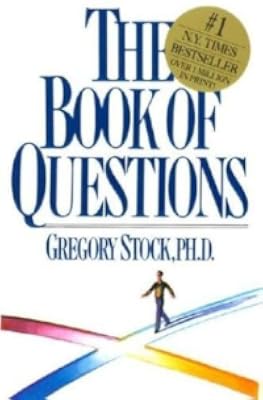
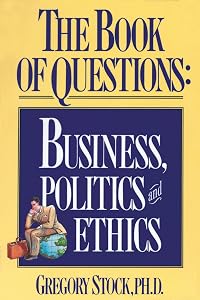
The phenomenon returns! Originally published in 1987, "The Book of Questions", a New York Times bestseller, has been completely revised and updated to incorporate the myriad cultural shifts and hot-button issues of the past twenty-five years, making it current and even more appealing. This is a book for personal growth, a tool for deepening relationships, a lively conversation starter for the family dinner table, a fun way to pass the time in the car. It poses over 300 questions that invite show more people to explore the most fascinating of subjects: themselves and how they really feel about the world. The revised edition includes more than 100 all-new questions that delve into such topics as the disappearing border between man and machine-How would you react if you learned that a sad and beautiful poem that touched you deeply had been written by a computer? The challenges of being a parent-Would you completely rewrite your child's college-application essays if it would help him get into a better school? The never-endingly interesting topic of sex-Would you be willing to give up sex for a year if you knew it would give you a much deeper sense of peace than you now have? And of course, the meaning of it all-If you were handed an envelope with the date of your death inside, and you knew you could do nothing to alter your fate, would you look? "The Book of Questions" may be the only publication that challenges-and even changes-the way you view the world, without offering a single opinion of its own. show lessTags
Recommendations

Member Reviews
A small volume from the late 80s consisting entirely of questions designed to provoke thought, discussion, or self-examination. Most of them are based on hypothetical scenarios. Some semi-random examples: "If you could use a voodoo doll to hurt anyone you chose, would you?", "Would you be willing to have horrible nightmares every night for a year if you would be rewarded with extraordinary wealth?", "What, if anything, is too serious to be joked about?" There's lots of moral dilemmas and artificial choices, and questions about what you would trade for wealth or money or love or fulfillment.
I bought this at a library sale something like twenty years ago, and it sat on my shelves all that time until I finally decided to pick it up and show more read through it. Alas, I think that long, long delay was unfortunate, because this sort of exercise is surely much more interesting, enlightening, and useful when you're college-age and still figuring out who you are and what you value. Coming to it in my 40s, though... Well, for most of the questions either I already had an answer I'd worked out years ago, or the questions just seemed kind of stupid. show less
I bought this at a library sale something like twenty years ago, and it sat on my shelves all that time until I finally decided to pick it up and show more read through it. Alas, I think that long, long delay was unfortunate, because this sort of exercise is surely much more interesting, enlightening, and useful when you're college-age and still figuring out who you are and what you value. Coming to it in my 40s, though... Well, for most of the questions either I already had an answer I'd worked out years ago, or the questions just seemed kind of stupid. show less
Gregory Stock's The Book of Questions contains over 200 questions on subjects of personal character, relationships, and moral values. It is meant to stimulate deep personal evaluation and character judgment through psychological observation in the context of confrontations with a variety of moral dilemmas. Most of the questions are of an emotionally difficult or socially taboo nature in the intention of encouraging the reader to answer honestly after giving each question serious contemplation. The objective is not to find the right answer, as there are no right or wrong responses, but to gain a clearer insight into one's own values and desires.
It is interesting to observe how your answers to these questions change or remain the same show more when returning to them every few years or so. I purchased this book in 1996, at the age of 20, and have confronted these questions numerous times. Now, in 2014, at the age of 38, I find that many of my answers have dramatically changed through the years. Most alarming are the answers that have remained the same.
I have personally found this book a useful way to get to know someone and allow others some insight into myself. You can tell much about someone based simply on their refusal or acceptance to address certain questions, or to confront the book at all.
Here are a few of the highlights. Simple "yes" or "no" answers will not suffice. The best questions are those that are hardest to answer.
"You and a person you love deeply are placed in separate rooms with a button next to each of you. You know that you will both be killed unless one of you presses your button before 60 minutes pass; furthermore, the first to press the button will save the other person, but will immediately be killed. What do you think you would do?"
"You are given the power to kill people simply by thinking of their deaths and twice repeating the word "good-bye." People would die a natural death and no one would suspect you. Are there any situations in which you would use this power?" Further, "If you can imagine killing someone indirectly, could you still see doing so if you had to look into the person's eyes and stab the person to death? Have you ever genuinely wanted to kill someone, or wished someone dead?"
"Would you be willing to become extremely ugly physically if it meant you would live for 1,000 years at any physical age you chose?" Further, "How much are you affected by a person's physical appearance? How would it change your life if something happened to make you much less attractive than you are now? Do you find anything disturbing about immortality? What age seems ideal to you?"
"You have the chance to meet someone with whom you can have the most satisfying love imaginable - the stuff of dreams. sadly, you know that in six months the person will die. Knowing the pain that would follow, would you still want to meet the person and fall in love? What if you knew your lover would not die, but instead would betray you?" Further, "In love, is intensity or permanence more important to you? How much do you expect from someone who loves you? What would make you feel betrayed by your mate - indifference? dishonesty? infidelity?"
"While on a trip to another city, your spouse (or lover) meets and spends a night with an exciting stranger. Given that they will never meet again, and that you will not otherwise learn of the incident, would you want your partner to tell you about it? If roles were reversed, would you reveal what you had done?" Further, "How serious would an affair need to be before you would want and expect to be told about it? What makes hearing such a confession so threatening that most people would rather be deceived? Is this kind of honesty more likely to be destructive or lead to greater intimacy and trust? How much do you rust your lover? How much can you be trusted?"
"If God appeared to you in a series of vivid and moving dreams and told you to leave everything behind, travel alone to the Red Sea and become a fisherman, what would you do? What if you were told to sacrifice your child?"
"If you could choose the manner of your death, what would it be?" Further, "Would you prefer to die a hero's death, die a martyr to some great cause, die in a natural catastrophe, or die peacefully? Why is it so tempting to have death catch us in our sleep? How do your feelings about death influence the way you lead your life?"
"What is the worst psychological torture you can imagine suffering? Anything causing even minor physical injury should not be considered."
Some questions seem simple, but upon further reflection prove to be quite challenging.
"Do you believe in ghosts or evil spirits? Would you be willing to spend a night alone in a remote house that is supposedly haunted?"
"What would constitute a "perfect" evening for you?"
"What is your most treasured memory?"
"How do you react when people sing "Happy Birthday" to you in a restaurant?"
"Would you like your spouse to be both smarter and more attractive than you?"
"Would you be willing to give up sex for one year if you knew it would give you a much deeper sense of peace than you have now?"
"If you walked out of your house one morning and saw a bird with a broken wing huddled in some nearby bushes, what would you do?"
"For an all-expense-paid, one-week vacation anywhere in the world, would you be willing to kill a beautiful butterfly by pulling off its wings? What about stepping on a cockroach?" Further, "Why does a beautiful creature merit more compassion than an ugly one? Does it damage us psychologically when we destroy something we find beautiful? How meaningful is the difference between pulling the wings off a insect and stepping on it? Is the decision of how to kill something a minor decision when balanced against the decision of whether or not to kill it at all?"
"Good questions don't lead to answers, they lead to more questions." show less
It is interesting to observe how your answers to these questions change or remain the same show more when returning to them every few years or so. I purchased this book in 1996, at the age of 20, and have confronted these questions numerous times. Now, in 2014, at the age of 38, I find that many of my answers have dramatically changed through the years. Most alarming are the answers that have remained the same.
I have personally found this book a useful way to get to know someone and allow others some insight into myself. You can tell much about someone based simply on their refusal or acceptance to address certain questions, or to confront the book at all.
Here are a few of the highlights. Simple "yes" or "no" answers will not suffice. The best questions are those that are hardest to answer.
"You and a person you love deeply are placed in separate rooms with a button next to each of you. You know that you will both be killed unless one of you presses your button before 60 minutes pass; furthermore, the first to press the button will save the other person, but will immediately be killed. What do you think you would do?"
"You are given the power to kill people simply by thinking of their deaths and twice repeating the word "good-bye." People would die a natural death and no one would suspect you. Are there any situations in which you would use this power?" Further, "If you can imagine killing someone indirectly, could you still see doing so if you had to look into the person's eyes and stab the person to death? Have you ever genuinely wanted to kill someone, or wished someone dead?"
"Would you be willing to become extremely ugly physically if it meant you would live for 1,000 years at any physical age you chose?" Further, "How much are you affected by a person's physical appearance? How would it change your life if something happened to make you much less attractive than you are now? Do you find anything disturbing about immortality? What age seems ideal to you?"
"You have the chance to meet someone with whom you can have the most satisfying love imaginable - the stuff of dreams. sadly, you know that in six months the person will die. Knowing the pain that would follow, would you still want to meet the person and fall in love? What if you knew your lover would not die, but instead would betray you?" Further, "In love, is intensity or permanence more important to you? How much do you expect from someone who loves you? What would make you feel betrayed by your mate - indifference? dishonesty? infidelity?"
"While on a trip to another city, your spouse (or lover) meets and spends a night with an exciting stranger. Given that they will never meet again, and that you will not otherwise learn of the incident, would you want your partner to tell you about it? If roles were reversed, would you reveal what you had done?" Further, "How serious would an affair need to be before you would want and expect to be told about it? What makes hearing such a confession so threatening that most people would rather be deceived? Is this kind of honesty more likely to be destructive or lead to greater intimacy and trust? How much do you rust your lover? How much can you be trusted?"
"If God appeared to you in a series of vivid and moving dreams and told you to leave everything behind, travel alone to the Red Sea and become a fisherman, what would you do? What if you were told to sacrifice your child?"
"If you could choose the manner of your death, what would it be?" Further, "Would you prefer to die a hero's death, die a martyr to some great cause, die in a natural catastrophe, or die peacefully? Why is it so tempting to have death catch us in our sleep? How do your feelings about death influence the way you lead your life?"
"What is the worst psychological torture you can imagine suffering? Anything causing even minor physical injury should not be considered."
Some questions seem simple, but upon further reflection prove to be quite challenging.
"Do you believe in ghosts or evil spirits? Would you be willing to spend a night alone in a remote house that is supposedly haunted?"
"What would constitute a "perfect" evening for you?"
"What is your most treasured memory?"
"How do you react when people sing "Happy Birthday" to you in a restaurant?"
"Would you like your spouse to be both smarter and more attractive than you?"
"Would you be willing to give up sex for one year if you knew it would give you a much deeper sense of peace than you have now?"
"If you walked out of your house one morning and saw a bird with a broken wing huddled in some nearby bushes, what would you do?"
"For an all-expense-paid, one-week vacation anywhere in the world, would you be willing to kill a beautiful butterfly by pulling off its wings? What about stepping on a cockroach?" Further, "Why does a beautiful creature merit more compassion than an ugly one? Does it damage us psychologically when we destroy something we find beautiful? How meaningful is the difference between pulling the wings off a insect and stepping on it? Is the decision of how to kill something a minor decision when balanced against the decision of whether or not to kill it at all?"
"Good questions don't lead to answers, they lead to more questions." show less
Great little book of thought provoking questions. You'll either learn something new about others or discover something about yourself.
An addictive little book consisting of open-ended questions designed to help us learn more about ourselves. An example is "Of all the people close to you, whose death would you find most disturbing?". Or, "Would you be willing to murder an innocent person if it would end hunger in the world?". At a family gathering, my mom was looking through the book, and asked us "What, if anything, would you change about the way you were raised?". Tracy and Steve passed; I said that I would change the non-demonstrativeness that was our family as I was growing up. Mom seemed to take that to heart; this was in the mid-1980's, and since then, she has seemed to make a conscious effort to show more physical affection, until now it is natural. So I owe show more this book a large debt of gratitude. show less
I really liked this book. I didn't expect to find as many questions that I didn't know the answer to as I did. They were all 'what if's or 'what would you do's and I thought I knew myself quite well but was both pleased and surprised to find that many of the questions posed required some thought.
This book is just fun to have around if you are going to have a couples' gathering where you need some games or entertainment. I highly recommend pulling some questions from this book to ask a potential mate too. I used it to get to know my current boyfriend better since we met online. It contains many thought provoking questions that are intended to get the conversation going in a new direction. I really enjoy it, and still find myself using it from time to time.
Good for teaching free conversation classes. Some of the vocabulary is a bit complex for non-native speakers, but the issues are issues we all deal with all of the time.
Members
- Recently Added By
Lists

Life and How to Live It
21 works; 4 members

Best Self Help Books
87 works; 18 members
Author Information

13 Works 2,391 Members
Gregory Stock is director of the Program on Medicine, Technology, and Society at the School of Public Health of the University of California at Los Angeles
Series

Common Knowledge
- Original publication date
- 1987
Classifications
Statistics
- Members
- 1,535
- Popularity
- 14,966
- Reviews
- 18
- Rating
- (3.50)
- Languages
- 8 — Chinese, English, French, German, Hungarian, Italian, Portuguese, Spanish
- Media
- Paper, Ebook
- ISBNs
- 14
- UPCs
- 1
- ASINs
- 3