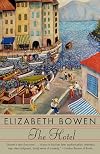
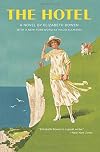
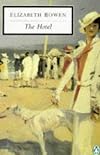
The Hotel
by Elizabeth Bowen
On This Page
Description
It was an exciting time for young women of the 1920s as they embraced liberation from the pre-World War I traditions of their mothers. In the mild Mediterranean climate of the Italian Riviera, a rebellious young Sydney Warren cautiously tested her newfound freedom, developing an intimate relationship with the charming middle-aged widow Mrs. Kerr that caused rumors and speculation to stir among the wealthy British guests of a luxurious seaside hotel. A sapphic affair simmers beneath the show more surface of Elizabeth Bowen's captivating first novel, published in 1927. With its masterful storytelling, combined with Bowen's keen observations and elegant prose, The Hotel beautifully illuminates the contrast between the tranquil Italian setting and the underlying tensions among the privileged characters. The novel is a thoughtful exploration of social norms, personal identity, and the subtle dynamics of group interaction, resulting in a rich story that often relies on what is left unsaid as much as what is written on the page. show lessTags
Recommendations

























Member Reviews
A lot of reviewers are comparing this novel to Forster, Elizabeth Taylor, and Austen. It reminded me most of The Magic Mountain. If only these characters had something to do with their lives, they could be happy. Instead they are languishing and trapped in their daily schedules of tennis, tea, cards, and picnics, and they can never do anything that isn’t customary for the English.
The complaint about this book is that “nothing happens,” but in the 1920s that was how they handled the love that dare not speak its name. The characters understand perfectly what is going on, even if some readers don’t. This novel was depressing yet funny, and I finished it feeling oddly hopeful for the people in the story.
The complaint about this book is that “nothing happens,” but in the 1920s that was how they handled the love that dare not speak its name. The characters understand perfectly what is going on, even if some readers don’t. This novel was depressing yet funny, and I finished it feeling oddly hopeful for the people in the story.
”An hotel, you know, is a great place for friendships.”
“Mustn’t that be,” said Ronald, “what people come out for?”
“Perhaps some—”
“But are there really people who would do that?” asked Ronald sharply, in a tone of revulsion, as though he had brought himself up more squarely than he had anticipated to the edge of some kind of abyss. “You mean women?”
“Yes, I suppose so,” said Milton…
The Hotel is Elizabeth Bowen’s first novel, published in 1927, the same year that Virginia Woolf published To the Lighthouse. While the two books’ concerns are rather different—Woolf is concerned with family life and its changes and various estrangements in a new era, while Bowen is concerned with Brits abroad in show more the Italian Riviera while their world at home is falling apart—they way they approach things is eerily similar. Both have a New Woman figure at their center (Lily Briscoe in Lighthouse and Sydney Warren in The Hotel); both of these women express admiration for older women of the previous generation in covert homoerotic tones, while also being adamant in their desires to break free from the constraints of the older, pre-War world that was still so steeped in Victorian norms.
Maud Ellmann says that “as a first novel [The Hotel] is astonishing.” And it is: the social banter of The Last September is here, coupled with a melancholy for a world that will soon collapse into an ineffable unknown; the deep interiority and psychological explorations in other novels like The Death of the Heart and The Heat of the Day; and the playfulness mixed with droll seriousness that one finds scattered in the best of Bowen’s short stories. Truly a 5-star book, had this been written by anyone other than Bowen, the weaknesses are perhaps overlooked easily given this is her first novel; however, it’s hard to believe that this is a first novel at all, given what control Bowen has here, and how far-ranging her insights. A novel about women’s friendships and alliances while in solitude or in the enforced company of men, The Hotel dips into gender politics more deeply than To the Lighthouse does, but, as a first novel, it lacks the emotive symbolism and skilled technique that Woolf employs; indeed, at times, Bowen’s fictional hotel is so far removed from Britain and the action that’s taking place there, that one can’t help but feel that the characters exist in a bubble and that there is nothing whatever going on in the world at large—unless, of course, this was her intent.
Bowen said that she liked the idea of a hotel as a place to cage her characters, to force them into interactions with each other, to set the stage for different social classes to engage with each other, and to elicit quiet scenes of drama, passion, repression, and even rebellion that might not otherwise have occurred. The scenery of the Riviera is evoked exceedingly well, and this book is perhaps an excellent primer for those who find later Bowen to be often tediously difficult, with her deep interior plumbing of characters and her often idiosyncratic and disarming way of phrasing sentences that causes the reader to question events just as much as her characters do. While The Hotel seems to owe more to Woolf than to James, Bowen's later work is a true synthesis of her own style that shows her debt to both literary figures, but is more Jamesian in its scope and concentration.
This new edition, published by University of Chicago Press (who also reprinted Bowen’s third novel, Friends and Relations) is a beautiful edition indeed; Ellmann’s introduction situations The Hotel within Bowen’s oeuvre and there really is no better critic today writing on Bowen’s singular work. show less
This is Bowen's first novel. I recently also read "Friends and Relations", which is her second, and they feel to me like a pair, being stylistically and thematically similar. I've read quite a bit of Bowen's later work, in which she went in much more obviously for the seer.
This is a kind of comedy, except that it ends with a broken engagement rather than a marriage. It's all about manners and sexual/emotional repression, as we get to know a hotel-ful of privileged English people on holiday on the Italian Riviera in the early 20s. The story is much more about the precious intimacy and precariousness of friendship than it is about romance -- Bowen seems to believe more in it more, as something likely not to dissolve. Her minute show more observations of her characters' inner lives and motives, their conversation, and their response to their environment are Jamesian, which is to say, finely observed and fascinating. If you like the kind of book that you can't breeze through with your mind half on something else, and which is "about" almost nothing at all except the earth-shattering effects on people of their most subtle feelings, this is the book for you. show less
This is a kind of comedy, except that it ends with a broken engagement rather than a marriage. It's all about manners and sexual/emotional repression, as we get to know a hotel-ful of privileged English people on holiday on the Italian Riviera in the early 20s. The story is much more about the precious intimacy and precariousness of friendship than it is about romance -- Bowen seems to believe more in it more, as something likely not to dissolve. Her minute show more observations of her characters' inner lives and motives, their conversation, and their response to their environment are Jamesian, which is to say, finely observed and fascinating. If you like the kind of book that you can't breeze through with your mind half on something else, and which is "about" almost nothing at all except the earth-shattering effects on people of their most subtle feelings, this is the book for you. show less
First published in 1927 The Hotel was Elizabeth Bowen’s first novel, published following two collections of short stories. For a first novel it is very assured, remarkably so, written with great insight and subtlety.
In a hotel on the Italian Riviera, a certain kind of genteel English tourist spends the summer during the 1920’s. Here we meet spinsters Miss Pym and Miss Fitzgerald, unassuming and a little stuck in their ways, as the novel opens there has been an upsetting quarrel. Mrs and Miss Pinkerton are used to having things just their way, the exclusive use of the bathroom opposite their rooms’ just one of the comforts they have come to rely on. Sydney Warren, an attractive, scornful young woman, at the hotel with (and at the show more expense of) her cousin Tessa Bellamy, who’s vague ailments keep her largely to her room.
“Miss Pym never went near the tennis courts, but a prospect of walking down there and appearing with Mrs Kerr was delightful (poor Emily, scrambling alone in the hills!) She abandoned a plan she had, still embryonic, of going down to the shops, and wondered whether their two names – her own and Mrs Kerr’s – might not, henceforward, begin to be coupled. She had a quiet little thrill and held open the swing-door with gratitude, almost with reverence. Mrs Kerr with a vague inclination of the head passed out before her. They crossed the gravel together under the hundred windows of The Hotel.”
Popular middle-aged Mrs Kerr is glamorous and quietly manipulative, and Sydney falls under her spell. Mrs Kerr is subject to a great deal of speculation from the other guests, sought out and admired, Sydney can bask a little in the glow of her aura although her fledgling friendship with Mrs Kerr becomes the subject of a little mild spite.
Middle-aged clergyman James Milton is a late arrival at the hotel, and not aware of the unwritten bathroom law – he relaxes from his arduous journey with a soak in the Pinkerton’s bathroom. His transgression is hardly a good start, and at first he is viewed by his fellow guests as a fairly unexciting prospect. The pretty Lawrence sisters are also popular with several of the guests, they are cynical and witty, and quite conventional, Veronica Lawrence is wearily certain about her eventual future being that of an inevitable marriage. Unwittingly Veronica’s attitude to love and marriage has quite an influence on Sydney, leading her to make a surprising decision. The Lawrence girls; trying to throw off their conventionality, with their air of world weary cynicism, but their very conventionality is infectious. Sydney is as influenced by them as she is by Mrs Kerr, and between both of these outside influences she becomes less and less certain of what she wants. James Milton is very much in the market for a wife, and it is probably not so surprising that he should look towards Sydney.
It is when Mrs Kerr’s twenty year old son arrives at the hotel that we begin to see her cool manipulation in action. Ronald and Sydney don’t entirely hit it off at first, but as Sydney seems to be drawing closer to James, it hardly seems to matter.
“ He pushed his way back into the drawing room, now quite vacant and in yellow shade from the awning. He sat down on a sofa, leaning back, crossing his legs, and waited for his mother to appear in the window, as she almost immediately did, and after a moment’s blank stare into the dusk to perceive him and come over royally. She did concede, and generously he could approve the concession, a few words back over her shoulder, perhaps to Miss Warren out there. Then she sat beside him, most beautiful in the half light, her attitude settling into complete repose as silk settles into folds.”
Bowen is a master at observation, and here she has recreated the claustrophobia of a genteel hotel, and the chilly relationships that exist behind its rarefied exterior, brilliantly.
The world of the hotel one of tennis and bridge, cliff side-walks, picnics and dining room conversation, is not an entirely comfortable one. This is a closed, privileged world, set among the olive groves and sunshine of the Riviera, everyone knows just how to behave, yet there is little sense of real enjoyment. Before the summer ends Sydney falls further and more resolutely under the spell of Mrs Kerr, neither she, Roland or James will be left untouched by the intensity that has risen up between them all.
Elizabeth Bowen’s writing is absolutely sublime, I find she needs to be read slowly, there is perhaps little in the way of plot, but really who needs plot? There is in fact a lot going on in the polite conversations, the side long glances, unspoken passions and future hopes. My favourite Bowen novels (I have yet to read them all) so far remain Death of the Heart and The House in Paris, but this is an excellent novel, and would actually make for a great place to start for anyone new to Bowen. show less
In a hotel on the Italian Riviera, a certain kind of genteel English tourist spends the summer during the 1920’s. Here we meet spinsters Miss Pym and Miss Fitzgerald, unassuming and a little stuck in their ways, as the novel opens there has been an upsetting quarrel. Mrs and Miss Pinkerton are used to having things just their way, the exclusive use of the bathroom opposite their rooms’ just one of the comforts they have come to rely on. Sydney Warren, an attractive, scornful young woman, at the hotel with (and at the show more expense of) her cousin Tessa Bellamy, who’s vague ailments keep her largely to her room.
“Miss Pym never went near the tennis courts, but a prospect of walking down there and appearing with Mrs Kerr was delightful (poor Emily, scrambling alone in the hills!) She abandoned a plan she had, still embryonic, of going down to the shops, and wondered whether their two names – her own and Mrs Kerr’s – might not, henceforward, begin to be coupled. She had a quiet little thrill and held open the swing-door with gratitude, almost with reverence. Mrs Kerr with a vague inclination of the head passed out before her. They crossed the gravel together under the hundred windows of The Hotel.”
Popular middle-aged Mrs Kerr is glamorous and quietly manipulative, and Sydney falls under her spell. Mrs Kerr is subject to a great deal of speculation from the other guests, sought out and admired, Sydney can bask a little in the glow of her aura although her fledgling friendship with Mrs Kerr becomes the subject of a little mild spite.
Middle-aged clergyman James Milton is a late arrival at the hotel, and not aware of the unwritten bathroom law – he relaxes from his arduous journey with a soak in the Pinkerton’s bathroom. His transgression is hardly a good start, and at first he is viewed by his fellow guests as a fairly unexciting prospect. The pretty Lawrence sisters are also popular with several of the guests, they are cynical and witty, and quite conventional, Veronica Lawrence is wearily certain about her eventual future being that of an inevitable marriage. Unwittingly Veronica’s attitude to love and marriage has quite an influence on Sydney, leading her to make a surprising decision. The Lawrence girls; trying to throw off their conventionality, with their air of world weary cynicism, but their very conventionality is infectious. Sydney is as influenced by them as she is by Mrs Kerr, and between both of these outside influences she becomes less and less certain of what she wants. James Milton is very much in the market for a wife, and it is probably not so surprising that he should look towards Sydney.
It is when Mrs Kerr’s twenty year old son arrives at the hotel that we begin to see her cool manipulation in action. Ronald and Sydney don’t entirely hit it off at first, but as Sydney seems to be drawing closer to James, it hardly seems to matter.
“ He pushed his way back into the drawing room, now quite vacant and in yellow shade from the awning. He sat down on a sofa, leaning back, crossing his legs, and waited for his mother to appear in the window, as she almost immediately did, and after a moment’s blank stare into the dusk to perceive him and come over royally. She did concede, and generously he could approve the concession, a few words back over her shoulder, perhaps to Miss Warren out there. Then she sat beside him, most beautiful in the half light, her attitude settling into complete repose as silk settles into folds.”
Bowen is a master at observation, and here she has recreated the claustrophobia of a genteel hotel, and the chilly relationships that exist behind its rarefied exterior, brilliantly.
The world of the hotel one of tennis and bridge, cliff side-walks, picnics and dining room conversation, is not an entirely comfortable one. This is a closed, privileged world, set among the olive groves and sunshine of the Riviera, everyone knows just how to behave, yet there is little sense of real enjoyment. Before the summer ends Sydney falls further and more resolutely under the spell of Mrs Kerr, neither she, Roland or James will be left untouched by the intensity that has risen up between them all.
Elizabeth Bowen’s writing is absolutely sublime, I find she needs to be read slowly, there is perhaps little in the way of plot, but really who needs plot? There is in fact a lot going on in the polite conversations, the side long glances, unspoken passions and future hopes. My favourite Bowen novels (I have yet to read them all) so far remain Death of the Heart and The House in Paris, but this is an excellent novel, and would actually make for a great place to start for anyone new to Bowen. show less
Sometimes described as a 1920s Jane Austen (bit of a stretch), but I see more likeness to Anita Brookner. Relatively light, character rather than plot-driven, but some intriguing and well observed social insights and very unexpected metaphors. One or two grating phrases, but far more brilliant ones.
Upper middle class Brits staying in a Mediterranean hotel. A little confusing at first when you encounter Mrs X and Jane, but don't immediately realise or remember that they are one and the same.
Upper middle class Brits staying in a Mediterranean hotel. A little confusing at first when you encounter Mrs X and Jane, but don't immediately realise or remember that they are one and the same.
Here is a time capsule from an era when (fairly) wealthy English people could afford a season long holiday in Italy. The "will they won't they" romance is the most interesting aspect of the story. Each sentence has so many dependent clauses that it become a little difficult to follow the author's train of thought (which says as much about my reading comprehension as her writing style!). The author is an expert at capturing the varied nature of shy people--what memes these days would just call, "Awkward!" Recommended for all readers.
1.5* - Blergh.
She did not want to go down to the courts again; she knew that if Mrs Kerr sat on here, watching her meditatively, her play would all go to pieces.
‘I have heard so much of your service. Today I am really going to watch it.’
‘This is one of my off days.’ ‘
Dear Sydney, whenever I come you tell me it’s one of your off days.’ Mrs Kerr laughed. ‘I’m unlucky.’
‘Oh, do you notice that? From the moment you come here I never hit anything.’
‘What on earth do you mean, my dear Sydney! How terribly sinister! It had never occurred to me that my eye might be evil. I meant something much more prosaic – that I happen to miss things.’
Well, I somewhat sympathise with Mrs. Kerr. I, too, miss things, and one of show more things I have missed was the point of this book. I have heard so much praise of Bowen's work that reading her first novel was a huge let down.
I first read about the The Hotel in connection with the censorship of Radclyffe Hall's The Well of Loneliness. When reading up on the history of the trial and the ban of the book in the UK, some of the sources cite other books published in 1928 which also are attributed with a lesbian theme. Anyway, one of the articles referred to The Hotel not being considered for censorship because it was too "reticent".
Reticent, indeed. I had no expectations (or indeed any particular wish) to read about any romantic entanglements between the main characters, but I did expect the book to have story or a point but it seems that even these eluded me.
The Hotel is about a group of English tourists (mostly women) who holiday in a hotel in Italy. There is a group of older women, a few younger ones and the two main characters - Mrs. Kerr and Sydney. The tourists basically provide the soundboard of conventional upper-middle class society against which Mrs Kerr and Sydney develop their friendship, though Mrs Kerr is characterised so ambiguously that it is difficult to say whether she is one of the old "conventionals" or not.
Anyway, so during the holiday, Sydney meets Mrs Kerr and the two become friends and somewhat abstain from mingling with the rest of the guests. Their friendship is somewhat disrupted, however, when Mrs Kerr's son arrives at the hotel and one of the other guests, a clergyman, falls in love with Sydney and proposes to her. She refuses, then accepts, then breaks it off. Then guest start to depart.
Really, there is not much of a story.
What was more aggravating than the non-story was the writing. Yes, there were some great paragraphs, one my favourites being:
"On still spring nights the thud of a falling lemon would be enough to awake one in terror."
However, they were so few embedded in so much pretentious drivel that just would not come to any point.
‘There are situations in life,’ said Mrs Pinkerton, ‘face to face with which one is powerless.’ Though she only meant that in the struggle for life one is sorely handicapped by the obligations of nobility.
The only character that made me finish the book was Sydney, who is a straight forward sensible character.
‘Doesn’t it rain? I like it!’ she was moved to exclaim. ‘If I were Monet and alive now, I would paint this and present the picture to the P.L.M. as a poster for the Côte d’Azur.’ She smiled out at the rain with an air of complicity. show less
She did not want to go down to the courts again; she knew that if Mrs Kerr sat on here, watching her meditatively, her play would all go to pieces.
‘I have heard so much of your service. Today I am really going to watch it.’
‘This is one of my off days.’ ‘
Dear Sydney, whenever I come you tell me it’s one of your off days.’ Mrs Kerr laughed. ‘I’m unlucky.’
‘Oh, do you notice that? From the moment you come here I never hit anything.’
‘What on earth do you mean, my dear Sydney! How terribly sinister! It had never occurred to me that my eye might be evil. I meant something much more prosaic – that I happen to miss things.’
Well, I somewhat sympathise with Mrs. Kerr. I, too, miss things, and one of show more things I have missed was the point of this book. I have heard so much praise of Bowen's work that reading her first novel was a huge let down.
I first read about the The Hotel in connection with the censorship of Radclyffe Hall's The Well of Loneliness. When reading up on the history of the trial and the ban of the book in the UK, some of the sources cite other books published in 1928 which also are attributed with a lesbian theme. Anyway, one of the articles referred to The Hotel not being considered for censorship because it was too "reticent".
Reticent, indeed. I had no expectations (or indeed any particular wish) to read about any romantic entanglements between the main characters, but I did expect the book to have story or a point but it seems that even these eluded me.
The Hotel is about a group of English tourists (mostly women) who holiday in a hotel in Italy. There is a group of older women, a few younger ones and the two main characters - Mrs. Kerr and Sydney. The tourists basically provide the soundboard of conventional upper-middle class society against which Mrs Kerr and Sydney develop their friendship, though Mrs Kerr is characterised so ambiguously that it is difficult to say whether she is one of the old "conventionals" or not.
Anyway, so during the holiday, Sydney meets Mrs Kerr and the two become friends and somewhat abstain from mingling with the rest of the guests. Their friendship is somewhat disrupted, however, when Mrs Kerr's son arrives at the hotel and one of the other guests, a clergyman, falls in love with Sydney and proposes to her. She refuses, then accepts, then breaks it off. Then guest start to depart.
Really, there is not much of a story.
What was more aggravating than the non-story was the writing. Yes, there were some great paragraphs, one my favourites being:
"On still spring nights the thud of a falling lemon would be enough to awake one in terror."
However, they were so few embedded in so much pretentious drivel that just would not come to any point.
‘There are situations in life,’ said Mrs Pinkerton, ‘face to face with which one is powerless.’ Though she only meant that in the struggle for life one is sorely handicapped by the obligations of nobility.
The only character that made me finish the book was Sydney, who is a straight forward sensible character.
‘Doesn’t it rain? I like it!’ she was moved to exclaim. ‘If I were Monet and alive now, I would paint this and present the picture to the P.L.M. as a poster for the Côte d’Azur.’ She smiled out at the rain with an air of complicity. show less
Members
- Recently Added By
Lists

Boarding House and Hotel Fiction
73 works; 25 members
Author Information

74+ Works 9,059 Members
Elizabeth Bowen, distinguished Anglo-Irish novelist, was born in Dublin in 1899, traveled extensively, lived in London, and inherited the family estate-Bowen's Court, in County Cork. Her account of the house, Bowen's Court (1942), with a detailed fictionalized history of the family in Ireland through three centuries, has charm, warmth, and show more insight. Seven Winters is a fragment of autobiography published in England in 1942. The "Afterthoughts" of the original edition are critical essays in which she discusses and analyzes, among others, such literary figures as Virginia Woolf, E. M. Forster, Katherine Mansfield, Anthony Trollope, and Eudora Welty. Bowen's stories, mostly about people of the British upper middle class, portray relationships that are never simple, except, perhaps, on the surface. Her concern with time and memory is a major theme. Beautifully and delicately written, her stories, with their oblique psychological revelations, are symbolic, subtle, and terrifying. A Time in Rome (1960) is her brilliant evocation of that city and its layered past. In 1948, Bowen was made a Commander of the British Empire. Bowen died in 1973. (Bowker Author Biography) show less
Series
Belongs to Publisher Series
Work Relationships
Is abridged in
Common Knowledge
- Original publication date
- 1927
- Important places
- Italian Riviera, Liguria, Italy
- First words
- Miss Fitzgerald hurried out of the Hotel into the road.
- Quotations
- She was hunched over a writing-table, trying to write a letter with a Hotel pen that screeched and staggered.... She twirled her pen and stared at the nib resignedly. “Pen’s the limit”.
“It looks it. You might fi... (show all)nd a better one in the drawing-room.... Go in and look for a pen.... Look here, take my Onoto.”
“Oh no, thanks. Nothing but grief and bitterness comes of borrowing other people’s Onotos.” - Blurbers
- Glendinning, Victoria
Classifications
Statistics
- Members
- 259
- Popularity
- 124,745
- Reviews
- 14
- Rating
- (3.61)
- Languages
- English
- Media
- Paper, Ebook
- ISBNs
- 14
- ASINs
- 10