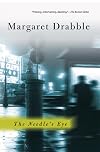
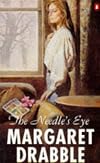
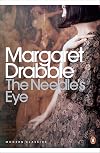
The Needle's Eye
by Margaret Drabble
On This Page
Description
Simon Camish, an embittered, diffident lawyer in a loveless marriage, would not have particularly noticed Rose Vassiliou had he not been asked to drive her home one night after a dinner party. Yet at one time she had been notorious-her name constantly in the news. Now, separated from her Greek husband, she lives alone with her three children. Despite all the efforts and sneers of her friends, she refuses to move from her slum house in a decaying neighborhood to which she has become attached. show more Gradually, Simon becomes aware that Rose is a woman of remarkable integrity and courage. He is drawn into her affairs when her husband takes legal action to reopen the question of custody of the children-a scheme for getting his wife back. And, while the precise nature of their ties eludes him, Simon comes to realize that Rose and her Greek ex-husband are forever and inextricably bound to each other. show lessTags
Recommendations



















Member Recommendations
kitzyl An embittered lawyer in a loveless coupling attends a social gathering where he is drawn to an enigmatic riches-to-rags woman, whose broken marriage has made her a social outcast. Explores the rigid ideas of morality in the 70s (a century apart) enforced by wealth/class. Woman has a "Olde Shabby Riche"-ly decorated house where the man immediately feels at home.
Member Reviews
I have just read this again after several years, and realised why I had kept it. Many of her novels have characters I can never relate to, but there is something appealing both about Rose's apparent haplessness, and her deliberate choice of a poorer neighbourhood where she can build up a life from unpromising surroundings. I love the outing in the middle where they all trek off with the kids to visit the hens nesting in the old armchair on the bomb site.
Published in 1972, it evokes a past world of corner shops and neighbourliness, which contrasts with the sterile, empty life of the chattering classes at their meaningless dinner parties. Yet by the end, the scruffy neighbourhood is becoming gentrified and respectable.
I wish the ending show more were different for Rose though. As in many 20th C novels, violence against women is accepted as a form of love. If we have learned nothing else, if we are even going backwards, we surely have learned that this is not so; violence is control, control is not love. I wanted Rose to keep going it alone with her children, and a little help from her friends; she was doing a grand job. show less
Published in 1972, it evokes a past world of corner shops and neighbourliness, which contrasts with the sterile, empty life of the chattering classes at their meaningless dinner parties. Yet by the end, the scruffy neighbourhood is becoming gentrified and respectable.
I wish the ending show more were different for Rose though. As in many 20th C novels, violence against women is accepted as a form of love. If we have learned nothing else, if we are even going backwards, we surely have learned that this is not so; violence is control, control is not love. I wanted Rose to keep going it alone with her children, and a little help from her friends; she was doing a grand job. show less
As implied by the biblical illusion in the title, this is about people uncomfortable with wealth and the practical and emotional hurdles they go through to try to find happiness.
The main character, Rose, is an heiress trying to dispose of her money and also fighting a custody battle against her ex-husband. Simon, the lawyer who befriends her (not her actual lawyer for the case) has a similar distaste for money, but for very different reasons. There is plenty of thoughtful pondering by both, and the complex dynamics between Rose, her ex, Simon and his wife is intriguing and often unexpected.
When I first read this, maybe 15 years ago, I was struck by the similarities between Rose and someone I know. Rereading it, but with a more mature show more eye, that still holds true and gives it an extra edge for me, but I'd still recommend it to those that don't know anyone so like Rose. show less
The main character, Rose, is an heiress trying to dispose of her money and also fighting a custody battle against her ex-husband. Simon, the lawyer who befriends her (not her actual lawyer for the case) has a similar distaste for money, but for very different reasons. There is plenty of thoughtful pondering by both, and the complex dynamics between Rose, her ex, Simon and his wife is intriguing and often unexpected.
When I first read this, maybe 15 years ago, I was struck by the similarities between Rose and someone I know. Rereading it, but with a more mature show more eye, that still holds true and gives it an extra edge for me, but I'd still recommend it to those that don't know anyone so like Rose. show less
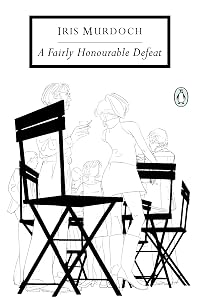
This book has a rather old-fashioned feel to it and apart from the odd topical reference it could pass for earlier than early 70s. It reminded me a little of Iris Murdoch - middle class eccentrics behaving strangely.
The book has two unhappy marriages at its heart.
For much of it events of greater significance seem to be about to happen but Drabble seems to like her characters too much to allow anything really nasty to happen to them. For all that I found this one enjoyable to read.
The book has two unhappy marriages at its heart.
For much of it events of greater significance seem to be about to happen but Drabble seems to like her characters too much to allow anything really nasty to happen to them. For all that I found this one enjoyable to read.
This is only the third Margaret Drabble novel I have read, and first published in 1972 it is also the earliest. At the centre of the story of The Needle's Eye is Rose Vassiliou a complex woman who has spent much of her adult life splashed across the pages of the country's newspapers. Renowned as an heiress who gave away her money and married a man against her parent's wishes, we meet Rose in her thirties, divorced, with 3 children and living in a run down house behind Alexandra Palace from where it is impossible to get a taxi. At a dinner party held by mutual friends while his wife is away, Simon Camish an unhappily married lawyer meets Rose and is asked to give her a lift home. It is during this journey that Simon becomes drawn into show more Rose's complicated world, when he agrees to look over some papers for her concerning the custody case brought by her ex husband. What Simon soon comes to realise is that Rose's relationship with her former husband is far from simple, and many of the decisions Rose makes in the course of the novel are rooted in her peculiar relationship with him. Ultimately many of the relationships are altered by Simon's involvement in Rose's life.
1970's London is one of the stars of this book, I felt I got a real sense of it - and I don't mean the smart trendy London, but the ordinary streets, the corner shops and the harrassed working class mothers. Margaret Drabble's sense of place is brilliant, as are her characters. Rose is often enormously frustrating and I never could decide whether I liked her or not, but I probably liked her more than I didn't. show less
1970's London is one of the stars of this book, I felt I got a real sense of it - and I don't mean the smart trendy London, but the ordinary streets, the corner shops and the harrassed working class mothers. Margaret Drabble's sense of place is brilliant, as are her characters. Rose is often enormously frustrating and I never could decide whether I liked her or not, but I probably liked her more than I didn't. show less
I used to gobble these paperback Margaret Drabble books up - I'd see them in the grocery store - really! - and they all looked alike, always her picture in b&w on the cover, and I devoured them. How I wish I'd kept all the originals -- now I hunt for them everywhere I go and buy them in any edition that I don't already own. I guess I'm hooked on this dense, wordy, and insightful writer. She's spoken to me and struck me with her brilliance since I was a young woman reading!
2671 The Needle's Eye A Novel by Margaret Drabble (read 29 Oct 1994) This is a well-written book and spends a lot of time showing the character of the characters--a la Henry James--and so it is slow-moving. This book was worth reading and I would consider reading another of her books.
Post WWII London, a woman is embarrased by her wealth, and tries to atone for it. Not always successfully, but with good intentions.
Erica Kline, 5/1/2003
Erica Kline, 5/1/2003
Members
- Recently Added By
Author Information

68+ Works 13,808 Members
Margaret Drabble was born on June 5, 1939 in Sheffield, England. She attended The Mount School in York and Newnham College, Cambridge University. After graduation, she joined the Royal Shakespeare Company at Stratford during which time she understudied for Vanessa Redgrave. She is a novelist, critic, and the editor of the fifth edition of The show more Oxford Companion to English Literature. Her works include A Summer Bird Cage; The Millstone, which won the John Llewelyn Rhys Prize in 1966; Jerusalem the Golden, which won James Tait Black Prize in 1967; and The Witch of Exmoor. She also received the E. M. Forster award and was awarded a Society of Authors Travelling Fellowship in the 1960s and the Commander of the Order of the British Empire in 1980. (Bowker Author Biography) show less
Awards and Honors
Awards
Common Knowledge
- Original publication date
- 1972
Classifications
Statistics
- Members
- 487
- Popularity
- 62,470
- Reviews
- 9
- Rating
- (3.73)
- Languages
- English, Estonian, Swedish
- Media
- Paper, Audiobook, Ebook
- ISBNs
- 17
- ASINs
- 11