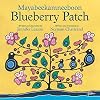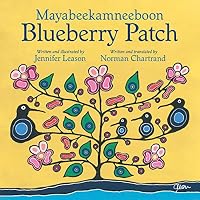
Meennunyakaa / Blueberry Patch (schchechmala children's series) (English and Ojibwa Edition)
by Jennifer Leason
On This Page
Description
"Based in Duck Bay, Manitoba, in the 1940s, an Elder shares his experience of packing up to go out to collect blueberries, a traditional gathering that took place every summer. He describes the journey and landscape with humor and such vivid imagery that readers will see themselves there with him, boarding the trail of wagons from surrounding communities and heading east toward the blueberry patch. The Elder's stories offer a journey back in time and are complemented by images of fields of show more plump blueberries, tall green grass, bannock baking over an open fire, clear freshwater streams and the tents the people slept in" -- Publishers website show lessTags
Recommendations





Member Reviews
Co-authors Jennifer Leason and Norman Chartrand - Leason is also the illustrator, and Chartrand also the translator - spin a tale of a communal foraging visit, made during the 1940s, to the blueberry patches near Pelican River, Manitoba, in this lovely bilingual picture-book from Canada. The young narrator describes how his family pack their belongings onto a horse-drawn cart, board up their house, and depart from Duck Bay. He describes his games with the children of other native families making the same trip, and the route they travel. The after matter here includes a list of questions and activity suggestions, as well as a recipe for bannock...
According to the author biographies at the rear of the book, Chartrand is Leason's show more great-uncle, and both authors are Saulteaux-Métis Anishinaabek, and belong to the Pine Creek Indian Band of Manitoba. Blueberry Patch / Mayabeekamneeboon is apparently their first title, and is published by Theytus Books, a Native-owned publisher based in British Columbia. The text is bilingual, in both English and Anishinaabemowin (Saulteaux Ojibwe, I assume?), and is accompanied by vividly colorful folk-art illustrations from Leason. The story here was engaging, and I appreciated the bilingual aspect of the text, given the importance of preserving endangered native languages, but for me the true standout was the visuals. Leason is a talented artist - I would love to see more of her work! Recommended to anyone who is looking for indigenous Canadian picture-books, for children's stories featuring the Saulteaux-Métis Anishinaabe, or for gorgeous picture-book art. show less
According to the author biographies at the rear of the book, Chartrand is Leason's show more great-uncle, and both authors are Saulteaux-Métis Anishinaabek, and belong to the Pine Creek Indian Band of Manitoba. Blueberry Patch / Mayabeekamneeboon is apparently their first title, and is published by Theytus Books, a Native-owned publisher based in British Columbia. The text is bilingual, in both English and Anishinaabemowin (Saulteaux Ojibwe, I assume?), and is accompanied by vividly colorful folk-art illustrations from Leason. The story here was engaging, and I appreciated the bilingual aspect of the text, given the importance of preserving endangered native languages, but for me the true standout was the visuals. Leason is a talented artist - I would love to see more of her work! Recommended to anyone who is looking for indigenous Canadian picture-books, for children's stories featuring the Saulteaux-Métis Anishinaabe, or for gorgeous picture-book art. show less
A story full of vivid imagery describing a grandfathers memories going blueberry picking. A great story to have in your classrooms for children to look at and deeper understand the lives and memories of others.
This book does a good job of incorporating culture into a children's book. It follows the Saulteaux tribe as the pack up to go collect blueberries. What sets this book apart is how it includes a translation of what is being said into the native language. It allows anyone who reads to explore a new language and maybe pick up some words if they analyze the text. The pictures in this book are styled after traditional paintings and leave room for the reader to imagine what is going on in the picture. Another part of the book that is really unique is that it includes the recipe for the dish that is eaten, "Bannock." This would be a great book for children to read at any age especially when in an unit about Native American History.
This story told both in english and the language spoken by the Saulteaux, Anishinaabemowin, tells of a journey made to go blueberry picking by the Elder Norman Chartrand and his family and tribe, one of the authors. Through the story and rich artwork and vocabulary allows for a beautiful window into the Saulteaux culture. I would use this book for 2nd-5th grade, looking at even recreating the artwork in the book or making the bread from the traditional recipe in the back of the book.
I loved this book! This book was about different stories told from the perspective of someone who grew up in a Native American family. Underneath the text, the story was translated into Anishinaabemowin, which is a Native American language. At the end of the book, it was very interactive which I loved! There were activities for students to do, questions to ask students, it included a recipe of food that was talked about in the book. It also includes a link you can look up and listen to the story being read to you in Anishinaabemowin. This would be great for intermediate students.
This book is the author’s perspective of his communities seasonal relocation to pick berries. It has vivid imagery of the nature and feelings associated with the move. Pictures are interesting and very abstract. I would use with 3rd or 4th to talk about writing about an event or memory.
Ratings
Members
- Recently Added By
Author Information
2 Works 31 Members
All Editions
Awards and Honors
Notable Lists
Classifications
Statistics
- Members
- 23
- Popularity
- 1,143,668
- Reviews
- 6
- Rating
- (4.00)
- Languages
- English
- Media
- Paper
- ISBNs
- 2