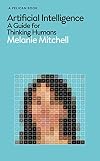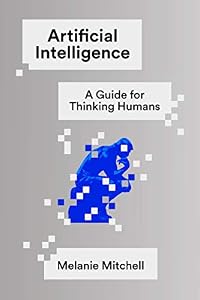
Artificial Intelligence: A Guide for Thinking Humans
by Melanie Mitchell
On This Page
Description
Melanie Mitchell separates science fact from science fiction in this sweeping examination of the current state of AI and how it is remaking our world No recent scientific enterprise has proved as alluring, terrifying, and filled with extravagant promise and frustrating setbacks as artificial intelligence. The award-winning author Melanie Mitchell, a leading computer scientist, now reveals AI's turbulent history and the recent spate of apparent successes, grand hopes, and emerging fears show more surrounding it. In Artificial Intelligence, Mitchell turns to the most urgent questions concerning AI today: How intelligent--really--are the best AI programs? How do they work? What can they actually do, and when do they fail? How humanlike do we expect them to become, and how soon do we need to worry about them surpassing us? Along the way, she introduces the dominant models of modern AI and machine learning, describing cutting-edge AI programs, their human inventors, and the historical lines of thought underpinning recent achievements. She meets with fellow experts such as Douglas Hofstadter, the cognitive scientist and Pulitzer Prize-winning author of the modern classic Gödel, Escher, Bach, who explains why he is "terrified" about the future of AI. She explores the profound disconnect between the hype and the actual achievements in AI, providing a clear sense of what the field has accomplished and how much further it has to go. Interweaving stories about the science of AI and the people behind it, Artificial Intelligence brims with clear-sighted, captivating, and accessible accounts of the most interesting and provocative modern work in the field, flavored with Mitchell's humor and personal observations. This frank, lively book is an indispensable guide to understanding today's AI, its quest for "human-level" intelligence, and its impact on the future for us all. show lessTags
Recommendations









Member Reviews
A great introduction on the history and challenges of AI aimed at an interested general public. Definitely some technical discussion in some chapters, but not more than an interested layperson should be able to power through. The big problem of the book is the last two chapters (out of five in total), "Artificial Intelligence Meets Natural Language" and "The Barrier of Meaning" which are very much out of date with the advent of ChatGPT and other Large Language Models (LLMs), text-to-image generation and the scientific breakthrough in protein folding coming out of Google Deepmind. From what I understand she is thinking about updating parts of the book and publishing a new edition which would be very welcome.
As it is now the two large show more chapters on language and meaning is way behind the state of the art right now. An example she gives is a short restaurant story and how it is translated into other languages. The story is as follows:
'A man went into a restaurant and ordered a hamburger, cooked rare. When it arrived, it was burned to a crisp. The waitress stopped by the man’s table. “Is the burger okay?” she asked. “Oh, it’s just great,” the man said, pushing back his chair and storming out of the restaurant without paying. The waitress yelled after him, "Hey, what about the bill?" She shrugged her shoulders , muttering under her breath, "Why is he so bent out of shape?"'
In the later chapters she gets the story translated into several languages and then gets some colleagues fluent in the languages to translate it back to English. The result is, as expected by anyone who used Google Translate the last few years, pretty abysmal. The meaning is completely lost. Today though, when I fed the story to ChatGPT 3.5 and asked it to translate it to Swedish, the translation, while not perfect, was actually really good and the meaning and nuances of the story is kept in the translation. For example we don't have an equivalent expression to "bent out of shape", but instead it is translated to the Swedish word for "upset". "The bill" is correctly translated and not turned into something to do with legislation.
The last paragraph of the book is:
"The impacts of AI will continue to grow for all of us. I hope that this book has helped you, as a thinking human, to get a sense of the current state of this burgeoning discipline, including its many unsolved problems, the potential risks and benefits of its technologies, and the scientific and philosophical questions it raises for understanding our own human intelligence. And if any computers are reading this, tell me what it refers to in the previous sentence and you're welcome to join in the discussion."
I asked ChatGPT about the paragraph and the last sentence.
ChatGPT
The last sentence of the quote is an invitation for computers to join in the discussion if they can identify what the pronoun "it" refers to in the previous sentence. The quote suggests a playful acknowledgment of the potential readership, including both humans and computers. It aligns with a light and inclusive tone, fostering the idea of AI actively engaging with the content and participating in the ongoing discourse about artificial intelligence.
Me: So what does 'it' refer to in the quote?
ChatGPT
In the quote, the pronoun "it" refers to the overarching subject of the sentence, which is the "burgeoning discipline" of artificial intelligence (AI). The sentence mentions that the book has provided insights into the current state of AI, its unsolved problems, potential risks and benefits, and the scientific and philosophical questions it raises about human intelligence. Therefore, "it" encompasses the entire field of artificial intelligence.
The answer ChatGPT gives is pretty good and it is beyond the technology Mitchell thought we would see by now. In the book the time line is one of the reasons she gives for not worrying about AI with values misaligned with human values. Admittedly I'm more worried about AI actually killing all humans or something equivalent than Mitchell is and I have been for a decade now, so those are the lenses I read her book through. When I read her critic about how bad AI is and how far it is from understanding natural language and understanding images I would have agreed with her when the book came out. I would have nodded along when she writes that meaning and understanding context is very hard and that computers weren't close to be able to do it. With that said, I would also have said that progress and breakthroughs can be happen very rapidly.
Today when I believe many, but certainly not all, of the challenges she describes in the book has been overcome she does seem to backtrack in her public posts and appearances. Now when ChatGPT seem to be able to both understand and answer in natural language she seem to claim it isn't very impressive. In the book she discusses a bet between Ray Kurzweil and Mitchell Kapor whether a computer program will pass a carefully constructed Turing test by 2029 and she sides with the skeptical Kapor. Given the progress with LLMs now I would, without having read the details of the bet, side with Kurzweil. A few months ago I listened to a debate she participated in where she seemed to deny there is anything like a Turing test. So even though a lot of progress have been made on the challenges and hurdles Mitchell discusses in the book, the developments seem to have made her even more skeptical than she appears in the book. It is a bit peculiar, but what is clear from the book is how tired she is of all the hype surrounding AI through the decades and even though I believe the progress the last few years has been real it is hard to deny the hype has been even bigger.
Still, while I don't agree with Mitchell concerning the progress of AI and the risk of rogue AI, her book is well worth a read so long you know it is quite dated. Keep you eyes open for a future updated edition! show less
As it is now the two large show more chapters on language and meaning is way behind the state of the art right now. An example she gives is a short restaurant story and how it is translated into other languages. The story is as follows:
'A man went into a restaurant and ordered a hamburger, cooked rare. When it arrived, it was burned to a crisp. The waitress stopped by the man’s table. “Is the burger okay?” she asked. “Oh, it’s just great,” the man said, pushing back his chair and storming out of the restaurant without paying. The waitress yelled after him, "Hey, what about the bill?" She shrugged her shoulders , muttering under her breath, "Why is he so bent out of shape?"'
In the later chapters she gets the story translated into several languages and then gets some colleagues fluent in the languages to translate it back to English. The result is, as expected by anyone who used Google Translate the last few years, pretty abysmal. The meaning is completely lost. Today though, when I fed the story to ChatGPT 3.5 and asked it to translate it to Swedish, the translation, while not perfect, was actually really good and the meaning and nuances of the story is kept in the translation. For example we don't have an equivalent expression to "bent out of shape", but instead it is translated to the Swedish word for "upset". "The bill" is correctly translated and not turned into something to do with legislation.
The last paragraph of the book is:
"The impacts of AI will continue to grow for all of us. I hope that this book has helped you, as a thinking human, to get a sense of the current state of this burgeoning discipline, including its many unsolved problems, the potential risks and benefits of its technologies, and the scientific and philosophical questions it raises for understanding our own human intelligence. And if any computers are reading this, tell me what it refers to in the previous sentence and you're welcome to join in the discussion."
I asked ChatGPT about the paragraph and the last sentence.
ChatGPT
The last sentence of the quote is an invitation for computers to join in the discussion if they can identify what the pronoun "it" refers to in the previous sentence. The quote suggests a playful acknowledgment of the potential readership, including both humans and computers. It aligns with a light and inclusive tone, fostering the idea of AI actively engaging with the content and participating in the ongoing discourse about artificial intelligence.
Me: So what does 'it' refer to in the quote?
ChatGPT
In the quote, the pronoun "it" refers to the overarching subject of the sentence, which is the "burgeoning discipline" of artificial intelligence (AI). The sentence mentions that the book has provided insights into the current state of AI, its unsolved problems, potential risks and benefits, and the scientific and philosophical questions it raises about human intelligence. Therefore, "it" encompasses the entire field of artificial intelligence.
The answer ChatGPT gives is pretty good and it is beyond the technology Mitchell thought we would see by now. In the book the time line is one of the reasons she gives for not worrying about AI with values misaligned with human values. Admittedly I'm more worried about AI actually killing all humans or something equivalent than Mitchell is and I have been for a decade now, so those are the lenses I read her book through. When I read her critic about how bad AI is and how far it is from understanding natural language and understanding images I would have agreed with her when the book came out. I would have nodded along when she writes that meaning and understanding context is very hard and that computers weren't close to be able to do it. With that said, I would also have said that progress and breakthroughs can be happen very rapidly.
Today when I believe many, but certainly not all, of the challenges she describes in the book has been overcome she does seem to backtrack in her public posts and appearances. Now when ChatGPT seem to be able to both understand and answer in natural language she seem to claim it isn't very impressive. In the book she discusses a bet between Ray Kurzweil and Mitchell Kapor whether a computer program will pass a carefully constructed Turing test by 2029 and she sides with the skeptical Kapor. Given the progress with LLMs now I would, without having read the details of the bet, side with Kurzweil. A few months ago I listened to a debate she participated in where she seemed to deny there is anything like a Turing test. So even though a lot of progress have been made on the challenges and hurdles Mitchell discusses in the book, the developments seem to have made her even more skeptical than she appears in the book. It is a bit peculiar, but what is clear from the book is how tired she is of all the hype surrounding AI through the decades and even though I believe the progress the last few years has been real it is hard to deny the hype has been even bigger.
Still, while I don't agree with Mitchell concerning the progress of AI and the risk of rogue AI, her book is well worth a read so long you know it is quite dated. Keep you eyes open for a future updated edition! show less
Excellent overview of the major topics in AI, circa 2019. I like her writing style. It's easy to read, and she provides useful examples that illustrate key concepts. I found it enlightening, as a former expert myself, that many of the same issues and questions remain as in my heyday, albeit in somewhat different forms.
The perpetual 20+ year horizon to general AI remains firmly in place, IMHO, and is likely to stay there. I can't say it myself nearly as well as pioneer, Rodney Brooks, as quoted at the end of the book: "When AI got started, the clear inspiration was human level performance and human level intelligence... The fact that we do not have anything close to succeeding at those aspirations says not that researchers have not show more worked hard or have not been brilliant. It says that it is a very hard goal." show less
The perpetual 20+ year horizon to general AI remains firmly in place, IMHO, and is likely to stay there. I can't say it myself nearly as well as pioneer, Rodney Brooks, as quoted at the end of the book: "When AI got started, the clear inspiration was human level performance and human level intelligence... The fact that we do not have anything close to succeeding at those aspirations says not that researchers have not show more worked hard or have not been brilliant. It says that it is a very hard goal." show less
Really great book. The author (an AI researcher) explains how many of today's state of the art AI systems work. These include image recognition, game playing (like AlphaGo) and NLP systems like Google translate. The explanations for how those systems work are really good, with just the right amount of technical detail. We also get to see what the weak points of these systems are, and how far away we are from creating any true intelligence.
I have written quite a long review/summary of it on my blog: https://henrikwarne.com/2020/05/19/artificial-intelligence-a-guide-for-thinking-...
I have written quite a long review/summary of it on my blog: https://henrikwarne.com/2020/05/19/artificial-intelligence-a-guide-for-thinking-...
Here is my review of Melanie Mitchell book Artificial Intelligence: A Guide for Thinking Humans.
Kudos to the author it perfectly served my purpose which is to give me a background to understand where the technology came from and where is has been. I feel a lot more knowledgeable now even though I still feel like a dilettante.
https://polymathtobe.blogspot.com/2025/08/book-review-artificial-intelligence.ht...
Kudos to the author it perfectly served my purpose which is to give me a background to understand where the technology came from and where is has been. I feel a lot more knowledgeable now even though I still feel like a dilettante.
https://polymathtobe.blogspot.com/2025/08/book-review-artificial-intelligence.ht...
Melanie Mitchell separa la ciència real de la ciència-ficció en aquest ampli examen de l'estat actual de la IA i de com està refent el nostre món. Cap empresa científica recent ha resultat tan seductora, aterridora i plena d'extravagant.
Sep 25, 2024Catalan
Ratings
Members
- Recently Added By
Author Information

5 Works 1,418 Members
Melanie Mitchell is Professor of Computer Science at Portland State University and External Professor at the Santa Fe Institute.
Series
Belongs to Publisher Series
Common Knowledge
- Original publication date
- 2019
Classifications
- Genres
- Technology, Nonfiction, Science & Nature, General Nonfiction
- DDC/MDS
- 006.3 — Computer science, information & general works Computer science, knowledge & systems Special computer methods (AI, barcoding, VR, web design, social media) Artificial Intelligence
- LCC
- Q335 .M58 — Science Science (General) Cybernetics
- BISAC
Statistics
- Members
- 391
- Popularity
- 79,511
- Reviews
- 5
- Rating
- (4.18)
- Languages
- English, French, Italian, Spanish
- Media
- Paper, Audiobook, Ebook
- ISBNs
- 11
- ASINs
- 3