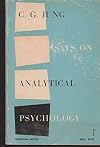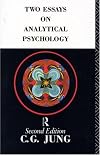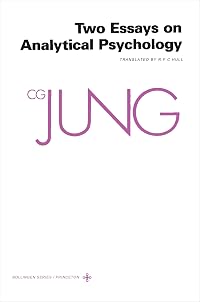
Two Essays on Analytical Psychology
by C. G. Jung
On This Page
Description
This volume has become known as perhaps the best introduction to Jung's work. In these famous essays. "The Relations between the Ego and the Unconscious" and "On the Psychology of the Unconscious," he presented the essential core of his system. Historically, they mark the end of Jung's intimate association with Freud and sum up his attempt to integrate the psychological schools of Freud and Adler into a comprehensive framework. This is the first paperback publication of this key work in its show more revised and augmented second edition of 1966. The earliest versions of the Two Essays, "New Paths in Psychology" (1912) and "The Structure of the Unconscious" (1916), discovered among Jung's posthumous papers, are published in an appendix, to show the development of Jung's thought in later versions. As an aid to study, the index has been comprehensively expanded. show lessTags
Recommendations











Member Reviews
“To find out what is truly individual in ourselves, profound reflection is needed; and suddenly we realize how uncommonly difficult the discovery of individuality is.” ― C.G. Jung
I was surprised to find much of the first part of this book, "On the Psychology of the Unconscious", to be a critique of Freud as much as an outline of Jung's position on the topic. Written and revised during World War I and subsequently revised, it is somewhat fragmented, yet still a good introduction to the topic. Part two is a further discussion of the relation of the ego to the unconscious including an introduction to individuation. The wealth of concepts is such that it is easy to lose track of the overall subject matter. My appreciation for the text show more was primarily concerned with the literary allusions and references to thinkers from Heraclitus to Nietzsche and beyond. show less
I was surprised to find much of the first part of this book, "On the Psychology of the Unconscious", to be a critique of Freud as much as an outline of Jung's position on the topic. Written and revised during World War I and subsequently revised, it is somewhat fragmented, yet still a good introduction to the topic. Part two is a further discussion of the relation of the ego to the unconscious including an introduction to individuation. The wealth of concepts is such that it is easy to lose track of the overall subject matter. My appreciation for the text show more was primarily concerned with the literary allusions and references to thinkers from Heraclitus to Nietzsche and beyond. show less
Difficult read to be honest. Took me a while to digest.
Some of the ideas are still salient, some can be dismissed with our current knowledge. There is a lot more to Jung and should not be dismissed as easily as he sometimes is.
Some of the ideas are still salient, some can be dismissed with our current knowledge. There is a lot more to Jung and should not be dismissed as easily as he sometimes is.
Best overview of Jung's psychology. Start here.
Collected works of Jung, vol 7
Los dos escritos tempranos aquí reunidos, "Sobre la psicología de lo insonsciente" y "Las relaciones entre el yo y lo inconsciente", pertenecen a las obras más importantes de Carl Gustav Jung. Sobre la base de un rico material empírico se expone en ellos los conceptos fundamentales de la Psicología Analítica y se explora "el problema que representa ese inconsciente caótico que dormita inquieto bajo el ordenado mundo de la consciencia". Enfrentado a los efectos desastrosos de la psicología de las naciones, Jung elabora la idea de un inconsciente colectivo y estudia sus relaciones con la psique individual. Ambos escritos reflejan así el empeño junguiano de fomentar el desarrollo psicológico de los individuos.
Feb 4, 2026Spanish
Ratings
Members
- Recently Added By
Lists

Jordan B. Peterson's Recommended Books
104 works; 5 members
Author Information

901+ Works 42,824 Members
Carl Gustav Jung was born in Switzerland on July 26, 1875. He originally set out to study archaeology, but switched to medicine and began practicing psychiatry in Basel after receiving his degree from the University of Basel in 1902. He became one of the most famous of modern psychologists and psychiatrists. Jung first met Sigmund Freud in 1907 show more when he became his foremost associate and disciple. The break came with the publication of Jung's Psychology of the Unconscious (1912), which did not follow Freud's theories of the libido and the unconscious. Jung eventually rejected Freud's system of psychoanalysis for his own "analytic psychology." This emphasizes present conflicts rather than those from childhood; it also takes into account the conflict arising from what Jung called the "collective unconscious"---evolutionary and cultural factors determining individual development. Jung invented the association word test and contributed the word complex to psychology, and first described the "introvert" and "extrovert" types. His interest in the human psyche, past and present, led him to study mythology, alchemy, oriental religions and philosophies, and traditional peoples. Later he became interested in parapsychology and the occult. He thought that unidentified flying objects (UFOs) might be a psychological projection of modern people's anxieties. He wrote several books including Studies in Word Association, Flying Saucers: A Modern Myth of Things Seen in the Skies, and Psychology and Alchemy. He died on June 6, 1961 after a short illness. (Bowker Author Biography) show less
Some Editions
Series
Belongs to Publisher Series
Bollingen Series (20.07)
Work Relationships
Has as a student's study guide
Common Knowledge
- Canonical title
- Two Essays on Analytical Psychology
- Original publication date
- 1953
- Original language
- German
Classifications
Statistics
- Members
- 522
- Popularity
- 57,507
- Reviews
- 5
- Rating
- (4.43)
- Languages
- 7 — Danish, English, German, Italian, Portuguese, Serbian, Spanish
- Media
- Paper, Ebook
- ISBNs
- 20
- ASINs
- 16