On This Page
Description
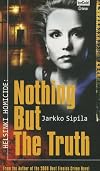
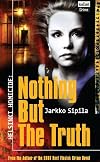
"A young cocaine dealer is gunned down at the door of his apartment on the outskirts of downtown Helsinki. Detective Lieutenant Kari Takamäki and his homicide team find the trigger man-but who was working behind the scenes? A woman from a neighboring building comes forward with an image of the getaway driver's face burned into her memory. After testifying in the trial, she finds herself the target of an escalating spiral of threats. Not wishing to uproot her life, she and her show more twelve-year-old daughter risk death by spurning the police's offer of a safe house. As the threats mount, the witness is torn between her principles and her desire to keep her family safe. How much should an ordinary citizen sacrifice for the benefit of society as a whole?"--Page 4 of cover. show lessTags
Recommendations



















Member Reviews
Ice Cold Crime, a small publisher in Minnesota, has added another title to the their list of Finnish translations, a 2006 entry in Jarkko Sipila’s Helsinki Homicide series. (These do not need to be read in order, a good thing as they have followed the tradition of being translated out of order.)
In Nothing but the Truth, Mari Lehtonen, a single mother, witnesses a gangland murder and decides, after some inner struggle, to heed the requests being broadcast by the police for witnesses to come forward. Though this seems to be the way people ought to behave, she soon realizes the gangsters whose dispute was settled with a bullet see it as a shocking breach of thug etiquette, the police are surprised (but pleased), and she has put her show more daughter’s life in danger. When the killers tries to shut her up, the police move the woman and her daughter to a safe house, but she is outraged by the fact that her act of good citizenship has made her a prisoner – while the criminals remain free.
There’s not much that Detective Lieutenant Kari Takamaki can do, other than counsel patience and offer protection until her testimony is given. There’s not even a guarantee of a conviction, given that the criminal organization can afford good lawyers. While Takamaki and his police team try to keep their witness under wraps, Suhonen, an undercover cop who seems equally at home in the squad room and among the subjects of his investigations, breaks the news to the victim’s father, a career criminal himself who has his own ideas about the course of justice.
This is a fascinating story about the various players involved in crime – the police and the criminals who understand the rules of engagement and an ordinary citizen who doesn’t care about those rules, but believes she shouldn’t be punished for doing the right thing. One of the criminal characters describes the ongoing battle between him and the police as a war, one that only accidentally catches up civilians as collateral damage; another criminal describes the situation as maintaining the “balance of terror, just like in Soviet times.” Only Mari Lehtonen seems to have a clear view of right and wrong, and this seemingly mousey woman turns out to have a firm spine and stubborn courage.
Sipila’s world is gritty, but not cynical, and he tells a lively, well-paced story without favoring outsized dramatic situations or moral dilemmas over human-sized conflicts. In other words, he doesn’t write the kind of emotion-laden morality plays that seem so popular in the US thriller market. That’s one reason why this story feels fresh.
In an effort to explain to undergraduates who haven’t read a lot of crime fiction how varied the genre is, I have this diagram I sketch out on the board, with an axis that represents the spectrum from light to dark and another one that runs from realistic to mythic. Some dark thrillers are no more realistic than the fluffiest of craft cozies; some light mysteries do a good job of representing the incursion of violence into an otherwise ordinary situation, which is more real to most of us than, oh, serial killers or ninja assassins or heroic cops on a mission from God. I’m not sure this is the best way to diagram variations on the mystery, but it’s what I’ve come up with.
Sipila’s police procedurals edge into the darker end of the spectrum, without being gruesome or stylishly nihilistic in the noir tradition. On the realism – mythic axis, however, they are firmly at the realistic end of the scale. The bad guys can be really bad, but they’re human. The cops are good, but human, too, and their limitations are disillusioning to Mari Lehtonen, whose refusal to be a casualty in the war between cops and crooks is quietly heroic.
A great deal of my pleasure in reading this story is owed to Peter Ylitalo Leppa, whose translation is once again superb. Translators are in the unenviable position of being most successful when we don’t notice them. Leppa has perfected invisibility and deserves high praise for it. show less
In Nothing but the Truth, Mari Lehtonen, a single mother, witnesses a gangland murder and decides, after some inner struggle, to heed the requests being broadcast by the police for witnesses to come forward. Though this seems to be the way people ought to behave, she soon realizes the gangsters whose dispute was settled with a bullet see it as a shocking breach of thug etiquette, the police are surprised (but pleased), and she has put her show more daughter’s life in danger. When the killers tries to shut her up, the police move the woman and her daughter to a safe house, but she is outraged by the fact that her act of good citizenship has made her a prisoner – while the criminals remain free.
There’s not much that Detective Lieutenant Kari Takamaki can do, other than counsel patience and offer protection until her testimony is given. There’s not even a guarantee of a conviction, given that the criminal organization can afford good lawyers. While Takamaki and his police team try to keep their witness under wraps, Suhonen, an undercover cop who seems equally at home in the squad room and among the subjects of his investigations, breaks the news to the victim’s father, a career criminal himself who has his own ideas about the course of justice.
This is a fascinating story about the various players involved in crime – the police and the criminals who understand the rules of engagement and an ordinary citizen who doesn’t care about those rules, but believes she shouldn’t be punished for doing the right thing. One of the criminal characters describes the ongoing battle between him and the police as a war, one that only accidentally catches up civilians as collateral damage; another criminal describes the situation as maintaining the “balance of terror, just like in Soviet times.” Only Mari Lehtonen seems to have a clear view of right and wrong, and this seemingly mousey woman turns out to have a firm spine and stubborn courage.
Sipila’s world is gritty, but not cynical, and he tells a lively, well-paced story without favoring outsized dramatic situations or moral dilemmas over human-sized conflicts. In other words, he doesn’t write the kind of emotion-laden morality plays that seem so popular in the US thriller market. That’s one reason why this story feels fresh.
In an effort to explain to undergraduates who haven’t read a lot of crime fiction how varied the genre is, I have this diagram I sketch out on the board, with an axis that represents the spectrum from light to dark and another one that runs from realistic to mythic. Some dark thrillers are no more realistic than the fluffiest of craft cozies; some light mysteries do a good job of representing the incursion of violence into an otherwise ordinary situation, which is more real to most of us than, oh, serial killers or ninja assassins or heroic cops on a mission from God. I’m not sure this is the best way to diagram variations on the mystery, but it’s what I’ve come up with.
Sipila’s police procedurals edge into the darker end of the spectrum, without being gruesome or stylishly nihilistic in the noir tradition. On the realism – mythic axis, however, they are firmly at the realistic end of the scale. The bad guys can be really bad, but they’re human. The cops are good, but human, too, and their limitations are disillusioning to Mari Lehtonen, whose refusal to be a casualty in the war between cops and crooks is quietly heroic.
A great deal of my pleasure in reading this story is owed to Peter Ylitalo Leppa, whose translation is once again superb. Translators are in the unenviable position of being most successful when we don’t notice them. Leppa has perfected invisibility and deserves high praise for it. show less
Gritty Finnish Noir that seems to run out of steam but then intelligently brings everything together.
I enjoyed this book and will certainly look into other titles in the Helsinki Homicide series. I will also check to see whether film or TV versions of these stories have been produced. Having traveled in Finland within the past year, it was interesting to know and recognize place names that were part of the plot.
Ratings
Members
- Recently Added By
Author Information

50+ Works 469 Members
Some Editions
Series

Classifications
- Genres
- Fiction and Literature, Mystery
- DDC/MDS
- 894.54133 — Literature & rhetoric Literatures of other languages Literatures of Altaic, Uralic, Hyperborean, Dravidian languages; literatures of miscellaneous languages of south Asia Finno-Ugric languages Finnic languages Finnish Finnish fiction 1900–2000
- LCC
- PH355 .S553 .M5713 — Language and Literature Uralic languages. Basque language Uralic. Basque Finnish
Statistics
- Members
- 45
- Popularity
- 634,359
- Reviews
- 4
- Rating
- (3.23)
- Languages
- English, Finnish
- Media
- Paper, Ebook
- ISBNs
- 4
- ASINs
- 1