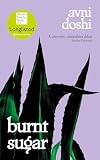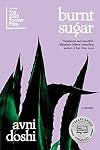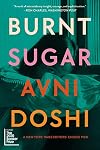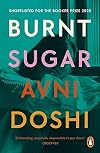
Burnt Sugar
by Avni Doshi
On This Page
Description
"In her youth, Tara was wild. She abandoned her loveless marriage to join an ashram, endured a brief stint as a beggar (mostly to spite her affluent parents), and spent years chasing after a dishevelled, homeless 'artist' - all with her young child in tow. Now she is forgetting things, and her grown-up daughter is faced with the task of caring for a woman who never cared for her. This is a love story and a story about betrayal. But not between lovers - between mother and daughter."Tags
Recommendations




























Member Reviews
Dark, disturbing and thought-provoking, Burnt Sugar centres around a toxic mother/daughter relationship, the veracity of memory and obsessive, fanatic behaviours.
Antara’s early recollections of neglect, isolation, cruelty and hunger form the foundations for the unfolding and unravelling of her relationship with her mother Tara, who abandoned her unsympathetic husband for a gigantean guru and penniless, pockmarked photographer in turn with her young daughter in tow. Revenge and punishment, hurt and humiliation, long-buried secrets and deep-rooted resentments are the weapons of choice in a destructive battle that can never be won. Amidst friends and family whose characters, characteristics, flaws and foibles are described with biting show more wit, Tara and Antara vacillate between love and hate as shocking thoughts and deeds soar out of control.
Although not the easiest of reads I was hooked from the opening line.
I was left with a vivid picture of Pune, the sights and sounds, hustle and bustle, poverty and pollution, country clubs and compound apartments as well as a better understanding of Asian culture.
I’m so pleased that the cover and blurb prompted me to buy Burnt Sugar from one of my favourite local charity shops after a 3 plus year absence. show less
Antara’s early recollections of neglect, isolation, cruelty and hunger form the foundations for the unfolding and unravelling of her relationship with her mother Tara, who abandoned her unsympathetic husband for a gigantean guru and penniless, pockmarked photographer in turn with her young daughter in tow. Revenge and punishment, hurt and humiliation, long-buried secrets and deep-rooted resentments are the weapons of choice in a destructive battle that can never be won. Amidst friends and family whose characters, characteristics, flaws and foibles are described with biting show more wit, Tara and Antara vacillate between love and hate as shocking thoughts and deeds soar out of control.
Although not the easiest of reads I was hooked from the opening line.
I was left with a vivid picture of Pune, the sights and sounds, hustle and bustle, poverty and pollution, country clubs and compound apartments as well as a better understanding of Asian culture.
I’m so pleased that the cover and blurb prompted me to buy Burnt Sugar from one of my favourite local charity shops after a 3 plus year absence. show less
Antara and her mother have always had a difficult relationship and now her mother, in her fifties, has dementia. As she struggles to find a solution to her mother's care, the novel goes back in time to her unconventional upbringing in an ashram where her mother leaves her to be cared for by an American woman when she becomes the guru's newest paramour. Her adolescence and young adulthood are likewise marked by abuse and insecurity. Neither Antara nor her mother are able to relate to each other with love or respect and their other relationships are marked by conflict and manipulation.
An author takes a risk in choosing to write about an unsympathetic character. It's a balancing act to make the narrator unpleasant and to still have the show more reader invested in what happens to the narrator. And whether you think that Doshi succeeds in this will determine how you react to this novel. Doshi provides Antara with a childhood that should make the reader root for her and to understand why she is unable to form bonds with anyone, but then she multiplies the many ways Anatara's inability to form attachments harms the people around her.
This isn't an easy novel to read, nor is it intended to be. show less
An author takes a risk in choosing to write about an unsympathetic character. It's a balancing act to make the narrator unpleasant and to still have the show more reader invested in what happens to the narrator. And whether you think that Doshi succeeds in this will determine how you react to this novel. Doshi provides Antara with a childhood that should make the reader root for her and to understand why she is unable to form bonds with anyone, but then she multiplies the many ways Anatara's inability to form attachments harms the people around her.
This isn't an easy novel to read, nor is it intended to be. show less
First-person narrator Antara doles out her story slowly. Her mother, Tara, is beginning to have memory problems, and Antara knows she will need to care for her, but is somewhat resentful. When Antara was young, her mother left her father and took her to live in an ashram, where "Baba" had sex with many of the women (and at least one child). Later, Antara was sent to a Catholic boarding school where she and the other girls were physically abused. Now Antara is an artist, married to Dilip, who was raised in America; they are considering having a baby, and Dilip (and his mother) want them to move to the States. Antara's art - a series of daily portrait drawings of the same face, over and over - infuriates her mother, but it's not until show more later in the story that the reader understands why: the face belongs to Reza Pine, who was in a relationship with Tara when Antara was a young teen. He disappeared, and when Antara ran into him years later, they began a relationship.
Neither mother nor daughter is blameless. Antara researches dementia and memory loss, and when she puts her mother on a no-sugar, high-fat diet, Tara becomes much clearer and sharper; but Antara then fears her mother will tell Dilip about Reza, and lets her have sweets again, and she becomes fuzzy and unclear again.
The reliability of anybody's memory is questionable. The ending, especially, makes the reader question reality: whose memories and perception are trustworthy? (Unreliable narrator?) Antara and Dilip have a baby girl, which Tara seems to think is baby Antara, and the rest of the family and friends gathered go along with it for her sake. Antara flees, then returns, waiting to be let back in.
Quotes
Human degeneration halts and sputters but doesn't reverse. (2)
And so we paused in this stalemate, as we so often would again, everyone standing by their falsehoods, certain that their own self-interest would prevail. (4)
It seems to me now that this forgetting is convenient, that she doesn't want to remember the things she has said and done. It feels unfair that she can put away the past from her mind while I'm brimming with it all the time. (50)
This is a long and drawn-out loss, where a little bit goes missing at a time. Perhaps...there is no other way besides waiting...and the mourning can happen afterwards, a mourning filled with regret because we never truly had closure. (97)
"You'll never know if the memory is real or imagined. Your mother is no longer reliable." (doctor, 136)
Days and nights unhinged from dates and hours, and time was only recognizable by the passage of the moon in the sky. (156)
"Reality is something that is co-authored." (life coach, 176)
We dissolve with questions. Even question marks have always seemed strange to me, a hook from the hand of some nightmare. (178)
How many times must a performance be repeated before it becomes reality? If a falsehood is enacted enough, does it begin to sound factual? Is a pathway created for lies to come true in the brain? (227)
My own mother. The more deranged she becomes, the greater her clarity of purpose, like a picture with minimum aperture - the background dims as the singularity of the focus intensifies. (229) show less
Neither mother nor daughter is blameless. Antara researches dementia and memory loss, and when she puts her mother on a no-sugar, high-fat diet, Tara becomes much clearer and sharper; but Antara then fears her mother will tell Dilip about Reza, and lets her have sweets again, and she becomes fuzzy and unclear again.
The reliability of anybody's memory is questionable. The ending, especially, makes the reader question reality: whose memories and perception are trustworthy? (Unreliable narrator?) Antara and Dilip have a baby girl, which Tara seems to think is baby Antara, and the rest of the family and friends gathered go along with it for her sake. Antara flees, then returns, waiting to be let back in.
Quotes
Human degeneration halts and sputters but doesn't reverse. (2)
And so we paused in this stalemate, as we so often would again, everyone standing by their falsehoods, certain that their own self-interest would prevail. (4)
It seems to me now that this forgetting is convenient, that she doesn't want to remember the things she has said and done. It feels unfair that she can put away the past from her mind while I'm brimming with it all the time. (50)
This is a long and drawn-out loss, where a little bit goes missing at a time. Perhaps...there is no other way besides waiting...and the mourning can happen afterwards, a mourning filled with regret because we never truly had closure. (97)
"You'll never know if the memory is real or imagined. Your mother is no longer reliable." (doctor, 136)
Days and nights unhinged from dates and hours, and time was only recognizable by the passage of the moon in the sky. (156)
"Reality is something that is co-authored." (life coach, 176)
We dissolve with questions. Even question marks have always seemed strange to me, a hook from the hand of some nightmare. (178)
How many times must a performance be repeated before it becomes reality? If a falsehood is enacted enough, does it begin to sound factual? Is a pathway created for lies to come true in the brain? (227)
My own mother. The more deranged she becomes, the greater her clarity of purpose, like a picture with minimum aperture - the background dims as the singularity of the focus intensifies. (229) show less
I just read the Booker nominee [b:Burnt Sugar|52969580|Burnt Sugar|Avni Doshi|https://i.gr-assets.com/images/S/compressed.photo.goodreads.com/books/1588840376l/52969580._SY75_.jpg|73076925] by [a:Avni Doshi|19501445|Avni Doshi|https://images.gr-assets.com/authors/1568197380p2/19501445.jpg] in which the narrator describes her fraught love-hate relationship with her mother who is sliding into dementia, and retraces the mother's neglect of her daughter growing up in an ashram in Pune, and the lover the two shared after the daughter grew up. The girl's American-born husband, Dilip, "was handsome and tall in a way that let everyone know he'd grown up abroad. Baseball caps, good manners and years of consuming American dairy," struggles to show more accommodate her foibles, her inexplicable repetitive art, her relationships with her family. The writing is lively and interesting. Much attention is devoted to smells (the bakery, the smoking rickshaw engine, fried cumin and garlic, armpits, food (dal, pakoras, samosas, koftas), memories and anger, and time in the book is askew. I read it with interest, occasional amusement, and a longing to revisit India. The character of the daughter is not sympathetic, but she is not dull and her reactions and thoughts are insightful as she struggles to do her duty by her mother.
"The habit of waiting has already been instilled...deeply ingrained. I wonder if, when I'm old and frail and can see the shape of my end in front of me, I will still be waiting for the future to roll in." show less
"The habit of waiting has already been instilled...deeply ingrained. I wonder if, when I'm old and frail and can see the shape of my end in front of me, I will still be waiting for the future to roll in." show less
How can one bring herself to care for a sick parent who neglected her?
I may be in the minority, but I found myself enjoying Doshi's debut novel. Perhaps "enjoy" isn't the right word, as the subject matter can be difficult to stomach at times. But it is the type of book that has stayed with me long after reading it.
The mother-daughter relationship in this book illustrates the toxic and selfish side of human nature, both from the mother and daughter's perspectives. The characters are not likeable, but they are incredibly complex and possess so much depth. I loved how Doshi subtly references some of the social-political factors that may have contributed to this strained relationship. She also portrays the impact of direct and show more generational trauma in such a visceral way with vivid descriptions of scents.
This is a hard one for me to recommend to others, but I have to admit this was one of my favorite books I’ve read this year. Recommended to those who are able to handle difficult topics around childcare and elderly care. show less
I may be in the minority, but I found myself enjoying Doshi's debut novel. Perhaps "enjoy" isn't the right word, as the subject matter can be difficult to stomach at times. But it is the type of book that has stayed with me long after reading it.
The mother-daughter relationship in this book illustrates the toxic and selfish side of human nature, both from the mother and daughter's perspectives. The characters are not likeable, but they are incredibly complex and possess so much depth. I loved how Doshi subtly references some of the social-political factors that may have contributed to this strained relationship. She also portrays the impact of direct and show more generational trauma in such a visceral way with vivid descriptions of scents.
This is a hard one for me to recommend to others, but I have to admit this was one of my favorite books I’ve read this year. Recommended to those who are able to handle difficult topics around childcare and elderly care. show less
When Avni Doshi’s debut novel, Burnt Sugar, was published in 2020, it was shortlisted for the Booker Prize. To sum up the novel’s premise, it focuses on a troubled mother-daughter relationship and the obligations it brings throughout life. The unfolding story is narrated by Antara, the daughter who is dealing with her mother Tara’s worsening signs of dementia. Set in present day Pune, India, Antara’s account alternates between her childhood and her current married adult self.
When Antara was a young child, Tara left her husband, and with her daughter in tow, moved into an ashram where she became romantically involved with its guru. Paying no attention to her own daughter’s upbringing, it was only because of another woman’s show more kindness that Antara’s emotional needs were nominally met. Fast forward thirty years, and Antara is now forced to become a caregiver for her mother. Complicating matters, she discovers she is pregnant.
Avni Doshi’s poetic prose captures in frank detail a daughter’s mixed emotions regarding her mother and the prospect of becoming a mother herself. It is a three-pronged story centering on Antara’s time in the ashram, her mother’s current dementia, and her own reaction to motherhood. (In the first year of her baby’s life, she laments that she smells of “milk, vomit and shit.”) Doshi vividly captures the emotional roller coaster ride that Antara faces in this haunting novel. Burnt Sugar is a worthy addition to any reader’s shortlist. show less
When Antara was a young child, Tara left her husband, and with her daughter in tow, moved into an ashram where she became romantically involved with its guru. Paying no attention to her own daughter’s upbringing, it was only because of another woman’s show more kindness that Antara’s emotional needs were nominally met. Fast forward thirty years, and Antara is now forced to become a caregiver for her mother. Complicating matters, she discovers she is pregnant.
Avni Doshi’s poetic prose captures in frank detail a daughter’s mixed emotions regarding her mother and the prospect of becoming a mother herself. It is a three-pronged story centering on Antara’s time in the ashram, her mother’s current dementia, and her own reaction to motherhood. (In the first year of her baby’s life, she laments that she smells of “milk, vomit and shit.”) Doshi vividly captures the emotional roller coaster ride that Antara faces in this haunting novel. Burnt Sugar is a worthy addition to any reader’s shortlist. show less
Artist Antara has just been married when her mother Tara shows first signs of Alzheimer’s disease. With her mother losing her memory gradually, the daughter starts to remember what they both went through. The time when her father still lived with them, then, the time at an ashram where kids where more or less left to themselves while Tara was deeply in love with a guru, her time at a Christian, yet not so very philanthropic and humane, boarding school. As an adult, Antara learns that there are rules she is not aware of but which are highly important to others e.g. for her mother-in-law and which she better adhered to.
"I would be lying if I said my mother's misery has never given me pleasure."
Avni Doshi’s debut novel has been show more shortlisted for the 2020 Booker Prize, the first draft was written during a stay India and won the Tibor Jones South Asia Prize, all in all, it took her seven years to complete the book. The relationship between mother and daughter always remains the main focus of Antara’s thinking and her art since she is under a constant emotional pressure. Even though it is highly toxic, she cannot – of course – get rid of it.
The author’s observation and especially the way she describes the mother’s gradual memory loss are particularly striking. The contrast between tradition and a modern way of life, obviously present everywhere in India, is also powerfully depicted.
Having heard so much praise of the novel I really was looking forward to read it, yet, I struggled with the negativity. The relationship between mother and daughter, the mother’s neglect of her small child, the injustice Antara experiences again and again – it is not easy to endure. Maybe it just wasn’t the best time to read it – 2020 has offered by far enough negative news and after months of pandemic, who doesn’t slowly become depressed? show less
"I would be lying if I said my mother's misery has never given me pleasure."
Avni Doshi’s debut novel has been show more shortlisted for the 2020 Booker Prize, the first draft was written during a stay India and won the Tibor Jones South Asia Prize, all in all, it took her seven years to complete the book. The relationship between mother and daughter always remains the main focus of Antara’s thinking and her art since she is under a constant emotional pressure. Even though it is highly toxic, she cannot – of course – get rid of it.
The author’s observation and especially the way she describes the mother’s gradual memory loss are particularly striking. The contrast between tradition and a modern way of life, obviously present everywhere in India, is also powerfully depicted.
Having heard so much praise of the novel I really was looking forward to read it, yet, I struggled with the negativity. The relationship between mother and daughter, the mother’s neglect of her small child, the injustice Antara experiences again and again – it is not easy to endure. Maybe it just wasn’t the best time to read it – 2020 has offered by far enough negative news and after months of pandemic, who doesn’t slowly become depressed? show less
Members
- Recently Added By
Published Reviews
ThingScore 100
Set in the city of Pune in west India, the novel alternates between scenes of the past in which the young Antara suffers distress and neglect, and the present day in which the adult Antara is prosperous, middle-class and recently married to Dilip.
added by bergs47
Lists

2021 Women's Prize for Fiction Longlist
16 works; 7 members

The Guardian Books of the Year 2020
126 works; 8 members

Anticipated 2021 Reads
231 works; 7 members

Books Read in 2020
4,379 works; 124 members

Economist Books of the Year 2020
41 works; 5 members

Books Read in 2021
5,361 works; 114 members
Author Information

2 Works 766 Members
Some Editions
Awards and Honors
Awards
Distinctions
Common Knowledge
- Canonical title
- Burnt Sugar
- Original title
- Girl in White Cotton
- Original publication date
- 2020-07-30 (UK) (UK); 2019 (India) (India)
- Epigraph
- Ma, ami tumar kachchey aamar porisoi diti diti biakul oya dzai
Mother I'm so tired, tired of introducing myself to you
Rehna Sultana, 'Mother' - Dedication
- For Nishi, Naren and Pushpa the Brave
- First words
- I would be lying if I said my mother's misery has never given me pleasure.
- Last words
- (Click to show. Warning: May contain spoilers.)I ring the bell twice and lean against the wall, waiting to be let back in.
- Blurbers
- Gilbert, Elizabeth; Sudjic, Olivia; Basu, Diksha; Jin, Ming; Doshi, Tishani; Buchanan, Rowan Hisayo
Classifications
Statistics
- Members
- 765
- Popularity
- 36,445
- Reviews
- 31
- Rating
- (3.27)
- Languages
- 10 — Catalan, Dutch, English, German, Italian, Polish, Portuguese (Portugal), Russian, Spanish, Turkish
- Media
- Paper, Audiobook, Ebook
- ISBNs
- 27
- ASINs
- 11