On This Page
Description
"Combining the social commentary of The Handmaid's Tale with the white-knuckled thrills of Red Rising, this epic space opera follows a comfort woman as she claims her agency, a soldier questioning his allegiances, and a non-binary hero out to save the solar system. First Sister has no name and no voice. As a priestess of the Sisterhood, she travels the stars alongside the soldiers of Earth and Mars-the same ones who own the rights to her body and soul. When her former captain abandons her, show more First Sister's hopes for freedom are dashed when she is forced to stay on her ship with no friends, no power, and a new captain-Saito Ren-whom she knows nothing about. She is commanded to spy on Captain Ren by the Sisterhood, but soon discovers that working for the war effort is so much harder to do when you're falling in love. Lito val Lucius climbed his way out of the slums to become an elite soldier of Venus, but was defeated in combat by none other than Saito Ren, resulting in the disappearance of his partner, Hiro. When Lito learns that Hiro is both alive and now a traitor to the cause, he now has a shot at redemption: track down and kill his former partner. But when he discovers recordings that Hiro secretly made, Lito's own allegiances are put to the test. Ultimately, he must decide between following orders and following his heart. A stunning and sweeping debut novel that explores the power of technology, colonization, race, and gender, The First Sister is perfect for fans of James S.A. Corey, Chuck Wendig, and Margaret Atwood"-- show lessTags
Recommendations










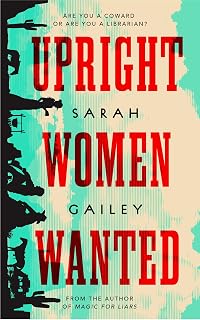
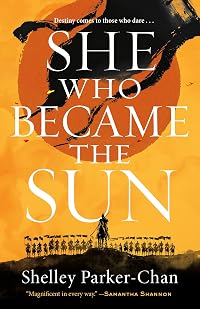
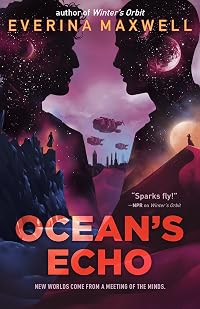
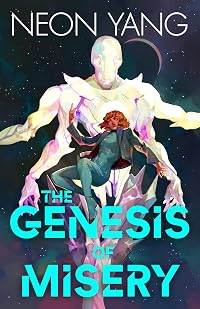





















Member Reviews
The first thing that struck me about The First Sister was the dark sci-fi setting that Lewis has created. Between grey-clad priestesses in spaceship chapels and Ironskin battle-suits, this novel has a vaguely gothic atmosphere that I love.
The second thing was that I had absolutely no idea where the story was going. I don’t necessarily mean in a plot-twisty way (though there are a couple of corkers), more so that I didn’t know what direction the book was taking until very late in the game.
This is partly down to the well-written blurb which (for once) doesn’t give too much away. It’s also a credit to Lewis’ flair for pacing and progressive worldbuilding. While The First Sister is more intimate and character-focused then I show more expected, Lewis’ imaginative and complex setting is slowly revealed throughout the book, adding further detail and scope.
The defining concept in this first instalment of The First Sister Trilogy is the Sisterhood and its representation of rape culture, which Lewis says was partly influenced by The Handmaid’s Tale and the #MeToo movement. It’s worth noting that there are no rape or sex scenes detailed in the book; the idea is portrayed more insidiously. Rather than focusing on individual perpetrators, Linden describes the unsettling control that government and religious organisations possess over individuals’ bodies, as well as the harm of a complacent society. This idea of a person’s body being violated by an institution is echoed throughout the story.
An interesting counterpoint to this theme is the fact that the Icarii, Geans and Asters are selectively inclusive – the queer characters in the story don’t face any discrimination for their gender or sexuality. This optimism perhaps makes this story a bit easier to digest, but also draws focus back to the idea of institution as villain, and tentatively suggests the possibility of social revolution.
The First Sister also draws focus to family relationships, the value we place on them, and the sacrifices we make for them. Among the several complex relationships in the book, I found the unique intimacy between Lito and Hiro particularly moving.
The First Sister is a relatively short sci-fi novel and I will admit there were a few aspects of the book that I wanted to continue learning about. However, it packs a punch, and I’m confident that these things will be further developed in subsequent books. It’s an impressive debut, and Lewis doesn’t shy away from challenges like writing a protagonist who can’t speak, or another who is developed mostly through a video transcript. show less
The second thing was that I had absolutely no idea where the story was going. I don’t necessarily mean in a plot-twisty way (though there are a couple of corkers), more so that I didn’t know what direction the book was taking until very late in the game.
This is partly down to the well-written blurb which (for once) doesn’t give too much away. It’s also a credit to Lewis’ flair for pacing and progressive worldbuilding. While The First Sister is more intimate and character-focused then I show more expected, Lewis’ imaginative and complex setting is slowly revealed throughout the book, adding further detail and scope.
The defining concept in this first instalment of The First Sister Trilogy is the Sisterhood and its representation of rape culture, which Lewis says was partly influenced by The Handmaid’s Tale and the #MeToo movement. It’s worth noting that there are no rape or sex scenes detailed in the book; the idea is portrayed more insidiously. Rather than focusing on individual perpetrators, Linden describes the unsettling control that government and religious organisations possess over individuals’ bodies, as well as the harm of a complacent society. This idea of a person’s body being violated by an institution is echoed throughout the story.
An interesting counterpoint to this theme is the fact that the Icarii, Geans and Asters are selectively inclusive – the queer characters in the story don’t face any discrimination for their gender or sexuality. This optimism perhaps makes this story a bit easier to digest, but also draws focus back to the idea of institution as villain, and tentatively suggests the possibility of social revolution.
The First Sister also draws focus to family relationships, the value we place on them, and the sacrifices we make for them. Among the several complex relationships in the book, I found the unique intimacy between Lito and Hiro particularly moving.
The First Sister is a relatively short sci-fi novel and I will admit there were a few aspects of the book that I wanted to continue learning about. However, it packs a punch, and I’m confident that these things will be further developed in subsequent books. It’s an impressive debut, and Lewis doesn’t shy away from challenges like writing a protagonist who can’t speak, or another who is developed mostly through a video transcript. show less
he first thing that struck me about The First Sister was the dark sci-fi setting that Lewis has created. Between grey-clad priestesses in spaceship chapels and Ironskin battle-suits, this novel has a vaguely gothic atmosphere that I love.
The second thing was that I had absolutely no idea where the story was going. I don’t necessarily mean in a plot-twisty way (though there are a couple of corkers), more so that I didn’t know what direction the book was taking until very late in the game.
This is partly down to the well-written blurb which (for once) doesn’t give too much away. It’s also a credit to Lewis’ flair for pacing and progressive worldbuilding. While The First Sister is more intimate and character-focused then I show more expected, Lewis’ imaginative and complex setting is slowly revealed throughout the book, adding further detail and scope.
The defining concept in this first instalment of The First Sister Trilogy is the Sisterhood and its representation of rape culture, which Lewis says was partly influenced by The Handmaid’s Tale and the #MeToo movement. It’s worth noting that there are no rape or sex scenes detailed in the book; the idea is portrayed more insidiously. Rather than focusing on individual perpetrators, Linden describes the unsettling control that government and religious organisations possess over individuals’ bodies, as well as the harm of a complacent society. This idea of a person’s body being violated by an institution is echoed throughout the story.
An interesting counterpoint to this theme is the fact that the Icarii, Geans and Asters are selectively inclusive – the queer characters in the story don’t face any discrimination for their gender or sexuality. This optimism perhaps makes this story a bit easier to digest, but also draws focus back to the idea of institution as villain, and tentatively suggests the possibility of social revolution.
The First Sister also draws focus to family relationships, the value we place on them, and the sacrifices we make for them. Among the several complex relationships in the book, I found the unique intimacy between Lito and Hiro particularly moving.
The First Sister is a relatively short sci-fi novel and I will admit there were a few aspects of the book that I wanted to continue learning about. However, it packs a punch, and I’m confident that these things will be further developed in subsequent books. It’s an impressive debut, and Lewis doesn’t shy away from challenges like writing a protagonist who can’t speak, or another who is developed mostly through a video transcript. show less
The second thing was that I had absolutely no idea where the story was going. I don’t necessarily mean in a plot-twisty way (though there are a couple of corkers), more so that I didn’t know what direction the book was taking until very late in the game.
This is partly down to the well-written blurb which (for once) doesn’t give too much away. It’s also a credit to Lewis’ flair for pacing and progressive worldbuilding. While The First Sister is more intimate and character-focused then I show more expected, Lewis’ imaginative and complex setting is slowly revealed throughout the book, adding further detail and scope.
The defining concept in this first instalment of The First Sister Trilogy is the Sisterhood and its representation of rape culture, which Lewis says was partly influenced by The Handmaid’s Tale and the #MeToo movement. It’s worth noting that there are no rape or sex scenes detailed in the book; the idea is portrayed more insidiously. Rather than focusing on individual perpetrators, Linden describes the unsettling control that government and religious organisations possess over individuals’ bodies, as well as the harm of a complacent society. This idea of a person’s body being violated by an institution is echoed throughout the story.
An interesting counterpoint to this theme is the fact that the Icarii, Geans and Asters are selectively inclusive – the queer characters in the story don’t face any discrimination for their gender or sexuality. This optimism perhaps makes this story a bit easier to digest, but also draws focus back to the idea of institution as villain, and tentatively suggests the possibility of social revolution.
The First Sister also draws focus to family relationships, the value we place on them, and the sacrifices we make for them. Among the several complex relationships in the book, I found the unique intimacy between Lito and Hiro particularly moving.
The First Sister is a relatively short sci-fi novel and I will admit there were a few aspects of the book that I wanted to continue learning about. However, it packs a punch, and I’m confident that these things will be further developed in subsequent books. It’s an impressive debut, and Lewis doesn’t shy away from challenges like writing a protagonist who can’t speak, or another who is developed mostly through a video transcript. show less
This was pitched as space opera with The Handmaid’s Tale, and that’s not inaccurate though it is aspirational. One main character is a silent Sister (they are silenced so that they can just listen to and support the soldiers who use them for confession and sexual access), while another is a fighter on the opposing side, whose own regime turns out to have its share of horrific tortures and injustices. It was a bit too crapsack world for me even though there is clearly some hope at the end.
The First Sister is an engrossing sci-fi story of forbidden love and strength. The story centers on the (potentially not so distant) future when Earth has become uninhabitable. The two major societies at the center of the narrative are the Geans and the Icarii with the Asters taking a featured role as well. The Geans are an uber-religious society comprised of former Earth residents that colonized Mercury. The Icarii are a society that is super technologically advanced and they are comprised of people that colonized Venus and Mars. In the middle of the Gean-Icarii conflict are the Asters, a people that are genetic combinations of the Geans and the Icarii, a people deemed unacceptable by both societies.
The story centers around a few show more central characters. The First Sister is a Gean priestess, who (despite her voicelessness) serves the Gean soldiers aboard one of their most prestigious warships. She consistently dreams of who and what she could be outside of the Sisterhood until she meets Saito Ren, the ship's new captain. Saito makes First Sister question everything she thought she wanted and was willing to give up. Lito val Lucius is an Icarii duelist who loses his other half (Hiro) when they betrayed him to the Gean army. Lito must come to terms with killing the person who meant everything to him unless Lito can figure out why Hiro's betrayal happened.
Lewis took their time with this world-building, and I am so thankful they did. The world of The First Sister is completely enthralling, and I found myself swept away time and time again. Furthermore, the sheer amount of LGBTQIA representation in this novel made my heart sing. First Sister is bisexual and has to understand her identity outside of her responsibilities and roles in the Sisterhood. Lito has to understand the devotion he feels for his commander, and what that means for him. Hiro is non-binary, which I have not seen in many novels, and as someone who recently came out as NB, it was so nice to have someone as badass as Hiro representing an identity that means so much to me.
This story is full of resiliency and grit, identity formation, and the power of a team. While science fiction isn't always my cup of tea, I absolutely loved this book. I can't wait to see how the story evolves over the next two books, and definitely am going to be recommending this book to everyone I know.
Overall rating: 3.5/5 (rounded to 4)
The First Sister is available for purchase now. Be sure to add it to your Goodreads shelf and see where it's available for purchase. Also, be sure to check out Linden A. Lewis's website!
I was lucky enough to be able to read this Advanced Reader's Copy through my partnership with NetGalley. All opinions are my own. show less
The story centers around a few show more central characters. The First Sister is a Gean priestess, who (despite her voicelessness) serves the Gean soldiers aboard one of their most prestigious warships. She consistently dreams of who and what she could be outside of the Sisterhood until she meets Saito Ren, the ship's new captain. Saito makes First Sister question everything she thought she wanted and was willing to give up. Lito val Lucius is an Icarii duelist who loses his other half (Hiro) when they betrayed him to the Gean army. Lito must come to terms with killing the person who meant everything to him unless Lito can figure out why Hiro's betrayal happened.
Lewis took their time with this world-building, and I am so thankful they did. The world of The First Sister is completely enthralling, and I found myself swept away time and time again. Furthermore, the sheer amount of LGBTQIA representation in this novel made my heart sing. First Sister is bisexual and has to understand her identity outside of her responsibilities and roles in the Sisterhood. Lito has to understand the devotion he feels for his commander, and what that means for him. Hiro is non-binary, which I have not seen in many novels, and as someone who recently came out as NB, it was so nice to have someone as badass as Hiro representing an identity that means so much to me.
This story is full of resiliency and grit, identity formation, and the power of a team. While science fiction isn't always my cup of tea, I absolutely loved this book. I can't wait to see how the story evolves over the next two books, and definitely am going to be recommending this book to everyone I know.
Overall rating: 3.5/5 (rounded to 4)
The First Sister is available for purchase now. Be sure to add it to your Goodreads shelf and see where it's available for purchase. Also, be sure to check out Linden A. Lewis's website!
I was lucky enough to be able to read this Advanced Reader's Copy through my partnership with NetGalley. All opinions are my own. show less
An exciting and full-bodied space opera with high stakes and multiple POVs that each managed to hold my interest equally. "The First Sister" feels similar to something like "The Expanse" series but with more queer characters and deeper explorations into themes such as personal and group identities; consent both in terms of sexual matters and body modifications; the effects of war on groups of peoples and individuals; and the ways one can choose to alter the paths they've been set on. I'm well and thoroughly hooked by the plot and am eager to finish this trilogy!
The First Sister compares itself to The Handmaid's Tale and Red Rising, and it wears its influences on its sleeves, with a lot of overwrought drama in packed into a wartorn inner solar system. The story creaks under the weight of its influences, images mashed together without much sense of coherence, but Lewis manages flashes of talents which elevate the book.
The nameless and titular First Sister is a priestess-concubine on a starship run by the Earth-Mars Gaem theocracy. The Sisters hear confessions, relieve the tensions of the soldiers, and have their voices taken by surgery. When her captain departs, and doesn't take First Sister with him as planned, First Sister must embark on a desperate espionage mission while winning the favor of show more new captain, the wounded Hero of Ceres Saito Ren. She is allowed to write with Ren (an act normally forbidden to sisters) in order to reveal that the new captain is in fact a traitor. If she fails, she'll be unranked and given to the crew, or disavowed and executed by her own order.
Lito sol Lucius is the second viewpoint, a soldier with the Venus and Mercury based Icarii. The Icarii have had a longstanding lead in tech, based on hermium shields and drives using elements only obtainable on Mercury, but that lead has been eroded recently. Lito lost Ceres, and in losing it lost his partner Hiro val Akira. Lito and Hiro are linked via neural implants as paired duelists: rapier and dagger fighters who use shapeshifting mercurial blades. Lito is cooling his heels as a training officer when he gets a new partner and a new assignment. It seems Hiro survived the Fall of Ceres and has betrayed the Icarii. Lito's mission is to return to Ceres incognito, find Hiro, and assassinate them.
The third story is Hiro's, revealed in flashback as audio logs to Lito. Hiro is by any measure the proper protagonist of the book. Non-binary and the child of the terrifyingly powerful scientist and industrialist Souji val Akira, Hiro is looking to end the long and pointless war between the planets. He's also looking for justice for the Asters, a human subspecies modified for survival in deep space, and ruthlessly exploited by more baseline humans. And he wants revenge on his father for a childhood of lies and trauma.
The stories all build toward an explosive climax of revelations on Ceres, as our viewpoint characters decide where their true loyalties lie, and who they'll kill or save to enact their beliefs. There's a lot that I don't much care for in this book. The setting feels artificial and arbitrary, built of pieces lifted from other works rather than an organic whole, the pacing is a beat off, and Hiro is the real protagonist, with the other characters serving merely as lenses onto his plot. The silenced and submissive First Sister feels exploitative, though Lewis handles her with some delicacy. And as someone who reads a lot of these books, I can see these flaws, and I can also say they don't matter because of a sheer fearless verve in this book. I'm hoping Lewis will grow as an author, and look forward to book two. show less
The nameless and titular First Sister is a priestess-concubine on a starship run by the Earth-Mars Gaem theocracy. The Sisters hear confessions, relieve the tensions of the soldiers, and have their voices taken by surgery. When her captain departs, and doesn't take First Sister with him as planned, First Sister must embark on a desperate espionage mission while winning the favor of show more new captain, the wounded Hero of Ceres Saito Ren. She is allowed to write with Ren (an act normally forbidden to sisters) in order to reveal that the new captain is in fact a traitor. If she fails, she'll be unranked and given to the crew, or disavowed and executed by her own order.
Lito sol Lucius is the second viewpoint, a soldier with the Venus and Mercury based Icarii. The Icarii have had a longstanding lead in tech, based on hermium shields and drives using elements only obtainable on Mercury, but that lead has been eroded recently. Lito lost Ceres, and in losing it lost his partner Hiro val Akira. Lito and Hiro are linked via neural implants as paired duelists: rapier and dagger fighters who use shapeshifting mercurial blades. Lito is cooling his heels as a training officer when he gets a new partner and a new assignment. It seems Hiro survived the Fall of Ceres and has betrayed the Icarii. Lito's mission is to return to Ceres incognito, find Hiro, and assassinate them.
The third story is Hiro's, revealed in flashback as audio logs to Lito. Hiro is by any measure the proper protagonist of the book. Non-binary and the child of the terrifyingly powerful scientist and industrialist Souji val Akira, Hiro is looking to end the long and pointless war between the planets. He's also looking for justice for the Asters, a human subspecies modified for survival in deep space, and ruthlessly exploited by more baseline humans. And he wants revenge on his father for a childhood of lies and trauma.
The stories all build toward an explosive climax of revelations on Ceres, as our viewpoint characters decide where their true loyalties lie, and who they'll kill or save to enact their beliefs. There's a lot that I don't much care for in this book. The setting feels artificial and arbitrary, built of pieces lifted from other works rather than an organic whole, the pacing is a beat off, and Hiro is the real protagonist, with the other characters serving merely as lenses onto his plot. The silenced and submissive First Sister feels exploitative, though Lewis handles her with some delicacy. And as someone who reads a lot of these books, I can see these flaws, and I can also say they don't matter because of a sheer fearless verve in this book. I'm hoping Lewis will grow as an author, and look forward to book two. show less
When I read the description that said for fans of Red Rising and The Handmaid's Tale I knew I would have to read it. These are two of my all time favorite books. The First Sister by Linden A. Lewis did not disappoint! If I could throw a third book that I saw similarities to it would be Dune by Frank Herbert, who was my first love in science fiction.
I really enjoyed everything about this book. The characters were unique, the world building was all encompassing and I truly found the book hard to put down. I need the next book in the series ASAP!
The story is told from two different points of view. The first being that of the First Sister. A woman in the service of the sisterhood who has achieved rank of First Sister on the star ship she show more has been assigned to. The sisterhood takes girls at a young age, removes their ability to speak, gives them no name and trains them in the ways of the sisterhood. The second point of view is that of Lito val Lucius a boy from the poorest population who worked his way up to being a duelist in an elite military force. He is paired with Hiro, a non-binary character with whom Lito is in love.
The story is immersive and thought provoking and definitely leaves you with a cliff hanger. I highly recommend this book. show less
I really enjoyed everything about this book. The characters were unique, the world building was all encompassing and I truly found the book hard to put down. I need the next book in the series ASAP!
The story is told from two different points of view. The first being that of the First Sister. A woman in the service of the sisterhood who has achieved rank of First Sister on the star ship she show more has been assigned to. The sisterhood takes girls at a young age, removes their ability to speak, gives them no name and trains them in the ways of the sisterhood. The second point of view is that of Lito val Lucius a boy from the poorest population who worked his way up to being a duelist in an elite military force. He is paired with Hiro, a non-binary character with whom Lito is in love.
The story is immersive and thought provoking and definitely leaves you with a cliff hanger. I highly recommend this book. show less
Members
- Recently Added By
Published Reviews
"Lewis’s lush prose creates an immersive, richly textured world with complex social dynamics and solid LGBTQ and multicultural representation."
added by jagraham684
Lists

Gays in Space - Novels
43 works; 4 members

BookTok Adult
115 works; 2 members

Good LGBT fiction for LGBT folk and friends
551 works; 55 members

Books Mentioned in the A+ Autostraddle Pop Up Discords Nov 2022 & Dec 2022
223 works; 3 members
Author Information

4+ Works 1,021 Members
Some Editions
Awards and Honors
Awards
Series

Common Knowledge
- Canonical title
- The First Sister
- Original publication date
- 2020-08
- People/Characters
- First Sister; Second Sister; Third Sister; Aunt Marshae; Captain Arturo Deluca; Saito Ren (show all 10); Lito sol Lucius; Hiro val Akira; Ofiera fon Bain; Ringer
- Dedication
- To Pablo, the Rapier to my Dagger
- First words
- The new captain arrives in two hours, so I sort my belongings and pack them into a small bag.
- Last words
- (Click to show. Warning: May contain spoilers.)[End.]
Classifications
Statistics
- Members
- 760
- Popularity
- 36,954
- Reviews
- 24
- Rating
- (3.62)
- Languages
- English
- Media
- Paper, Audiobook, Ebook
- ISBNs
- 9
- ASINs
- 3