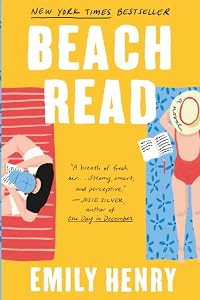
Beach Read
by Emily Henry
On This Page
Description
"Augustus Everett is an acclaimed author of literary fiction. January Andrews writes best-selling romance. When she pens a happily ever after, he kills off his entire cast. They're polar opposites. In fact, the only thing they have in common is that for the next three months, they're living in neighboring beach houses, broke, and bogged down with writer's block. Until, one hazy evening, one thing leads to another and they strike a deal designed to force them out of their creative ruts: show more Augustus will spend the summer writing something happy, and January will pen the next Great American Novel. She'll take him on field trips worthy of any rom-com montage, and he'll take her to interview surviving members of a backwoods death cult (obviously). Everyone will finish a book and no one will fall in love. Really." -- show lessTags
Recommendations
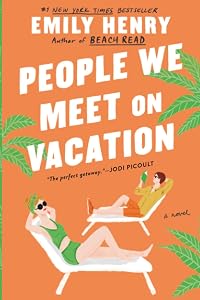
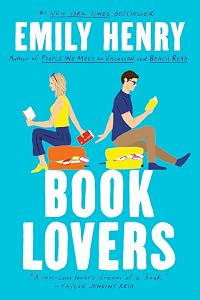
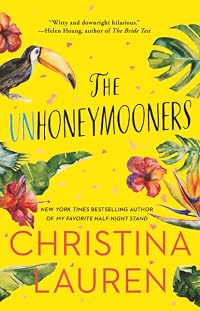
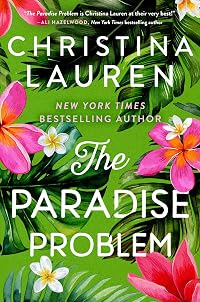
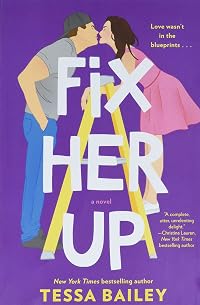
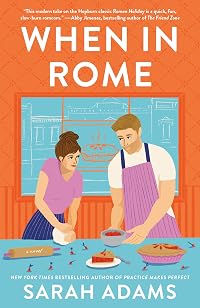
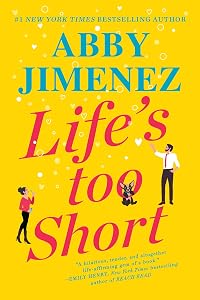
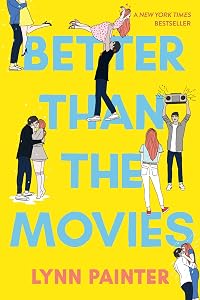
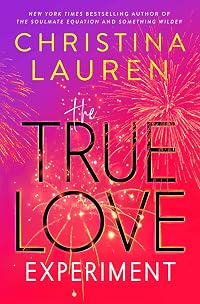
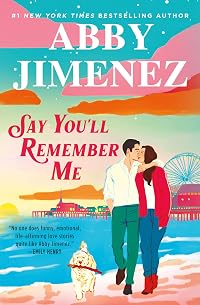
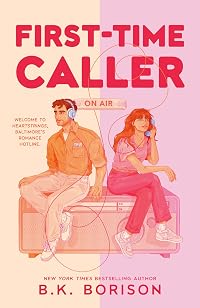
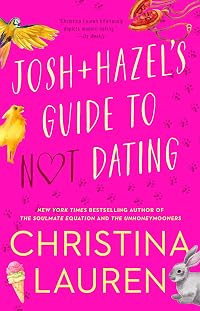
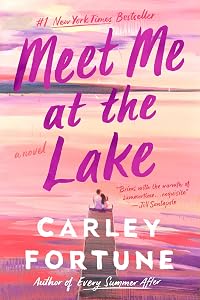
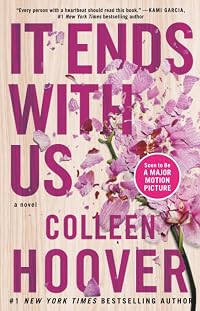
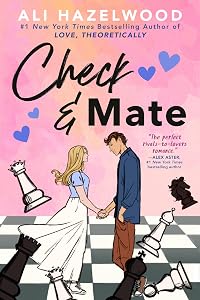
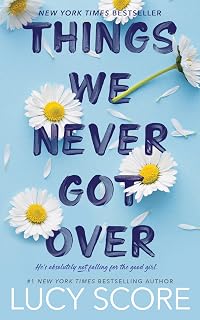
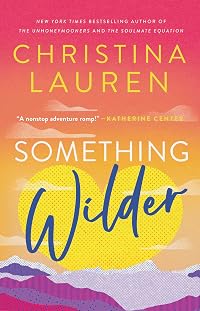
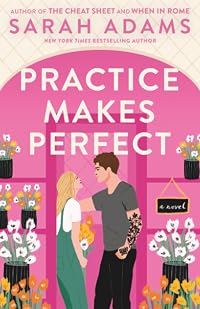
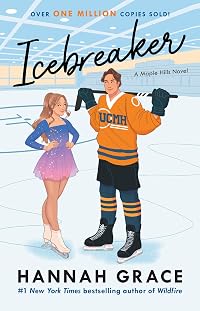


Member Recommendations
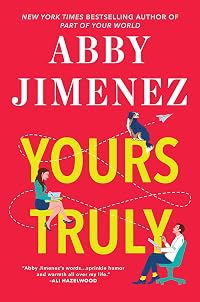
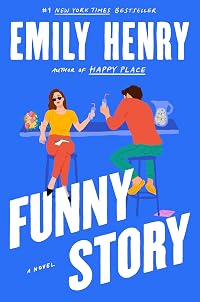
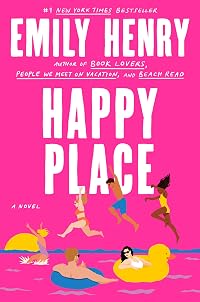
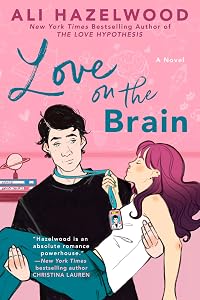
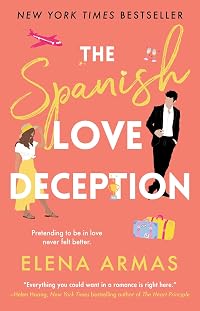
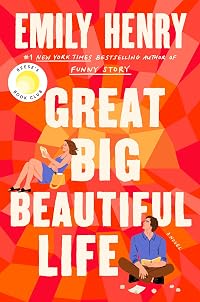
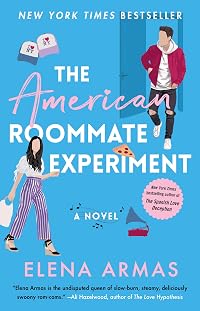
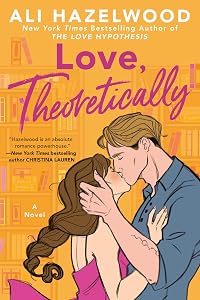
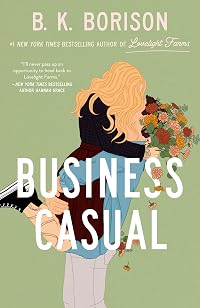
humouress Enemies to lovers; a girl who loves romance fiction feels that a boy looks down on it so they compete over every assignment throughout their time in school. Later, when they happen to be thrown together, she discovers a different side to him.
Member Reviews
Where else would I read this one? Fun, snarky, and a little bit darker than you might expect. Two authors, one writing dark literary prose and the other romances with happy endings, are unexpected neighbors and make a bet to try their hand at the other’s genre. Steamier than I expected, but definitely entertaining. During the incredibly stressful past year of quarantine life I discovered light happy ending books for the first time. I love the main character’s reasoning that those books are essential in times of darkness. I felt that way last year and certainly identified with that belief. Sometimes you just need to escape into something that you know will resolve itself happily.
“When the world felt dark and scary, love could show more whisk you off to go dancing; laughter could take some of the pain away; beauty could punch holes in your fear.”
“That was what I’d always loved about reading, what had driven me to write in the first place. That feeling that a new world was being spun like a spiderweb around you and you couldn’t move until the whole thing had revealed itself to you.”
“I know feeling small gets to some people, he had once told me, but I kind of like it. Takes the pressure off when you’re just one of six billion at any given moment. And when you’re going through something hard, it is nice to know you’re not even close to the only one.” show less
“When the world felt dark and scary, love could show more whisk you off to go dancing; laughter could take some of the pain away; beauty could punch holes in your fear.”
“That was what I’d always loved about reading, what had driven me to write in the first place. That feeling that a new world was being spun like a spiderweb around you and you couldn’t move until the whole thing had revealed itself to you.”
“I know feeling small gets to some people, he had once told me, but I kind of like it. Takes the pressure off when you’re just one of six billion at any given moment. And when you’re going through something hard, it is nice to know you’re not even close to the only one.” show less
A quick, escapist read. Beach Read is about two struggling novelists who've cordially disliked one another since their college days, finding themselves living in adjoining beach houses in Michigan one summer while trying to get past their respective cases of writers' block.
The book doesn't hang together tonally very well, but Emily Henry's writing is engaging, the dialogue often fun without sounding too much like forced banter, and I appreciated that for the most part Henry avoids the tendency of a lot of writers to confuse quirky eccentricity for personality or character depth, particularly when it comes to background characters. (For the most part: the main couple's names are January and Augustus, and January's constantly-referenced show more wardrobe of funky t-shirts, cut-offs, and boots just made me think of certain characters from Schitt's Creek.)
I might have rated this a little higher if not for the fact thatJanuary and Gus have sex for the first time after a major admission of ~mutual feelings~ in a tent... right next to the burned-out ruins of a former cult compound which was destroyed in an act of mass murder. I don't know about anyone else but I found that tacky, to say the least, and the very opposite of hot. show less
The book doesn't hang together tonally very well, but Emily Henry's writing is engaging, the dialogue often fun without sounding too much like forced banter, and I appreciated that for the most part Henry avoids the tendency of a lot of writers to confuse quirky eccentricity for personality or character depth, particularly when it comes to background characters. (For the most part: the main couple's names are January and Augustus, and January's constantly-referenced show more wardrobe of funky t-shirts, cut-offs, and boots just made me think of certain characters from Schitt's Creek.)
I might have rated this a little higher if not for the fact that
'Beach Read' lived up to its title. It's exactly the kind of book that I want to read on holiday.
It made me laugh, cry, think, grin at its impudence, cheer for the good bits and fast-forward through the sex bits. Most of all, it made me happy.
A clever structure
I picked up 'Beach Read' after reading Deborah Kehoe's review which positioned the book as much more than just another romance. She was absolutely right. 'Beach Read' is one of those rare books that manages to be accessible and engaging while also being clever and insightful.
Think of 'Beach Read' as having a double helix structure, like DNA.
One helix is a straight RomCom about two writers, January, a writer of 'women's fiction' and Gus, a Lit Fic writer. both struggling to show more write their next novel, who discover that they are neighbours for the summer and overcome some initial hostility to dance all the usual romance steps.
The other helix is about the process of writing, about overcoming writer's block and about challenging the artificial genre boundaries imposed by publishing houses to make books easier to market. Each helix would be fin on its own but together they make something much more powerful and original.
The RomCom helix: like a romance only with real people
I'm not normally a fan of romance but this romance I loved. I loved how knowing and yet how believable this book was. The structure is self-referentially that of a romance novel, from Meet Cute to Happy Ever After with all the steps in between labelled as we go along.
Yet it's neither groan-worthily glub nor mechanically formulaic because the characters KNOW the framework that they're in and any romance that occurs is created by a consensual collaboration. The characters aren't plot-devices, they have histories and personalities and problems that determine how they behave within this romantic construct. The story is backlit by a playful examination of the process of writing a novel and the nature of the genres that are imposed on them, which is used to reveal more about the characters themselves.
Together, these things make for a novel that's like a romance but with real people who aren't blinded or glamoured by the magic of romance but instead are able to see themselves and each other more clearly.
The Writing Helix: challenging genres and throwing words like knives.
I am a fan of clever trope-twisting and witty analysis and 'Beach Read' delivers both. Take this excerpt from a discussion between Gus, the male lit-fic writer and January the female romance writer. January says that her books aren't shelved as Romance but as Women's Fiction. Gus says:
'I don't understand why there'd need to be a full genre that's just books for women.'
January replies:
'Yeh, well you're not the only one who doesn't understand it.' I said. 'I know how to tell a story, Gus and I know how to string a sentence together. If you swapped out all my Jessicas for Johns, do you know what you'd get? Fiction. Just fiction. Ready and willing to be read by anyone but somehow, being a woman who writes about women, I've eliminated half the world's population from my potential readers and you know what? I feel ashamed of that. I feel pissed that people like you will assume my books couldn't possibly be worth your time while, meanswhile, you could shart on live TV and the New York Times would praise your bold display of humanity.'
Given that I wouldn't have picked up this book if I hadn't been told that it was more than a romance, this made me grin sheepishly.
Writing and what it means to be a writer is at the heart of the book which means that what these two say to each other and write to each other are important. For writers, words have sharp edges. I thought one of the joys of this book was the way the two writers traded pen sketches. It displayed how their imaginations worked and revealed the kind of judgements that they make, Here's an example where Gus, having asked January what 'baby January' was like and having been told, 'She was a lot' spontaneously spins this:
'Let me guess. Loud. Precocious. Room full of books organised in a way that only you understood. Close with your family and a couple of tight-knit friends, all of who you probably still talk to regularly, but casual friends with anyone else with a pulse. A secret over-achiever who had to be the best at something, even if no one else knew. Oh and prone to juggling or tap dancing for attention in any crowd.'
Here's January's response:
'Wow,' I said, a little stunned. 'You both nailed and roasted me.'
I could hear the joy and the danger in that Gus' kind of statement, where things come out of your mouth unedited, partly playful, partly true, partly catching you by surprise even as you hear yourself say them. It sparkles. Then January's response grounded it, without rebutting it, making it clear that words have edges and need to be thrown with care.
I also like how Emily Henry plays with the form while still delivering something satisfying. You know how there's likely to be a chapter in a romance book where the girl dreams of the boy or vis versa and suddenly understands the depth of their attraction? Well, this book has that chapter. The fun thing is that it's called 'The Dream' and it's one sentence long.
'I dreamed about Gus Everett and woke up needing a shower.'
That made me laugh.
The disappointing sex scene
The only thing that disappointed me in 'Beach Read' was the sex. I knew that had to be sex, I just wanted the sex to be as real as the people having it.
Up until the sex scene, the book had sidestepped clichés and toyed with tropes with skill and a little humour, keeping the focus on making January and Gus real. Yet the sex scenes didn't seem real at all. They lacked the focus of previous scenes. They were a muddle of sanitised descriptions of who does what to whom, hyperbolic descriptions of how good it all felt, and a few muttered attempts at humour. It was a long scene, cutting across a chapter break (why do that?) yet all I got was euphemisms that were so soft-focus that the sex wasn't really described. I was also supposed to accept that two people, having sex with each other for the first time managed a flawless choreography with no communication and rapidly achieved a level of mutual satisfaction that was explosive, exhausting.
My main problem with the scene was that it was so generic. It was a generic description of two beautiful, highly aroused people having frantic but deeply satisfying sex. Nothing in the scene links specifically to the characters in the book. You could drop this scene into another novel and only have to edit the names.
Earlier in the book, the two writers discuss how you make things real by paying attention to the small details that matter to people: how they dress, what they're anxious about, what unconscious ticks they have and so on. None of that thinking translated into the scene. January had neither anxiety or curiosity. There was no uncertainty, no hesitation, no real interaction beyond two bodies getting off in perfect soft-focus harmony.
This was very disappointing. Write a real sex scene for the real people in the book or write, 'the sex was great' and leave it at that but don't drop in a soft porn photomontage that would work well if you never saw the participants faces.
Try the audiobook
I listened to the audiobook version of 'Beach Read' and I recommend it. Julia Whelan did a great job on the narration. show less
It made me laugh, cry, think, grin at its impudence, cheer for the good bits and fast-forward through the sex bits. Most of all, it made me happy.
A clever structure
I picked up 'Beach Read' after reading Deborah Kehoe's review which positioned the book as much more than just another romance. She was absolutely right. 'Beach Read' is one of those rare books that manages to be accessible and engaging while also being clever and insightful.
Think of 'Beach Read' as having a double helix structure, like DNA.
One helix is a straight RomCom about two writers, January, a writer of 'women's fiction' and Gus, a Lit Fic writer. both struggling to show more write their next novel, who discover that they are neighbours for the summer and overcome some initial hostility to dance all the usual romance steps.
The other helix is about the process of writing, about overcoming writer's block and about challenging the artificial genre boundaries imposed by publishing houses to make books easier to market. Each helix would be fin on its own but together they make something much more powerful and original.
The RomCom helix: like a romance only with real people
I'm not normally a fan of romance but this romance I loved. I loved how knowing and yet how believable this book was. The structure is self-referentially that of a romance novel, from Meet Cute to Happy Ever After with all the steps in between labelled as we go along.
Yet it's neither groan-worthily glub nor mechanically formulaic because the characters KNOW the framework that they're in and any romance that occurs is created by a consensual collaboration. The characters aren't plot-devices, they have histories and personalities and problems that determine how they behave within this romantic construct. The story is backlit by a playful examination of the process of writing a novel and the nature of the genres that are imposed on them, which is used to reveal more about the characters themselves.
Together, these things make for a novel that's like a romance but with real people who aren't blinded or glamoured by the magic of romance but instead are able to see themselves and each other more clearly.
The Writing Helix: challenging genres and throwing words like knives.
I am a fan of clever trope-twisting and witty analysis and 'Beach Read' delivers both. Take this excerpt from a discussion between Gus, the male lit-fic writer and January the female romance writer. January says that her books aren't shelved as Romance but as Women's Fiction. Gus says:
'I don't understand why there'd need to be a full genre that's just books for women.'
January replies:
'Yeh, well you're not the only one who doesn't understand it.' I said. 'I know how to tell a story, Gus and I know how to string a sentence together. If you swapped out all my Jessicas for Johns, do you know what you'd get? Fiction. Just fiction. Ready and willing to be read by anyone but somehow, being a woman who writes about women, I've eliminated half the world's population from my potential readers and you know what? I feel ashamed of that. I feel pissed that people like you will assume my books couldn't possibly be worth your time while, meanswhile, you could shart on live TV and the New York Times would praise your bold display of humanity.'
Given that I wouldn't have picked up this book if I hadn't been told that it was more than a romance, this made me grin sheepishly.
Writing and what it means to be a writer is at the heart of the book which means that what these two say to each other and write to each other are important. For writers, words have sharp edges. I thought one of the joys of this book was the way the two writers traded pen sketches. It displayed how their imaginations worked and revealed the kind of judgements that they make, Here's an example where Gus, having asked January what 'baby January' was like and having been told, 'She was a lot' spontaneously spins this:
'Let me guess. Loud. Precocious. Room full of books organised in a way that only you understood. Close with your family and a couple of tight-knit friends, all of who you probably still talk to regularly, but casual friends with anyone else with a pulse. A secret over-achiever who had to be the best at something, even if no one else knew. Oh and prone to juggling or tap dancing for attention in any crowd.'
Here's January's response:
'Wow,' I said, a little stunned. 'You both nailed and roasted me.'
I could hear the joy and the danger in that Gus' kind of statement, where things come out of your mouth unedited, partly playful, partly true, partly catching you by surprise even as you hear yourself say them. It sparkles. Then January's response grounded it, without rebutting it, making it clear that words have edges and need to be thrown with care.
I also like how Emily Henry plays with the form while still delivering something satisfying. You know how there's likely to be a chapter in a romance book where the girl dreams of the boy or vis versa and suddenly understands the depth of their attraction? Well, this book has that chapter. The fun thing is that it's called 'The Dream' and it's one sentence long.
'I dreamed about Gus Everett and woke up needing a shower.'
That made me laugh.
The disappointing sex scene
The only thing that disappointed me in 'Beach Read' was the sex. I knew that had to be sex, I just wanted the sex to be as real as the people having it.
Up until the sex scene, the book had sidestepped clichés and toyed with tropes with skill and a little humour, keeping the focus on making January and Gus real. Yet the sex scenes didn't seem real at all. They lacked the focus of previous scenes. They were a muddle of sanitised descriptions of who does what to whom, hyperbolic descriptions of how good it all felt, and a few muttered attempts at humour. It was a long scene, cutting across a chapter break (why do that?) yet all I got was euphemisms that were so soft-focus that the sex wasn't really described. I was also supposed to accept that two people, having sex with each other for the first time managed a flawless choreography with no communication and rapidly achieved a level of mutual satisfaction that was explosive, exhausting.
My main problem with the scene was that it was so generic. It was a generic description of two beautiful, highly aroused people having frantic but deeply satisfying sex. Nothing in the scene links specifically to the characters in the book. You could drop this scene into another novel and only have to edit the names.
Earlier in the book, the two writers discuss how you make things real by paying attention to the small details that matter to people: how they dress, what they're anxious about, what unconscious ticks they have and so on. None of that thinking translated into the scene. January had neither anxiety or curiosity. There was no uncertainty, no hesitation, no real interaction beyond two bodies getting off in perfect soft-focus harmony.
This was very disappointing. Write a real sex scene for the real people in the book or write, 'the sex was great' and leave it at that but don't drop in a soft porn photomontage that would work well if you never saw the participants faces.
Try the audiobook
I listened to the audiobook version of 'Beach Read' and I recommend it. Julia Whelan did a great job on the narration. show less
January Andrews is broke, heartbroken after her father's death and the family drama that came to light in the wake of that event, and suddenly finds herself no longer able to write the romance novels for which she's so well-known. In an effort to try and churn out the book she's contracted to write, she retreats to the lake cabin she recently discovered her father owned only to find herself living next door to Augustus Everett, who she knew and kind of hated in college. Augustus is also a bestselling author although he wouldn't know a happy ending if it hit him in the face and he's also struggling with writer's block. Through a confluence of events January and Augustus make a bet, she'll write a book in his style and he'll try to write show more a romance and to help inform that process they'll each take the other on weekly outings for research. Romance plot ensues.
I really enjoyed this novel and thought Henry did a great job of dealing with the baggage both January and Augustus bring with them, while also crafting a super cute romance. And that's saying something when some of Augustus's research trips involve digging into a suicide cult from the area. I'm starting to run out of backlist for Henry and I'm sad about it. show less
I really enjoyed this novel and thought Henry did a great job of dealing with the baggage both January and Augustus bring with them, while also crafting a super cute romance. And that's saying something when some of Augustus's research trips involve digging into a suicide cult from the area. I'm starting to run out of backlist for Henry and I'm sad about it. show less
this is quite enjoyable, and well written. i like the way she tackles this idea of romance vs literary fiction and happy endings vs tragic endings and where reality actually lies. it's really more about that (and about allowing other people to be their true selves, and about how we get through the hard parts of life, about how to get past a betrayal and trust yourself and others again) than the romance, which is an interesting debate. i fall entirely on the side of sad realism and literary fiction, so it was fun to both hear her arguments for happiness in literature as well as hear his ideas for how he'd write scenes. (i loved his idea for the cult book. as much as i was enjoying this, i really perked up and was like - yes! write that show more book! it sounds amazing! although i don't know that i liked his version much at the end.)
i liked the characters, the main ones and the best friend. and the two main side characters, who just happen to be lesbians (it's really never even mentioned, just that these two women have been married ("her wife") and together for more than 30 years; they're treated exactly like anyone else and it's fantastic and great queer rep). i liked the setting of the town and the writing bet that the two writers make to both jumpstart their writing after experiencing writer's block, but also the value in seeing new perspectives that the bet gives them both. i appreciate when authors give a little of themselves in an afterword, and i was glad to get that tidbit here. more books should have just a few sentences at the end; it always makes me like the book more.
this is strong and i'd be happy to read her again. (especially if it's literary fiction.) show less
i liked the characters, the main ones and the best friend. and the two main side characters, who just happen to be lesbians (it's really never even mentioned, just that these two women have been married ("her wife") and together for more than 30 years; they're treated exactly like anyone else and it's fantastic and great queer rep). i liked the setting of the town and the writing bet that the two writers make to both jumpstart their writing after experiencing writer's block, but also the value in seeing new perspectives that the bet gives them both. i appreciate when authors give a little of themselves in an afterword, and i was glad to get that tidbit here. more books should have just a few sentences at the end; it always makes me like the book more.
this is strong and i'd be happy to read her again. (especially if it's literary fiction.) show less
I’m used to bright primary-coloured covers like one signalling fluff. Books with maybe a little seriousness, but that never get real. Pure romantic shenanigans from cover to cover. This isn’t what I was expecting at all.
Oh, there are shenanigans, from meet-uglies to book club embarrassment to the drive-in movie. The plot revolves around a dare to write the other person’s genre. There’s a running joke-gag-romantic moment with notepaper that’s just great. It’s enemies to lovers with a vengeance. But this is a novel with a lot of depth and heart and realness, with a female lead who’s a complete mess and allowed to be, that has a lot to say about romance as a genre and in life itself.
I liked pretty much everything about this. show more I liked that January was flawed and angry and dealing with a lot of stuff in relatable ways (i.e., not dealing much at all). I liked that Gus had his own issues. I especially liked the romance didn’t exist to fix their problems and that it felt a lot more natural than a lot of romances I’ve read. I think that’s Henry engaging with the literary fiction side of the story, because this isn’t just a novel about a romance writer and a literary novelist. It actually pulls tropes and style out of both genres too! (Which is, yes, another thing I liked.)
Henry’s also not interested in sugar-coating the writing process or playing into the “writers are perfect beings whose stories appear on paper like magic” trope-space that I’ve seen elsewhere. She’s happy to talk about the joy of creative flow and best-seller status, but she’s also happy to point out that writing is hard, meeting reader expectations is hard, and that best-seller status isn’t all it’s cracked up to be. There’s a lot of other stuff about stories and writing, and references, and things you might not catch if you aren’t familiar with both genres, and yes. Just yes.
She’s also not sugar-coating life itself. Neither January or Gus has a perfect family, a perfect past, present, or future. They’re struggling with believable things in believable ways, a lot of their “dates” and moments and discussions have a seriousness to them, lack that “omigosh! yay!” feeling that fluffier romances give me. This is also because of the literary elements in the story, I’m sure. Gus’s admonition to put in details that are so weird you have to believe them. This is Henry celebrating how weird and complicated life and love can get, and pushing what a romance can be.
Other things I liked: January has an amazing bestie. Gus has fantastic aunts. The small town didn’t feel too small-towny. There’s some great character growth on both sides. Pretty much every poignant moment made me cry. It was very satisfying.
Could’ve used a few more scenes with the aunts’ dogs though.
To bear in mind: an abusive father and the fallout of suicide cults (but not like that)
7.5/10 show less
Oh, there are shenanigans, from meet-uglies to book club embarrassment to the drive-in movie. The plot revolves around a dare to write the other person’s genre. There’s a running joke-gag-romantic moment with notepaper that’s just great. It’s enemies to lovers with a vengeance. But this is a novel with a lot of depth and heart and realness, with a female lead who’s a complete mess and allowed to be, that has a lot to say about romance as a genre and in life itself.
I liked pretty much everything about this. show more I liked that January was flawed and angry and dealing with a lot of stuff in relatable ways (i.e., not dealing much at all). I liked that Gus had his own issues. I especially liked the romance didn’t exist to fix their problems and that it felt a lot more natural than a lot of romances I’ve read. I think that’s Henry engaging with the literary fiction side of the story, because this isn’t just a novel about a romance writer and a literary novelist. It actually pulls tropes and style out of both genres too! (Which is, yes, another thing I liked.)
Henry’s also not interested in sugar-coating the writing process or playing into the “writers are perfect beings whose stories appear on paper like magic” trope-space that I’ve seen elsewhere. She’s happy to talk about the joy of creative flow and best-seller status, but she’s also happy to point out that writing is hard, meeting reader expectations is hard, and that best-seller status isn’t all it’s cracked up to be. There’s a lot of other stuff about stories and writing, and references, and things you might not catch if you aren’t familiar with both genres, and yes. Just yes.
She’s also not sugar-coating life itself. Neither January or Gus has a perfect family, a perfect past, present, or future. They’re struggling with believable things in believable ways, a lot of their “dates” and moments and discussions have a seriousness to them, lack that “omigosh! yay!” feeling that fluffier romances give me. This is also because of the literary elements in the story, I’m sure. Gus’s admonition to put in details that are so weird you have to believe them. This is Henry celebrating how weird and complicated life and love can get, and pushing what a romance can be.
Other things I liked: January has an amazing bestie. Gus has fantastic aunts. The small town didn’t feel too small-towny. There’s some great character growth on both sides. Pretty much every poignant moment made me cry. It was very satisfying.
Could’ve used a few more scenes with the aunts’ dogs though.
To bear in mind: an abusive father and the fallout of suicide cults (but not like that)
7.5/10 show less
This book gets sort of meta with its main characters arguing over the value of literary fiction versus women's fiction. Is the book itself supposed to be some kind of literary-romance combo? I thought maybe so at first. I should not have gotten my hopes up.
I thought the story was fresh and unexpected in some ways. On the other hand, I cringed a few times at cliches and thought something along the lines of "this kind of writing is exactly why chick lit is distinct from literary fiction." I'm talking about typical scenes that start to take on a sameness when you've read a lot of romance novels. There's also something generic about the way falling in love is described in many romance novels.
So this book turned out to be a mostly standard show more rom-com. Still, I liked it a lot because there were some very funny parts. While I was very into the meta-fiction elements at the beginning, by the end I thought the promise of a more self-aware romance was unfulfilled. But that's okay. I know where I can go to find intellectual stimulation and it ain't this. This is mostly just for fun. show less
I thought the story was fresh and unexpected in some ways. On the other hand, I cringed a few times at cliches and thought something along the lines of "this kind of writing is exactly why chick lit is distinct from literary fiction." I'm talking about typical scenes that start to take on a sameness when you've read a lot of romance novels. There's also something generic about the way falling in love is described in many romance novels.
So this book turned out to be a mostly standard show more rom-com. Still, I liked it a lot because there were some very funny parts. While I was very into the meta-fiction elements at the beginning, by the end I thought the promise of a more self-aware romance was unfulfilled. But that's okay. I know where I can go to find intellectual stimulation and it ain't this. This is mostly just for fun. show less
Members
- Recently Added By
Lists

Best Beach Reads
99 works; 61 members

FAB 2020
15 works; 1 member

Booktok Books
69 works; 8 members

READ IN 2020
172 works; 1 member

Top Five Books of 2020
982 works; 348 members
Books Read in 2022
5,168 works; 114 members

Favorite Romance Fiction
247 works; 115 members

Books Read in 2024
4,623 works; 126 members

Overdue Podcast
806 works; 9 members

Top Five Books of 2024
795 works; 264 members

Romance master list
42 works; 1 member

el
1,139 works; 1 member

Books Read in 2026
1,952 works; 66 members
Author Information

17 Works 39,244 Members
Emily Henry studied creative writing at Hope College and the New York Center for Art and Media Studies. She is a full-time writer and proofreader. Her first book, The Love That Split the World, was published in 2016. (Bowker Author Biography)
Some Editions
Awards and Honors
Awards
Distinctions
Notable Lists
Series
Belongs to Publisher Series
Knaur Taschenbuch (52518)
Work Relationships
Common Knowledge
- Canonical title
- Beach Read
- Original title
- Beach Read
- Alternate titles*
- Toen winter zomer werd
- Original publication date
- 2020-05-19
- People/Characters
- Augustus Everett; January Andrews
- Important places
- North Bear Shores, Michigan, USA
- Dedication
- For Joey:
You are so perfectly my favorite person. - First words
- I have a fatal flaw.
- Last words
- (Click to show. Warning: May contain spoilers.)A happy-for-now, so vast and deep that I knew—or rather believed—I didn't have to worry about tomorrow.
- Publisher's editor
- Bergeron, Amanda
- Blurbers
- Silver, Josie; Guillory, Jasmine; Lauren, Christina; Thorne, Sally; Whelan, Julia; Reichert, Amy E.
- Original language
- English
- Canonical DDC/MDS
- 813.6
- Canonical LCC
- PS3608.E5715
*Some information comes from Common Knowledge in other languages. Click "Edit" for more information.
Classifications
Statistics
- Members
- 8,494
- Popularity
- 1,301
- Reviews
- 231
- Rating
- (3.89)
- Languages
- 32 — Bulgarian, Czech, Danish, Dutch, English, Estonian, Finnish, French, German, Greek, Hebrew, Hungarian, Italian, Latvian, Lithuanian, Macedonian, Norwegian, Farsi/Persian, Polish, Romanian, Russian, Serbian, Croatian, Slovak, Slovenian, Spanish, Swedish, Turkish, Portuguese (Portugal), Portuguese (Brazil), Chinese, traditional, English (UK)
- Media
- Paper, Audiobook, Ebook
- ISBNs
- 48
- ASINs
- 15