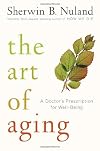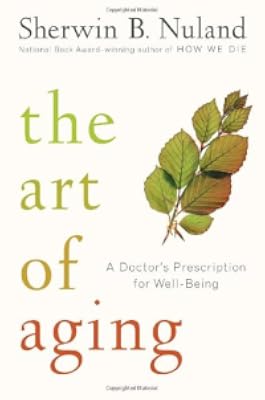
The art of aging: a doctor's prescription for well-being
by Sherwin B. Nuland
On This Page
Description
In his landmark book How we die, Sherwin B. Nuland profoundly altered our perception of the end of life. Now in The art of aging, Dr. Nuland steps back to explore the impact of aging on our minds and bodies, strivings and relationships. Melding a scientist's passion for truth with a humanist's understanding of the heart and soul, Nuland has created a wise, frank, and inspiring book about the ultimate stage of life's journey. The onset of aging can be so gradual that we are often surprised to show more find that one day it is fully upon us. The changes to the senses, appearance, reflexes, physical endurance, and sexual appetites are undeniable--and rarely welcome--and yet, as Nuland shows, getting older has its surprising blessings. Age concentrates not only the mind, but the body's energies, leading many to new sources of creativity, perception, and spiritual intensity. show lessTags
Recommendations




Member Reviews
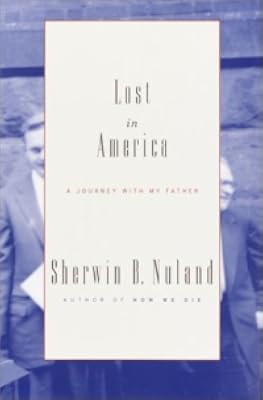
A few years back I read with great interest and enjoyment Sherwin Nuland's memoir about his immigrant father, LOST IN AMERICA. It explained a lot about the author's ambition and success as a physician and scholar. Then I began reading his best known book, HOW WE DIE, but still have not finished it. But now I have done a quick read of his THE ART OF AGING and quite enjoyed it. My own aging process hasn't been very artful, but is anyone's?
In his clinical descriptions of the process, you're bound to learn something. For instance -
"... testicles hang lower than they did years ago, because of loss of turgor in the skin muscle of the scrotum, a muscle called the dartos."
Turgor? Dartos? Your scrotum has muscles? See what I mean? Who knew?
But show more seriously - for this is a serious book - Nuland looks far beyond the physiological aspects of aging here, with a chapter about choices, in which he gives us three case studies of people who suffered strokes and how they coped and came back from them. One of these was actress Patricia Neal, who credits her then-husband Roald Dahl with forcing her recovery and return to acting.. Another chapter, "A Friendship in Letters" gives us Nuland's years-long correspondence with an aged Indian widow and her struggles with and recovery from suicidal depression.
"Drinking from the Fountain of Youth" was an especially entertaining chapter, as Nuland related his friendship with a med school classmate, Frank Scott, inventor of an inflatable penile implant playfully labeled "the hydraulic hard-on."
Later he tells us that wisdom - so often equated with age - is not just knowledge, but the proper management of knowledge. And that "caring" is vital to a happy old age. And lots more. So much more. And yes, there is wisdom here. Nuland knew how to manage his accumulated years of study and the knowledge he had gleaned. A wise man. Dr Nuland died in 2013.
This is a good book, filled with useful information - and yes, wisdom. Very highly recommended.
- Tim Bazzett, author of the memoir, BOOKLOVER show less
In his clinical descriptions of the process, you're bound to learn something. For instance -
"... testicles hang lower than they did years ago, because of loss of turgor in the skin muscle of the scrotum, a muscle called the dartos."
Turgor? Dartos? Your scrotum has muscles? See what I mean? Who knew?
But show more seriously - for this is a serious book - Nuland looks far beyond the physiological aspects of aging here, with a chapter about choices, in which he gives us three case studies of people who suffered strokes and how they coped and came back from them. One of these was actress Patricia Neal, who credits her then-husband Roald Dahl with forcing her recovery and return to acting.. Another chapter, "A Friendship in Letters" gives us Nuland's years-long correspondence with an aged Indian widow and her struggles with and recovery from suicidal depression.
"Drinking from the Fountain of Youth" was an especially entertaining chapter, as Nuland related his friendship with a med school classmate, Frank Scott, inventor of an inflatable penile implant playfully labeled "the hydraulic hard-on."
Later he tells us that wisdom - so often equated with age - is not just knowledge, but the proper management of knowledge. And that "caring" is vital to a happy old age. And lots more. So much more. And yes, there is wisdom here. Nuland knew how to manage his accumulated years of study and the knowledge he had gleaned. A wise man. Dr Nuland died in 2013.
This is a good book, filled with useful information - and yes, wisdom. Very highly recommended.
- Tim Bazzett, author of the memoir, BOOKLOVER show less
This is a book that caused me to think and learn; both from Dr. Nuland and from the many people he has learned from.
" ... we must study how to be old."
My favorite section was Nuland's discourse with Michael Debakey:
"Curiosity and the seeking of knowledge is a transcendent life force. Almost you might say spiritual. It has a driven character to it. It drives you intellectually, and to an extent physiologically. The brain influences the body in ways we don't know about."
I also found the discussion of Aubrey de Grey and the debate over biogerontology to be fasciating. There certainly must be a tradeoff between human lifespan and the ecology of the planet. On the other hand, having spent some time in a grove of bristlecone pines this show more summer, I beieve the limit to lifespan could be much higher than our current ~ 120 years.
The concept of compression of morbidity was also very interesting. This is the idea that instead of a gradual decay to death, we fall apart all at once.
I will close with a brief condensation of Dr. Nuland's prescription:
"... beyond the pursuit of wisdom, there is a triad of factors ... that are the essential ingredients of the benisons that should come with the later decades of our lives. ... The three are:
- A sense of mutual caring and connectedness with others.
- The maintenance , in so far as we can influence it by our own actions, of the physical capabilities of our bodies
- Creativity
Remember: " ... we must study how to be old." show less
" ... we must study how to be old."
My favorite section was Nuland's discourse with Michael Debakey:
"Curiosity and the seeking of knowledge is a transcendent life force. Almost you might say spiritual. It has a driven character to it. It drives you intellectually, and to an extent physiologically. The brain influences the body in ways we don't know about."
I also found the discussion of Aubrey de Grey and the debate over biogerontology to be fasciating. There certainly must be a tradeoff between human lifespan and the ecology of the planet. On the other hand, having spent some time in a grove of bristlecone pines this show more summer, I beieve the limit to lifespan could be much higher than our current ~ 120 years.
The concept of compression of morbidity was also very interesting. This is the idea that instead of a gradual decay to death, we fall apart all at once.
I will close with a brief condensation of Dr. Nuland's prescription:
"... beyond the pursuit of wisdom, there is a triad of factors ... that are the essential ingredients of the benisons that should come with the later decades of our lives. ... The three are:
- A sense of mutual caring and connectedness with others.
- The maintenance , in so far as we can influence it by our own actions, of the physical capabilities of our bodies
- Creativity
Remember: " ... we must study how to be old." show less
Loved this book. One of the best I've read so far on approaching the challenges of this stage of life with enthusiasm and creativity.
Nuland's short but insightful book examines the effects of aging on our bodies and minds. The author's readable prose eloquently explains the variabilities of the aging experience.
Excellent Birthday Gift: Dr. Nuland has authored an excellent guide to extending ones life. At first glance, I thought this book would offer substantial how to guidance on nutrition, exercise, and other physical life extending practices. I was pleased to discover that Dr. Nuland explores a wide array of discoveries concerned with the social practices that truly make one "alive".
Chief among these life giving/extending practices, are the intrinsic rewards offered to those who, in some way, live for the benefit of others. My heart resonated with the stories of people who by serving others have found purpose and therefore life. This book makes a great birthday gift for anyone who is on or is beginning his or her later life journey. It show more causes one to reflect on the fascinating adventures that could be in store for those who ponder the possibilities of an extraordinary purpose filled life. show less
Chief among these life giving/extending practices, are the intrinsic rewards offered to those who, in some way, live for the benefit of others. My heart resonated with the stories of people who by serving others have found purpose and therefore life. This book makes a great birthday gift for anyone who is on or is beginning his or her later life journey. It show more causes one to reflect on the fascinating adventures that could be in store for those who ponder the possibilities of an extraordinary purpose filled life. show less
Having turned 65 a few months ago, aging is frequently on my mind. I'm grateful every day that my health is inexplicably good, as is my attitude and my mental, emotional, and spiritual life.
After having heard an interview with the author about a month ago (it was a rebroadcast shortly after he died), I put this book on my to-read list. I'd previously read and appreciated his HOW WE DIE book.
I found the book to be a good read. I was pleased to see that I appear to be on the right path when it comes to mental, emotional, and spiritual health practices, but I need to increase my exercise.
After having heard an interview with the author about a month ago (it was a rebroadcast shortly after he died), I put this book on my to-read list. I'd previously read and appreciated his HOW WE DIE book.
I found the book to be a good read. I was pleased to see that I appear to be on the right path when it comes to mental, emotional, and spiritual health practices, but I need to increase my exercise.
There was a lot of blathering and the authored used a few irrelevant sidebars. I was interested in the subject matter of aging but was expecting a more clinical, evidence-based approach from a doctor. This doctor instead engages in wild speculation.
Members
- Recently Added By
Lists

Best Nonfiction Books about Aging
17 works; 2 members
Author Information

32+ Works 4,979 Members
Dr. Sherwin B. Nuland was born Shepsel Ber Nudelman on December 8, 1930 in the Bronx, New York. He received a bachelor's degree from New York University in 1951 and a medical degree from Yale University in 1955. He decided to specialize in surgery and in 1958, became the chief surgical resident at Yale-New Haven Hospital. From 1962 to 1991, he was show more a clinical professor of surgery at Yale University, where he also taught bioethics and medical history. Before retiring to write full-time, he was a surgeon at Yale-New Haven Hospital from 1962 to 1992. His books include Doctors: The Biography of Medicine, The Wisdom of the Body, The Doctors' Plague, The Uncertain Art, and the memoir Lost in America. His book, How We Die, won the National Book Award for nonfiction in 1994. He was also a contributing editor to The American Scholar and The New Republic. He died of prostate cancer on March 3, 2014 at the age of 83. (Bowker Author Biography) show less
Common Knowledge
- Canonical title
- The art of aging: a doctor's prescription for well-being
- Alternate titles
- How to grow old
- Original publication date
- 2007
- Epigraph
- Father Time is not always a hard parent, and, though he tarries for none of his children, often lays his hand lightly upon those of who who have used him well.
-Charles Dickens, 'Barnaby Rudge', 1841 - Dedication
- To Manny Papper
wisdom, equanimity, caritas - Blurbers
- Terkel, Studs
Classifications
- Genres
- Nonfiction, General Nonfiction, Science & Nature
- DDC/MDS
- 305.26 — Society, government, & culture Social sciences, sociology & anthropology Social group - Age, Gender, Ethnicity Age groups Older people (60+)
- LCC
- HQ1061 .N92 — Social sciences The family. Marriage, Women and Sexuality The Family. Marriage. Women The family. Marriage. Home Aged. Gerontology (Social aspects).
- BISAC
Statistics
- Members
- 227
- Popularity
- 143,185
- Reviews
- 8
- Rating
- (3.48)
- Languages
- 5 — Dutch, English, German, Portuguese, Spanish
- Media
- Paper, Audiobook, Ebook
- ISBNs
- 14
- ASINs
- 3