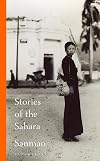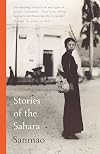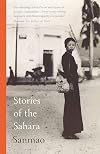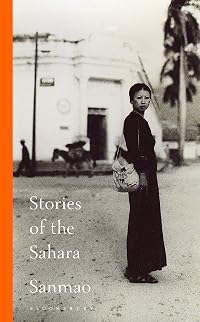
Stories of the Sahara
by Sanmao
On This Page
Description
The book that has captivated millions of Chinese readers, translated into English for the very first time. 'Hypnotic . . . A record of one person's fierce refusal to follow a path laid down for her by the rest of the world' Tash Aw, Paris Review Books of the Year Sanmao: author, adventurer, pioneer. Born in China in 1943, she moved from Chongqing to Taiwan, Spain to Germany, the Canary Islands to Central America, and, for several years in the 1970s, to the Sahara. Stories of the Sahara show more invites us into Sanmao's extraordinary life in the desert: her experiences of love and loss, freedom and peril, all told with a voice as spirited as it is timeless. At a period when China was beginning to look beyond its borders, Sanmao fired the imagination of millions and inspired a new generation. With an introduction by Sharlene Teo, author of Ponti, this is an essential collection from one of the twentieth century's most iconic figures. show lessTags
Recommendations





















Member Reviews
I raced through this book: a page-turning account written in 1976 by a Taiwanese/Chinese woman married to a Spaniard who realised her dream of living for a while in the Sahara Desert: which was in the 1970s still a Spanish protectorate. Sanmao is infectiously enthusiastic, curious, not to say nosy about the Sahwari people among whom she lived, and tells us much about everyday life and culture, and the reality of living in a climate which is in the course of a single day searingly hot and brain-numbingly cold. All this was interesting, but I couldn't warm to Sanmao, whom I found judgmental, even racist, and impetuous to the point of foolhardiness: whether it was opening her mouth without thinking, or driving endless miles in the - show more deserted - desert with no particular aim. Nevertheless, since I'm unlikely to get to the Sahara, this was an illuminating and immersive account of what life was - and I suspect still is - like there. show less
Fraudulent History of Sahrawi Independence
“Stories of the Sahara” by Sanmao (real name Chen Ping), is a unique work of travel literature. The book is light and breezy with the exception of two chapters, one about slavery, and the other about the Sahrawi independence movement. Unfortunately, major events in that long, climactic chapter about the independence movement are fraudulent.
Moving to the coastal city of El Aiún (Laayoun) with her husband, Sanmao writes very well about the mundane details of life, such as municipal water delivery, nosey neighbors, and making house repairs. Sanmao also writes about her Bohemian lifestyle, artistic interests, and frequent trips to the beach. Her description of El Aiún as a backwater village show more in the middle of the Sahara dessert does not mesh with some of the other descriptions she includes. It is a metropolitan city with Spanish and French colonizers, including major contingents of Franco’s Spanish army and the presence of multinational mining interests, where her husband works. Still, Sanmao concentrates on describing the minutiae of life, which is absolutely fascinating.
Sanmao frequently talks about the grooming habits of her Sahrawi neighbors, commenting on their odors and dirty skin. This is a little off-putting, but certainly forgivable. In addition, while she breezes past the subject of slavery in an early chapter, she does return to the subject in a lengthy article whereby she proves her generosity and sympathy.
However, As many professional reviewers have described (such as Miriam Lang in “East Asian History,” 2000), the chapter “Crying Camels” is largely a fabrication. In this intense and energetic chapter, Sanmao meets Muhammad Bassiri, an ethnic Sahrawi independence leader. Although he died in 1970, Sanmao describes hosting Bassiri and his in-town girlfriend Shahida (who is pregnant with the child of another man) as tensions with the Spanish occupiers heat up. Inserting herself in Sahrawi independence matters and claiming to have sheltered and advised Bassiri the day before he was killed is no small matter. It would be odd if a Koranic scholar married a liberal, urbane, Catholic convert in any event, but it is even more complicated because of the fact that Sanmao was in El Aiún for two years, around 1974 and 1975.
Nowhere does the publisher, translator, or author of the forward try to account for these inconsistencies. I only found out about this after I researched information about Bassiri independently. This damages my relationship and trust in the book. I cannot separate the book from other literary forgeries, such as Margaret B. Jones, James Frey, and Nasdijj. show less
“Stories of the Sahara” by Sanmao (real name Chen Ping), is a unique work of travel literature. The book is light and breezy with the exception of two chapters, one about slavery, and the other about the Sahrawi independence movement. Unfortunately, major events in that long, climactic chapter about the independence movement are fraudulent.
Moving to the coastal city of El Aiún (Laayoun) with her husband, Sanmao writes very well about the mundane details of life, such as municipal water delivery, nosey neighbors, and making house repairs. Sanmao also writes about her Bohemian lifestyle, artistic interests, and frequent trips to the beach. Her description of El Aiún as a backwater village show more in the middle of the Sahara dessert does not mesh with some of the other descriptions she includes. It is a metropolitan city with Spanish and French colonizers, including major contingents of Franco’s Spanish army and the presence of multinational mining interests, where her husband works. Still, Sanmao concentrates on describing the minutiae of life, which is absolutely fascinating.
Sanmao frequently talks about the grooming habits of her Sahrawi neighbors, commenting on their odors and dirty skin. This is a little off-putting, but certainly forgivable. In addition, while she breezes past the subject of slavery in an early chapter, she does return to the subject in a lengthy article whereby she proves her generosity and sympathy.
However, As many professional reviewers have described (such as Miriam Lang in “East Asian History,” 2000), the chapter “Crying Camels” is largely a fabrication. In this intense and energetic chapter, Sanmao meets Muhammad Bassiri, an ethnic Sahrawi independence leader. Although he died in 1970, Sanmao describes hosting Bassiri and his in-town girlfriend Shahida (who is pregnant with the child of another man) as tensions with the Spanish occupiers heat up. Inserting herself in Sahrawi independence matters and claiming to have sheltered and advised Bassiri the day before he was killed is no small matter. It would be odd if a Koranic scholar married a liberal, urbane, Catholic convert in any event, but it is even more complicated because of the fact that Sanmao was in El Aiún for two years, around 1974 and 1975.
Nowhere does the publisher, translator, or author of the forward try to account for these inconsistencies. I only found out about this after I researched information about Bassiri independently. This damages my relationship and trust in the book. I cannot separate the book from other literary forgeries, such as Margaret B. Jones, James Frey, and Nasdijj. show less
Love in the Barrens
Review of the Bloomsbury hardcover edition (2020) translated from the original Chinese 撒哈拉的故事 (Sahara Story) (1976)
I had never previously heard of Taiwanese writer Sanmao (March 26, 1943 – January 4, 1991) until I chanced to see a film documentary Sanmao: The Desert Bride (Spain, 2019) via Toronto's online HotDocs Festival 2020.
Stories of the Sahara (1976) is a collection of travelogue and autobiographical memoir articles about Sanmao's life with her husband José María Quero y Ruíz during the early 1970's in the town then called by its Spanish name El Aaiún in the Western Sahara. It was Sanmao's attraction to the desert that caused her to first move to the Sahara and her then boyfriend José followed show more after getting a job at the local phosphate mines. The stories usually take a self-deprecatory tone with Sanmao adapting to a 'fish out of water' existence among the local Sahwari people. Throughout all of stories, the mutual love and support between José and herself is the running thread.
Sanmao's earliest writing was collected in the book 雨季不再来 (Gone with the Rainy Season) (July 1976) after the popular success of the original Chinese edition of Stories of the Sahara (May 1976). She has over 20 published works to her credit. As best as I can determine, this current translation of Stories of the Sahara is her first work to be published in English.
I enjoyed this book immensely due to its stories of an unique life in such extreme circumstances. The humour and zest of the story-telling leads me to hope that there will be further Sanmao translations yet to come.
Trivia and Links
The New York Times wrote a belated October 23, 2019 obituary of Sanmao in their Overlooked Series as Overlooked No More: Sanmao ‘Wandering Writer’ Who Found Her Voice in the Desert. show less
Review of the Bloomsbury hardcover edition (2020) translated from the original Chinese 撒哈拉的故事 (Sahara Story) (1976)
I had never previously heard of Taiwanese writer Sanmao (March 26, 1943 – January 4, 1991) until I chanced to see a film documentary Sanmao: The Desert Bride (Spain, 2019) via Toronto's online HotDocs Festival 2020.
Stories of the Sahara (1976) is a collection of travelogue and autobiographical memoir articles about Sanmao's life with her husband José María Quero y Ruíz during the early 1970's in the town then called by its Spanish name El Aaiún in the Western Sahara. It was Sanmao's attraction to the desert that caused her to first move to the Sahara and her then boyfriend José followed show more after getting a job at the local phosphate mines. The stories usually take a self-deprecatory tone with Sanmao adapting to a 'fish out of water' existence among the local Sahwari people. Throughout all of stories, the mutual love and support between José and herself is the running thread.
Sanmao's earliest writing was collected in the book 雨季不再来 (Gone with the Rainy Season) (July 1976) after the popular success of the original Chinese edition of Stories of the Sahara (May 1976). She has over 20 published works to her credit. As best as I can determine, this current translation of Stories of the Sahara is her first work to be published in English.
I enjoyed this book immensely due to its stories of an unique life in such extreme circumstances. The humour and zest of the story-telling leads me to hope that there will be further Sanmao translations yet to come.
Trivia and Links
The New York Times wrote a belated October 23, 2019 obituary of Sanmao in their Overlooked Series as Overlooked No More: Sanmao ‘Wandering Writer’ Who Found Her Voice in the Desert. show less
The author was born as Chen Mao-ping (陳懋平) in China, then grew up in Taiwan. She took on the pen-name Sanmao and was also known in English as Echo Chan, after the nymph in Greek mythology. Sanmao moved to Western Sahara in the early 1970s (the Spanish Sahara at the time). Although her partner José Quero had tried to talk her out of it, when he saw she was determined to go, arranged himself a job there. Sanmao and José spent several years living in El Aaiún (Laâyoune), the capital. Sandal wrote about her experiences and published her stories as a serial in the Taiwanese United Daily News.
Sanmao is an engaging character with a fresh sense of humour, a natural curiosity, a fascination with life and a fiercely independent show more adventurous approach to life. She refuses to conform to expectations placed on her as a woman, which gets her both into and out of many unexpected situations. Although her writing about her Sahrawi neighbours at times has a condescending tone, she seems to genuinely love and esteem them. She is confronted with customs she finds shocking such as child brides and modern slavery, and she makes frequent complains about lack of personal hygiene, but overall she is positive and enjoys learning and interacting.
Towards the end of Sanmao’s stay in Western Sahara there is a push for independence and in 1975 the Spanish agree to withdraw. Morocco and Mauritania are immediately poised to fill the power void and there is a guerilla uprising. Sanmao and José become caught up in this and meet the guerilla leader.
I found this an interesting read by a quirky and entertaining narrator. show less
Sanmao is an engaging character with a fresh sense of humour, a natural curiosity, a fascination with life and a fiercely independent show more adventurous approach to life. She refuses to conform to expectations placed on her as a woman, which gets her both into and out of many unexpected situations. Although her writing about her Sahrawi neighbours at times has a condescending tone, she seems to genuinely love and esteem them. She is confronted with customs she finds shocking such as child brides and modern slavery, and she makes frequent complains about lack of personal hygiene, but overall she is positive and enjoys learning and interacting.
Towards the end of Sanmao’s stay in Western Sahara there is a push for independence and in 1975 the Spanish agree to withdraw. Morocco and Mauritania are immediately poised to fill the power void and there is a guerilla uprising. Sanmao and José become caught up in this and meet the guerilla leader.
I found this an interesting read by a quirky and entertaining narrator. show less
A Taiwanese woman traveling through the Sahara? I thought this had the makings of a fascinating travelogue. Well, not quite. Though the author did take such a trip (not alone, but with a Spanish husband) and doubtless had experiences more or less related to the stories, many are written in a too cute, comic book style in which the narrator represents herself as a kind of female Arabian Nights Sinbad cleverly outsmarting djinns and natives at every turn. I would have preferred a bit less of the author's overweening charm and more engagement with the desert and its people, through her eyes, to be sure, but on their terms.
Sanmao, and her husband Jose live in the Spanish Sahara among the native Sahrawi people. This book is a collection of short stories outlining their lives in the desert. Since this is a collection of short stories, at times it feels disjointed and hard to follow. Some of the stories lacked context - not knowing anything about the history of the area left me a little lost at times. I also found myself wanting to know more about the Spanish Sahara and its bid for independence. Despite these criticisms, the stories were interesting, dynamic and oftentimes humorous. I admire Sanmao and Jose's courage and sense of adventure. Overall, well worth reading.
This is newly translated book, 2019, first published in 1976. With her other books the inside book cover tells us that Sanmao has sold over 15million copies of all her works. The structure of this one is a simple compilation of short stories on her stay in what was then the Spanish Sahara. The subject matter is varied from the struggled , primitive, sometimes thrilling living in a desert environment; to the lives of the semi-nomadic Sahrawi; the disruptive end of Spanish colonialism; the anxiety-ridden stay with her Spanish mother-in-law; being a very independent Chinese woman; and to a barely disguised love story with husband Jose. Sanmao's inquiring mind finds almost everything of note and interesting and makes it interesting. There show more is a very horrific disturbing chapter near the end that would be too much for some readers.
Quotes: (page 170) “Eventually I organized myself and prepared to live in the desert for a year. Besides my father's encouragement, I had only one friend who didn't mock me or try to stop me, let alone drag me down. He quietly packed his things, went to the desert ahead of me and found work at a phosphate mining company. He settled down and waited for me to come to Africa all alone so he could take care of me. He knew I was a stubborn woman of singular will; I wouldn't change my mind.
When this person went to the desert and suffered in the name of love, I knew in my heart that I wanted to roam the ends of the earth with him. This person was my husband Jose. All this is old news, already two years past.”
(page 240) “Before I could say anything else, Jose took off his shoes and scurried towards the bay. He looked like he was going to sneak up on a group of heavenly guests. Before he could get close, that pink cloud rose into the air and flew off without a trace.
It was too bad that we didn't get a hot of the flamingos. But the beauty of that moment remains in my heart, something I will never in my life forget.
One time we paid a visit to someone's tent, along with a Sahrawi friend. That day the host slaughtered a goat with great ceremony and invited us to eat. This manner of eating goat is very simple. You cut the goat up into a few dozen pieces and throw it, dripping blood and all, to roast on a fire. Once its half cooked, you put it into a clay basin the size of a bathtub and sprinkle on some salt. Everyone gathers around to eat together.
All of us picked up big pieces to gnaw on. After gnawing a bit, we set it down, going out to drink tea and play board games with small stones. About an hour later, we were all called together again. We convened by the already gnawed-on meat, picking up pieces at random, regardless of who had had it before. We redoubled our efforts at eating. Only after many rounds of gnawing and tossing and gnawing and tossing did this goat get eaten to the bone.”
(page 346-347) “After going a whole night without sleep, I felt dizzy and heard ringing in my ears. I couldn't stop sweating. I was weakened a though I were about to collapse from illness. My mind thickly clouded, I pressed on until I suddenly found my self driving head-on into the barricades outside of town. I urgently slammed on the brakes, breaking out in a cold sweat from the fright.
'Why is this side blocked?' I asked the Spanish soldier standing guard.
'There's been an incident. They are burying people.'
'What does burying people have to do with traffic control? I asked dead weary.
'The dead ones include Basiri, the leader of those guerrillas!'
'You---You're lying!' I yelled.
'It;s true. Why would I lie to you?'
'You're wrong,' I cried out again. 'Absolutely wrong.' show less
Quotes: (page 170) “Eventually I organized myself and prepared to live in the desert for a year. Besides my father's encouragement, I had only one friend who didn't mock me or try to stop me, let alone drag me down. He quietly packed his things, went to the desert ahead of me and found work at a phosphate mining company. He settled down and waited for me to come to Africa all alone so he could take care of me. He knew I was a stubborn woman of singular will; I wouldn't change my mind.
When this person went to the desert and suffered in the name of love, I knew in my heart that I wanted to roam the ends of the earth with him. This person was my husband Jose. All this is old news, already two years past.”
(page 240) “Before I could say anything else, Jose took off his shoes and scurried towards the bay. He looked like he was going to sneak up on a group of heavenly guests. Before he could get close, that pink cloud rose into the air and flew off without a trace.
It was too bad that we didn't get a hot of the flamingos. But the beauty of that moment remains in my heart, something I will never in my life forget.
One time we paid a visit to someone's tent, along with a Sahrawi friend. That day the host slaughtered a goat with great ceremony and invited us to eat. This manner of eating goat is very simple. You cut the goat up into a few dozen pieces and throw it, dripping blood and all, to roast on a fire. Once its half cooked, you put it into a clay basin the size of a bathtub and sprinkle on some salt. Everyone gathers around to eat together.
All of us picked up big pieces to gnaw on. After gnawing a bit, we set it down, going out to drink tea and play board games with small stones. About an hour later, we were all called together again. We convened by the already gnawed-on meat, picking up pieces at random, regardless of who had had it before. We redoubled our efforts at eating. Only after many rounds of gnawing and tossing and gnawing and tossing did this goat get eaten to the bone.”
(page 346-347) “After going a whole night without sleep, I felt dizzy and heard ringing in my ears. I couldn't stop sweating. I was weakened a though I were about to collapse from illness. My mind thickly clouded, I pressed on until I suddenly found my self driving head-on into the barricades outside of town. I urgently slammed on the brakes, breaking out in a cold sweat from the fright.
'Why is this side blocked?' I asked the Spanish soldier standing guard.
'There's been an incident. They are burying people.'
'What does burying people have to do with traffic control? I asked dead weary.
'The dead ones include Basiri, the leader of those guerrillas!'
'You---You're lying!' I yelled.
'It;s true. Why would I lie to you?'
'You're wrong,' I cried out again. 'Absolutely wrong.' show less
Members
- Recently Added By
Lists

Paul French's Ultimate China Bookshelf
31 works; 1 member
Author Information
46 Works 194 Members
Some Editions
Awards and Honors
Distinctions
Notable Lists
Common Knowledge
- Important places*
- Sàhara Occidental
*Some information comes from Common Knowledge in other languages. Click "Edit" for more information.
Classifications
- Genres
- Travel, Biography & Memoir, Fiction and Literature
- DDC/MDS
- 895.1 — Literature & rhetoric Literatures of other languages Literatures of East and Southeast Asia Chinese
- LCC
- PL2894 .A475 .S24313 — Language and Literature Languages and literatures of Eastern Asia, Africa, Oceania Languages of Eastern Asia, Africa, Oceania Chinese language and literature Chinese literature Individual authors and works
- BISAC
Statistics
- Members
- 122
- Popularity
- 267,917
- Reviews
- 9
- Rating
- (3.97)
- Languages
- Catalan, Chinese, English, Spanish
- Media
- Paper, Ebook
- ISBNs
- 8
- ASINs
- 1