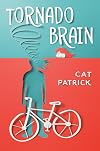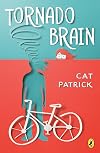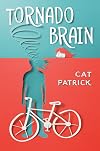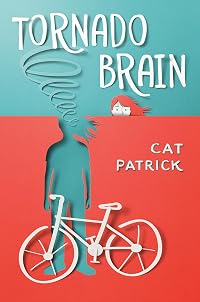
Tornado Brain
by Cat Patrick
On This Page
Description
In this heartfelt and powerfully affecting coming of age story, a neurodivergent 7th grader is determined to find her missing best friend before it's too late.Things never seem to go as easily for thirteen-year-old Frankie as they do for her sister, Tess. Unlike Tess, Frankie is neurodivergent. In her case, that means she can't stand to be touched, loud noises bother her, she's easily distracted, she hates changes in her routine, and she has to go see a therapist while other kids get to show more hang out at the beach. It also means Frankie has trouble making friends. She did have one—Colette—but they're not friends anymore. It's complicated.
Then, just weeks before the end of seventh grade, Colette unexpectedly shows up at Frankie's door. The next morning, Colette vanishes. Now, after losing Colette yet again, Frankie's convinced that her former best friend left clues behind that only she can decipher, so she persuades her reluctant sister to help her unravel the mystery of Colette's disappearance before it's too late.
A powerful story of friendship, sisters, and forgiveness, Tornado Brain is an achingly honest portrait of a young girl trying to find space to be herself. show less
Tags
Recommendations











Member Recommendations

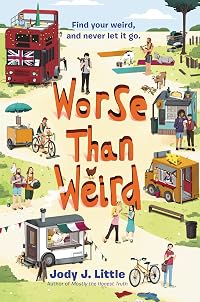
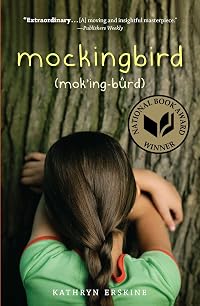
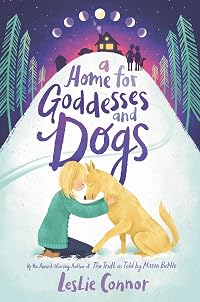
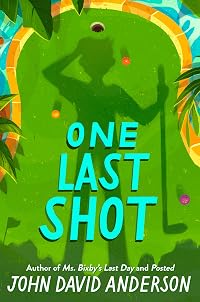
bintarab Borderline is an adult book (fantasy genre) that centers on a main character who is neurodiverse in much the same way as Tornado Brain does: the MC's differences from the norm make the story possible and are central to the story, but the story is not about those differences.
Member Reviews
Things never seem to go as easily for thirteen-year-old Frankie as they do for her twin sister, Tess. Unlike Tess, Frankie is neurodivergent, with diagnoses of ADHD and autism spectrum and attention processing disorders. Frankie can't stand to be touched, loud noises bother her, she's easily distracted, she hates changes in her routine, and she has to go see a therapist while other kids get to hang out at the beach. It also means Frankie has trouble making friends. She did have one--Colette--but they're not friends anymore. It's complicated.
Then, just weeks before the end of seventh grade, Colette unexpectedly shows up at Frankie's door. The next morning, Colette vanishes. Now, after losing Colette yet again, Frankie's convinced that show more her former best friend left clues behind that only she can decipher, so she persuades her reluctant sister to help her unravel the mystery of Colette's disappearance before it's too late. show less
Then, just weeks before the end of seventh grade, Colette unexpectedly shows up at Frankie's door. The next morning, Colette vanishes. Now, after losing Colette yet again, Frankie's convinced that show more her former best friend left clues behind that only she can decipher, so she persuades her reluctant sister to help her unravel the mystery of Colette's disappearance before it's too late. show less
My 10 year old daughter brought this book to my attention, telling me "it felt like real life" to her oppose to being a story of fiction. Since her apple didn't fall far from my neurodivergent tree, I wanted to give it a read for myself.
I am so thankful that my daughter has access to characters like Frankie. Being able to see yourself in the stories you read is life changing. I can't began to fathom how it would have changed my life as a child to read Tornado Brain then. So many times throughout my life people have written me off as cold, or not caring, or mean, etc. all because I had the inability to get my thoughts out articulately, or because I thought they "just knew" how I felt about them. When Frankie realized her mom's boyfriend show more might not know how much she cares about him it broke me into pieces.
From the emotional overloads, to the thought processing / honest word vomits / spacing out and everything in between. It was all depicted as I lived it decades ago—and still struggle with today. I adored the frank way the author approached being neurodivergent, plus the raw truth about loss and friendship.
This is a must read for both parents and kids alike. So many times I've wanted to put into words how my brain works, like why I interrupt others and mysteriously switch topics or why I don't like to be touched. Cat Patrick did it perfectly.
I would highly recommend this read to anyone wanting to take a peek inside the brain of someone who isn't neurotypical. Whether it's you, your child or someone you know, this book is a wonderful example.
While I didn't predict the ending, it was a well laid out plot that went at the pace of Frankie's mind. It also handled heavy (taboo to some) topics like periods, and death with the honesty, and grace they deserved. Frankie's reactions to everything made complete sense to me.
As a side note. I would love a full series of Frankie as an amateur sleuth, solving crimes around time.
TW: Missing Child, Death of a Child show less
I am so thankful that my daughter has access to characters like Frankie. Being able to see yourself in the stories you read is life changing. I can't began to fathom how it would have changed my life as a child to read Tornado Brain then. So many times throughout my life people have written me off as cold, or not caring, or mean, etc. all because I had the inability to get my thoughts out articulately, or because I thought they "just knew" how I felt about them. When Frankie realized her mom's boyfriend show more might not know how much she cares about him it broke me into pieces.
From the emotional overloads, to the thought processing / honest word vomits / spacing out and everything in between. It was all depicted as I lived it decades ago—and still struggle with today. I adored the frank way the author approached being neurodivergent, plus the raw truth about loss and friendship.
This is a must read for both parents and kids alike. So many times I've wanted to put into words how my brain works, like why I interrupt others and mysteriously switch topics or why I don't like to be touched. Cat Patrick did it perfectly.
I would highly recommend this read to anyone wanting to take a peek inside the brain of someone who isn't neurotypical. Whether it's you, your child or someone you know, this book is a wonderful example.
While I didn't predict the ending, it was a well laid out plot that went at the pace of Frankie's mind. It also handled heavy (taboo to some) topics like periods, and
As a side note. I would love a full series of Frankie as an amateur sleuth, solving crimes around time.
TW: Missing Child,
Cat Patrick does an incredible job of really letting you into Frankie's mind, and understanding that her reality is exactly that: her reality, her way of experiencing the world. Yes, it's different from almost everybody else's way of being, but that doesn't mean it's any lesser. It's embarrassing to admit, but I never consciously considered that of course neurodivergent people see the way they go through life as normal.
Frankie's struggles are mainly struggles every middle schooler can empathize with: her best friend has betrayed her by gossiping behind her back, her twin sister isn't her friend anymore, and she feels that she has no friends. When Colette, her former best friend, is announced missing, Frankie and her sister start to show more discover strange videos apparently taken by Colette and posted from the past. These videos contain clues to where she is, but Frankie has a hard time convincing anyone of that.
The relationships between everyone are so real and honest, and while the mystery aspect isn't super strong, that's not really the point. It did end a little abruptly, but everything was wrapped up.
Honestly, all I could really think about is how hard it seems to be to be around Frankie. I know I KNOW that it isn't her fault, and she really is a big-hearted, smart and curious girl, but man can she be a lot. Her family and friends have the patience of literal saints. show less
Frankie's struggles are mainly struggles every middle schooler can empathize with: her best friend has betrayed her by gossiping behind her back, her twin sister isn't her friend anymore, and she feels that she has no friends. When Colette, her former best friend, is announced missing, Frankie and her sister start to show more discover strange videos apparently taken by Colette and posted from the past. These videos contain clues to where she is, but Frankie has a hard time convincing anyone of that.
The relationships between everyone are so real and honest, and while the mystery aspect isn't super strong, that's not really the point. It did end a little abruptly, but everything was wrapped up.
Honestly, all I could really think about is how hard it seems to be to be around Frankie. I know I KNOW that it isn't her fault, and she really is a big-hearted, smart and curious girl, but man can she be a lot. Her family and friends have the patience of literal saints. show less
this was pretty great. i think being inside frankie's head can really help people see what it's like to think differently than those in the mainstream, and to be seen by those who are neurodivergent. it gave me a little insight into how my son's brain might work. (or might not; everyone is different.)
i liked the writing, the characters, the relationships. i am not quite as on board with the mystery of the videos, but it was fine.and i do think that having colette die at the end is actually really great for kids dealing with grief and sadness. i think that even though i wanted her to be ok, that having it turn out this way can help kids be seen, just like having a neurodivergent main character can. but being with these kids was great. show more the audio reader was also excellent. i really thought this was well done. show less
i liked the writing, the characters, the relationships. i am not quite as on board with the mystery of the videos, but it was fine.
I received a copy of this book through the Goodreads giveaway program.
Highly recommended for readers of any age. I wanted this book because I wanted to see how neurodiverse main characters could be portrayed (with the understanding that this book is intended for young readers), and I was surprised to find that Frankie (the MC and narrator of the book) is a complex and engaging character.
There are no other neurodiverse characters or characters with disabilities in the story (at least none who are explicitly identified as such), so this book would not pass the The Fries Test on disability representation in our culture, a critique based on the stereotypes and ways that authors have used disabled characters in the past. Despite that, I was show more impressed with how well the author (Cat Patrick) created a story from Frankie's character, weaving together her unique personality and voice with the manifestations of her neurodiversity unique to her. If Frankie had not been neurodiverse, there wouldn't be any story, but the story is not about her neurodiversity. That is the greatest strength of the book.
Although the main characters are seventh graders (and the adults in their lives), I agree with the book flap suggestion that the book is good for readers as young as fifth grade. The only caveat is thata major character in the book -- one of Frankie's close friends, also a seventh grader -- dies in the course of the book. It is a moving event treated with grace and realism, including a graphic description of the girl lying in an ICU, hooked up to a monitor, an IV, and a respiratory tube. The candor of the descriptions and events would make these scenes easy for even young readers to understand and deal with, but that also depends on the young reader's own life and sensibility. Patrick has included many teaching moments in this dramatic turn of events, including messages about how everyone deals with grief and mourning in their own way.
This story has enough dimension that I believe it will appeal to both male and female readers. At one point in the story Frankie experiences cramps only to discover that she is menstruating for the first time, along with an embarrassing stain on her backside in public. I wonder how boys will take this development in the book. It's a plot device to put Frankie in a situation that makes her desperate enough for help to overcome her anger at her sister to talk with her. As a plot device it works very well, but I wonder how boys would react: Would they hate the book and not want to read on? Would they start wondering if more "girl stuff" will come in the book? Would they be curious and appreciate the casual mention of this plot point? Or maybe a fifth-, sixth-, or seventh- grade boy has not yet been conditioned to think of menstruation as "girl stuff."
This book can demystify for readers some contradictory aspects of life, such as
* not wanting to see a psychologist/therapist, until circumstances change and then being okay with seeing a therapist,
* not wanting to be touched, but at the same time wanting the kind of affirmation that touch signifies,
* feeling deeply hurt by and angry at someone while feeling love for them at the same time,
* wanting to do a thing on your own without help from anyone, but facing the awful realization that you need help,
or
* getting furious at people for not cooperating and giving you what you need, while being completely unable to explain to them why you need it or why it's so important to you.
These are just a few of the examples of "teaching moments" incorporated in the book, and a kid can learn a lot about him/herself by seeing him/herself in the pages of this story in one way or another.
The language of the writing is clear and well-constructed to be accessible without being simplistic. At the beginning of the book, I was a little frustrated that the author spent a lot of time explaining (through Frankie's narration) some of the characteristics of Frankie's neurodiverse patterns; there was a lot of time spent "telling" rather than "showing." For example, Frankie would explain to the reader "I don't like to be touched" rather than just showing Frankie's reaction and leaving it to the reader to experience the moment and come to the understanding that Frankie does not like to be touched. However, about a third of the way through the book, the author dropped the habit of telling vs. showing to do more showing and letting the reader experience Frankie's reactions directly. I think the habit early in the book of explaining/telling may have been a concession to young readers who might otherwise not understand what is going on.
I enjoyed reading this book immensely. I hope there are sequels planned!
~bint show less
Highly recommended for readers of any age. I wanted this book because I wanted to see how neurodiverse main characters could be portrayed (with the understanding that this book is intended for young readers), and I was surprised to find that Frankie (the MC and narrator of the book) is a complex and engaging character.
There are no other neurodiverse characters or characters with disabilities in the story (at least none who are explicitly identified as such), so this book would not pass the The Fries Test on disability representation in our culture, a critique based on the stereotypes and ways that authors have used disabled characters in the past. Despite that, I was show more impressed with how well the author (Cat Patrick) created a story from Frankie's character, weaving together her unique personality and voice with the manifestations of her neurodiversity unique to her. If Frankie had not been neurodiverse, there wouldn't be any story, but the story is not about her neurodiversity. That is the greatest strength of the book.
Although the main characters are seventh graders (and the adults in their lives), I agree with the book flap suggestion that the book is good for readers as young as fifth grade. The only caveat is that
This story has enough dimension that I believe it will appeal to both male and female readers. At one point in the story Frankie experiences cramps only to discover that she is menstruating for the first time, along with an embarrassing stain on her backside in public. I wonder how boys will take this development in the book. It's a plot device to put Frankie in a situation that makes her desperate enough for help to overcome her anger at her sister to talk with her. As a plot device it works very well, but I wonder how boys would react: Would they hate the book and not want to read on? Would they start wondering if more "girl stuff" will come in the book? Would they be curious and appreciate the casual mention of this plot point? Or maybe a fifth-, sixth-, or seventh- grade boy has not yet been conditioned to think of menstruation as "girl stuff."
This book can demystify for readers some contradictory aspects of life, such as
* not wanting to see a psychologist/therapist, until circumstances change and then being okay with seeing a therapist,
* not wanting to be touched, but at the same time wanting the kind of affirmation that touch signifies,
* feeling deeply hurt by and angry at someone while feeling love for them at the same time,
* wanting to do a thing on your own without help from anyone, but facing the awful realization that you need help,
or
* getting furious at people for not cooperating and giving you what you need, while being completely unable to explain to them why you need it or why it's so important to you.
These are just a few of the examples of "teaching moments" incorporated in the book, and a kid can learn a lot about him/herself by seeing him/herself in the pages of this story in one way or another.
The language of the writing is clear and well-constructed to be accessible without being simplistic. At the beginning of the book, I was a little frustrated that the author spent a lot of time explaining (through Frankie's narration) some of the characteristics of Frankie's neurodiverse patterns; there was a lot of time spent "telling" rather than "showing." For example, Frankie would explain to the reader "I don't like to be touched" rather than just showing Frankie's reaction and leaving it to the reader to experience the moment and come to the understanding that Frankie does not like to be touched. However, about a third of the way through the book, the author dropped the habit of telling vs. showing to do more showing and letting the reader experience Frankie's reactions directly. I think the habit early in the book of explaining/telling may have been a concession to young readers who might otherwise not understand what is going on.
I enjoyed reading this book immensely. I hope there are sequels planned!
~bint show less
Frankie has lived her life being just a little different than those around her. At times, she finds it tough to control her emotions. She doesn't liked to be touched, and she is very, very interested in tornadoes. In kindergarten, during a tornado warning, Frankie helped Colette get through it by holding her close, and they have been friends ever since, until Colette said something that made Frankie very mad. So Colette, Frankie's fraternal twin, Tess, and a new girl at school, Mia are all friends, but Frankie is no longer included in their little circle. Frankie is feeling very alone until Colette is reported missing and Frankie thinks she may have some clues to help find her, but first, she has to get people to look past what makes show more her different so that they will believe her.
Tornado Brain is a coming of age story with the added pressure of autism wrapped up in a mystery. Frankie's thoughts are shared in the story as are her frustrations when people don't hear what she is trying to tell them. Each chapter begins with a fact, myth, or opinion about tornadoes that connects with something that occurs in that chapter, and as the story progresses, those connections become stronger and more intense. As emotional as this book is, there are also moments of quiet humor that make it sing. Overall, Tornado Brain is a wonderful story about the things that we do to hurt each other and the power of forgiveness. show less
Tornado Brain is a coming of age story with the added pressure of autism wrapped up in a mystery. Frankie's thoughts are shared in the story as are her frustrations when people don't hear what she is trying to tell them. Each chapter begins with a fact, myth, or opinion about tornadoes that connects with something that occurs in that chapter, and as the story progresses, those connections become stronger and more intense. As emotional as this book is, there are also moments of quiet humor that make it sing. Overall, Tornado Brain is a wonderful story about the things that we do to hurt each other and the power of forgiveness. show less
I was so excited to read this book. I have ADHD and my brother has severe autism, when I saw that the main character had both ADHD and in the autism spectrum, I thought I would love it. But I am disappointed! I am trying to figure out why.
I liked that Frankie was very interested in tornadoes. When I was growing up in the Midwest, we had many of them.
Frankie's twin sister, Tess, seemed too thinly developed to me. I did not understand her very much until that last part of the book.
Frankie's best friend, Colette from when they both had a tornado experience were boned together mostly because Colette was scared about the tornado. But the story dragged with the truth or scare games until Colette went missing. It was hard for Frankie when show more Colette and her sister became best friends and was left out a lot from the two.
When Colette went missing, then the story picked up speed and people began to see that Frankie noticed things that no one else did. Tess had new respect for Frankie's observational abilities, and she made Frankie feel appreciated and have a better feeling about herself.
I hated the ending. I felt confused and let down at the same time. show less
I liked that Frankie was very interested in tornadoes. When I was growing up in the Midwest, we had many of them.
Frankie's twin sister, Tess, seemed too thinly developed to me. I did not understand her very much until that last part of the book.
Frankie's best friend, Colette from when they both had a tornado experience were boned together mostly because Colette was scared about the tornado. But the story dragged with the truth or scare games until Colette went missing. It was hard for Frankie when show more Colette and her sister became best friends and was left out a lot from the two.
When Colette went missing, then the story picked up speed and people began to see that Frankie noticed things that no one else did. Tess had new respect for Frankie's observational abilities, and she made Frankie feel appreciated and have a better feeling about herself.
I hated the ending. I felt confused and let down at the same time. show less
Members
- Recently Added By
Author Information

9 Works 1,676 Members
Awards and Honors
Awards
Distinctions
Notable Lists
Common Knowledge
- Dedication
- For the remarkable Adiline M.
What a force of nature you are. - First words
- People used to believe that tornadoes only move in one direction--to the northeast--but that's not true. Sometimes they go southwest. Sometimes they touch down and don't go anywhere, getting sucked right back up into the sky.... (show all) That's disappointing. Sometimes they zig and sometimes they zag. Tornadoes are unpredictable.
- Original language
- English
Classifications
Statistics
- Members
- 149
- Popularity
- 219,289
- Reviews
- 9
- Rating
- (4.07)
- Languages
- English
- Media
- Paper, Audiobook, Ebook
- ISBNs
- 9
- ASINs
- 2