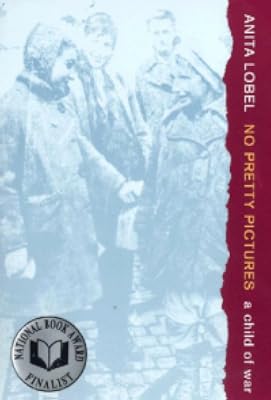
No Pretty Pictures: A Child of War
by Anita Lobel
On This Page
Description
The author, known as an illustrator of children's books, describes her experiences as a Polish Jew during World War II and for years in Sweden afterwards.Tags
Recommendations










Member Recommendations
Member Reviews
Anita Lobel is known for illustrating children's books, often in collaboration with her husband, Arnold Lobel of [Frog and Toad] fame. What I didn't know was that she was a very young Holocaust survivor. This memoir is written for a younger audience, or perhaps it just feels that way because she writes from the perspective of her childhood self. No reflections from her adult self on what she went through or about the war. Instead it is a wonderful glimpse into what it must have been like for a very young child to witness and experience the horrors of war and the Shoah.
Hanusia, as she was called by her family, was five years old when the Germans occupied her hometown of Krakow. She and her parents and younger brother lived in a small show more apartment, along with her nanny. Her father disappeared one night, and it wasn't until after the war that she learned he had been sent to the Soviet camps. Her mother was able to secure fake documents and spent the war living and working as a Catholic Pole. Fearing for the safety of the children, it was agreed that the nanny would take the children first to the village where family lived, and then to the nanny's tiny village. They disguise her younger brother as a girl, because he could be identified as Jewish the moment he used a public bathroom.
After five years of hiding, the children are caught and taken first to a prison and then to Płaszów concentration camp. Because their nanny was Catholic, they were taken away without an adult. They were ten- and eight-years-old. After stints in several different camps, they are liberated and taken to Sweden. There they spend two years in a sanitarium with tuberculosis, until they are finally reunited with family. Five years later they emigrate to the US and the story ends.
Lobel's story is heartbreaking, yet not emotionally fraught or graphic, in part because she was so young that her memories are at times innocent, and in part because she became emotionally numb to everything except wanting to stay with her brother. She never names her family members, except by diminutives like Mamusia (for Mama), and her brother is never named at all. For their privacy? Or perhaps to maintain the childlike perspective? She includes many photographs from before and after the war. I highly recommend this short memoir for its unique perspective from a very young child survivor. show less
Hanusia, as she was called by her family, was five years old when the Germans occupied her hometown of Krakow. She and her parents and younger brother lived in a small show more apartment, along with her nanny. Her father disappeared one night, and it wasn't until after the war that she learned he had been sent to the Soviet camps. Her mother was able to secure fake documents and spent the war living and working as a Catholic Pole. Fearing for the safety of the children, it was agreed that the nanny would take the children first to the village where family lived, and then to the nanny's tiny village. They disguise her younger brother as a girl, because he could be identified as Jewish the moment he used a public bathroom.
After five years of hiding, the children are caught and taken first to a prison and then to Płaszów concentration camp. Because their nanny was Catholic, they were taken away without an adult. They were ten- and eight-years-old. After stints in several different camps, they are liberated and taken to Sweden. There they spend two years in a sanitarium with tuberculosis, until they are finally reunited with family. Five years later they emigrate to the US and the story ends.
Lobel's story is heartbreaking, yet not emotionally fraught or graphic, in part because she was so young that her memories are at times innocent, and in part because she became emotionally numb to everything except wanting to stay with her brother. She never names her family members, except by diminutives like Mamusia (for Mama), and her brother is never named at all. For their privacy? Or perhaps to maintain the childlike perspective? She includes many photographs from before and after the war. I highly recommend this short memoir for its unique perspective from a very young child survivor. show less
No Pretty Pictures: a child of war –Anita Lobel
3 stars
Anita Lobel is an award winning illustrator of children’s books. I love her artwork. I have read On Market Street and The Rose in My Garden to many groups of children. Her pictures are vibrant and full of life. Although the title prepared me, I was deeply affected by her stark, unadorned memoir of her childhood. She was barely five years old, essentially the age of children that I teach, when the Germans invaded Poland. She does not relate her story in a child’s voice, but she tells it from the child’s perspective without adding adult interpretations or explanations until the epilog of the book. From my adult perspective this made the story even more horrifying. There is the show more helpless child who does not, cannot, understand what is happening to her.
The miraculous thing is that Anita and her young brother, who was frequently disguised as a girl, did survive the concentration camp. They were liberated and sent as refugees to Sweden. In Sweden they recovered from tuberculosis in a sanatorium until they were reunited with both of their surviving parents.
This memoir was intended for a young adult audience so the language is simple. I found myself wanting more from the narrator as she described her own reactions to being reunited with her family. She frequently refers to her own confusion about religious issues, but she never speaks to how she personally resolved these questions. There is an emotional distance in the telling of this story that is not a result of the reduced vocabulary. I think that Anita Lobel’s emotional expression is in her artwork, not in her prose. show less
3 stars
Anita Lobel is an award winning illustrator of children’s books. I love her artwork. I have read On Market Street and The Rose in My Garden to many groups of children. Her pictures are vibrant and full of life. Although the title prepared me, I was deeply affected by her stark, unadorned memoir of her childhood. She was barely five years old, essentially the age of children that I teach, when the Germans invaded Poland. She does not relate her story in a child’s voice, but she tells it from the child’s perspective without adding adult interpretations or explanations until the epilog of the book. From my adult perspective this made the story even more horrifying. There is the show more helpless child who does not, cannot, understand what is happening to her.
The miraculous thing is that Anita and her young brother, who was frequently disguised as a girl, did survive the concentration camp. They were liberated and sent as refugees to Sweden. In Sweden they recovered from tuberculosis in a sanatorium until they were reunited with both of their surviving parents.
This memoir was intended for a young adult audience so the language is simple. I found myself wanting more from the narrator as she described her own reactions to being reunited with her family. She frequently refers to her own confusion about religious issues, but she never speaks to how she personally resolved these questions. There is an emotional distance in the telling of this story that is not a result of the reduced vocabulary. I think that Anita Lobel’s emotional expression is in her artwork, not in her prose. show less
Anita was five years old when World War II began and changed her life forever. Along with her brother and Niania (nanny) they went into hiding. After several years the two children were caught and sent from one concentration camp to another. Despite the horrible conditions and lack of food, the children managed to survive until liberation. Discovered to have tuberculosis, the children then spent two years in a sanatorium in Sweden slowly recovering. Miraculously they discovered their parents had survived and they were ultimately reunited.
Beautifully written this is a moving memoir. It is a story of courage, determination and the struggle to survive. Family photos are included throughout the book, and an epilogue, which explains what show more happens next. Overall, I would highly recommend this book. show less
Beautifully written this is a moving memoir. It is a story of courage, determination and the struggle to survive. Family photos are included throughout the book, and an epilogue, which explains what show more happens next. Overall, I would highly recommend this book. show less
Anita Lobel is a well known author and illustrator. No Pretty Pictures is her story of being a Jewish child in Poland during World War 2.
Anita's father went into hiding first, leaving his family to keep them safe. Her mother used false papers to pass as non-Jewish and later sent Anita and her younger brother into hiding with their Nanny. Nanny pretended than Anita and her disguised brother were Nanny's two young daughters and they moved from place to place seeking anonymity. Anita and her brother were captured by Nazis and sent to Plaszow and then to Auschwitz. At the end of the war Anita and her brother were rescued and sent to Sweden where they recovered from Tuberculosis in a sanitorium and then were reunited with both their show more parents.
I read this book and then discussed it with a 12 year old who had also read it. Our minds were caught by totally different things.
As a parent I saw the adult Lobel's actions as attempts to keep their family alive even if they were separated. I could see the logic in separation giving some of them a chance even if one was caught. I found Anita's emotional separation from her parents to be most distressing. They survived as human beings but not as a family with solid parent/child relationships. Anita felt abandoned by her parents, especially her mother who came and saw them periodically. Anita came to look to her Nanny for the protection and stability that one usually finds in parents. This dependence was hampered by Nanny's dislike of Jews (in general) and outbursts of frustration and fear linked to trying to save two children. As the war went on, Anita stopped trusting Nanny and gave up expecting to be saved but could not let herself release the thought of trusting Nanny because it was her last thread of hope. Anita took on parts of Nanny's Roman Catholic faith; her Jewish faith was such a small and powerless part of her life and her main remembrance was her first and only pre-war participation in a Seder. Nanny and then the Lutheran nurses at the sanitorium gave Anita other places to look for god and angels to hope for protection from.
A heart rending look at the subtle devastation done by war and concentration camps. show less
Anita's father went into hiding first, leaving his family to keep them safe. Her mother used false papers to pass as non-Jewish and later sent Anita and her younger brother into hiding with their Nanny. Nanny pretended than Anita and her disguised brother were Nanny's two young daughters and they moved from place to place seeking anonymity. Anita and her brother were captured by Nazis and sent to Plaszow and then to Auschwitz. At the end of the war Anita and her brother were rescued and sent to Sweden where they recovered from Tuberculosis in a sanitorium and then were reunited with both their show more parents.
I read this book and then discussed it with a 12 year old who had also read it. Our minds were caught by totally different things.
As a parent I saw the adult Lobel's actions as attempts to keep their family alive even if they were separated. I could see the logic in separation giving some of them a chance even if one was caught. I found Anita's emotional separation from her parents to be most distressing. They survived as human beings but not as a family with solid parent/child relationships. Anita felt abandoned by her parents, especially her mother who came and saw them periodically. Anita came to look to her Nanny for the protection and stability that one usually finds in parents. This dependence was hampered by Nanny's dislike of Jews (in general) and outbursts of frustration and fear linked to trying to save two children. As the war went on, Anita stopped trusting Nanny and gave up expecting to be saved but could not let herself release the thought of trusting Nanny because it was her last thread of hope. Anita took on parts of Nanny's Roman Catholic faith; her Jewish faith was such a small and powerless part of her life and her main remembrance was her first and only pre-war participation in a Seder. Nanny and then the Lutheran nurses at the sanitorium gave Anita other places to look for god and angels to hope for protection from.
A heart rending look at the subtle devastation done by war and concentration camps. show less
Summary:
No Pretty Pictures: A Child Of War by Anita Lobel is a biography about her (Anita Lobel's) life as a jew during WW2. Before she was a refugee, Anita was a decently well off child. When she was almost five years old however, many of her family's belongings were taken by Nazis. Later many of her family members were deported and eventually Anita's mother and Nanusiu (nanny) had to take her and her brother to the countryside to try to get away from the Nazis. Anita's mother stayed in the city, as she had false papers to get her by, and the children and Nanusiu had to go to the countryside. Anita, here brother, and Nanusiu survived by begging and trading household goods from the old house for food. After moving many places and living show more in hiding they eventually move into a convent in which they stay for a while. Later the convent was caught housing Jews, and the Nazis took Anita, her brother, and the rest of the Jews to a prison, in which they would stay before being shipped off to a concentration camp. Many Jews were shot after they came in. The time she did spend in the prison camps she fortunately was able to get good food from a Nazi soldier who let her and some of her other deported family eat in his room. This went on until the camp was marched into the Auschwitz. They only spent one night there though and they had to move into a train the next day. The train took them to a small base in which they stayed for many days. They were then saved by soldiers (Anita knew they weren't Nazis but she didn't know who they were) who took them from the base and into Sweden. Anita and her brother were sick with tuberculosis and had to stay in a sanatorium. Almost a year later Anita was sent a letter from her mother, and after a while she got a letter from her father too. Anita had to leave the sanatorium and leave her brother behind, as she had recovered from tuberculosis and her brother had not. She was taken to Poland to a shelter for Polish refugee children, where she stayed until her parents came to get her. When she was taken back by her parents, she lived in a boardinghouse with her parents. Eventually her parents got jobs and were able to afford new clothes for Anita. When her brother finally recovered from tuberculosis they needed to get a larger apartment. Anita was finally able to go to school for the first time in her life. When she was in high school, Niania died from a brain tumor. When Anita was sixteen, her parents decided to move to America. She left behind her best friends and her first boyfriend to leave for New York City.
My Thoughts:
This story was really great for me to understand how the Jews were treated and lived in hiding during WW2. It was absolutely heartbreaking to read how Anita completely lost so much of her trust for people because of living in hiding so long. Anita, even after being saved by the soldiers, was so wary of everyone trying to help her. She thought that the Polish refugee shelter was another prison camp. It is fortunate she was able to hide for so long, she might not have made it out of the prison camps alive if she was caught earlier in the war. It was also sad reading that her brother didn't even recognise his father when he came back from the sanatorium. Her brother was way too young to remember his father before the war. This book gave me a lot of insight on what it was like to live in hiding from the Nazis and live in prison camps as a Jew. show less
No Pretty Pictures: A Child Of War by Anita Lobel is a biography about her (Anita Lobel's) life as a jew during WW2. Before she was a refugee, Anita was a decently well off child. When she was almost five years old however, many of her family's belongings were taken by Nazis. Later many of her family members were deported and eventually Anita's mother and Nanusiu (nanny) had to take her and her brother to the countryside to try to get away from the Nazis. Anita's mother stayed in the city, as she had false papers to get her by, and the children and Nanusiu had to go to the countryside. Anita, here brother, and Nanusiu survived by begging and trading household goods from the old house for food. After moving many places and living show more in hiding they eventually move into a convent in which they stay for a while. Later the convent was caught housing Jews, and the Nazis took Anita, her brother, and the rest of the Jews to a prison, in which they would stay before being shipped off to a concentration camp. Many Jews were shot after they came in. The time she did spend in the prison camps she fortunately was able to get good food from a Nazi soldier who let her and some of her other deported family eat in his room. This went on until the camp was marched into the Auschwitz. They only spent one night there though and they had to move into a train the next day. The train took them to a small base in which they stayed for many days. They were then saved by soldiers (Anita knew they weren't Nazis but she didn't know who they were) who took them from the base and into Sweden. Anita and her brother were sick with tuberculosis and had to stay in a sanatorium. Almost a year later Anita was sent a letter from her mother, and after a while she got a letter from her father too. Anita had to leave the sanatorium and leave her brother behind, as she had recovered from tuberculosis and her brother had not. She was taken to Poland to a shelter for Polish refugee children, where she stayed until her parents came to get her. When she was taken back by her parents, she lived in a boardinghouse with her parents. Eventually her parents got jobs and were able to afford new clothes for Anita. When her brother finally recovered from tuberculosis they needed to get a larger apartment. Anita was finally able to go to school for the first time in her life. When she was in high school, Niania died from a brain tumor. When Anita was sixteen, her parents decided to move to America. She left behind her best friends and her first boyfriend to leave for New York City.
My Thoughts:
This story was really great for me to understand how the Jews were treated and lived in hiding during WW2. It was absolutely heartbreaking to read how Anita completely lost so much of her trust for people because of living in hiding so long. Anita, even after being saved by the soldiers, was so wary of everyone trying to help her. She thought that the Polish refugee shelter was another prison camp. It is fortunate she was able to hide for so long, she might not have made it out of the prison camps alive if she was caught earlier in the war. It was also sad reading that her brother didn't even recognise his father when he came back from the sanatorium. Her brother was way too young to remember his father before the war. This book gave me a lot of insight on what it was like to live in hiding from the Nazis and live in prison camps as a Jew. show less
No Pretty Pictures is written by Anita Lobel. It was nominated for the National Book Award in young adult literature. It is a memoir of Anita Lobel, a Jewish girl who was living in Krakow, Poland during the Nazi Occupation of Poland and survived the Holocaust. The story begins when Anita was 5 years old. Anita had a mother, father and a brother. Anita and her brother were sent by their mother to their nanny, a devouted Catholic. Unfortunately Anita and her brother were eventually caught by the Nazis and were sent to a series of Concentration Camps. Luckily, Anita, her brother, and her parents all survived and were reunited in Stockholm, Sweden. The story ends when Anita was 16 years old and living in the United States.
No Pretty show more Pictures is an excellent book. Since it is told through the eyes of Anita, it enables readers to view and understand what life was like for a young Jewish girl during the Holocaust and World War II. The story is about bravery, struggle, and the will to survive. Based on my review, I give No Pretty Pictures 5 out of 5 stars. show less
No Pretty show more Pictures is an excellent book. Since it is told through the eyes of Anita, it enables readers to view and understand what life was like for a young Jewish girl during the Holocaust and World War II. The story is about bravery, struggle, and the will to survive. Based on my review, I give No Pretty Pictures 5 out of 5 stars. show less
This book could be a class text for middle school students. It is a little tricky with the foreign languages used (even though it often translates) and it overall would be most appropriate for an older student. As a class text, they could discuss the history taking place and they would enjoy the story being told of life on the run.
Members
- Recently Added By
Author Information

36+ Works 2,875 Members
Anita Lobel (née Kempler) was born on June 2, 1934. She is a Polish-American illustrator of children's books, including A New Coat for Anna, This Quiet Lady, Alison's Zinnia, and On Market Street, which won a Caldecott Honor for illustrations. One Lighthouse, One Moon, one of two books she created about her cat, Nini, is a New York Times Best show more Illustrated Book. Her childhood memoir, No Pretty Pictures, was a finalist for the National Book Award. Lobel was born in Krakow, Poland. She was forced to hide in a convent during WWII, but was captured by the Nazis. She and her brother were forced to go into a concentration camp in Germany; they were rescued in 1945 by the Swedish Red Cross. They were lucky to be reunited with their parents in 1947. In 1952, her family moved to New York, and she then attended Pratt Institute for Art. Lobel graduated with a B. F. A. in Fine Arts. Lobel met her husband, Arnold, at Pratt while acting in a play. Anita's major works include: Alison's Zinnias, Sven's Bridge, On Market Street, and One Lighthouse, One Moon. She has been nominated for numerous awards including selections for the Best Illustrated Book from New York Times Book Reviews (Sven's Bridge, On Market Street and One Lighthouse, One Moon). On Market Street also received a Caldecott Honor Book Award, a Boston Globe/Horn Book Award (illustration), and is an American Book Award finalist. (Bowker Author Biography) show less
Awards and Honors
Awards
Distinctions
Common Knowledge
- Canonical title
- No Pretty Pictures: A Child of War
- Original publication date
- 1998
- People/Characters
- Aneta Kempler; Niania
- Important places
- Krakow, Poland; Stockholm, Sweden
- Important events
- World War II (1939 | 1945); Holocaust
- Dedication
- The Winski Family
For my brother and to the memory of Niania - First words
- Prologue: I was born in Krakow, Poland.
From our balcony on a September day a long time ago, I watched the Germans march into the city where we lived. - Last words
- (Click to show. Warning: May contain spoilers.)Mine is only another story.
- Publisher's editor
- Hirschman, Susan
- Blurbers
- Wiesel, Elie
- Original language
- English
Classifications
Statistics
- Members
- 604
- Popularity
- 48,346
- Reviews
- 10
- Rating
- (4.13)
- Languages
- English, German
- Media
- Paper
- ISBNs
- 8
- ASINs
- 6