On This Page
Description
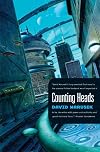
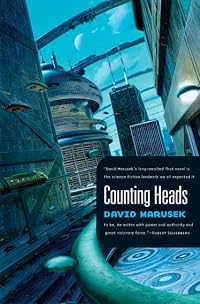
Counting Heads is David Marusek's extraordinary launch as an SF novelist: The year is 2134, and the Information Age has given rise to the Boutique Economy in which mass production and mass consumption are rendered obsolete. Life extension therapies have increased the human lifespan by centuries. Loyal mentars (artificial intelligences) and robots do most of society's work. The Boutique Economy has made redundant ninety-nine percent of the world's fifteen billion human inhabitants. The world show more would be a much better place if they all simply went away.Eleanor K. Starke, one of the world's leading citizens is assassinated, and her daughter, Ellen, is mortally wounded. Only Ellen, the heir to her mother's financial empire, is capable of saving Earth from complete domination plotted by the cynical, selfish, immortal rich, that is if she survives. Her cryonically frozen head is in the hands of her family's enemies. A ragtag ensemble of unlikely heroes join forces to rescue Ellen's head, all for their own purposes.Counting Heads arrives as a science fiction novel like a bolt of electricity, galvanizing readers with an entirely new vision of the future.At the Publisher's request, this title is being sold without Digital Rights Management Software (DRM) applied. show lessTags
Recommendations

Member Reviews
“I am not pouting, and I am certainly not indulging in self-pity, as Eleanor accuses me. In fact, I am brooding. It is what artists do, we brood. To other, more active people, we appear selfish, obsessive, even narcissistic, which is why we prefer to brood in private.”
In “Counting Heads” by David Marusek
SF stories often regurgitate medieval themes and settings, including wars, sword fighting, emperors, dukes, and so on. Star Wars and Dune do this, too. They would have us believe that people still fight with (light) sabres although they master FTL travel as well. Light sabres may be entertaining, but to me they are not serious SF. I prefer another kind of SF, the kind that shows NEW forms of human/alien behaviour induced by alien show more settings and new technology, NEW dilemmas and choices, and shows how current developments will play out in the not-too-distant future. In short, it kind of sheds light on the human condition as I’ve been writing “ad nauseam” on this blog. David's Marusek brilliant "Counting Heads" has no sword fighting, no laser guns. It does have court cases being pursued by Artificial Intelligence Assistance up to the Highest Court within milliseconds. People being "seared" - deprived of their online identity and thereby being unable to live a normal life. Societies with large numbers of clones such as "Maries" (that often marry Freds, who are fond of making lists for everything they do). Leftover Nano weapons from a past conflict still wreaking havoc. How drones will change the way life is lived. People choosing the age at which they remain living. A large queue forming outside the neighborhood 3D print shop because someone is printing a couch... Etcetera. And the book was written in 2005. This shows it’s not necessary to write 600-pages books to give us a fine SF novel. More words, not always give us a better book for sure; would a longer book serve to clarify, especially when the reader is forced to embrace and remember new names and terminologies at almost every paragraph? Do we really need to be spoon-fed? I much prefer my SF to be ultra-dense like Marusek's; he prefers to build the world through subtle hints for an attentive reader to pick up and put together. But we're geeks. We're smart guys. We wear hats. This is how we should want our books. We don't need our mommies to cut up our steak for us, so why do we need an author to spoon-feed us big chunks of exposition to explain every nuance? Were this another type of SF novel (meaning bigger), it’d degenerate to a sinkhole of flash-in-the-pan fantasy in the guise of science fiction.
My point: there is SF that retells old stories in new settings, and there is SF that throws most of the old out and replaces it with thought-provoking new stuff. The books from Philip K. Dick could only be made into movies at the end of his life, and decades thereafter, because that's when society had learned enough to understand his concepts. Maybe the same will happen to David Marusek.
SF = Speculative Fiction. show less
In “Counting Heads” by David Marusek
SF stories often regurgitate medieval themes and settings, including wars, sword fighting, emperors, dukes, and so on. Star Wars and Dune do this, too. They would have us believe that people still fight with (light) sabres although they master FTL travel as well. Light sabres may be entertaining, but to me they are not serious SF. I prefer another kind of SF, the kind that shows NEW forms of human/alien behaviour induced by alien show more settings and new technology, NEW dilemmas and choices, and shows how current developments will play out in the not-too-distant future. In short, it kind of sheds light on the human condition as I’ve been writing “ad nauseam” on this blog. David's Marusek brilliant "Counting Heads" has no sword fighting, no laser guns. It does have court cases being pursued by Artificial Intelligence Assistance up to the Highest Court within milliseconds. People being "seared" - deprived of their online identity and thereby being unable to live a normal life. Societies with large numbers of clones such as "Maries" (that often marry Freds, who are fond of making lists for everything they do). Leftover Nano weapons from a past conflict still wreaking havoc. How drones will change the way life is lived. People choosing the age at which they remain living. A large queue forming outside the neighborhood 3D print shop because someone is printing a couch... Etcetera. And the book was written in 2005. This shows it’s not necessary to write 600-pages books to give us a fine SF novel. More words, not always give us a better book for sure; would a longer book serve to clarify, especially when the reader is forced to embrace and remember new names and terminologies at almost every paragraph? Do we really need to be spoon-fed? I much prefer my SF to be ultra-dense like Marusek's; he prefers to build the world through subtle hints for an attentive reader to pick up and put together. But we're geeks. We're smart guys. We wear hats. This is how we should want our books. We don't need our mommies to cut up our steak for us, so why do we need an author to spoon-feed us big chunks of exposition to explain every nuance? Were this another type of SF novel (meaning bigger), it’d degenerate to a sinkhole of flash-in-the-pan fantasy in the guise of science fiction.
My point: there is SF that retells old stories in new settings, and there is SF that throws most of the old out and replaces it with thought-provoking new stuff. The books from Philip K. Dick could only be made into movies at the end of his life, and decades thereafter, because that's when society had learned enough to understand his concepts. Maybe the same will happen to David Marusek.
SF = Speculative Fiction. show less
I was caught by the premise and what can I say? I love hi-tech future-Earth stories, especially when they don't automatically deform into the dissolution of society, but rather, they discuss important issues in sometimes humorous, sometimes disturbing, sometimes just plainly WTF.
This one is definitely all of the above.
The entire novel is extremely rich in wonderful world-building ideas in the grand, nearly overwhelming sense that it's all over the place, from nanotech everywhere, to domed cities to keep out the nasties (weaponized nanotech), AIs that haven't taken over the world, but instead cohabit with us, humans who have been augmented in both capacity and health that we're pretty much on the same playing field as the AIs, helpful show more clones everywhere, a grand colonizing expedition set up for a fairly distant star, and an interesting, not generic utopian society.
So where's the story?
Oh, of course things go wrong. In fact, tons of things go wrong for this large cast of characters, from complete disenfranchisement of all the joys this world has to offer, to losing one's head, to learning that the greatest adventure the world has to offer might be a con-job, to living in fear of the omnipresent surveillance.
This book, despite the very strong beginning and focus on poor Sam, isn't, unfortunately, about him. It's easy to get misled by the some of the hype. Instead, this is a book about all the people, and overpopulation, and the kinds of societies that we allow ourselves to create.
Of course, that's not to say that the characters aren't fascinating, even with such a large cast, because they are. But also don't expect a traditional thriller or plots that weave back together again in a grand fashion, because that's not what this novel is really about. Nor is it an easily defined and thematic novel, either.
Instead, it is an extremely rich exploration of imagination and life, full of loss, duty, loneliness, joy, and especially of hope, mostly transcending the base cares and proving that no matter how advanced we become, or how we might eradicate disease or old age, we're still human, for good or ill. And I'm not leaving out the clones.
Hell, even the AIs are only human.
Don't let me mislead you, though, because there's plenty of action and adventure here, too, as well as creepy images of slugs everywhere and babies with adult heads, but there's also some totally wonderful allusions mixed in with some extremely clever prose, too. And in any account, no one should ever discount extremely crisp writing.
If you're looking for futuristic SF in the vein of [b:Stand on Zanzibar|41069|Stand on Zanzibar|John Brunner|https://d2arxad8u2l0g7.cloudfront.net/books/1360613921s/41069.jpg|2184253] or [b:Brave New World|5129|Brave New World|Aldous Huxley|https://d2arxad8u2l0g7.cloudfront.net/books/1433092908s/5129.jpg|3204877], that focuses more on what the world of the future has to say, with lots of extras that paint as interesting a picture as the MCs, then you really can't go wrong with this gem of a novel. show less
This one is definitely all of the above.
The entire novel is extremely rich in wonderful world-building ideas in the grand, nearly overwhelming sense that it's all over the place, from nanotech everywhere, to domed cities to keep out the nasties (weaponized nanotech), AIs that haven't taken over the world, but instead cohabit with us, humans who have been augmented in both capacity and health that we're pretty much on the same playing field as the AIs, helpful show more clones everywhere, a grand colonizing expedition set up for a fairly distant star, and an interesting, not generic utopian society.
So where's the story?
Oh, of course things go wrong. In fact, tons of things go wrong for this large cast of characters, from complete disenfranchisement of all the joys this world has to offer, to losing one's head, to learning that the greatest adventure the world has to offer might be a con-job, to living in fear of the omnipresent surveillance.
This book, despite the very strong beginning and focus on poor Sam, isn't, unfortunately, about him. It's easy to get misled by the some of the hype. Instead, this is a book about all the people, and overpopulation, and the kinds of societies that we allow ourselves to create.
Of course, that's not to say that the characters aren't fascinating, even with such a large cast, because they are. But also don't expect a traditional thriller or plots that weave back together again in a grand fashion, because that's not what this novel is really about. Nor is it an easily defined and thematic novel, either.
Instead, it is an extremely rich exploration of imagination and life, full of loss, duty, loneliness, joy, and especially of hope, mostly transcending the base cares and proving that no matter how advanced we become, or how we might eradicate disease or old age, we're still human, for good or ill. And I'm not leaving out the clones.
Hell, even the AIs are only human.
Don't let me mislead you, though, because there's plenty of action and adventure here, too, as well as creepy images of slugs everywhere and babies with adult heads, but there's also some totally wonderful allusions mixed in with some extremely clever prose, too. And in any account, no one should ever discount extremely crisp writing.
If you're looking for futuristic SF in the vein of [b:Stand on Zanzibar|41069|Stand on Zanzibar|John Brunner|https://d2arxad8u2l0g7.cloudfront.net/books/1360613921s/41069.jpg|2184253] or [b:Brave New World|5129|Brave New World|Aldous Huxley|https://d2arxad8u2l0g7.cloudfront.net/books/1433092908s/5129.jpg|3204877], that focuses more on what the world of the future has to say, with lots of extras that paint as interesting a picture as the MCs, then you really can't go wrong with this gem of a novel. show less
I gave up on this book halfway through. I almost never give up on books like that... but in this case, the book never connected with me.
The story, to the extent that there is one, is set on a future Earth that has been devastated by nano- and biological weapons. People live in cities, which serve as enclaves to protect them from remnants of past wars. We have a massive class divide, with cloned humans serving as virtual slaves and affluents who rule the world, all living in a police state set up in response to these weapons. Most people have AI assistants, who sadly aren't very intelligent. The affluents can live a long time, but happiness seems to elude them. Actually, pretty much everyone we see in the book seems unhappy, whether due show more to poverty, boredom, or something else. The author puts a great deal of energy into inventing and describing this future. However, the future we see is, well, rather depressing. To the extent that the book is primarily about this possible future, the book ends up being rather depressing, itself.
Or perhaps that's not the problem. Perhaps the problem is that the characters are, themselves, depressed and depressing. There is no character in here who I wanted to spend more time with; they are unsympathetic, shallow, empty-shelled, and unable or unwilling to do anything about it. There's no hero, no character to identify with and root for, no one to look up to. No one seems to have any particular passion or drive. Everyone is entirely too passive -- things happen to them, for no particular reason, and they don't or can't do anything about it. The characters are not subjects; they don't act upon the world; instead, they are the objects who are acted upon. They're like a rock who is stepped upon, eroded by time, gathered up and displayed for all to see by a collector, crushed by a mining operation into pieces... stuff happens, but it's not because of any of the characters. Actually, the characters with the most sense of personality are the AIs, but even they don't seem to have an independent drive of their own; they merely live to serve their masters. No one seems to have a sense of humor, and they all seem to be alone in the world. Sure, there are couples, but you don't see much love between them; folks have friends, but you don't see much of a bond or affection between them; you don't see them receiving emotional strength or support others. They're all on their own. When you add all of this up, it gets to be a real downer. Not what I'm looking for, for my entertainment.
The strong point of the book is the vividly imagined future. It's carefully thought out, credible, and well integrated into the book. But, well, I guess I need something more. Maybe a personality who makes me laugh or who I enjoy spending time with; maybe a plot that makes me turn the pages; something. This book lacks that... something. Oh well, maybe the author's next novel will be better! show less
The story, to the extent that there is one, is set on a future Earth that has been devastated by nano- and biological weapons. People live in cities, which serve as enclaves to protect them from remnants of past wars. We have a massive class divide, with cloned humans serving as virtual slaves and affluents who rule the world, all living in a police state set up in response to these weapons. Most people have AI assistants, who sadly aren't very intelligent. The affluents can live a long time, but happiness seems to elude them. Actually, pretty much everyone we see in the book seems unhappy, whether due show more to poverty, boredom, or something else. The author puts a great deal of energy into inventing and describing this future. However, the future we see is, well, rather depressing. To the extent that the book is primarily about this possible future, the book ends up being rather depressing, itself.
Or perhaps that's not the problem. Perhaps the problem is that the characters are, themselves, depressed and depressing. There is no character in here who I wanted to spend more time with; they are unsympathetic, shallow, empty-shelled, and unable or unwilling to do anything about it. There's no hero, no character to identify with and root for, no one to look up to. No one seems to have any particular passion or drive. Everyone is entirely too passive -- things happen to them, for no particular reason, and they don't or can't do anything about it. The characters are not subjects; they don't act upon the world; instead, they are the objects who are acted upon. They're like a rock who is stepped upon, eroded by time, gathered up and displayed for all to see by a collector, crushed by a mining operation into pieces... stuff happens, but it's not because of any of the characters. Actually, the characters with the most sense of personality are the AIs, but even they don't seem to have an independent drive of their own; they merely live to serve their masters. No one seems to have a sense of humor, and they all seem to be alone in the world. Sure, there are couples, but you don't see much love between them; folks have friends, but you don't see much of a bond or affection between them; you don't see them receiving emotional strength or support others. They're all on their own. When you add all of this up, it gets to be a real downer. Not what I'm looking for, for my entertainment.
The strong point of the book is the vividly imagined future. It's carefully thought out, credible, and well integrated into the book. But, well, I guess I need something more. Maybe a personality who makes me laugh or who I enjoy spending time with; maybe a plot that makes me turn the pages; something. This book lacks that... something. Oh well, maybe the author's next novel will be better! show less
How do we tell good science fiction from bad? By the rhapsody of language and scientific ideas. Counting Heads flickers us into the 22nd century in a fast-paced narrative of cascading tech-extrapolations that actually drive the story. It’s exhilarating! This is arch science fiction flexible as music. Keenly imagined future-science is the eerily beautiful femme fatale of this noir portrayal of our mercantile culture as a murder mystery – where the victim is the human soul. A masterful work.
Couldn't read past the 1/3 mark...too many names, too many maddening acronyms, and a story that goes all over the place without fleshing out any of its characters. Great ideas hampered by so-so storytelling.
I enjoyed this book in the weirdest way. The characters, and the richly detailed SF future they inhabit, are fascinating. The central plot about rescuing Ellen's disembodied head, though, was regrettable. I could barely follow it, right up to its arbitrary ending ("Wait, there's only 12 pages left?!?"). The side characters end up much more interesting than the main show, especially Fred Russ and his existential clone journey. It might have worked better as a collection of novellas than a novel. Still, with 2.5 stars for the plot, and 5 stars for the characters and world, it averages out to justify a very "worth reading" 4 stars. I plan to read the sequel as well.
Meh. Its interesting, but I got sick of the scattered plot lines that really don't seem to go no where. I suspect it might get interesting at the end of the book, but I have better things to read than a book that isn't interesting.
Some things I liked - the technology. It is lovely. I can totally see a large chunk of this book actually happening. The writing is spot on within each segment, but the segments don't seem to go anywhere. Anyway, Maybe I'll pick it up again at another point in time and give this book a real review.
Some things I liked - the technology. It is lovely. I can totally see a large chunk of this book actually happening. The writing is spot on within each segment, but the segments don't seem to go anywhere. Anyway, Maybe I'll pick it up again at another point in time and give this book a real review.
Members
- Recently Added By
Lists

Broderick and Di Filippo's Science Fiction: The 101 Best Novels 1985-2010
103 works; 7 members

Good (mostly) modern science fiction
40 works; 4 members
Talk Discussions
Past Discussions
Sci Fi - 2 books, some nano content in Name that Book (August 2013)
Author Information

21+ Works 978 Members

David Marusek is a LibraryThing Author, an author who lists their personal library on LibraryThing.
Some Editions
Awards and Honors
Awards
Distinctions
Series

Work Relationships
Common Knowledge
- Canonical title
- Counting Heads
- Original publication date
- 2005
- People/Characters
- Eleanor Starke; Ellen Starke
- Dedication
- My father, bless his sensibilities, sanitized books with a black marking pen before adding them to his library. He indelibly struck out all words of an offensive nature. I fear that this, my first novel, would not be permitte... (show all)d to join his library unmarked. Nevertheless, I dedicate it to his memory:
Henry Paul Marusak
Inventor - First words
- On March 30, 2092, the Department of Health and Human Services issued Eleanor and me a permit.
- Last words
- (Click to show. Warning: May contain spoilers.)(Joy/Unexpected.)
- Blurbers
- Crowley, John; Kress, Nancy; Silverberg, Robert; Rogers, Bruce Holland; Cadigan, Pat; Goonan, Kathleen Ann (show all 7); Dozois, Gardner
Classifications
Statistics
- Members
- 534
- Popularity
- 55,540
- Reviews
- 25
- Rating
- (3.61)
- Languages
- Czech, English, French
- Media
- Paper, Audiobook, Ebook
- ISBNs
- 9
- ASINs
- 3