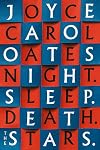
Night. Sleep. Death. The Stars.: A Novel
by Joyce Carol Oates
On This Page
Description
This novel provides an examination of contemporary America through the prism of a family tragedy: when a powerful parent dies, each of his adult children reacts in startling and unexpected ways, and his grieving widow in the most surprising way of all. Stark and penetrating, it's an exploration of psychological trauma, class warfare, grief, and eventual healing.Tags
Recommendations











Member Reviews
If ever there was bad timing for a book's release, it is the release date of Night. Sleep. Death. The Stars. by Joyce Carol Oates. With its discussion of police brutality and bigotry, one would think it is a perfect time to publish the book. However, the police brutality, in this case, occurs against a wealthy, white family patriarch, which feels more like a declaration of "All Lives Matter" rather than a timely story that contributes to the fight against racist police violence.
Also, the tragedy that befalls this larger-than-life patriarch is only the impetus for the rest of the story, which is, in fact, more about the dissolution of the family at the father's death. Granted, the scene of his beating is horrible. It is rare for a scene show more of violence to bother me in a story, but I had a very difficult time pushing through that scene, which occurs within the first few chapters. I almost opted to mark it as a DNF because the scene was so uncomfortable. However, it is a brief flash in an over-long story, seen and then passed over for his death and the aftermath.
The rest of the novel follows the five children and wife of the patriarch as they each struggle to cope with his passing and his impact on their lives. We quickly find that three of the children are horrible human beings. Selfish, angry, racist, and wholly absorbed in maintaining the status quo, you find those scenes that focus on them to be just as uncomfortable as the police beating. They hide behind their white privilege and ability to donate money to worthy causes to justify their racism and abhor anyone who may actually comingle with someone of another skin color, including their mother.
If that were not bad enough, the scenes that focus on the widow and her grief drag on interminably. I read the novel for over an hour one night and still did not get through that first rush of grief the widow experiences. At some point, you no longer care about her suffering and her utter lack of interest in life. As callous as it sounds, you just want the scene to end so that the story would move forward.
In the background of all this is the fact that the family files a lawsuit against the local police department who caused their father's death. It truly is in the background of the novel, mentioned only as a point of the eldest's anger and obsession. Here is another example of where the story's release may not be the most timely. The McClaren family is wealthy. They can afford to seek legal justice for their father, but they are the exception. Ms. Oates discusses the expense associated with such lawsuits and how they can last for years. There are very few families who can afford to take on such cases and pointing out this fact seems rather tactless.
Night. Sleep. Death. The Stars. is too much of everything. It is too long. Ms. Oates drags out certain scenes, like the widow's grief and battle to simply survive after her husband's death so that they feel never-ending. Three of the siblings are too selfish. The family exhibits too much bigotry and hatred towards those who are not among the family's class. Ms. Oates tries to soften this through various love interests and a burgeoning interest in social justice within the widow, but it does not feel enough. No one calls the three siblings on their white privilege. The family receives closure in their lawsuit, again something that just does not happen in real life. The entire story made me feel uncomfortable, and not because it forced me to look at my own ignorance regarding racism. I don't feel that the story contributes anything to the Black Lives Matter movement. In fact, as I previously said, it feels more like a statement that white people can suffer at the hands of the police as well, which is the epitome of those who declare "All Lives Matter." I finished Night. Sleep. Death. The Stars. rather disgusted with the family, the story in general, and the publisher for releasing the novel. I know Ms. Oates is a literary darling, but this is simply the wrong story for the current situation within the United States right now. show less
Also, the tragedy that befalls this larger-than-life patriarch is only the impetus for the rest of the story, which is, in fact, more about the dissolution of the family at the father's death. Granted, the scene of his beating is horrible. It is rare for a scene show more of violence to bother me in a story, but I had a very difficult time pushing through that scene, which occurs within the first few chapters. I almost opted to mark it as a DNF because the scene was so uncomfortable. However, it is a brief flash in an over-long story, seen and then passed over for his death and the aftermath.
The rest of the novel follows the five children and wife of the patriarch as they each struggle to cope with his passing and his impact on their lives. We quickly find that three of the children are horrible human beings. Selfish, angry, racist, and wholly absorbed in maintaining the status quo, you find those scenes that focus on them to be just as uncomfortable as the police beating. They hide behind their white privilege and ability to donate money to worthy causes to justify their racism and abhor anyone who may actually comingle with someone of another skin color, including their mother.
If that were not bad enough, the scenes that focus on the widow and her grief drag on interminably. I read the novel for over an hour one night and still did not get through that first rush of grief the widow experiences. At some point, you no longer care about her suffering and her utter lack of interest in life. As callous as it sounds, you just want the scene to end so that the story would move forward.
In the background of all this is the fact that the family files a lawsuit against the local police department who caused their father's death. It truly is in the background of the novel, mentioned only as a point of the eldest's anger and obsession. Here is another example of where the story's release may not be the most timely. The McClaren family is wealthy. They can afford to seek legal justice for their father, but they are the exception. Ms. Oates discusses the expense associated with such lawsuits and how they can last for years. There are very few families who can afford to take on such cases and pointing out this fact seems rather tactless.
Night. Sleep. Death. The Stars. is too much of everything. It is too long. Ms. Oates drags out certain scenes, like the widow's grief and battle to simply survive after her husband's death so that they feel never-ending. Three of the siblings are too selfish. The family exhibits too much bigotry and hatred towards those who are not among the family's class. Ms. Oates tries to soften this through various love interests and a burgeoning interest in social justice within the widow, but it does not feel enough. No one calls the three siblings on their white privilege. The family receives closure in their lawsuit, again something that just does not happen in real life. The entire story made me feel uncomfortable, and not because it forced me to look at my own ignorance regarding racism. I don't feel that the story contributes anything to the Black Lives Matter movement. In fact, as I previously said, it feels more like a statement that white people can suffer at the hands of the police as well, which is the epitome of those who declare "All Lives Matter." I finished Night. Sleep. Death. The Stars. rather disgusted with the family, the story in general, and the publisher for releasing the novel. I know Ms. Oates is a literary darling, but this is simply the wrong story for the current situation within the United States right now. show less
An 800 page book doesn't scare me. Some of my favorite books are whoppers.
The number of pages are irrelevant when one becomes immersed in detailed characters, propelled by foreshadowing through their actions and weaknesses, touched by universal truths of human nature.
Oates latest novel explores the impact of death on a family.
I was sucked into the story, eagerly looking forward to reading and learning more about these characters. To discover if I was right about what would come.
Night. Sleep. Death. The Stars. begins with the sudden death of a family patriarch. Whitey stopped to investigate what appeared, and was, a case of police profiling and brutality. He was their next victim. He did not survive.
Whitey was 67---my age. He was his show more wife Jessalyn's reason for existence, her lodestone; he defined her. In deep shock, she plummets into a private despair hidden behind her self-effacing thoughtfulness for others.
The children, as children do, decide what must be done, how their mother should 'be', and when her actions do not conform with expectations, they reel off into obsessions and fears and anger.
The family balance is thrown off. The children carry their individual burdens. Some believed they were 'favorite' sons or daughters, while others strove to gain their father's approval. One had given up trying.
After many months, a man enters Jessalyn's life who takes her under his care. She rejects his attentions in horror, but allows him to slowly change her, alter her, and bring her back into the land of the living.
The children are incensed, complain to each other, demand someone do something. Mom has been acting incorrectly. Mom has chosen the wrong man. Mom has a feral cat in the house.
Oh, I have seen this! The children who resent the second spouse. I myself scared off a woman who had set her sights on my newly widowed father! Yes, I did!
I was increasingly horrified as the novel got darker and darker, delving into the black hearts of these children. They are murderers and self-abusers and suicidal misfits and long-suffering, angry wives.
Each sibling must find their way out of their despair and illness. I expected Jessalyn to change into a 'modern heroine', evolving into her own woman. To leave passivity behind. She finds happiness, but not growth.
This story disturbed my sleep. It was an emotional journey.
I received a free ebook from the publisher through NetGalley. My review is fair and unbiased. show less
The number of pages are irrelevant when one becomes immersed in detailed characters, propelled by foreshadowing through their actions and weaknesses, touched by universal truths of human nature.
Oates latest novel explores the impact of death on a family.
I was sucked into the story, eagerly looking forward to reading and learning more about these characters. To discover if I was right about what would come.
Night. Sleep. Death. The Stars. begins with the sudden death of a family patriarch. Whitey stopped to investigate what appeared, and was, a case of police profiling and brutality. He was their next victim. He did not survive.
Whitey was 67---my age. He was his show more wife Jessalyn's reason for existence, her lodestone; he defined her. In deep shock, she plummets into a private despair hidden behind her self-effacing thoughtfulness for others.
The children, as children do, decide what must be done, how their mother should 'be', and when her actions do not conform with expectations, they reel off into obsessions and fears and anger.
The family balance is thrown off. The children carry their individual burdens. Some believed they were 'favorite' sons or daughters, while others strove to gain their father's approval. One had given up trying.
After many months, a man enters Jessalyn's life who takes her under his care. She rejects his attentions in horror, but allows him to slowly change her, alter her, and bring her back into the land of the living.
The children are incensed, complain to each other, demand someone do something. Mom has been acting incorrectly. Mom has chosen the wrong man. Mom has a feral cat in the house.
Oh, I have seen this! The children who resent the second spouse. I myself scared off a woman who had set her sights on my newly widowed father! Yes, I did!
I was increasingly horrified as the novel got darker and darker, delving into the black hearts of these children. They are murderers and self-abusers and suicidal misfits and long-suffering, angry wives.
Each sibling must find their way out of their despair and illness. I expected Jessalyn to change into a 'modern heroine', evolving into her own woman. To leave passivity behind. She finds happiness, but not growth.
This story disturbed my sleep. It was an emotional journey.
I received a free ebook from the publisher through NetGalley. My review is fair and unbiased. show less
Oates’ latest is a big book, both literally and figuratively. At ~800 pages, it will keep you busy during quarantine. But there is a lot to chew on here, so it may be well worth the effort. She gives the reader a Shakespearean tragedy with many themes, but her ultimate focus seems to be America’s truly troubled relationship with race and privilege. Revelations about our persistent delusions in this regard are indeed timely.
Oates views her themes through the lens of a privileged American family, the McClarens. Its patriarch is the essence of white privilege. He is a respected member of his community and a successful businessman with an ideal American family. Not to put too fine a point on it, Oates even nicknames him “Whitey.” show more Notwithstanding his failed attempt to rescue a man of color from a brutal roadside attack by police, Whitey always was a staunch supporter of law and order when he was mayor of his small NY town. Although never clear to either Whitey or his family, such dissonance stands as an example of our racial hypocrisy. Serving in the role of the king in a Shakespearean tragedy, Whitey ends up dying at the hands of his “guardians” early in the story.
The bulk of the novel then follows his family and how they cope with Whitey’s untimely death. Pretenses quickly disappear and ugliness ensues. Keeping up appearances and seeking revenge seem to take precedence over decency. The chief conflict in the novel is between Whitey’s widow, Jessalyn, and her adult children (Thom, Beverly, Lorene, Sophia and Virgil). Jessalyn, the widowed queen in the tale, becomes unmoored and withdraws to the sprawling family manse on Old Farm Road. This malleable woman struggles to adjust to her new status as a widow. She wanders the place, not unlike Hamlet at Elsinore, questioning herself, abandoning her appearance, donating her wardrobe to charity, misplacing her belongings, talking to the walls, and clutching onto dubious lifelines like a homeless man and feral cat. Eventually, Jessalyn is rescued by a dashing prince charming, Hugo Martinez. Notwithstanding his many admirable attributes, including that of a highly respected photographer, this charismatic man has one overarching flaw. He happens to be Hispanic.
The three older McClaren children object to Hugo primarily due to his race, but secondarily because of the mistaken notion that he is a gold digger. Thom, Beverly and Lorene represent undisguised examples of the dark side of American white privilege. Oates manages to give this trio a witch’s brew of truly ugly qualities. These include bullying, elitism, stale marriages, vindictiveness, narcissism, misogyny, alcoholism, manipulativeness, self-hatred, self-harm, and plenty of delusions about their own worth. The youngest members of the family, Sophia and Virgil are just lost souls. Sophia quit graduate school and is now working as a research lab assistant. She is mistakenly characterized as a biological expert in the family. A notion she is reluctant to correct. Whitey’s death forces her to question the pain and suffering for laboratory animals required by her job and her extra-marital affair with her boss. Virgil is a closeted gay who rejects the materialism of his family until he is pleasantly surprised by the generous bequest he receives in Whitey’s will. He lives on the edges of society in a commune spending most of his time creating underappreciated art.
Oates’ characterizations of the family members brilliantly capture many of the glaring flaws in the notion of American exceptionalism. However, her penchant for using multiple third person narration gives the story an unsettled feel. Also, she eschews any attempt at building suspense by killing off Whitey in the first few pages and quickly dispatching the family’s suit of the town. Furthermore, the unfortunate Galapagos conclusion offers some pretty unrealistic solutions. Eternal happiness may not come from the mutually caring relationship between Jessalyn and Hugo and concern for the planet is unlikely to solve all of the problems they left back home. show less
Oates views her themes through the lens of a privileged American family, the McClarens. Its patriarch is the essence of white privilege. He is a respected member of his community and a successful businessman with an ideal American family. Not to put too fine a point on it, Oates even nicknames him “Whitey.” show more Notwithstanding his failed attempt to rescue a man of color from a brutal roadside attack by police, Whitey always was a staunch supporter of law and order when he was mayor of his small NY town. Although never clear to either Whitey or his family, such dissonance stands as an example of our racial hypocrisy. Serving in the role of the king in a Shakespearean tragedy, Whitey ends up dying at the hands of his “guardians” early in the story.
The bulk of the novel then follows his family and how they cope with Whitey’s untimely death. Pretenses quickly disappear and ugliness ensues. Keeping up appearances and seeking revenge seem to take precedence over decency. The chief conflict in the novel is between Whitey’s widow, Jessalyn, and her adult children (Thom, Beverly, Lorene, Sophia and Virgil). Jessalyn, the widowed queen in the tale, becomes unmoored and withdraws to the sprawling family manse on Old Farm Road. This malleable woman struggles to adjust to her new status as a widow. She wanders the place, not unlike Hamlet at Elsinore, questioning herself, abandoning her appearance, donating her wardrobe to charity, misplacing her belongings, talking to the walls, and clutching onto dubious lifelines like a homeless man and feral cat. Eventually, Jessalyn is rescued by a dashing prince charming, Hugo Martinez. Notwithstanding his many admirable attributes, including that of a highly respected photographer, this charismatic man has one overarching flaw. He happens to be Hispanic.
The three older McClaren children object to Hugo primarily due to his race, but secondarily because of the mistaken notion that he is a gold digger. Thom, Beverly and Lorene represent undisguised examples of the dark side of American white privilege. Oates manages to give this trio a witch’s brew of truly ugly qualities. These include bullying, elitism, stale marriages, vindictiveness, narcissism, misogyny, alcoholism, manipulativeness, self-hatred, self-harm, and plenty of delusions about their own worth. The youngest members of the family, Sophia and Virgil are just lost souls. Sophia quit graduate school and is now working as a research lab assistant. She is mistakenly characterized as a biological expert in the family. A notion she is reluctant to correct. Whitey’s death forces her to question the pain and suffering for laboratory animals required by her job and her extra-marital affair with her boss. Virgil is a closeted gay who rejects the materialism of his family until he is pleasantly surprised by the generous bequest he receives in Whitey’s will. He lives on the edges of society in a commune spending most of his time creating underappreciated art.
Oates’ characterizations of the family members brilliantly capture many of the glaring flaws in the notion of American exceptionalism. However, her penchant for using multiple third person narration gives the story an unsettled feel. Also, she eschews any attempt at building suspense by killing off Whitey in the first few pages and quickly dispatching the family’s suit of the town. Furthermore, the unfortunate Galapagos conclusion offers some pretty unrealistic solutions. Eternal happiness may not come from the mutually caring relationship between Jessalyn and Hugo and concern for the planet is unlikely to solve all of the problems they left back home. show less
(33) How I love me a fat, well-written saga in a indulgent new release hardcover no less. While I have not read the majority of Oates' novels, several of her novels stand-out to me as being among my all time favorites. What I especially love about Oates is that her books have literary gravitas, lovely construction and prose, yet are easily read. It is so refreshing for literature to be accessible yet still good. She also has a habit of including themes or actual events in American life that are lurid 'ripped from the headlines' kind of stuff - yet are handled with a virtuoso touch. In this wrist bender, 'Whitey' McClaren, former mayor and pillar of a high-brow upstate NY city pulls off the side of the road after a board meeting one show more random afternoon because he sees a black man being beaten mercilessly by two cops. And this begins an unraveling of a family, much like 'We Were the Mulvaneys," but perhaps a bit more hopeful.
As usual, Oates characters are finely drawn, definitely not always likeable but true to themselves with very distinctive voices. There were times I thought that Jes and Whitey's marriage would turn out to have been only superficial - certainly the patriarchy involved in their relationship was nauseating. But apparently, it was a mutually acceptable and affirming thing. Seemed rather awful to me. While I am nostalgic about some things from the past (the absence of computers and cell phones for example) I am so glad to have never been expected to endure a traditional marriage.
The plot is very rambling. It is certainly a linear story told over the course of a few years but the perspective and what one imagines to be the general thrust of the story changes often. By the time the last part of the story rolls around entitled 'Galapagos' - it seems loose ends are not wrapped up (are they ever in life?) I am not sure she brings it all back together as well as I would have liked accounting for the 1/2 star off.
In the end, it is a profound exploration of the death of a loved one. The Walt Whitman poem excerpt is haunting. This novel, 'My Sister, My Love', 'Black Water', and 'Bellefleur' are my favorite JCO's. I am sad to be finished. show less
As usual, Oates characters are finely drawn, definitely not always likeable but true to themselves with very distinctive voices. There were times I thought that Jes and Whitey's marriage would turn out to have been only superficial - certainly the patriarchy involved in their relationship was nauseating. But apparently, it was a mutually acceptable and affirming thing. Seemed rather awful to me. While I am nostalgic about some things from the past (the absence of computers and cell phones for example) I am so glad to have never been expected to endure a traditional marriage.
The plot is very rambling. It is certainly a linear story told over the course of a few years but the perspective and what one imagines to be the general thrust of the story changes often. By the time the last part of the story rolls around entitled 'Galapagos' - it seems loose ends are not wrapped up (are they ever in life?) I am not sure she brings it all back together as well as I would have liked accounting for the 1/2 star off.
In the end, it is a profound exploration of the death of a loved one. The Walt Whitman poem excerpt is haunting. This novel, 'My Sister, My Love', 'Black Water', and 'Bellefleur' are my favorite JCO's. I am sad to be finished. show less
*Thank you to NetGalley for a free e-copy in exchange for an honest review.*
Actual Rating: 3.8
This was surprisingly really enjoyable from beginning to end, and super salient considering how many innocent dark-skinned (specifically Black people) are getting shot by police today without consequences.
Night. Sleep. Death. The Stars is a story about a powerful man’s death, and the story about his family coming to terms with it. But even more so, Whitey’s death wasn’t as simple as it seems — he was beaten by police while trying to stop it from happening to a dark-skinned young man, and after his death, one of his sons is wrapped up in a lawsuit in a justice system that is clearly broken.
Never have I read a book that made me so TORN show more about its characters. I’m used to having my mind made up, either rooting for a character to have the best ending or wanting the worst tragedy to hit them. That definitely wasn’t the case with this book, and to be honest I really appreciate the multitude of emotions these characters made me feel. One minute I hated them, and the next I appreciated some of the things they did.
Let’s be very clear. All of them, except for Virgil, sound like your typical white, Trumpian, rich, suburban conservative, and their offhanded comments about someone’s race or status were enough to make me hate them. Yet, we kept hearing Whitey Whitey Whitey, this parent who just had so much influence over all of their worldviews, that sometimes you kind of get how and why they’re so narrow-minded. You’re not supposed to like them, but you do grow to understand them.
Two characters that stood out to me were Thom, the macho, heir to the family company. Violent and self-righteous. If I knew him in real life, I’d run in the other direction. Toxic. And yet, his pursuit of justice was interesting and relatable and it made sense, even though morally it was for all the wrong reasons. Thom feels like an “the end justifies the means type.”
And the second one was Virgil, practically Thom’s character foil, the runt and outcast of the family. Different and isolated. The quirky artist. If I knew him in real life, I’d probably find him obnoxious. But there was still something about the way he stuck to his principles and his way of life despite the rest of his family looking down on him for it.
The others, like Sophia, Beverley, Lorene, even the widow Jessalyn — were fun to read too, but I have to admit that it really felt like Thom and Virgil were the MAIN ones in the story. And this might’ve been one downside to this book: the fact that there were so many characters made it difficult sometimes to remember who had done what. Jessalyn’s story wasn’t altogether that interesting, but it was about a woman moving on after her husband had died and not feeling guilty, and that was something I appreciated.
And Whitey. Yes, he was dead. He was pretty much only alive for a few chapters, and a soul in a few more. But Joyce Carol Oates did an amazing job with selling us his power, his role in society and in the family. He felt like a main character, and I felt his presence throughout the entire book, even if he was no longer there. He was in how all the characters acted.
The writing style is definitely not your typical novel. It’s a little stream-of-consciousness at times, fragmented, using parentheses and mini exclamations. Surprisingly, I found that this writing style worked really well for me, especially because it felt like it was allowing me to get inside the head of every character and follow their trains of thought.
Ultimately, I’d definitely recommend this one. Even if it did get me a long time to get through — it is 800 pages — it was worth it, and in such a racially charged political climate, it honestly felt like the perfect read. show less
Actual Rating: 3.8
This was surprisingly really enjoyable from beginning to end, and super salient considering how many innocent dark-skinned (specifically Black people) are getting shot by police today without consequences.
Night. Sleep. Death. The Stars is a story about a powerful man’s death, and the story about his family coming to terms with it. But even more so, Whitey’s death wasn’t as simple as it seems — he was beaten by police while trying to stop it from happening to a dark-skinned young man, and after his death, one of his sons is wrapped up in a lawsuit in a justice system that is clearly broken.
Never have I read a book that made me so TORN show more about its characters. I’m used to having my mind made up, either rooting for a character to have the best ending or wanting the worst tragedy to hit them. That definitely wasn’t the case with this book, and to be honest I really appreciate the multitude of emotions these characters made me feel. One minute I hated them, and the next I appreciated some of the things they did.
Let’s be very clear. All of them, except for Virgil, sound like your typical white, Trumpian, rich, suburban conservative, and their offhanded comments about someone’s race or status were enough to make me hate them. Yet, we kept hearing Whitey Whitey Whitey, this parent who just had so much influence over all of their worldviews, that sometimes you kind of get how and why they’re so narrow-minded. You’re not supposed to like them, but you do grow to understand them.
Two characters that stood out to me were Thom, the macho, heir to the family company. Violent and self-righteous. If I knew him in real life, I’d run in the other direction. Toxic. And yet, his pursuit of justice was interesting and relatable and it made sense, even though morally it was for all the wrong reasons. Thom feels like an “the end justifies the means type.”
And the second one was Virgil, practically Thom’s character foil, the runt and outcast of the family. Different and isolated. The quirky artist. If I knew him in real life, I’d probably find him obnoxious. But there was still something about the way he stuck to his principles and his way of life despite the rest of his family looking down on him for it.
The others, like Sophia, Beverley, Lorene, even the widow Jessalyn — were fun to read too, but I have to admit that it really felt like Thom and Virgil were the MAIN ones in the story. And this might’ve been one downside to this book: the fact that there were so many characters made it difficult sometimes to remember who had done what. Jessalyn’s story wasn’t altogether that interesting, but it was about a woman moving on after her husband had died and not feeling guilty, and that was something I appreciated.
And Whitey. Yes, he was dead. He was pretty much only alive for a few chapters, and a soul in a few more. But Joyce Carol Oates did an amazing job with selling us his power, his role in society and in the family. He felt like a main character, and I felt his presence throughout the entire book, even if he was no longer there. He was in how all the characters acted.
The writing style is definitely not your typical novel. It’s a little stream-of-consciousness at times, fragmented, using parentheses and mini exclamations. Surprisingly, I found that this writing style worked really well for me, especially because it felt like it was allowing me to get inside the head of every character and follow their trains of thought.
Ultimately, I’d definitely recommend this one. Even if it did get me a long time to get through — it is 800 pages — it was worth it, and in such a racially charged political climate, it honestly felt like the perfect read. show less
Family. Race. Turmoil. Evolution.
When prominent Hammond, NY, citizen, its former mayor in fact, comes upon what he views as an injustice in progress, a brown man being abused by two white police officers, he steps in. Angered by his interference, the officers turn on him, beating and tasering him relentlessly. After, they release the man they’d stopped for nothing more than suspicion of driving black, call 911, and leave John Earle McClaren by the side of the road. Thus begins Joyce Carol Oates’ saga of a family thrown into turmoil as they deal with the loss of their patriarch, as well as racism inherent in American life, for not even this man and his family are immune to it, regardless of John Earle’s selfless sacrifice.
Even in show more death, John Earle continues to exert a powerful influence over his family of six, wife Jessalyn, sons Thom and Virgil, and daughters Beverly, Lorene, and Sophia, as each comes to terms with his death. As they do, the essence of their characters, long held in abeyance by John Earle’s dominant presence, surface, spurring conflict among them and for their various careers as businessman, artist, homemaker, school administrator, and researcher, respectively. And then there are their various relationships with their mother as they watch her struggle with her overwhelming grief, but even more, their concern and near abhorrence of the emergence of something she’d lost in her marriage, her agency as an independent person. This concern as it regards the new man who enters her life exposes both the racism and class prejudice ingrained in each family member, and by extension American society in general.
Most readers familiar with Oates’ work and life know that the unexpected death of her first husband, author, publisher, and professor Raymond Smith, affected her deeply, plunging her into the depths of depression for six months, until she met Charles Gross, whom she married and who died in 2019. She wrote about her life with and emotional loss of Smith in A Widow's Story: A Memoir. So it will be no surprise that among the strongest parts of Night. Sleep. Death. The Stars. are those involving Jessalyn. In some important ways, including the suddenness of John Earle’s death, the depths of Jessalyn’s grief and despair, and her meeting and marriage to another man different from her first husband relatively soon into widowhood, parallel Oates’ own life, adding even more authenticity to the character of Jessalyn.
JCO fans will greatly enjoy this new novel, especially the epic length, as she is never more effective than when she is eating up lots of landscape. Most readers will find the novel an absorbing, and if they allow it, a thought provoking excursion not only into family dynamics but into the most crucial societal issue in American history. show less
When prominent Hammond, NY, citizen, its former mayor in fact, comes upon what he views as an injustice in progress, a brown man being abused by two white police officers, he steps in. Angered by his interference, the officers turn on him, beating and tasering him relentlessly. After, they release the man they’d stopped for nothing more than suspicion of driving black, call 911, and leave John Earle McClaren by the side of the road. Thus begins Joyce Carol Oates’ saga of a family thrown into turmoil as they deal with the loss of their patriarch, as well as racism inherent in American life, for not even this man and his family are immune to it, regardless of John Earle’s selfless sacrifice.
Even in show more death, John Earle continues to exert a powerful influence over his family of six, wife Jessalyn, sons Thom and Virgil, and daughters Beverly, Lorene, and Sophia, as each comes to terms with his death. As they do, the essence of their characters, long held in abeyance by John Earle’s dominant presence, surface, spurring conflict among them and for their various careers as businessman, artist, homemaker, school administrator, and researcher, respectively. And then there are their various relationships with their mother as they watch her struggle with her overwhelming grief, but even more, their concern and near abhorrence of the emergence of something she’d lost in her marriage, her agency as an independent person. This concern as it regards the new man who enters her life exposes both the racism and class prejudice ingrained in each family member, and by extension American society in general.
Most readers familiar with Oates’ work and life know that the unexpected death of her first husband, author, publisher, and professor Raymond Smith, affected her deeply, plunging her into the depths of depression for six months, until she met Charles Gross, whom she married and who died in 2019. She wrote about her life with and emotional loss of Smith in A Widow's Story: A Memoir. So it will be no surprise that among the strongest parts of Night. Sleep. Death. The Stars. are those involving Jessalyn. In some important ways, including the suddenness of John Earle’s death, the depths of Jessalyn’s grief and despair, and her meeting and marriage to another man different from her first husband relatively soon into widowhood, parallel Oates’ own life, adding even more authenticity to the character of Jessalyn.
JCO fans will greatly enjoy this new novel, especially the epic length, as she is never more effective than when she is eating up lots of landscape. Most readers will find the novel an absorbing, and if they allow it, a thought provoking excursion not only into family dynamics but into the most crucial societal issue in American history. show less
Family. Race. Turmoil. Evolution.
When prominent Hammond, NY, citizen, its former mayor in fact, comes upon what he views as an injustice in progress, a brown man being abused by two white police officers, he steps in. Angered by his interference, the officers turn on him, beating and tasering him relentlessly. After, they release the man they’d stopped for nothing more than suspicion of driving black, call 911, and leave John Earle McClaren by the side of the road. Thus begins Joyce Carol Oates’ saga of a family thrown into turmoil as they deal with the loss of their patriarch, as well as racism inherent in American life, for not even this man and his family are immune to it, regardless of John Earle’s selfless sacrifice.
Even in show more death, John Earle continues to exert a powerful influence over his family of six, wife Jessalyn, sons Thom and Virgil, and daughters Beverly, Lorene, and Sophia, as each comes to terms with his death. As they do, the essence of their characters, long held in abeyance by John Earle’s dominant presence, surface, spurring conflict among them and for their various careers as businessman, artist, homemaker, school administrator, and researcher, respectively. And then there are their various relationships with their mother as they watch her struggle with her overwhelming grief, but even more, their concern and near abhorrence of the emergence of something she’d lost in her marriage, her agency as an independent person. This concern as it regards the new man who enters her life exposes both the racism and class prejudice ingrained in each family member, and by extension American society in general.
Most readers familiar with Oates’ work and life know that the unexpected death of her first husband, author, publisher, and professor Raymond Smith, affected her deeply, plunging her into the depths of depression for six months, until she met Charles Gross, whom she married and who died in 2019. She wrote about her life with and emotional loss of Smith in A Widow's Story: A Memoir. So it will be no surprise that among the strongest parts of Night. Sleep. Death. The Stars. are those involving Jessalyn. In some important ways, including the suddenness of John Earle’s death, the depths of Jessalyn’s grief and despair, and her meeting and marriage to another man different from her first husband relatively soon into widowhood, parallel Oates’ own life, adding even more authenticity to the character of Jessalyn.
JCO fans will greatly enjoy this new novel, especially the epic length, as she is never more effective than when she is eating up lots of landscape. Most readers will find the novel an absorbing, and if they allow it, a thought provoking excursion not only into family dynamics but into the most crucial societal issue in American history. show less
When prominent Hammond, NY, citizen, its former mayor in fact, comes upon what he views as an injustice in progress, a brown man being abused by two white police officers, he steps in. Angered by his interference, the officers turn on him, beating and tasering him relentlessly. After, they release the man they’d stopped for nothing more than suspicion of driving black, call 911, and leave John Earle McClaren by the side of the road. Thus begins Joyce Carol Oates’ saga of a family thrown into turmoil as they deal with the loss of their patriarch, as well as racism inherent in American life, for not even this man and his family are immune to it, regardless of John Earle’s selfless sacrifice.
Even in show more death, John Earle continues to exert a powerful influence over his family of six, wife Jessalyn, sons Thom and Virgil, and daughters Beverly, Lorene, and Sophia, as each comes to terms with his death. As they do, the essence of their characters, long held in abeyance by John Earle’s dominant presence, surface, spurring conflict among them and for their various careers as businessman, artist, homemaker, school administrator, and researcher, respectively. And then there are their various relationships with their mother as they watch her struggle with her overwhelming grief, but even more, their concern and near abhorrence of the emergence of something she’d lost in her marriage, her agency as an independent person. This concern as it regards the new man who enters her life exposes both the racism and class prejudice ingrained in each family member, and by extension American society in general.
Most readers familiar with Oates’ work and life know that the unexpected death of her first husband, author, publisher, and professor Raymond Smith, affected her deeply, plunging her into the depths of depression for six months, until she met Charles Gross, whom she married and who died in 2019. She wrote about her life with and emotional loss of Smith in A Widow's Story: A Memoir. So it will be no surprise that among the strongest parts of Night. Sleep. Death. The Stars. are those involving Jessalyn. In some important ways, including the suddenness of John Earle’s death, the depths of Jessalyn’s grief and despair, and her meeting and marriage to another man different from her first husband relatively soon into widowhood, parallel Oates’ own life, adding even more authenticity to the character of Jessalyn.
JCO fans will greatly enjoy this new novel, especially the epic length, as she is never more effective than when she is eating up lots of landscape. Most readers will find the novel an absorbing, and if they allow it, a thought provoking excursion not only into family dynamics but into the most crucial societal issue in American history. show less
Members
- Recently Added By
Lists

Books Read in 2020
4,379 works; 124 members

Llibres que he llegit el 2024
77 works; 1 member
Author Information

481+ Works 62,308 Members
Joyce Carol Oates was born on June 16, 1938 in Lockport, New York. She received a bachelor's degree in English from Syracuse University and a master's degree in English from the University of Wisconsin. She is the author of numerous novels and collections of short stories. Her works include We Were the Mulvaneys, Blonde, Bellefleur, You Must show more Remember This, Because It Is Bitter, Because It Is My Heart, Solstice, Marya : A Life, and Give Me Your Heart. She has received numerous awards including the National Book Award for Them, the PEN/Malamud Award for Excellence in Short Fiction, and the F. Scott Fitzgerald Award for Lifetime Achievement in American Literature. She was a finalist for the 2015 Pulitzer Prize for Fiction with her title Lovely, Dark, Deep. She also wrote a series of suspense novels under the pseudonym Rosamond Smith. In 2015, her novel The Accursed became listed as a bestseller on the iBooks chart. She worked as a professor of English at the University of Windsor, before becoming the Roger S. Berlind Distinguished Professor of Humanities at Princeton University. She and her late husband Raymond J. Smith operated a small press and published a literary magazine, The Ontario Review. (Bowker Author Biography) Joyce Carol Oates is one of the most eminent and prolific literary figures and social critics of our times. She has won the National Book Award and several O. Henry and Pushcart prizes. Among her other awards are an NEA grant, a Guggenheim fellowship, the PEN/Malamud Lifetime Achievement Award, and the F. Scott Fitzgerald Award for Lifetime Achievement in American Literature. (Publisher Provided) show less
Some Editions
Awards and Honors
Awards
Distinctions
The Guardian Book of the Day (2020-06-15)
Common Knowledge
- Canonical title*
- Natten. Sömnen. Döden. Och stjärnorna
- Original title
- Night. Sleep. Death. The Stars
- Original publication date
- 2020
*Some information comes from Common Knowledge in other languages. Click "Edit" for more information.
Classifications
Statistics
- Members
- 334
- Popularity
- 95,067
- Reviews
- 20
- Rating
- (3.93)
- Languages
- 5 — English, French, Italian, Spanish, Swedish
- Media
- Paper, Audiobook, Ebook
- ISBNs
- 28
- ASINs
- 6