On This Page
Description
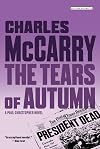
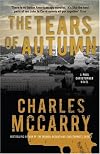
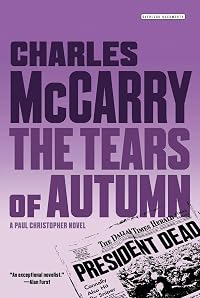
"As soon as he began publishing fiction more than three decades ago, Charles McCarry was recognized as a spy novelist of uncommon gifts" wrote Charles Trueheart in The Washington Post. Tears of Autumn, McCarry's riveting novel of espionage and foreign affairs, was a major bestseller upon its first publication in 1975. Spun with unsettling plausibility from the events surrounding the assassination of John F. Kennedy, and featuring Paul Christopher, it's a tour de force of action and enigma. show more Christopher, at the height of his powers, believes he knows who arranged the assassination, and why. His theory is so destructive of the legend of the dead president, though, and so dangerous to the survival of foreign policy that he is ordered to desist from investigating. But he is a man who lives by, and for, the truth-and his internal compunctions force him to the heart of the matter. Christopher resigns from the Agency and embarks on a tour of investigation that takes him from Paris to Rome, Zurich, the Congo, and Saigon.|Charles McCarry is the author, most recently, of Christopher's Ghosts, and has written ten acclaimed novels featuring Paul Christopher and his family (all available from Overlook). During the Cold War, he was an intelligence officer operating under deep cover in Europe, Africa, and Asia. show lessTags
Recommendations









Member Reviews
'The Tears of Autumn' is supposedly a classic espionage novel by one of the genre's greats, Charles McCarry. I still can't believe I hadn't heard of either until about a month ago. I'm glad I'm finally on the bandwagon!
The Tears of Autumn was published in 1974, when both the war in Vietnam and the assassination of JFK were still pretty fresh in everyone's mind. In the novel, Paul Christopher, a CIA 'lone-wolf' spy, begins to form an idea on who was responsible for Kennedy's death and wants to investigate in his own inimitable way. His superiors don't see the how the dots connect so he's literally cut loose to go at it totally off the books. The plot follows him as he bounces between continents (which was a lot more complicated to do in show more those days) and begins to build and solidify his case. He encounters more than his fair share of really bad characters and deadly situations along the way and survives a number of harrowing close-calls. In the end, Christopher proves his theory but to what end?
Since belatedly 'discovering' McCarry I've learned that he's one of the guys who has been considered the American version of LeCarre. I can certainly see why. His writing is flawless, dialogue is strong, and unlike a few of LeCarre's earlier novels there doesn't seem to be any 'dating' of the style. Tears of Autumn was written at least 43 years ago and is still fresh, although the action is a little slower paced than more recent efforts.
Tears of Autumn is a wonderful example of the spy novel of the post-war era. I loved it and will continue to get further into McCarry's catalog. show less
The Tears of Autumn was published in 1974, when both the war in Vietnam and the assassination of JFK were still pretty fresh in everyone's mind. In the novel, Paul Christopher, a CIA 'lone-wolf' spy, begins to form an idea on who was responsible for Kennedy's death and wants to investigate in his own inimitable way. His superiors don't see the how the dots connect so he's literally cut loose to go at it totally off the books. The plot follows him as he bounces between continents (which was a lot more complicated to do in show more those days) and begins to build and solidify his case. He encounters more than his fair share of really bad characters and deadly situations along the way and survives a number of harrowing close-calls. In the end, Christopher proves his theory but to what end?
Since belatedly 'discovering' McCarry I've learned that he's one of the guys who has been considered the American version of LeCarre. I can certainly see why. His writing is flawless, dialogue is strong, and unlike a few of LeCarre's earlier novels there doesn't seem to be any 'dating' of the style. Tears of Autumn was written at least 43 years ago and is still fresh, although the action is a little slower paced than more recent efforts.
Tears of Autumn is a wonderful example of the spy novel of the post-war era. I loved it and will continue to get further into McCarry's catalog. show less
I had to keep reminding myself that it is just a story, but the plot relies on the "single deranged gunman" and while not overtly stated, implicitly accepted "magic bullet" theory of the Kennedy assassination. And while I have no theory of my own as to who killed Kennedy, I personally don't find the official explanation the least bit credible. Therefore, while I enjoyed other aspects of this book, it did take a great deal of a "willing suspension of disbelief" to get through it.
I listened to, rather than read this book and it was so good that I rushed out and bought The Miernik Dossier (the first of the Paul Christopher series) and have plans to read each and every book in the series. What intrigued me was yet another JFK assassination theory (I'm not a conspiracy theory nut, but I am interested).
When Christopher hears that JFK has been assassinated in Dallas, he immediately knows who did it and why. At a time when Lee Harvey Oswald was considered both the mastermind and crazed lone gunman of Kennedy's assassination, nobody higher up wants to even consider the alternatives. But Christopher knows, and embarks on a journey filled with danger and intrigue to prove it, even if only to himself.
Tears of Autumn is show more an intelligent read, and doesn't insult anyone's intelligence. The assassination plot is quite plausible, without being in your face about it, and the author's fine writing makes you believe that these events could have happened in the way he posits.
The characters are very believable; the action is nonstop, and the writing is incredible. If you are at all interested in the JFK assassination, or in Vietnam, or if you just want a quality read, then I can definitely and most highly recommend this book. show less
When Christopher hears that JFK has been assassinated in Dallas, he immediately knows who did it and why. At a time when Lee Harvey Oswald was considered both the mastermind and crazed lone gunman of Kennedy's assassination, nobody higher up wants to even consider the alternatives. But Christopher knows, and embarks on a journey filled with danger and intrigue to prove it, even if only to himself.
Tears of Autumn is show more an intelligent read, and doesn't insult anyone's intelligence. The assassination plot is quite plausible, without being in your face about it, and the author's fine writing makes you believe that these events could have happened in the way he posits.
The characters are very believable; the action is nonstop, and the writing is incredible. If you are at all interested in the JFK assassination, or in Vietnam, or if you just want a quality read, then I can definitely and most highly recommend this book. show less
The question of who killed John F. Kennedy is answered through the ideas and actions of spy-extrordinare, Paul Christopher. In one moment, Christopher knows who did it and quits the CIA and leaves his new love behind to set off to find the facts. His journey takes him to Vietnam, through Europe and to the Congo. Along the way he earns the respect and animosity of a powerful family, endangering his and his love's lives. But in the end, he has his facts.
This is a great spy novel. Both the plot and the writing are clear and crisp. I'm looking forward to read more of McCarrey.
This is a great spy novel. Both the plot and the writing are clear and crisp. I'm looking forward to read more of McCarrey.
Paul Christopher is back; Christopher, the the cool-as-a-cucumber, jet-setting, incorruptible CIA secret agent. This time he is trying to convince his superiors he knows who killed John F. Kennedy and why. But, is this a story of revenge or not? When Vietnam's president, Ngo Dinh Diem, is assassinated Christopher can't help but think there is a connection when JFK is murdered just three weeks later in Texas. Was Oswald just a switch someone far-reaching flicked on? Christopher seeks the truth and along the way puts the people he cares about in danger (especially a love interest, of course). While the plot is predictable and the characters, typecast, I enjoyed Christopher's next adventure.
Charles McCarry's "Tears of Autumn," a work of fiction, is so believable that it is surprising that here in 2020 conspiracy theorist haven't latched onto it as non-fiction in disguise.
Paul Christopher is said to be an intelligence officer with three major traits: First, "he's intelligent and entirely unsentimental. Second, he will go to any lengths to get at the truth, he never gives up. Third, he is not subject to fear." Christopher sets out to ascertain if RFK's assassination was in retaliation for the deaths of Ngo Dinh Diam and Ngo Dinh Nhu. Although his search is violently opposed as an attempt to besmirch Kennedy's legacy, Christopher never falters even after U.S. agents attempt to assassinate him and Vietnamese killers threaten show more his lover, Molly. Christopher is not entirely unsentimental and he does fear, if only for Molly's life. show less
Paul Christopher is said to be an intelligence officer with three major traits: First, "he's intelligent and entirely unsentimental. Second, he will go to any lengths to get at the truth, he never gives up. Third, he is not subject to fear." Christopher sets out to ascertain if RFK's assassination was in retaliation for the deaths of Ngo Dinh Diam and Ngo Dinh Nhu. Although his search is violently opposed as an attempt to besmirch Kennedy's legacy, Christopher never falters even after U.S. agents attempt to assassinate him and Vietnamese killers threaten show more his lover, Molly. Christopher is not entirely unsentimental and he does fear, if only for Molly's life. show less
McCarry crafts a more plausible Kennedy assassination theory than most conspiracy devotees. Kennedy countenances (at a minimum) the assassinations of Ngo Dinh Diem and his brother on 1 November 1963 (so says the book; in reality the date was 2 November). Three weeks later, JFK is assassinated in Dallas. US agent Paul Christopher concludes that the Vietnamese did it. He quits the agency and sets out to prove it. The tale sprawls across 4 continents with rapid pacing as he chases down the truth.
The book's interesting characters are mostly believable, at once familiar yet not completely typecast. Christopher is the expert and honest US agent. David Patchens is the honest-broker spy chief. Foley is the JFK worshipper and political show more operator. The Truong toc is the ancestral head of Diem's family (OK, not so familiar, but intriguing). Luong plays Christopher's trusted agent (guess what happens to him!). And there's a Cuban agent, a Mafia don, a Vietnamese fortune-teller, and more. Molly, Christopher's obligatory love interest, provides important motivation, but is otherwise uninspired.
The book gives readers a peek into Vietnamese culture that is quite interesting. The book also suggests that if the American people had been told the connection between the assassinations that support for the war, not yet fully under way, would have dried up overnight.
Highly recommended for fans of the spy genre. show less
The book's interesting characters are mostly believable, at once familiar yet not completely typecast. Christopher is the expert and honest US agent. David Patchens is the honest-broker spy chief. Foley is the JFK worshipper and political show more operator. The Truong toc is the ancestral head of Diem's family (OK, not so familiar, but intriguing). Luong plays Christopher's trusted agent (guess what happens to him!). And there's a Cuban agent, a Mafia don, a Vietnamese fortune-teller, and more. Molly, Christopher's obligatory love interest, provides important motivation, but is otherwise uninspired.
The book gives readers a peek into Vietnamese culture that is quite interesting. The book also suggests that if the American people had been told the connection between the assassinations that support for the war, not yet fully under way, would have dried up overnight.
Highly recommended for fans of the spy genre. show less
Members
- Recently Added By
Published Reviews
ThingScore 100
The best novel by America’s greatest writer of espionage fiction is also the most credible account of President Kennedy’s assassination. You will believe it’s what really happened.
added by Roycrofter
Lists

Best Spy Fiction
153 works; 102 members
Author Information

36+ Works 3,442 Members
Albert Charles McCarry Jr. was born in Pittsfield, Massachusetts on June 14, 1930. He enlisted in the Army, where he wrote for Stars and Stripes and edited a weekly Army newspaper in Bremerhaven, Germany. He was a dishwasher and newspaper reporter before becoming an assistant and speechwriter to Secretary of Labor James P. Mitchell. After two show more years, McCarry was recruited by the C.I.A. He worked for nine years as a deep cover operative in Europe, Asia and Africa. He became an author of both fiction and nonfiction. His fiction works included Ark and The Paul Christopher series. His nonfiction works included Citizen Nader and three memoirs - two written with Alexander Haig Jr. and one written with Donald T. Regan. McCarry died from complications of a cerebral hemorrhage caused by a fall on February 26, 2019 at the age of 88. (Bowker Author Biography) show less
Some Editions
Series

Work Relationships
Has as a student's study guide
Common Knowledge
- Original publication date
- 1974
- People/Characters
- Paul Christopher
- Important places
- Saigon, Vietnam; Rome, Italy
- Important events
- Assassination of John F. Kennedy
- Epigraph
- "The pentagon's secret study of the Vietnam war discloses that President Kennedy knew and approved of plans for the military coup d'état that overthrew President Ngo Dinh Diem in 1963...'Our complicity in his overthrow heigh... (show all)tened our responsibilities and our commitments' in Vietnam, the study finds..." - The Pentagon Papers, as published by The New York Times
"To the living, one owes consideration; to the dead, only the truth." - Voltaire (Lettres sur Oedipe) - Dedication
- For Mother
- First words
- Paul Christopher had been loved by two women who could not understand why he had stopped writing poetry.
- Last words
- (Click to show. Warning: May contain spoilers.)Christopher felt her pulse on his own skin.
- Blurbers
- O'Rourke, P. J.; Furst, Alan; Benchley, Peter; Penzler, Otto; Mailer, Norman
- Canonical DDC/MDS
- 813.54
- Canonical LCC
- PS3563.A2577
Classifications
Statistics
- Members
- 562
- Popularity
- 52,547
- Reviews
- 15
- Rating
- (3.90)
- Languages
- Danish, Dutch, English, Norwegian (Bokmål)
- Media
- Paper, Audiobook, Ebook
- ISBNs
- 31
- ASINs
- 13