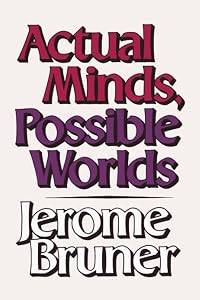
Actual Minds, Possible Worlds
by Jerome Bruner
On This Page
Description
In this characteristically graceful and provocative book, Jerome Bruner, one of the principal architects of the cognitive revolution, sets forth nothing less than a new agenda for the study of mind. According to Professor Bruner, cognitive science has set its sights too narrowly on the logical, systematic aspects of mental life ́those thought processes we use to solve puzzles, test hypotheses, and advance explanations. There is obviously another side to the mind ́a side devoted to the show more irrepressibly human acts of imagination that allow us to make experience meaningful. This is the side of the mind that leads to good stories, gripping drama, primitive myths and rituals, and plausible historical accounts. Bruner calls it the ́narrative mode, ́ and his book makes important advances in the effort to unravel its nature. Drawing on recent work in literary theory, linguistics, and symbolic anthropology, as well as cognitive and developmental psychology, Professor Bruner examines the mental acts that enter into the imaginative creation of possible worlds, and he shows how the activity of imaginary world making undergirds human science, literature, and philosophy, as well as everyday thinking, and even our sense of self. Over twenty years ago, Jerome Bruner first sketched his ideas about the mind ́s other side in his justly admired book, On Knowing: Essays for the Left Hand. Actual Minds, Possible Worlds can be read as a sequel to this earlier work, but it is a sequel that goes well beyond its predecessor by providing rich examples of just how the mind ́s narrative mode can be successfully studied. The collective force of these examples points the way toward a more humane and subtle approach to the investigation of how the mind works. show lessTags
Recommendations







Member Reviews
Recently, I have been reading a bit on social construction and constructivist arguments about the social reality that we live in. Those arguments have focused on the construction of material facts, institutions, social conventions. The part that I did not recognize as missing, because I was taking it for granted, is how the individual mind becomes part of and contributes to the constructed social. This work is central to Bruner's argument.
Much of the focus is on what Bruner calls a "narrative mode" of thought, which is a way of engaging with the world and the minds that reside in it through narrative (e.g., prose, poetry, history, etc.). He then constructs an argument about how the interpretive flexibility and purposeful engagement of show more narrative builds a transactive relationship with individual minds. As readers, we envision possible worlds in those narratives, worlds that connect with and modify the experiences that we bring. It is through our engagement with narratives that we construct "right versions" of the world that we act upon until we come into contact with other minds and the narratives that they bring, which then results in additional, transactive reordering of experience. Iterate this process enough and it becomes clear how social reality starts to form.
Bruner's argument about narrative and its transactive effects still rings true, but the presupposition that people are willing to seek out narratives that challenge or at least alter their ordered sense of the world seems less true today than it must have in the mid 1980's. So, too, does the presupposition of a narrative's presumed honesty. The ease with which people can control the narratives that they do interact with (via filter bubbles, e.g.) and the unreliability of some narratives shows how this transactive relationship can just as easily reinforce bias or create parallel, hostile realities, especially if minds do not come into contact with others or with narratives that challenge their experiences. This is not to say that Bruner's argument is outdated, rather, I think it argues for new and continued life for this work investigating how our modern media environment leads to a retrenchment of experience.
Highly recommend. The argument is clear, well researched, and compelling. show less
Much of the focus is on what Bruner calls a "narrative mode" of thought, which is a way of engaging with the world and the minds that reside in it through narrative (e.g., prose, poetry, history, etc.). He then constructs an argument about how the interpretive flexibility and purposeful engagement of show more narrative builds a transactive relationship with individual minds. As readers, we envision possible worlds in those narratives, worlds that connect with and modify the experiences that we bring. It is through our engagement with narratives that we construct "right versions" of the world that we act upon until we come into contact with other minds and the narratives that they bring, which then results in additional, transactive reordering of experience. Iterate this process enough and it becomes clear how social reality starts to form.
Bruner's argument about narrative and its transactive effects still rings true, but the presupposition that people are willing to seek out narratives that challenge or at least alter their ordered sense of the world seems less true today than it must have in the mid 1980's. So, too, does the presupposition of a narrative's presumed honesty. The ease with which people can control the narratives that they do interact with (via filter bubbles, e.g.) and the unreliability of some narratives shows how this transactive relationship can just as easily reinforce bias or create parallel, hostile realities, especially if minds do not come into contact with others or with narratives that challenge their experiences. This is not to say that Bruner's argument is outdated, rather, I think it argues for new and continued life for this work investigating how our modern media environment leads to a retrenchment of experience.
Highly recommend. The argument is clear, well researched, and compelling. show less
Jerome Bruner begins his Actual Minds, Possible Worlds with William James' distinction between “reasoning” and “narrative, descriptive, contemplative thinking.” He ends with the observation that what will see us through “our epistemic excesses” (by which he means the tendency to say that all we have are texts and the tendency to say that texts are strictly determined by an independently existing, external world) is “the writing of poems and novels that help perpetually to recreate the world, and the writing of criticism and interpretation that celebrate the varied ways in which human beings search for meaning and for its incarnation in reality . . .” Connecting the beginning and the end is Bruner's central theme of show more “subjunctivizing reality,” of “trafficking in human possibilities rather than settled certainties.”
Although Bruner follows James in distinguishing two modes of thought, paradigmatic and narrative, suggesting that the first aims at truth while the second aims at “life-likeness,” his concept of constructing worlds makes it possible to recognize that both modes are concerned with truth. To construct a world is to be willing to live in it—or at least to entertain the possibility of living in it, and one crucial aspect of that is bringing it to life. A still-born world is a world devoid of life, a world in which no one lives. What is a “true” world that has no life?
Bruner himself recognizes the concern with truth in his comment that “we ask of a proposition not whether it is true or false, but in what kind of possible world it would be true.” Cutting across the distinction between sciences and humanities as ways of world making is a common commitment to human possibilities as opposed to settled certainties. This connects Bruner with such contemporary ethical theorists as Alasdair MacIntyre and Stanley Hauerwas who see narrative as a form of rationality. Reason seeks to discover meaning, and one characteristically human way to undertake that search is in the world making of story, the exploration of possible worlds.
For Bruner, this insight involves a challenge to the notion of gradually diminishing egocentrism, which he attributes to Piaget. Bruner sees the exploration of possible worlds as emerging very early in the ability to take multiple perspectives. He sees sense of self and sense of other as being functions of narratives available to us in the form of culture, an implicit “semiconnected knowledge of the world.” His challenge to a Piagetian understanding of egocentrism consists in suggesting that the problem is scarcity of narrative models—“scripts” or “scenarios”—available to young children. Through negotiation people arrive at satisfactory ways of acting in given contexts.
This is really quite compatible with a Piagetian outlook: to understand is to invent. For Bruner, this means that one constructs stories, not in isolation, but in a social context, a context he characterizes as negotiation. Greater experience in negotiation contributes to enhanced ability to take multiple perspectives. As one's repertoire expands, so do the possible worlds one may construct.
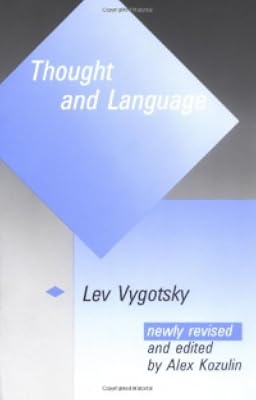
There is an important insight here, which Bruner traces at least in part to the Soviet psychologist Lev Vygotsky, and which distinguishes Bruner from Hauerwas, for whom narrative is strictly given rather than made. Language is a way of sorting out thought, and thought is a way of organizing perception and action; all are tools and aids in culture available for use in carrying out action. Again, this is consistent with Piaget. In fact, it is an answer to Hauerwas' criticism of Piaget in A Community of Character. It makes explicit the way in which “word” (or, more broadly, symbol) functions as mediating structure between “mind” and “world.”
Like Piaget, Vygostsky was concerned with the pedagogical implications of psychological theory. Bruner sees his “Zone of Proximal Development” as an especially important contribution to the understanding of those implications. That zone is described as the “distance between the actual developmental level as determined by independent problem solving and the level of potential development as determined through problem solving under adult guidance or in collaboration with more capable peers.” Culture is implicit “semiconnected knowledge of the world”; the Zone of Proximal Development is a description of how culture is transmitted in interaction with “more capable peers.” What Piaget described as “decentration” was understood by Vygotsky as interaction between inexperienced and more experienced participants in culture. Bruner describes this as a process of negotiation. Meaning, then, is equated with negotiation—and it is socially constructed in story. Culture is a forum for negotiation. What is transmitted is not so much culture as possibility; culture is a realm of possibility in which meanings are made. As such, it is continually transformed; actual minds negotiate possible worlds.
Of course, it is also accurate to insist that actual worlds provide a context for the development of possible minds. One never begins with a blank slate, but always in the middle: worlds are “given” as well as “made.”
Bruner's comment that “we are natural ontologists but reluctant epistemologists” is evidence that he sees the significance of beginning in the middle. It may be easier to say what “is” than to say how and what we know. A confident description of what is seems essential to a comfortable existence. Calling what is into question by attending to the role of knowing in communicating it can be uncomfortable. That discomfort—at least in its healthier manifestations—is what Bruner means by “subjunctivizing.” Ontology, he argues, “looks after itself”; what is, is. “It is epistemology that needs cultivating.”
To cultivate epistemology is to discover the subjunctive realm, the realm of what if. That is the realm of symbol, of word—and it is the possibility of transformation, not only of world but also of mind. show less
Although Bruner follows James in distinguishing two modes of thought, paradigmatic and narrative, suggesting that the first aims at truth while the second aims at “life-likeness,” his concept of constructing worlds makes it possible to recognize that both modes are concerned with truth. To construct a world is to be willing to live in it—or at least to entertain the possibility of living in it, and one crucial aspect of that is bringing it to life. A still-born world is a world devoid of life, a world in which no one lives. What is a “true” world that has no life?
Bruner himself recognizes the concern with truth in his comment that “we ask of a proposition not whether it is true or false, but in what kind of possible world it would be true.” Cutting across the distinction between sciences and humanities as ways of world making is a common commitment to human possibilities as opposed to settled certainties. This connects Bruner with such contemporary ethical theorists as Alasdair MacIntyre and Stanley Hauerwas who see narrative as a form of rationality. Reason seeks to discover meaning, and one characteristically human way to undertake that search is in the world making of story, the exploration of possible worlds.
For Bruner, this insight involves a challenge to the notion of gradually diminishing egocentrism, which he attributes to Piaget. Bruner sees the exploration of possible worlds as emerging very early in the ability to take multiple perspectives. He sees sense of self and sense of other as being functions of narratives available to us in the form of culture, an implicit “semiconnected knowledge of the world.” His challenge to a Piagetian understanding of egocentrism consists in suggesting that the problem is scarcity of narrative models—“scripts” or “scenarios”—available to young children. Through negotiation people arrive at satisfactory ways of acting in given contexts.
This is really quite compatible with a Piagetian outlook: to understand is to invent. For Bruner, this means that one constructs stories, not in isolation, but in a social context, a context he characterizes as negotiation. Greater experience in negotiation contributes to enhanced ability to take multiple perspectives. As one's repertoire expands, so do the possible worlds one may construct.
There is an important insight here, which Bruner traces at least in part to the Soviet psychologist Lev Vygotsky, and which distinguishes Bruner from Hauerwas, for whom narrative is strictly given rather than made. Language is a way of sorting out thought, and thought is a way of organizing perception and action; all are tools and aids in culture available for use in carrying out action. Again, this is consistent with Piaget. In fact, it is an answer to Hauerwas' criticism of Piaget in A Community of Character. It makes explicit the way in which “word” (or, more broadly, symbol) functions as mediating structure between “mind” and “world.”
Like Piaget, Vygostsky was concerned with the pedagogical implications of psychological theory. Bruner sees his “Zone of Proximal Development” as an especially important contribution to the understanding of those implications. That zone is described as the “distance between the actual developmental level as determined by independent problem solving and the level of potential development as determined through problem solving under adult guidance or in collaboration with more capable peers.” Culture is implicit “semiconnected knowledge of the world”; the Zone of Proximal Development is a description of how culture is transmitted in interaction with “more capable peers.” What Piaget described as “decentration” was understood by Vygotsky as interaction between inexperienced and more experienced participants in culture. Bruner describes this as a process of negotiation. Meaning, then, is equated with negotiation—and it is socially constructed in story. Culture is a forum for negotiation. What is transmitted is not so much culture as possibility; culture is a realm of possibility in which meanings are made. As such, it is continually transformed; actual minds negotiate possible worlds.
Of course, it is also accurate to insist that actual worlds provide a context for the development of possible minds. One never begins with a blank slate, but always in the middle: worlds are “given” as well as “made.”
Bruner's comment that “we are natural ontologists but reluctant epistemologists” is evidence that he sees the significance of beginning in the middle. It may be easier to say what “is” than to say how and what we know. A confident description of what is seems essential to a comfortable existence. Calling what is into question by attending to the role of knowing in communicating it can be uncomfortable. That discomfort—at least in its healthier manifestations—is what Bruner means by “subjunctivizing.” Ontology, he argues, “looks after itself”; what is, is. “It is epistemology that needs cultivating.”
To cultivate epistemology is to discover the subjunctive realm, the realm of what if. That is the realm of symbol, of word—and it is the possibility of transformation, not only of world but also of mind. show less
Bruner reflexiona sobre los actos mentales que intervienen en la creación imaginaria de mundos posibles
Sep 8, 2020Spanish
Ratings
Members
- Recently Added By
Lists

Tom's Bookstore
346 works; 2 members
Author Information

54+ Works 1,827 Members
Jerome Seymour Bruner was born in Manhattan, New York on October 1, 1915. Born blind because of cataracts, he had an experimental operation to restore his vision at the age of 2. He received a degree in psychology from Duke University in 1937 and received a doctorate from Harvard University. His theories about perception, child development, and show more learning informed education policy and helped launch the cognitive revolution. He wrote or co-wrote several books including A Study of Thinking written with Jacqueline J. Goodnow and George A. Austin and The Process of Education. He helped design Head Start, the federal program introduced in 1965 to improve preschool development. He died on June 5, 2016 at the age of 100. (Bowker Author Biography) show less
Series
Belongs to Publisher Series
Jerusalem-Harvard Lectures (1986)
Common Knowledge
- Canonical title
- Actual Minds, Possible Worlds
- Quotations
- Contrary to common sense there is no unique "real world" that pre-exists and is independent of human mental activity and human symbolic language; that which we call the world is a product of some mind whose symbolic procedure... (show all)s construct the world.
Classifications
Statistics
- Members
- 236
- Popularity
- 137,961
- Reviews
- 3
- Rating
- (3.96)
- Languages
- 5 — English, French, Italian, Portuguese, Spanish
- Media
- Paper, Ebook
- ISBNs
- 12
- ASINs
- 2