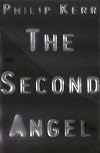
The Second Angel
by Philip Kerr
On This Page
Description
THE YEAR IS 2069, THE CENTENNIAL OF THE "APOLLO 11" MOON WALK. Earth has been irrevocably altered by global climatic changes and a worldwide plague of P2 -- a slow-acting, insidious virus. The Moon, now populated by penal colonies and sex hotels, also protects mankind's most sought-after and vital commodity -- virus-free blood -- in the most impregnable high-security installation ever engineered. The First National Blood Bank is the brainchild of security firm Terotech's chief designer, Dana show more Dallas. But after Dallas' P2-infected daughter is denied uncontaminated blood, he is considered a security risk -- and expendable. With his life on the line, and his family caught in the cross fire, Dallas swears revenge on the elitist system and his own creation. Enlisting an eclectic crew of rebels, he devises a daring plan to infiltrate the lunar fortress -- one that will jeopardize everyone involved, and hinges on a very strange and unforeseen ally. In "The Second Angel," acclaimed novelist Philip Kerr convincingly mixes prophecy and science in a dark, dystopian, high-velocity thriller that rockets toward its explosive conclusion. show lessTags
Recommendations














Member Reviews
This book was an on-and-off read for me in nearly every respect. First, the story/plot is incredibly thought out and engaging, not to mention original. The problem comes stylistically and balance-wise. Kerr went into writing this sci-fi thriller treating it as something of an experiment in style and voice, and unfortunately, I feel the experiment failed. Without giving away plot or the supposed twist (which I found extremely predictable, even early on in reading), a reader should go into this book being aware that a good portion of the text is given in lengthy and formal footnotes that often make you feel as if you're reading a textbook instead of a story. Additionally, there's an incredible amount of superfluous information which has show more little to nothing to do with a reader's understanding of the plot, characters, or action. They seem to be there for the sole benefit of letting the reader know that the author has thought through this future world and created details in all respects, from disease to war to architecture and art. It gets old--fast. Compounding the problem is that, mixed in with the superfluous and tiresomely detailed footnotes, there is necessary information. Without reading every footnote completely (which you're expected to do) it's impossible to know what is a stylistic addition and what is necessary for the story. I found this incredibly frustrating, especially since the footnotes came across as awkward and wordy, if not rambling.
Beyond this fatal flaw, there is the problem of character. For a book that is supposed to be suspenseful, it's hard to achieve this effect without having the readers be interested in the characters. Unfortunately, the author gave little time to the characters themselves. As a result, they were flat and unsympathetic, even at the moments when a reader should have felt sorry or frightened for them. Simply, he didn't give you enough information to be interested in their outcomes. For me, this made it easy to put the book down. I finished it rather quickly primarily because I left it in a convenient spot so that it was often at hand when I had spare time, and partly because I'd glance at it, and simply want to get it over with.
If you're interested in looking at a failed experiment in style, I'd glance over the first fifty pages or so of this book. If you want a good plot/story and don't care much for characters, you might also enjoy this. For me, I needed fewer heavy-handed footnotes, and more detail and feeling when it came to the actual people in the book. show less
Beyond this fatal flaw, there is the problem of character. For a book that is supposed to be suspenseful, it's hard to achieve this effect without having the readers be interested in the characters. Unfortunately, the author gave little time to the characters themselves. As a result, they were flat and unsympathetic, even at the moments when a reader should have felt sorry or frightened for them. Simply, he didn't give you enough information to be interested in their outcomes. For me, this made it easy to put the book down. I finished it rather quickly primarily because I left it in a convenient spot so that it was often at hand when I had spare time, and partly because I'd glance at it, and simply want to get it over with.
If you're interested in looking at a failed experiment in style, I'd glance over the first fifty pages or so of this book. If you want a good plot/story and don't care much for characters, you might also enjoy this. For me, I needed fewer heavy-handed footnotes, and more detail and feeling when it came to the actual people in the book. show less
This book has been hyped as being like Michael Crichton in style.
I can see that - it's a near-future medical/heist/cyber/murder thriller that relies heavily on the author's 'scientific' theories.
However, where Crichton interviews scientists, and then ignores what they tell him (either to make a good story or to further his own political agenda, depending on who you believe... see:
http://www.realclimate.org/index.php?p=74#more-74 ) it seems that Kerr hasn't bothered to actually talk to any scientists at all, instead making it all up as he goes along.
I'm not going to get into all the scientific and medical inaccuracies of the book - if you're interested, a doctor reviewed it on amazon.com, and caught many more of the problems than I did. show more If such things bother you, this book is not for you.
At the outset of the book, in 2069, our protagonist, Dallas, is a successful, wealthy executive. He and his family are free of the P2 virus, a blood disease that most of the world's population has. P2 can be cured by a full blood transfer, replacing the body's blood with healthy blood. Healthy blood transfusions can also help one live longer. Unfortunately, this situation has made blood the new 'gold standard' of civilization, artificially raising prices so that only the very wealthy can afford such treatments.
It's just Dallas' bad luck that his daughter turns out to have an unrelated, genetic blood disease that will require her to have repeated blood transfers if she is to live. When his corporation finds out the situation he's facing (potential bankruptcy and desperation from paying for blood for his daughter), they no longer trust him, and decide to have him and his family assassinated. His wife and child are killed, but the assassin misses him.
Angry and without a job, Dallas decides to turn to a life of crime, and makes plans to rob the world's largest blood bank (actually, it's on the Moon).
Most of the book concentrates on this heist (aided by virtual reality sims. )
Not much energy is devoted to Dallas' loss of his family; it's just an excuse to get into the action.
Kerr obviously intends a deep musing on the powerful symbolism of blood, and so we don't miss that, he introduces a 'narrator' device which keeps popping up (in italics) to comment on the action or insert (totally unnecessary) footnotes. Some people might find this clever or fun, I just thought it interrupted and detracted from the story. The 'identity' of the narrator is also supposed to be a secret/surprise, but I figured most of it out pretty early on.
I'd previously read the omnibus edition of 3 of Kerr's crime/mystery novels, Berlin Noir, and was much more favorably impressed by those. Science-based SF just isn't this author's forte, in my opinion. show less
I can see that - it's a near-future medical/heist/cyber/murder thriller that relies heavily on the author's 'scientific' theories.
However, where Crichton interviews scientists, and then ignores what they tell him (either to make a good story or to further his own political agenda, depending on who you believe... see:
http://www.realclimate.org/index.php?p=74#more-74 ) it seems that Kerr hasn't bothered to actually talk to any scientists at all, instead making it all up as he goes along.
I'm not going to get into all the scientific and medical inaccuracies of the book - if you're interested, a doctor reviewed it on amazon.com, and caught many more of the problems than I did. show more If such things bother you, this book is not for you.
At the outset of the book, in 2069, our protagonist, Dallas, is a successful, wealthy executive. He and his family are free of the P2 virus, a blood disease that most of the world's population has. P2 can be cured by a full blood transfer, replacing the body's blood with healthy blood. Healthy blood transfusions can also help one live longer. Unfortunately, this situation has made blood the new 'gold standard' of civilization, artificially raising prices so that only the very wealthy can afford such treatments.
It's just Dallas' bad luck that his daughter turns out to have an unrelated, genetic blood disease that will require her to have repeated blood transfers if she is to live. When his corporation finds out the situation he's facing (potential bankruptcy and desperation from paying for blood for his daughter), they no longer trust him, and decide to have him and his family assassinated. His wife and child are killed, but the assassin misses him.
Angry and without a job, Dallas decides to turn to a life of crime, and makes plans to rob the world's largest blood bank (actually, it's on the Moon).
Most of the book concentrates on this heist (aided by virtual reality sims. )
Not much energy is devoted to Dallas' loss of his family; it's just an excuse to get into the action.
Kerr obviously intends a deep musing on the powerful symbolism of blood, and so we don't miss that, he introduces a 'narrator' device which keeps popping up (in italics) to comment on the action or insert (totally unnecessary) footnotes. Some people might find this clever or fun, I just thought it interrupted and detracted from the story. The 'identity' of the narrator is also supposed to be a secret/surprise, but I figured most of it out pretty early on.
I'd previously read the omnibus edition of 3 of Kerr's crime/mystery novels, Berlin Noir, and was much more favorably impressed by those. Science-based SF just isn't this author's forte, in my opinion. show less
I love Philip Kerr but what a disappointment this was: it is set toward the end of the 21st century after an epidemic has contaminated our blood to such an extent disease-free blood is one of the most expensive things in the world. Dallas, who creates security systems, is set on revenge after his wife and daughter are murdered: he decides the best way to do this is to rob the national blood reserve, situated on the moon.
Difficult to believe this ploddingly pedestrian work is by the author of the Bernie Gunther series: an unnamed [but pretty obvious] universal narrator clutters the text with far too many footnotes, there is too much science for a novel and the book is startlingly deficient in humour - unless the whole thing is a joke by show more Kerr on his loyal readers. Boring. show less
Difficult to believe this ploddingly pedestrian work is by the author of the Bernie Gunther series: an unnamed [but pretty obvious] universal narrator clutters the text with far too many footnotes, there is too much science for a novel and the book is startlingly deficient in humour - unless the whole thing is a joke by show more Kerr on his loyal readers. Boring. show less
This is a horrible book to review, at least for me.
There is an interesting story, actually two interesting stories in here, and an interesting and plausible (if not very pleasant) culture.
BUT...
It's written rather self-consciously as a history book, complete with footnotes. It's an interesting ploy, but a bit heavy handed at times. Worse even than that, at least for me, is the lousy quality of the science. The moon doesn't have a microgravity, it has low gravity but not microgravity. Thalassaemia doesn't, never did, protect against malaria (that's sickle cell anaemia).
Any virus will fit through a 1µm gap, HIV is only 120nm in diameter, so 5 fill fit through in a line without touching each other nor the sides. The list of hair-tearing show more errors continues. show less
There is an interesting story, actually two interesting stories in here, and an interesting and plausible (if not very pleasant) culture.
BUT...
It's written rather self-consciously as a history book, complete with footnotes. It's an interesting ploy, but a bit heavy handed at times. Worse even than that, at least for me, is the lousy quality of the science. The moon doesn't have a microgravity, it has low gravity but not microgravity. Thalassaemia doesn't, never did, protect against malaria (that's sickle cell anaemia).
Any virus will fit through a 1µm gap, HIV is only 120nm in diameter, so 5 fill fit through in a line without touching each other nor the sides. The list of hair-tearing show more errors continues. show less
The first chapter of this book was difficult to read as it contained footnotes on every other page. I found this extremely distracting and, in many cases, unnecessary as it was details that could have been incorporated into the story-line.
The plot of this novel is interesting and could have made a good story, but it was spoiled by the mediocre writing style. I found the characters superficial and the technology clichéd. I won't be bothering to re-read this book.
The plot of this novel is interesting and could have made a good story, but it was spoiled by the mediocre writing style. I found the characters superficial and the technology clichéd. I won't be bothering to re-read this book.
"Utterly absorbing"
-ENTERTAINMENT WEEKLY
-ENTERTAINMENT WEEKLY
Ultimo cuarto del siglo XXI. el ochenta por ciento de la humanidad está infectado por un virus de la sangre; la única cura es una transfusión total. El veinte por ciento restante constituye una minoría privilegiada. En este mundo hostil, solo a un grupo de marginados se le podía ocurrir el más audaz y desesperado de los robos: el del mayor banco de sangre, y el mejor protegido. La diferenciaentre el exito o el fracaso no es la libertad o la prisión, sino la vida o la muerte. Pero solo el intentarlo se va a convertir en la más gigantesca epopeya del futuro....
Dec 14, 2010Spanish
Members
- Recently Added By
Published Reviews
ThingScore 50
Aber diese pedantischen Exkursionen und die zahlreichen Fußnoten, hinkendste aller Erzähltechniken, legitimiert Kerr durch den speziellen Charakter seines Erzählers, der sich am Ende des Textes offenbart. Bis auf dieses Spiel mit einer unzuverlässigen, vorlauten Erzählstimme "in der großen Tradition von Joseph Conrad, Henry James und Emily Bronte" bleibt Kerr unaufgeregt konventionell. show more Erstaunlich, dass sich selbst die gewagtesten Gedankenspiele in die herkömmlichsten Sprachmuster fügen. Die mutigsten Zukunftslaboranten machen keine stilistischen Experimente. Die Sprach-Matrix ist mindestens hundert Jahre alt. Nur hin und wieder flackert ein zeitgemäßes Licht auf: "Das Cockpit erstrahlte hell wie ein in Spaltung begriffenes Wasserstoffatom." Dank seines grundsoliden Erzählhandwerks erschafft Kerr ein unterhaltsam schillerndes Simulationsuniversum, das mit vielen amüsanten Gimmicks ausgestattet ist. Das alles ohne Stilblüten, die gerade im Science-Fiction-Genre immer wieder fruchtbarsten Nährboden finden. Gekonnt vampt Kerr das rotwangige Genre. Besonders empfehlenswert ist die Lektüre für jene Kleinanleger, die zu Beginn dieses Jahrtausends mit der lukrativen Idee liebäugeln, in einen Biotech-Fonds zu investieren. show less
added by Indy133
Author Information

45+ Works 19,438 Members
Work Relationships
Is contained in
Contains
Common Knowledge
- Original title
- The Second Angel
- Original publication date
- 1998
- Epigraph
- And the second angel poured out his vial upon the sea; and it
became as the blood of a dead man.
Revalation 16:3 - Dedication
- For Caradoc King, with gratitude and affection
- First words
- It was another bright, cold day on the Moon and the atomic clocks were flashing three hundred.
Classifications
Statistics
- Members
- 494
- Popularity
- 61,154
- Reviews
- 8
- Rating
- (3.10)
- Languages
- 6 — Danish, Dutch, English, French, German, Spanish
- Media
- Paper, Audiobook
- ISBNs
- 24
- UPCs
- 1
- ASINs
- 2