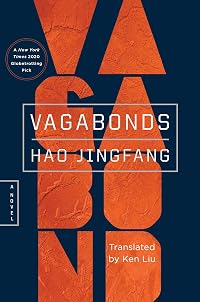
Vagabonds
by Jingfang Hao
On This Page
Description
"A century after the Martian war of independence, a group of kids are sent to Earth as delegates from Mars, but when they return home, they are caught between the two worlds, unable to reconcile the beauty and culture of Mars with their experiences on Earth in this spellbinding novel from Hugo Award-winning author Hao Jingfang. This genre-bending novel is set on Earth in the wake of a second civil war...not between two factions in one nation, but two factions in one solar system: Mars and show more Earth. In an attempt to repair increasing tensions, the colonies of Mars send a group of young people to live on Earth to help reconcile humanity. But the group finds itself with no real home, no friends, and fractured allegiances as they struggle to find a sense of community and identity, trapped between two worlds. Fans of Kazuo Ishiguro's Never Let Me Go and Naomi Alderman's The Power will fall in love with this novel about lost innocence, an uncertain future, and never feeling at home, no matter where you are in the universe. Translated by Ken Liu, bestselling author of The Paper Menagerie and translator of Cixin Liu's The Three-Body Problem, Vagabonds is the first novel from Hao Jingfang, the first Chinese woman to ever win the esteemed Hugo Award"-- show lessTags
Recommendations




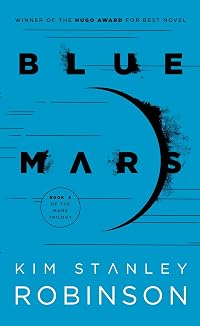
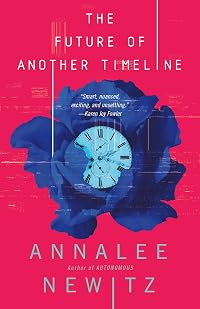
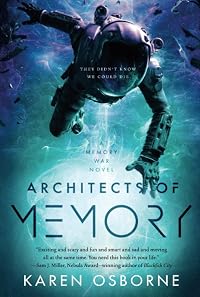
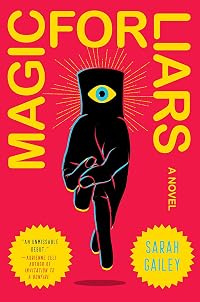

Member Reviews
This book is long, exactly 600 pages, and, even though it takes place on Mars, there's a lot more philosophy than action in those pages. Nevertheless, I never felt it dragged or that I was bored.
A group of young Martians were sent to Earth for five years and are just returning to Mars at the start of the book. Mars and Earth are very different in societal terms. Earth is a laissez-faire capitalist society while Mars is a communal socialist enterprise. For the group of young people just returning to Mars and the start of their adult life, these five years have made them question Mars society and their place in it. Luoying, a dancer and granddaughter of the consul of Mars, is our lens on the changes to come. On Earth she often heard her show more grandfather referred to as a dictator. Back on Mars she continually thinks about whether he is or isn't. The other main character is a filmmaker from Earth, Eko, sent to document the interactions of the Earth delegation with the Mars government. There are still tensions from the war between Earth and Mars over 100 years ago and it is still a question whether the two planets can exist peacefully. And there are factions on Mars who want to change the status quo but some want to do it peacefully and legally and some want to start another war. So, with all this going down, it's easy to see why it would take 600 pages to bring the narrative to a conclusion.
I couldn't help but feel that this book was an allegory for the relationship between China and the USA. Jingfang lives in Beijing and works as a macroeconomics researcher so I don't think it's unlikely that she has a good understanding of both the capitalist and socialist economies. She doesn't seem to approve of capitalism but, at the same time, she seems to see flaws in the restrictive world of Communism. And, in the end, I think she sees Mars (China) evolving but not to absolute capitalism. show less
A group of young Martians were sent to Earth for five years and are just returning to Mars at the start of the book. Mars and Earth are very different in societal terms. Earth is a laissez-faire capitalist society while Mars is a communal socialist enterprise. For the group of young people just returning to Mars and the start of their adult life, these five years have made them question Mars society and their place in it. Luoying, a dancer and granddaughter of the consul of Mars, is our lens on the changes to come. On Earth she often heard her show more grandfather referred to as a dictator. Back on Mars she continually thinks about whether he is or isn't. The other main character is a filmmaker from Earth, Eko, sent to document the interactions of the Earth delegation with the Mars government. There are still tensions from the war between Earth and Mars over 100 years ago and it is still a question whether the two planets can exist peacefully. And there are factions on Mars who want to change the status quo but some want to do it peacefully and legally and some want to start another war. So, with all this going down, it's easy to see why it would take 600 pages to bring the narrative to a conclusion.
I couldn't help but feel that this book was an allegory for the relationship between China and the USA. Jingfang lives in Beijing and works as a macroeconomics researcher so I don't think it's unlikely that she has a good understanding of both the capitalist and socialist economies. She doesn't seem to approve of capitalism but, at the same time, she seems to see flaws in the restrictive world of Communism. And, in the end, I think she sees Mars (China) evolving but not to absolute capitalism. show less
Three groups of travelers are bound for an independent Mars on the only ship allowed to make the journey between the estranged planets. The returning delegates of Mars are excited to get home, the Terran delegates are anxious about the forthcoming negotiations, and the returning children of Mars, sent to study on Earth 5 years previously, are ready to get back home but uncertain of their place there.
It's 30 years after the war for Martian independence ended, but relations between the planets are still delicate. Earth views Mars as an authoritarian society without freedom and Mars views Earth as devoid of morality and ideals. Stuck between the vastly different lifestyles and societies of the two are the group of students sent to learn show more about life on Earth but expected to conform back into the vastly different Martian society on their return.
Hao Jingfang's Vagabonds is a meditation on humanity and the meaning of freedom. Mars represents the collective ideals of societies, placing familial bonds and the betterment of the whole over individual freedom. Earth represents the individual, the pursuit of freedom and profit over the collective good. The students shuttled between these two worlds are thrown into internal conflict. Seeing the flaws of both societies, but unable to live in either, they must decide if struggling to fix the problems they have found is a worthwhile or achievable goal. Are revolutions ever truly successful, is it possible to build something without flaw?
This contemplation of societies is understandable and raises good questions, but Vagabonds struggles with finding direction through it. Reading more like a selection from de Montaigne's Essais than a novel, the book features circular arguments, abrupt jumps in time, constantly adds new point of view characters and completely drops others. Structurally, it's a bit of a mess. While Hao Jinfang's lyrical writing often makes individual sections of this book unforgettable, the overall effect is a lengthy, overly descriptive slog. Entire pages are spent, paragraph after paragraph, on describing the same thing using slightly different words for sentence after sentence. Sometimes this is done to good effect, often when a character is using their surrounding to parse their conflicts. However, when combined with the time jumps and point of view changes, it leads to an overall muddle reading experience.
Hao Jingfang is clearly a talented writer. Vagabonds will appeal to people who would rather ponder than go on a journey. There are some truly wonderfully written sections of this book and I do look forward to reading future works from this author. Having said that, I will not be picking this one back up for a revisit.
Thank you the Gallery / Saga Press and Netgalley for a copy of this book to review. show less
It's 30 years after the war for Martian independence ended, but relations between the planets are still delicate. Earth views Mars as an authoritarian society without freedom and Mars views Earth as devoid of morality and ideals. Stuck between the vastly different lifestyles and societies of the two are the group of students sent to learn show more about life on Earth but expected to conform back into the vastly different Martian society on their return.
Hao Jingfang's Vagabonds is a meditation on humanity and the meaning of freedom. Mars represents the collective ideals of societies, placing familial bonds and the betterment of the whole over individual freedom. Earth represents the individual, the pursuit of freedom and profit over the collective good. The students shuttled between these two worlds are thrown into internal conflict. Seeing the flaws of both societies, but unable to live in either, they must decide if struggling to fix the problems they have found is a worthwhile or achievable goal. Are revolutions ever truly successful, is it possible to build something without flaw?
This contemplation of societies is understandable and raises good questions, but Vagabonds struggles with finding direction through it. Reading more like a selection from de Montaigne's Essais than a novel, the book features circular arguments, abrupt jumps in time, constantly adds new point of view characters and completely drops others. Structurally, it's a bit of a mess. While Hao Jinfang's lyrical writing often makes individual sections of this book unforgettable, the overall effect is a lengthy, overly descriptive slog. Entire pages are spent, paragraph after paragraph, on describing the same thing using slightly different words for sentence after sentence. Sometimes this is done to good effect, often when a character is using their surrounding to parse their conflicts. However, when combined with the time jumps and point of view changes, it leads to an overall muddle reading experience.
Hao Jingfang is clearly a talented writer. Vagabonds will appeal to people who would rather ponder than go on a journey. There are some truly wonderfully written sections of this book and I do look forward to reading future works from this author. Having said that, I will not be picking this one back up for a revisit.
Thank you the Gallery / Saga Press and Netgalley for a copy of this book to review. show less
The Boule Chamber of the Capitol of the Republic of Mars in located in Mars City, a huge habitat enclosed in glass with soaring glass towers and connected by tube trains. In fact, the city is almost the entire Republic of Mars, excepting a few military outposts of the Flight System. Ruled by the veterans of the bloody rebellion which led to the planet’s independence from Earth, the humans of Mars have constructed a technological utopia that far surpasses their indolent, wasteful and greedy cousins on Earth. They have mastered nuclear fusion technology and moved the dwarf planet Ceres into orbit around Mars to serve as their third moon. Soon they plan to turn its icy surface into the precious water needed on their home world.
But the show more Martians lack expertise in hydrology and hydraulic engineering. They need help from their watery neighboring world. Help may be arriving soon. The diplomatic ship, the Maearth is returning to Mars with a delegation of political and industrial leaders from Earth and a group of the Martians’ daughters and sons, the Mercury Group. Named for the ancient Roman god, these messengers and exchange students from Mars lived for years on Earth, as good will ambassadors absorbing information about the cultures and ways of their hosts across the globe.
Among them is Luoying, a dancer, and the granddaughter of Hans Sloan, the consul of Mars, or as he’s referred to on Earth, “the great dictator.” On her return home Luoying finds herself somewhat ill at ease, and a bit alienated from her childhood home. And she’s not the only member of the Mercury Group to feel this way. But what are they going to do with these feelings? There is no consensus among them, but they feel they ought to do something. As the author states in the prologue to the first part, “This is a tale of the fall of the last utopia.”
It’s also a highly literate philosophical novel bristling with ideas about politics, human nature, art, and a passion for ideals. It filled to the brim with conflicts: between generations, individual freedom and collective unity, capitalism versus a technological socialist utopia, creativity versus commerce, highbrows versus lowbrows, and chocked full of cultural misunderstandings. Through her characters and the results of their actions, the author presents sound arguments for both sides. The closest she comes to hinting at her own point of view is with her ubiquitous quotes from Albert Camus. This is a true wonder of a book, both subtle and profound. show less
But the show more Martians lack expertise in hydrology and hydraulic engineering. They need help from their watery neighboring world. Help may be arriving soon. The diplomatic ship, the Maearth is returning to Mars with a delegation of political and industrial leaders from Earth and a group of the Martians’ daughters and sons, the Mercury Group. Named for the ancient Roman god, these messengers and exchange students from Mars lived for years on Earth, as good will ambassadors absorbing information about the cultures and ways of their hosts across the globe.
Among them is Luoying, a dancer, and the granddaughter of Hans Sloan, the consul of Mars, or as he’s referred to on Earth, “the great dictator.” On her return home Luoying finds herself somewhat ill at ease, and a bit alienated from her childhood home. And she’s not the only member of the Mercury Group to feel this way. But what are they going to do with these feelings? There is no consensus among them, but they feel they ought to do something. As the author states in the prologue to the first part, “This is a tale of the fall of the last utopia.”
It’s also a highly literate philosophical novel bristling with ideas about politics, human nature, art, and a passion for ideals. It filled to the brim with conflicts: between generations, individual freedom and collective unity, capitalism versus a technological socialist utopia, creativity versus commerce, highbrows versus lowbrows, and chocked full of cultural misunderstandings. Through her characters and the results of their actions, the author presents sound arguments for both sides. The closest she comes to hinting at her own point of view is with her ubiquitous quotes from Albert Camus. This is a true wonder of a book, both subtle and profound. show less
“To be interesting, rely on your head; to be faithful, rely on your heart and eyes.”
In “Vagabonds” by Hao Jingfang
Prior to “Vagabonds” I read Liu’s translation of Chinese SF: “Invisible Planets - Contemporary Chinese Science Fiction”; my favourite story was Jingfang’s “Folding Beijing”. I was eagerly anticipating Jingfang’s first novel in English (also translated by Liu).
From a point of view of a normal SF consumer, I think there is a growing resistance to any novel in the English language, which does not follow a linear narrative or even simply has what the reader deems to be 'gaps' or using a sort of dreamlike narrative. There is a clear demand for every last element of the story to be written out and even show more minor character to have their lives resolved (I just finished the fourth volume of the Expanse Series and I couldn’t have found a better counterpoint). In Western SF No-one is allowed to 'ride into the sunset' without the author saying what it was like when the character reached the next town and bedded down for the night and then what the rest of their life entailed. Western readers nowadays are becoming very narrow in what they will tolerate, anything diverging from that simple, often very comprehensive (to the point of tedium) approach is condemned as 'bizarre' or 'weak'.
There is now push-back against unreliable narrators too and people struggling to cope with substantial challenges, even more so in movies, but still also with novels. However, it seems a pity that unreliable narrators/struggling heroic characters of any gender are ruled out entirely and that what is articulated must be accurate, perhaps even omniscient. Maybe anyone who favours a more uncertain narrator or struggling heroic character is now perceived to not want a 'proper' book or to want the silencing of certain groups in our society, rather than perhaps a more intellectually challenging/stimulating approach to writing.
Jingfang’s novel has its core the fact that trying to make things better and utopias are not the same thing. The one essential ingredient that most utopian ideas overlook is change. The universe, planets and life are all dynamic. Never static. And change can be unpredictable. Utopias will almost always find themselves contradicted or in conflict with some aspects of that change. In attempting to deal with it they become inflexible and despotic. That inflexibility (of utopian planning, generally) is a fair call, but Newman, but I should argue explicitly for the more limited utopianism of 'making things better', rather than the more authoritarian-tending fix-everything-in-one-swoop-with-one-rigid-blueprint utopianism that Western SF readers see in much real-world utopianism (or fake-utopianism, cf. Stalin, and Mao).
Of course, isn't the whole point of Utopia that it isn't actually possible? Yes, we can (and should) strive towards such a thing, but it's no more likely to be achieved than is a perpetual motion machine. It's a fantasy. Dystopian fiction shows us the myriad ways in which a search for Utopia might fail. I'd take strong issue with the writer's proposal that Gilead is a Christian utopia; it's very precisely a Christian dystopia. The problem is that stories like Jingfang’s want to have a point, and that often means showing that working towards utopia ironically leads to things being massively worse off for others - so whether intentionally or not, you end up with a parable about how you should just accept things as they are because you'll only screw them up. It's interesting to compare this novel to TV shows like Star Trek, or Iain M Banks' Culture novels, where the utopian society is already established and just forms the background to other stories. This is really just an extension of the "be careful what you wish for" trope in old folk tales. A couple gets three wishes: one of them uses the first one selfishly; the other uses the second one to attack them out of spite; and they end up using the third to put everything back to normal.
I am glad to see that some publishers (I must check who published “Vagabonds”) are at least still trying to highlight, even laud, different narrative approaches in the face of so much popular hostility to them, so much more vocal in these days of online ratings and customer feedback. show less
In “Vagabonds” by Hao Jingfang
Prior to “Vagabonds” I read Liu’s translation of Chinese SF: “Invisible Planets - Contemporary Chinese Science Fiction”; my favourite story was Jingfang’s “Folding Beijing”. I was eagerly anticipating Jingfang’s first novel in English (also translated by Liu).
From a point of view of a normal SF consumer, I think there is a growing resistance to any novel in the English language, which does not follow a linear narrative or even simply has what the reader deems to be 'gaps' or using a sort of dreamlike narrative. There is a clear demand for every last element of the story to be written out and even show more minor character to have their lives resolved (I just finished the fourth volume of the Expanse Series and I couldn’t have found a better counterpoint). In Western SF No-one is allowed to 'ride into the sunset' without the author saying what it was like when the character reached the next town and bedded down for the night and then what the rest of their life entailed. Western readers nowadays are becoming very narrow in what they will tolerate, anything diverging from that simple, often very comprehensive (to the point of tedium) approach is condemned as 'bizarre' or 'weak'.
There is now push-back against unreliable narrators too and people struggling to cope with substantial challenges, even more so in movies, but still also with novels. However, it seems a pity that unreliable narrators/struggling heroic characters of any gender are ruled out entirely and that what is articulated must be accurate, perhaps even omniscient. Maybe anyone who favours a more uncertain narrator or struggling heroic character is now perceived to not want a 'proper' book or to want the silencing of certain groups in our society, rather than perhaps a more intellectually challenging/stimulating approach to writing.
Jingfang’s novel has its core the fact that trying to make things better and utopias are not the same thing. The one essential ingredient that most utopian ideas overlook is change. The universe, planets and life are all dynamic. Never static. And change can be unpredictable. Utopias will almost always find themselves contradicted or in conflict with some aspects of that change. In attempting to deal with it they become inflexible and despotic. That inflexibility (of utopian planning, generally) is a fair call, but Newman, but I should argue explicitly for the more limited utopianism of 'making things better', rather than the more authoritarian-tending fix-everything-in-one-swoop-with-one-rigid-blueprint utopianism that Western SF readers see in much real-world utopianism (or fake-utopianism, cf. Stalin, and Mao).
Of course, isn't the whole point of Utopia that it isn't actually possible? Yes, we can (and should) strive towards such a thing, but it's no more likely to be achieved than is a perpetual motion machine. It's a fantasy. Dystopian fiction shows us the myriad ways in which a search for Utopia might fail. I'd take strong issue with the writer's proposal that Gilead is a Christian utopia; it's very precisely a Christian dystopia. The problem is that stories like Jingfang’s want to have a point, and that often means showing that working towards utopia ironically leads to things being massively worse off for others - so whether intentionally or not, you end up with a parable about how you should just accept things as they are because you'll only screw them up. It's interesting to compare this novel to TV shows like Star Trek, or Iain M Banks' Culture novels, where the utopian society is already established and just forms the background to other stories. This is really just an extension of the "be careful what you wish for" trope in old folk tales. A couple gets three wishes: one of them uses the first one selfishly; the other uses the second one to attack them out of spite; and they end up using the third to put everything back to normal.
I am glad to see that some publishers (I must check who published “Vagabonds”) are at least still trying to highlight, even laud, different narrative approaches in the face of so much popular hostility to them, so much more vocal in these days of online ratings and customer feedback. show less
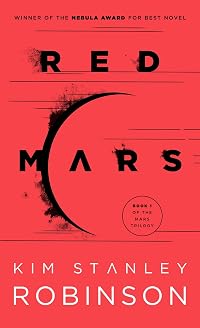
I came to this book knowing that it was highly touted as a potential nominee for a Hugo, so while I wouldn't say that I was daring Hao to impress me, I did have expectations. Were those expectations met? To a large degree, yes. It would have been useful to know beforehand that Hao has an advanced level of academic training, and is a practitioner of social policy, as this book is very much an example of the case where the characters embody arguments of how one should live one's life. While I wouldn't say that this then reduces these characters to cardboard, or that this work is didactic, it does mute the tones of personality. As has been noted, much of the story boils down to the character of the Martian girl Luoying, who is trying to show more understand how her world is as it is, after having received a social education on Earth. This is not a book that is trying to knock you over, but I'd argue that it is worth the investment of time. Recommended for fans of Kim Stanley Robinson. I would also not be surprised to see it wind up on the Hugo short list for best novel; though I think 2021 will be a very competitive year. show less
Vagabonds by Hao Jingfang (translated by Ken Liu) is a recommended science fiction novel set on Mars which explores contrasting societal values between Earth and Mars.
A century after the Martian War of Independence, a group of teenagers who were born and raised on Mars are sent to Earth as delegates. Called the Mercury Group, when they return home with a delegation of Terran representatives, the group begins to feel separate from the rest of Martian society and caught between the societal differences of the two worlds. After spending five of their formative teenage years on earth, members of the Mercury Group now have a fractured sense of identity and question how they fit into their community and their roles.
It is clear that there are show more still tensions between the two different systems of Earth and Mars. The novel closely follows Luoying, one of the returning students who is a dancer. She explored many aspects of Earth's society when she visited and now struggles to rectify the rigidity of Martian society with the materialistic, individualistic society of Western civilization. Luoying is the granddaughter of Hans Sloan, the consul of Mars. After her return from Earth, she is questioning her grandfather's role in being chosen as one of the teens to visit, as well as his role in the death of her parents.
Vagabonds is beautifully written, poetic, thoughtful and contemplative. Certainly it is clear why Hao Jingfang is a Hugo Award–winning author. In many ways it could have been set on future Earth, comparing and contrasting two different societies, and is more of a veiled comparison of an evolved socialism versus Western capitalism. While it explores the difference, it doesn't openly berate one over the other. It is also coming-of-age novel. The most notable fact is, however, very slow-paced novel and how you have to make a monumental choice to keep reading. This would be highly recommended, but it moves way-too-slowly.
Disclosure: My review copy was courtesy of Simon & Schuster.
http://www.shetreadssoftly.com/2020/04/vagabonds.html
https://www.goodreads.com/review/show/3282683466 show less
A century after the Martian War of Independence, a group of teenagers who were born and raised on Mars are sent to Earth as delegates. Called the Mercury Group, when they return home with a delegation of Terran representatives, the group begins to feel separate from the rest of Martian society and caught between the societal differences of the two worlds. After spending five of their formative teenage years on earth, members of the Mercury Group now have a fractured sense of identity and question how they fit into their community and their roles.
It is clear that there are show more still tensions between the two different systems of Earth and Mars. The novel closely follows Luoying, one of the returning students who is a dancer. She explored many aspects of Earth's society when she visited and now struggles to rectify the rigidity of Martian society with the materialistic, individualistic society of Western civilization. Luoying is the granddaughter of Hans Sloan, the consul of Mars. After her return from Earth, she is questioning her grandfather's role in being chosen as one of the teens to visit, as well as his role in the death of her parents.
Vagabonds is beautifully written, poetic, thoughtful and contemplative. Certainly it is clear why Hao Jingfang is a Hugo Award–winning author. In many ways it could have been set on future Earth, comparing and contrasting two different societies, and is more of a veiled comparison of an evolved socialism versus Western capitalism. While it explores the difference, it doesn't openly berate one over the other. It is also coming-of-age novel. The most notable fact is, however, very slow-paced novel and how you have to make a monumental choice to keep reading. This would be highly recommended, but it moves way-too-slowly.
Disclosure: My review copy was courtesy of Simon & Schuster.
http://www.shetreadssoftly.com/2020/04/vagabonds.html
https://www.goodreads.com/review/show/3282683466 show less
Thank you to Netgalley and Lauren Jackson at Saga Press for my free ARC .
"Sometimes the fight over the treasure is more important than the treasure itself." Remember this line. It is taken from the first few page of Vagabonds and to this reader seems to be the entire theme of the book. An interesting worldview that is set to challenge your own and after all that is the point of all great fiction of all great science fiction of great political science fiction and this is a masterful piece of literature and a bold take on science fiction that really is a work of political science fiction that in these times is much more interesting than straight sci-fi.
Vagabonds is set in a future where Mars has been colonized ans where Martians have show more revolted against Earth in a drawn out violent war. The two worlds exist in mutual conflict and distrust. Mars is a social oligarchy and Earth has itself as a whole turned into a ultra-capitalist planet. The themes coming from the point of view of Chinese novelist Hao Jingfang are immediately relatable and its easy to see where she is coming from. The inventiveness of it all and the familiarity of the story and the beautiful language put into place to tell this long and slow moving, slow moving in a great engaging way, tale.
Vagabonds takes a journey into identity and politics, and what it is to be an individual within society; within societies. Vagabonds questions what is society. Thankfully Jingfang does not give any answers into these explorations, but the questions are important ones, and the characters and plot drive the questions further and further directly from the first pages it does so from the perspectives of politicians, artists, and most importantly children who grow up in opposing communities and learn to deal with the internal conflicts raised by their experiences and by the adults around them; the previous generation and the previous generations generation.
In this lyrical tale of political science fiction Hao Jingfang has created a large cast of characters across worlds and across time. Vagabonds is thoughtful, reflective science fiction novel exploring these themes across deep(ish) time and deep space.
Jingfang's Vagabonds is not fast paced, but rather moves slowly, in a good way, to introduce the reader to different characters, getting to know the worlds they live in and the windows through which they view their lives, their opportunities and communities. Multiple viewpoints from different perspectives highlight the greys in their and our society, the ways in which nothing is ever so simple as right or wrong, and the ways in which sometimes things are not so different as they might at first appear. The cycle of history has a tendency to repeat itself, the question is how much is learnt.
This is science fiction as exploration of what home is of what culture is of what humanity is, of what society can become. As a US based reader was a pleasure to read a totally different perspective on science fiction and to my reading its political science fiction and appropriately so in my mind as its coming from a Chinese perspective. Vagabonds is dealing with a lot of ideas - about living, about love, about plans for the future, about revolutions, about what it means to be home, about what it means to be free, etc. It's not a particularly focused book on these ideas, but the questions it asks about each of them tends to be fascinating and thought provoking.
The basis for this exploration is its two different worlds, which each carry elements you can see in today's governments. The Earth in this book is ultra-capitalist, with everything being done for the sake of profit and nothing else, and where squabbling governments may still exist but are secondary in importance to the billionaires and corporations who have real power. Still, it's a world where everyone is certainly free to choose whatever life they wish to lead, to the extent they can stay out of poverty, and partying, rebelling, or altering the way one expresses themselves are an expected and ordinary part of life
It’s a journey into what it is to experience and explore where the boundaries lie in society. Its a novel you need to dig into because as the world is on lockdown and is sure to soon be out of lockdown the opinions and ideas that come out of isolation are the ones that can and will change what comes next. show less
"Sometimes the fight over the treasure is more important than the treasure itself." Remember this line. It is taken from the first few page of Vagabonds and to this reader seems to be the entire theme of the book. An interesting worldview that is set to challenge your own and after all that is the point of all great fiction of all great science fiction of great political science fiction and this is a masterful piece of literature and a bold take on science fiction that really is a work of political science fiction that in these times is much more interesting than straight sci-fi.
Vagabonds is set in a future where Mars has been colonized ans where Martians have show more revolted against Earth in a drawn out violent war. The two worlds exist in mutual conflict and distrust. Mars is a social oligarchy and Earth has itself as a whole turned into a ultra-capitalist planet. The themes coming from the point of view of Chinese novelist Hao Jingfang are immediately relatable and its easy to see where she is coming from. The inventiveness of it all and the familiarity of the story and the beautiful language put into place to tell this long and slow moving, slow moving in a great engaging way, tale.
Vagabonds takes a journey into identity and politics, and what it is to be an individual within society; within societies. Vagabonds questions what is society. Thankfully Jingfang does not give any answers into these explorations, but the questions are important ones, and the characters and plot drive the questions further and further directly from the first pages it does so from the perspectives of politicians, artists, and most importantly children who grow up in opposing communities and learn to deal with the internal conflicts raised by their experiences and by the adults around them; the previous generation and the previous generations generation.
In this lyrical tale of political science fiction Hao Jingfang has created a large cast of characters across worlds and across time. Vagabonds is thoughtful, reflective science fiction novel exploring these themes across deep(ish) time and deep space.
Jingfang's Vagabonds is not fast paced, but rather moves slowly, in a good way, to introduce the reader to different characters, getting to know the worlds they live in and the windows through which they view their lives, their opportunities and communities. Multiple viewpoints from different perspectives highlight the greys in their and our society, the ways in which nothing is ever so simple as right or wrong, and the ways in which sometimes things are not so different as they might at first appear. The cycle of history has a tendency to repeat itself, the question is how much is learnt.
This is science fiction as exploration of what home is of what culture is of what humanity is, of what society can become. As a US based reader was a pleasure to read a totally different perspective on science fiction and to my reading its political science fiction and appropriately so in my mind as its coming from a Chinese perspective. Vagabonds is dealing with a lot of ideas - about living, about love, about plans for the future, about revolutions, about what it means to be home, about what it means to be free, etc. It's not a particularly focused book on these ideas, but the questions it asks about each of them tends to be fascinating and thought provoking.
The basis for this exploration is its two different worlds, which each carry elements you can see in today's governments. The Earth in this book is ultra-capitalist, with everything being done for the sake of profit and nothing else, and where squabbling governments may still exist but are secondary in importance to the billionaires and corporations who have real power. Still, it's a world where everyone is certainly free to choose whatever life they wish to lead, to the extent they can stay out of poverty, and partying, rebelling, or altering the way one expresses themselves are an expected and ordinary part of life
It’s a journey into what it is to experience and explore where the boundaries lie in society. Its a novel you need to dig into because as the world is on lockdown and is sure to soon be out of lockdown the opinions and ideas that come out of isolation are the ones that can and will change what comes next. show less
Members
- Recently Added By
Published Reviews
ThingScore 75
Hao Jingfang’s Vagabonds is a long, generous, and often quite graceful novel which describes itself as “the tale of the fall of the last utopia,” but which can almost be described in purely “literary” terms. It focuses on a group of young people, most having just returned from what amounts to an extended gap year abroad, facing a variety of life choices as they launch into their show more careers and engage in sometimes extended philosophical dorm-room style debates on lofty topics ranging from the most practical forms of government to the nature of artistic freedom, environmental responsibility, and even housing policies. show less
Lists

Favorite Science Fiction by Women Authors
737 works; 202 members

Arthur C. Clarke Award Winners and Shortlisted Books
219 works; 14 members

Speculative Fiction from around the World
610 works; 18 members
Author Information
20+ Works 579 Members
Hao Jingfang is a Chinese author born on July 27, 1984 in Tianjin, China. She studied and worked in physics at the Tsinghua University. Later her interests turned to economics and earned a doctoral degree in economics. She currently works as an economic researcher at China Development Research Foundation. She has continued to develop her writing show more since high school, from winning the 2002 first prize at the 4th national high school "New Concept" writing competition, to winning the 2016 Hugo Award for Best Novelette for her work Folding Beijing. (Bowker Author Biography) show less
Some Editions
Awards and Honors
Awards
Common Knowledge
- Canonical title*
- Vagamondi
- Original title
- 流浪苍穹
- Original publication date
- 2016-06-01; 2020 (English language) (English language); 2023-06-20 (Italian language) (Italian language)
- First words*
- Questa è la storia di un gruppo di ragazzi nati in un mondo e diventati grandi in
un altro. - Publisher's editor
- Monti, Joe [Simon & Schuster]; Cheetham, Nic [Head of Zeus]
- Blurbers
- Liu, Cixin
- Original language
- Chinese
*Some information comes from Common Knowledge in other languages. Click "Edit" for more information.
Classifications
- Genres
- Fiction and Literature, Science Fiction
- DDC/MDS
- 895.13 — Literature & rhetoric Literatures of other languages Literatures of East and Southeast Asia Chinese Chinese fiction
- LCC
- PL2939 .A537 .L5813 — Language and Literature Languages and literatures of Eastern Asia, Africa, Oceania Languages of Eastern Asia, Africa, Oceania Chinese language and literature Chinese literature Individual authors and works
- BISAC
Statistics
- Members
- 405
- Popularity
- 76,898
- Reviews
- 17
- Rating
- (3.47)
- Languages
- English, Italian, Polish, Spanish
- Media
- Paper, Audiobook, Ebook
- ISBNs
- 19
- ASINs
- 6