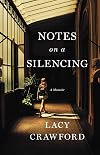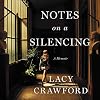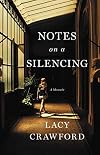
Notes on a Silencing: A Memoir
by Lacy Crawford
On This Page
Description
Traces the author's healing journey after a traumatizing sexual assault at infamous St. Paul's boarding school, describing how she helped police uncover proof of the school's institutionalized mandate of silence.Tags
Recommendations














































Member Reviews
this is stunning. in the writing, in the story, in the coverup, in her bravery and honesty. everything about this (except the terrible truth of her story) is perfect and perfectly done. i don't even have more to say than that - this is simply excellent.
"It's not a remarkable story. In fact it's ordinary. A sexual assault at a New England boarding school. A boarding school. I was assaulted in privilege. I have survived in privilege."
"What interests me is not what happened - I remember, I have alway remembered. What interests me is the near impossibility of telling what happened in a way that discharges its power."
"I did not understand that self-esteem and safety weren't held like treasure between a girl's legs, but could be plundered in show more other ways."
"All that stuff I just said about money and power - that's not just setting. It's about character. I'm trying to show what I would have given up - what I thought I would have been forced to give up - if I had gotten caught in the boys' room. I'm trying to argue my side. That's why I didn't scream, see? That's why I didn't claw their eyeballs out or bite. I was trying to find my place in that moment and I could not admit to myself that the moment was violent."
"I gathered that I was newly arrived to where my mother was in this world of downstairs men at night, where I supposed all women lived. I didn't like it but she wasn't surprised to find me here, so what choice did I have but to be here too?"
"The reason I hate to write what happened on that card table, what I did on that card table, is because it's a defense attorney's dream. 'Ah ha! Desire.' As though my choice on one night cost me the benefit of the doubt forever. The blanket projection of proto-consent cast across all the days and nights of my life. I don't owe anyone the telling of this. I never sued or took my abusers to court. Nor is it a matter of conscience. I did not want to write it because it should not matter, but of course it does. Because a girl who is attacked will so often assume the fault lies with her. There is no escaping a primal culpability. I include the events of the summer I was fifteen in open defiance of this presumed vulnerability. And to force into view what is to me the chilling logic that a girl who has explored a boy's body, or permitted her body to be explored in any way, is thereafter suspect as a victim. In other words, it's open season on her. In other words, to believe in the perfect victim is to believe in no victim at all."
"Teachers refused to punish me, which is another way of saying they refused to look after me. I could do anything here, because nobody was willing to see me anymore."
"My story was mine but the law's version of it was not."
"I believe, in fact, that the slur 'slut' carries within it, Trojan horse style, silence as its true intent. That the opposite of slut is not virtue, but voice. So I've written what happened, exactly as I remember. It is an effort of accompaniment, as much as it is of witness, to go back to that girl leaving the boys' room on an October night, sneakers landing on a sandy path, and walk with her all the way home. " show less
"It's not a remarkable story. In fact it's ordinary. A sexual assault at a New England boarding school. A boarding school. I was assaulted in privilege. I have survived in privilege."
"What interests me is not what happened - I remember, I have alway remembered. What interests me is the near impossibility of telling what happened in a way that discharges its power."
"I did not understand that self-esteem and safety weren't held like treasure between a girl's legs, but could be plundered in show more other ways."
"All that stuff I just said about money and power - that's not just setting. It's about character. I'm trying to show what I would have given up - what I thought I would have been forced to give up - if I had gotten caught in the boys' room. I'm trying to argue my side. That's why I didn't scream, see? That's why I didn't claw their eyeballs out or bite. I was trying to find my place in that moment and I could not admit to myself that the moment was violent."
"I gathered that I was newly arrived to where my mother was in this world of downstairs men at night, where I supposed all women lived. I didn't like it but she wasn't surprised to find me here, so what choice did I have but to be here too?"
"The reason I hate to write what happened on that card table, what I did on that card table, is because it's a defense attorney's dream. 'Ah ha! Desire.' As though my choice on one night cost me the benefit of the doubt forever. The blanket projection of proto-consent cast across all the days and nights of my life. I don't owe anyone the telling of this. I never sued or took my abusers to court. Nor is it a matter of conscience. I did not want to write it because it should not matter, but of course it does. Because a girl who is attacked will so often assume the fault lies with her. There is no escaping a primal culpability. I include the events of the summer I was fifteen in open defiance of this presumed vulnerability. And to force into view what is to me the chilling logic that a girl who has explored a boy's body, or permitted her body to be explored in any way, is thereafter suspect as a victim. In other words, it's open season on her. In other words, to believe in the perfect victim is to believe in no victim at all."
"Teachers refused to punish me, which is another way of saying they refused to look after me. I could do anything here, because nobody was willing to see me anymore."
"My story was mine but the law's version of it was not."
"I believe, in fact, that the slur 'slut' carries within it, Trojan horse style, silence as its true intent. That the opposite of slut is not virtue, but voice. So I've written what happened, exactly as I remember. It is an effort of accompaniment, as much as it is of witness, to go back to that girl leaving the boys' room on an October night, sneakers landing on a sandy path, and walk with her all the way home. " show less
One thing the #MeToo movement has taught us is that sexual assault is not uncommon. In fact, estimates place its prevalence at around 25% of women. Crawford’s intention in writing this memoir was not to describe one more incident of rape. But instead to explore in a highly personal way how communities silence and blame the victims while minimizing the crimes. The common trope is that rape is not about sex, but about power. Crawford’s memoir emphasizes that the exercise of power extends beyond the rapist to the community and its institutions.
St. Paul’s School is one of those Eastern prep schools that provide the world with movers and shakers. Most of these kids are from money and privilege. They include over-achievers, obsessed show more with academic success. As a teen, Lacy Crawford was no exception until she discovered she had herpes and made the “mistake” of revealing that she had been raped by two fellow students. Then, the ugliness of raw power began. She observes, “It’s so simple, what happened at St. Paul’s. It happens all the time. First, they refused to believe me. Then they shamed me. Then they silenced me.”
Crawford’s third-person narrative reads more like a meticulous work of investigative journalism than a memoir. It clearly describes a series of events and strategies not unlike the stages of grief (i.e., denial, anger, bargaining, and acceptance). First, Lacy blamed herself and struggled with giving a name to what happened to her. Was it my fault for going to their room after hours? Was it really rape or just nonconsensual sex? Once the incident became common knowledge, she was shunned by her female friends and bullied by her male peers. This led to the second stage, characterized by withdrawal and anger. The bargaining stage came when she decided that graduation and acceptance to Princeton would magically make the problem disappear. Thus, she doggedly pursued these goals despite an extremely negative reaction to her presence at St. Paul’s. Lacy came to accept her experience decades later when she discovered that the State of New Hampshire had opened an investigation of a systematic pattern of coverup and obstruction that the school encouraged following multiple incidents of rape. She was further buoyed after learning of another teenage victim, who was pursuing legal remedies against the school.
This unsettling memoir is important on several levels. It not only generates empathy for the victims, but also shows the systematic ways communities silence the victims of sexual abuse, how this increases their suffering, and corrupts justice. Unfortunately, it also shows how far our society has yet to go. show less
St. Paul’s School is one of those Eastern prep schools that provide the world with movers and shakers. Most of these kids are from money and privilege. They include over-achievers, obsessed show more with academic success. As a teen, Lacy Crawford was no exception until she discovered she had herpes and made the “mistake” of revealing that she had been raped by two fellow students. Then, the ugliness of raw power began. She observes, “It’s so simple, what happened at St. Paul’s. It happens all the time. First, they refused to believe me. Then they shamed me. Then they silenced me.”
Crawford’s third-person narrative reads more like a meticulous work of investigative journalism than a memoir. It clearly describes a series of events and strategies not unlike the stages of grief (i.e., denial, anger, bargaining, and acceptance). First, Lacy blamed herself and struggled with giving a name to what happened to her. Was it my fault for going to their room after hours? Was it really rape or just nonconsensual sex? Once the incident became common knowledge, she was shunned by her female friends and bullied by her male peers. This led to the second stage, characterized by withdrawal and anger. The bargaining stage came when she decided that graduation and acceptance to Princeton would magically make the problem disappear. Thus, she doggedly pursued these goals despite an extremely negative reaction to her presence at St. Paul’s. Lacy came to accept her experience decades later when she discovered that the State of New Hampshire had opened an investigation of a systematic pattern of coverup and obstruction that the school encouraged following multiple incidents of rape. She was further buoyed after learning of another teenage victim, who was pursuing legal remedies against the school.
This unsettling memoir is important on several levels. It not only generates empathy for the victims, but also shows the systematic ways communities silence the victims of sexual abuse, how this increases their suffering, and corrupts justice. Unfortunately, it also shows how far our society has yet to go. show less
Notes on a Silencing by Lacy Crawford is a 2020 Little Brown & Co. publication.
This is a raw, searing memoir chronicling Lacy Crawford time attending St. Paul’s Academy and the all too familiar story of a horrifying sexual assault that resulted in physical illness and psychological damage, but was also covered up by a University that protected its reputation and male students at all cost.
Lacy finds her voice years later when the school finds itself under investigation... Finally.
An elite school with powerful allies manages to silence Crawford… or so they thought. This memoir holds nothing back and paints an appalling picture of crime, double standards, bullying and blackmail. It is also a tale of lost innocence, of a time when show more even parents failed to see obvious signs of distress, leaving a young girl to cope in a viscous world of harassment and entitlement.
This is not an easy book to read, and it goes without saying it is one long trigger- so prepare yourself. Still, it’s an important book- one that needs more attention now that some of the fire from the “Me Too” movement has cooled down. We still need a reminder, as we can’t be so naïve that we believe all that toxicity has magically cleared up now. Today, as we speak, there’s a Lacy Crawford out there somewhere… and she needs us to keep up the pressure, to insist on accountability, to protect these young people from abuse, coverups, harassment and years of unnecessary pain and heartbreak.
There were a couple of quibbles- I understand the author has the absolute right to tell her story, her way. But this is not a blog. It’s a professional book- published by a respected publishing house and as such, I would have preferred the use of more professional language - which would have left a deeper impression, I think.
The only other issue: Because this is a harrowing story and no matter how mentally healthy one is, it is emotionally draining, which made me feel it might have been a bit overlong. By the end, I was exhausted.
But other than that, this is a powerful memoir, that if you can handle the subject matter, it is well worth the emotional toll it takes. Lacy has endured much, and I’m glad she found the courage to step forward and tell her story. I think I’ll remember this one for a very long time to come. show less
This is a raw, searing memoir chronicling Lacy Crawford time attending St. Paul’s Academy and the all too familiar story of a horrifying sexual assault that resulted in physical illness and psychological damage, but was also covered up by a University that protected its reputation and male students at all cost.
Lacy finds her voice years later when the school finds itself under investigation... Finally.
An elite school with powerful allies manages to silence Crawford… or so they thought. This memoir holds nothing back and paints an appalling picture of crime, double standards, bullying and blackmail. It is also a tale of lost innocence, of a time when show more even parents failed to see obvious signs of distress, leaving a young girl to cope in a viscous world of harassment and entitlement.
This is not an easy book to read, and it goes without saying it is one long trigger- so prepare yourself. Still, it’s an important book- one that needs more attention now that some of the fire from the “Me Too” movement has cooled down. We still need a reminder, as we can’t be so naïve that we believe all that toxicity has magically cleared up now. Today, as we speak, there’s a Lacy Crawford out there somewhere… and she needs us to keep up the pressure, to insist on accountability, to protect these young people from abuse, coverups, harassment and years of unnecessary pain and heartbreak.
There were a couple of quibbles- I understand the author has the absolute right to tell her story, her way. But this is not a blog. It’s a professional book- published by a respected publishing house and as such, I would have preferred the use of more professional language - which would have left a deeper impression, I think.
The only other issue: Because this is a harrowing story and no matter how mentally healthy one is, it is emotionally draining, which made me feel it might have been a bit overlong. By the end, I was exhausted.
But other than that, this is a powerful memoir, that if you can handle the subject matter, it is well worth the emotional toll it takes. Lacy has endured much, and I’m glad she found the courage to step forward and tell her story. I think I’ll remember this one for a very long time to come. show less
(1) Whoa.. Powerful. Incredibly well-written. High-school is bad enough but at least most people don't have to live in the building with a den of snakes 24/7. Most people have the respite of coming home at the end of the day. This is the author's story of being sexually assaulted as a sophomore at St. Paul's Prep school and how the school covered it up. She is writing to simply tell her story ~ 25 years after it happened. And it is a searing indictment. For shame!
The author is my generation as opposed to the more recent story written by Chanel Miller, 'Know My Name.' This is a more artfully written book than that one and it has the benefit of time and maturity under its wing. Lacy's experiences and loneliness and bewilderment were so show more relatable for someone such as myself who went to a posh New England liberal arts college filled with graduates of such prep schools as a local middle class newb. No internet, no texting, only a payphone in the lobby of the dorm - how I remember.
Crawford's writing is elegant, restrained, yet poignant. It only escapes a perfect rating from me as at times it began to sound a bit like a term paper on post-assault psychology - it seemed repetitive in that vein. The reader felt Lacy's erasure in the narrative - no more was needed. It seemed that Crawford rejected this life of elitism and privilege after her experiences (although I did read that she was a college admissions advisor for hire for clients hoping to get their kids into elite schools - so maybe not so much.)
Anyway, Bravo! Highly recommended as an important literary memoir. The book to crystallize the #me too movement for the discerning reader. Gawd - they should close that school. show less
The author is my generation as opposed to the more recent story written by Chanel Miller, 'Know My Name.' This is a more artfully written book than that one and it has the benefit of time and maturity under its wing. Lacy's experiences and loneliness and bewilderment were so show more relatable for someone such as myself who went to a posh New England liberal arts college filled with graduates of such prep schools as a local middle class newb. No internet, no texting, only a payphone in the lobby of the dorm - how I remember.
Crawford's writing is elegant, restrained, yet poignant. It only escapes a perfect rating from me as at times it began to sound a bit like a term paper on post-assault psychology - it seemed repetitive in that vein. The reader felt Lacy's erasure in the narrative - no more was needed. It seemed that Crawford rejected this life of elitism and privilege after her experiences (although I did read that she was a college admissions advisor for hire for clients hoping to get their kids into elite schools - so maybe not so much.)
Anyway, Bravo! Highly recommended as an important literary memoir. The book to crystallize the #me too movement for the discerning reader. Gawd - they should close that school. show less
I was transfixed by this audio book. Powerfully exposes how a sexual assault affects and damages the victim's life is so many ways. Crawford seamlessly weaves the story of her assault with the story of her life at St Pauls with the story of her family life into one engrossing book. As a teacher, I am appalled by the actions of the school - I looked into Chessy Prout's story and realized I had read about it in the news after the court case. I was shocked then and am even more so now. In awe of the strength and bravery of these women and disgusted how our society continues to support and defend perpetrators and ostracize victims.
I recently read Know My Name and both these books are so well written and so powerful.
I recently read Know My Name and both these books are so well written and so powerful.
This is a heartrending “coming of age” story that is more upsetting because it is true. A child of privilege, unschooled in how to protect herself from the advances of boys when she was at boarding school, had her life forever effected by the events she experienced while there. She was very sheltered and unaware of her body and its power. She was unable to make sensible decisions because she questioned her ability to fit in. Like many teens, she pushed the envelope on obeying rules, but when she broke them, it led to untoward events on several occasions. Did she ask for it? No, she did not. Could she have behaved more wisely? Surely, but then she could also fly if she had wings. She was a 15 year old teenage girl, on her own, in a show more room without a lock, in a boarding school for the spawn of the rich and powerful, so they looked away from the dangerous behavior of the boys and girls Their disobedience was somehow accepted as the entitlement of the more advantaged in society. Criminal behavior was ignored. In the author’s words, when a crime of sexual abuse was committed, first there was disbelief that the accuser could be innocent, than there was shaming of the accuser, then there were the threats of expulsion, and false charges against them which silenced them. The perpetrators of the crimes were never held responsible. Privileged but very naïve, attending St. Paul’s School in New Hampshire, far from her parents who lived in the posh community of Lake Forest, Illinois, Lacy Caldwell was tricked into becoming the victim of a terrible assault, an assault which shadowed her for the rest of her life. The publishing of this book may save other innocents from an equally degrading experience and life changing event.
Afraid of the shame and repercussions, Lacy submitted silently to the forced fellatio and demeaning behavior of two seniors, both 18, and hoped it would remain secret so that her future would not be altered. She had hopes and dreams. Her mother was a priest. She was a bright, good girl. The event caused her to become depressed and more insecure. When she became ill, with severe throat pain and bleeding from her mouth, the school never once assumed she was ill from something other than normal childhood sickness, colds, canker sores, etc. She was sent to doctors and never told the diagnosis. When the throat pain and bleeding persisted and she lost 10 pounds, she was sent to another doctor. She was never told about the various diagnoses..After confessing about her assault and complaining to her mom about her emotional state, she saw another doctor, participated in a study, and was given Prozac. She also saw her pediatrician who prescribed a medication to control Herpes Simplex, which was what she had contracted as a result of the assault. It is an STD, a sexually transmitted disease.
The school covered the whole attack up and refused to allow Lacy to return to school, once the charges were made, unless she promised not to speak of it. She would be expelled and accused of drug dealing if she did not comply. It seemed to me that her parents were more concerned with the continuity of her education, than with her reputation, and they submitted to the school’s requests rather than clearing her name in court and at school. As a result, when she returned to school, although the entire affair was supposed to be kept secret, she was eventually shamed and shunned because one of the coaches had told the team to get tested if they had been with Lacy. That news spread like wildfire. Yes, Lacy had made some foolish decisions, because she was young and unsophisticated, but she did not deserve what happened to her, and the guilty were never punished, rather, their teammates and friends revered them.
The cover up was the main idea for all involved. Reputations and futures would be tarnished and had to be protected. So the school and the guilty young boys were shielded from shame, but not Lacy Caldwell. She was ridiculed by the worst abusers of the female students, entitled young men who broke all the rules and assaulted the young girls or took advantage of their innocence without consequences.
Decades later, when there was an investigation into sexual assault at St. Paul’s School, Lacy’s history and accusations against her attackers came to light again, The cover up caused gasps from the investigators who were then, inexplicably, forced to drop their investigation. The cover up was still in motion. Rich and powerful forces were preventing her attack from being properly investigated and seeing the light of day. So, she decided, with her husband’s advice, to let it all hang out. The book is the result.
There is a lot of what some would consider excessively descriptive sex, and the use of foul language which may seem inappropriate, but the story and its message is too valuable to ignore. The book may be a better venue to publicize the crimes and the criminals. It could gain a wider audience and make the public more aware of what is all too common in many places where there are vulnerable females. Lacy’s only crime was not being aware of her own beauty and sexuality, and her vulnerability was attacked mercilessly.
Her recall of events is amazing; her introspection is deep. She wanted to belong, but not in the way that they initiated her into their world. During the investigation, questions arose about the veracity of the accusers, the investigators, the school administration and the law firms.
When the book was published, Lacy’s recall of the events was questioned by book reviewers. Parts of her recall were questioned. Some events seemed fuzzy. Some explanations were contradicted elsewhere. I supported her effort and believed her. The boys, now men, never denied their involvement. However, I found fault in her flashback to the “me too” movement and the idea that women need to be believed, even without evidence. Zero tolerance, once an accusation is made, is not something I support. When she brought up the Kavanaugh case, as if it was legitimate, when it was debunked totally because no one corroborated her story, she lost a bit of my support. She also made sure to announce that her mom was a priest, typically a field for men, that her school priest was gay and her counselor was black, and included other innuendos about progressive causes. It then seemed to me that she actually had an agenda while pretending not to have one. That was also a flaw in her character as she was growing up. She seemed innocent of most threats that faced her, but he made decisions that she knew were disobedient and could have repercussions. She does not take responsibility for her life’s mistakes and choices, but holds others responsible. Still, no one should be assaulted, regardless of how many rules they break, how they dress, where they go, or what they believe. Females deserve respect at all times. They are weaker and can be overcome, but that does not make the stronger right. It makes them even more wrong.
Some of the book seems repetitious, but other than that, don’t criticize the language, listen to the message instead. The cover up of these kinds of assaults happens in schools everywhere, more often than people would believe. The faculty and the students abuse their privileges and are often able to hide their crimes. Fraud is easy to carry out if the right people and policies are in place. More tolerance of female complaints are necessary, but not zero tolerance. Lacy’s life was scarred by the events at her boarding school. show less
Afraid of the shame and repercussions, Lacy submitted silently to the forced fellatio and demeaning behavior of two seniors, both 18, and hoped it would remain secret so that her future would not be altered. She had hopes and dreams. Her mother was a priest. She was a bright, good girl. The event caused her to become depressed and more insecure. When she became ill, with severe throat pain and bleeding from her mouth, the school never once assumed she was ill from something other than normal childhood sickness, colds, canker sores, etc. She was sent to doctors and never told the diagnosis. When the throat pain and bleeding persisted and she lost 10 pounds, she was sent to another doctor. She was never told about the various diagnoses..After confessing about her assault and complaining to her mom about her emotional state, she saw another doctor, participated in a study, and was given Prozac. She also saw her pediatrician who prescribed a medication to control Herpes Simplex, which was what she had contracted as a result of the assault. It is an STD, a sexually transmitted disease.
The school covered the whole attack up and refused to allow Lacy to return to school, once the charges were made, unless she promised not to speak of it. She would be expelled and accused of drug dealing if she did not comply. It seemed to me that her parents were more concerned with the continuity of her education, than with her reputation, and they submitted to the school’s requests rather than clearing her name in court and at school. As a result, when she returned to school, although the entire affair was supposed to be kept secret, she was eventually shamed and shunned because one of the coaches had told the team to get tested if they had been with Lacy. That news spread like wildfire. Yes, Lacy had made some foolish decisions, because she was young and unsophisticated, but she did not deserve what happened to her, and the guilty were never punished, rather, their teammates and friends revered them.
The cover up was the main idea for all involved. Reputations and futures would be tarnished and had to be protected. So the school and the guilty young boys were shielded from shame, but not Lacy Caldwell. She was ridiculed by the worst abusers of the female students, entitled young men who broke all the rules and assaulted the young girls or took advantage of their innocence without consequences.
Decades later, when there was an investigation into sexual assault at St. Paul’s School, Lacy’s history and accusations against her attackers came to light again, The cover up caused gasps from the investigators who were then, inexplicably, forced to drop their investigation. The cover up was still in motion. Rich and powerful forces were preventing her attack from being properly investigated and seeing the light of day. So, she decided, with her husband’s advice, to let it all hang out. The book is the result.
There is a lot of what some would consider excessively descriptive sex, and the use of foul language which may seem inappropriate, but the story and its message is too valuable to ignore. The book may be a better venue to publicize the crimes and the criminals. It could gain a wider audience and make the public more aware of what is all too common in many places where there are vulnerable females. Lacy’s only crime was not being aware of her own beauty and sexuality, and her vulnerability was attacked mercilessly.
Her recall of events is amazing; her introspection is deep. She wanted to belong, but not in the way that they initiated her into their world. During the investigation, questions arose about the veracity of the accusers, the investigators, the school administration and the law firms.
When the book was published, Lacy’s recall of the events was questioned by book reviewers. Parts of her recall were questioned. Some events seemed fuzzy. Some explanations were contradicted elsewhere. I supported her effort and believed her. The boys, now men, never denied their involvement. However, I found fault in her flashback to the “me too” movement and the idea that women need to be believed, even without evidence. Zero tolerance, once an accusation is made, is not something I support. When she brought up the Kavanaugh case, as if it was legitimate, when it was debunked totally because no one corroborated her story, she lost a bit of my support. She also made sure to announce that her mom was a priest, typically a field for men, that her school priest was gay and her counselor was black, and included other innuendos about progressive causes. It then seemed to me that she actually had an agenda while pretending not to have one. That was also a flaw in her character as she was growing up. She seemed innocent of most threats that faced her, but he made decisions that she knew were disobedient and could have repercussions. She does not take responsibility for her life’s mistakes and choices, but holds others responsible. Still, no one should be assaulted, regardless of how many rules they break, how they dress, where they go, or what they believe. Females deserve respect at all times. They are weaker and can be overcome, but that does not make the stronger right. It makes them even more wrong.
Some of the book seems repetitious, but other than that, don’t criticize the language, listen to the message instead. The cover up of these kinds of assaults happens in schools everywhere, more often than people would believe. The faculty and the students abuse their privileges and are often able to hide their crimes. Fraud is easy to carry out if the right people and policies are in place. More tolerance of female complaints are necessary, but not zero tolerance. Lacy’s life was scarred by the events at her boarding school. show less
Powerful, clear-eyed account of Lacy Crawford's traumatic attack at the age of fifteen, and the subsequent layers of abuse by other students, adults and by the school itself. The sense of privilege by the wealthy elite superseded the care of an individual in her time of need. Breathtakingly stark reality of the victims of sexual abuse.
Members
- Recently Added By
Lists

Hachette Book Group
152 works; 6 members

Top Five Books of 2024
795 works; 264 members

Psychology: Abuse, Grief, Self-Help
189 works; 1 member
Author Information

2 Works 573 Members
Some Editions
Awards and Honors
Awards
Distinctions
Notable Lists
Common Knowledge
- Canonical title
- Notes on a Silencing: A Memoir
- Epigraph
- I told you I wanted to live in a world in which the antidote to shame is not honor, but honestly. -Maggie Nelson, The Argonauts
- First words
- One evening around eleven o'clock, a young man called a girl on the phone. -Chapter 1
- Canonical DDC/MDS
- 813.6
- Canonical LCC
- HV6565.N4
Classifications
Statistics
- Members
- 444
- Popularity
- 69,323
- Reviews
- 12
- Rating
- (4.27)
- Languages
- English
- Media
- Paper, Audiobook, Ebook
- ISBNs
- 11
- ASINs
- 3