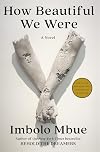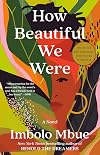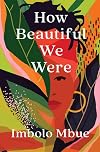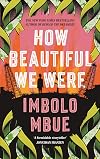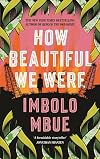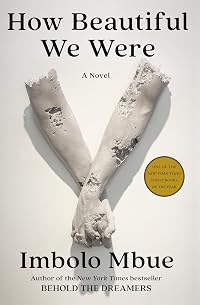
How Beautiful We Were
by Imbolo Mbue
On This Page
Description
"'We should have known the end was near.' So begins Imbolo Mbue's exquisite and devastating novel How Beautiful We Were. Set in the fictional African village of Kosawa, it tells the story of a people living in fear amidst environmental degradation wrought by a large and powerful American oil company. Pipeline spills have rendered farmlands infertile. Children are dying from drinking toxic water. Promises of clean up and financial reparations to the villagers are made--and ignored. The show more country's government, led by a corrupt, brazen dictator, exists to serve its own interest. Left with few choices, the people of Kosawa decide to fight the American corporation. Doing so will come at a steep price. Told through multiple perspectives and centered around a fierce young girl named Thula who grows up to become a revolutionary, Joy of the Oppressed is a masterful exploration of what happens when the reckless drive for profit, coupled with the ghosts of colonialism, comes up against one village's quest for justice--and a young woman's willingness to sacrifice everything for the sake of her people's freedom"-- show lessTags
Recommendations








Member Reviews
For generations, the people of Kosawa, a small rural village in an unnamed West African country, have lived peaceful lives, hunting, fishing, and farming to raise their families. That all changes near the end of the last century when Pexton, an American energy company, is allowed by a corrupt government to exploit the villagers by drilling for oil on their ancestral land, an act that gradually despoils the environment with toxic waste and adversely impacts those who still call the place home. How Beautiful We Were tells the story of Kosawa’s fight over the next four decades to restore their former way of life, or at least get compensated for the damages they have suffered. We experience much of this heartbreaking history through the show more eyes of Thula Nangi, a young girl who grows up to be a strong and resourceful woman with a passion for her homeland and a zeal for seeking justice that never wavers until the day she dies.
This is a beautifully written book that relates a moving and believable tale. Imbolo Mbue creates prose that is both powerfully frank in its depiction of the greed, corruption, and brutality of the agents of power and lyrically tender in rendering the plight and spirit of the Kosawa villagers. It is also interesting to note the structure the author adopts in telling her story. Laid out in a mostly linear fashion over a forty-year period, the narration rotates in alternating chapters from the first-person collective viewpoint of Thula’s peers (called “The Children”) to that of several members of the Nangi family. This provides the reader with a useful contrast as the myriad narrators often see the same set of events from different perspectives and varying levels of intensity. The only real critique I have is that the story seemed to bog down a little bit near the end as the protracted legal process ground toward its inevitably sad conclusion.
So, at the end, I was left with the following question: Can the words in a book—a novel, no less—change the world and make it a better place? As much as I would like to think so and hope so, I am really not sure. Certainly, powerful and moving prose such as that found in How Beautiful We Were can raise awareness and even serve as a rallying cry for some sort of social action. But what becomes of that heightened consciousness and newly found goodwill? How does that get translated into actions and outcomes that will correct an unjust or cruel situation? Of course, the irony is that this novel itself teaches us that while words and good intentions can indeed inspire heartfelt activity, it is very unlikely that anything will ultimately change. Maybe, then, just telling the story will have to be enough for us. show less
This is a beautifully written book that relates a moving and believable tale. Imbolo Mbue creates prose that is both powerfully frank in its depiction of the greed, corruption, and brutality of the agents of power and lyrically tender in rendering the plight and spirit of the Kosawa villagers. It is also interesting to note the structure the author adopts in telling her story. Laid out in a mostly linear fashion over a forty-year period, the narration rotates in alternating chapters from the first-person collective viewpoint of Thula’s peers (called “The Children”) to that of several members of the Nangi family. This provides the reader with a useful contrast as the myriad narrators often see the same set of events from different perspectives and varying levels of intensity. The only real critique I have is that the story seemed to bog down a little bit near the end as the protracted legal process ground toward its inevitably sad conclusion.
So, at the end, I was left with the following question: Can the words in a book—a novel, no less—change the world and make it a better place? As much as I would like to think so and hope so, I am really not sure. Certainly, powerful and moving prose such as that found in How Beautiful We Were can raise awareness and even serve as a rallying cry for some sort of social action. But what becomes of that heightened consciousness and newly found goodwill? How does that get translated into actions and outcomes that will correct an unjust or cruel situation? Of course, the irony is that this novel itself teaches us that while words and good intentions can indeed inspire heartfelt activity, it is very unlikely that anything will ultimately change. Maybe, then, just telling the story will have to be enough for us. show less
This book was one of those that is important to read, but relentless in the story. Set in a small village someplace in Africa, it tells the story of the fight to protect the village from a fictional American Oil company that is polluting the land, air, and water of the village.
The story alternates perspective, from brave Thula, whose entire life is defined at making the company pay for the harm it caused, from studying in America and using that education to organize rallies and get legal standing for the villagers, to the collective age-group of Thula's, who stay in their village and have to deal with the immediate results of Oil Spills and dirty air.
This is a book that was chosen by my book club because it has ended up on a number of show more banned book lists. And I can see why - while the story isn't Anti-American, it is Anti-American Oil Company, pointing out the rich and corrupt are in every company. There are also subplots of women independence, love, loyalty to family/home/ways of life. Its not an easy read, and sometimes bleak in outlook.
As for the book itself, I found it hard to get into. But once I started, I couldn't stop. I really needed to know how it ended. But it is bleak, at times hopeless, and I think it really gets across the feeling of helplessness in the face of evil. show less
The story alternates perspective, from brave Thula, whose entire life is defined at making the company pay for the harm it caused, from studying in America and using that education to organize rallies and get legal standing for the villagers, to the collective age-group of Thula's, who stay in their village and have to deal with the immediate results of Oil Spills and dirty air.
This is a book that was chosen by my book club because it has ended up on a number of show more banned book lists. And I can see why - while the story isn't Anti-American, it is Anti-American Oil Company, pointing out the rich and corrupt are in every company. There are also subplots of women independence, love, loyalty to family/home/ways of life. Its not an easy read, and sometimes bleak in outlook.
As for the book itself, I found it hard to get into. But once I started, I couldn't stop. I really needed to know how it ended. But it is bleak, at times hopeless, and I think it really gets across the feeling of helplessness in the face of evil. show less
When the American oil company first started work on the village's lands, the villagers were excited about the benefits and improvements that were sure to come. But what followed were lands destroyed and dying children, the water undrinkable and the village stuck between a company that insists that they'd like to help, but their hands are tied, and a government that silences anyone who might get in the way of the current arrangements.
This isn't a fun read, but it is an informative one. Mbue has made some interesting decisions about how she told this story, including the use of the first person plural for some chapters, a choice that works far better here than in other places I've encountered it. This is very much a book written by an show more African (Mbue was born in Cameroon and now lives in New York) for an American audience but it isn't a book that coddles the reader. It explains without over-simplifying. At heart, though, this is less a novel propelled by a story than one motivated by a cause. show less
This isn't a fun read, but it is an informative one. Mbue has made some interesting decisions about how she told this story, including the use of the first person plural for some chapters, a choice that works far better here than in other places I've encountered it. This is very much a book written by an show more African (Mbue was born in Cameroon and now lives in New York) for an American audience but it isn't a book that coddles the reader. It explains without over-simplifying. At heart, though, this is less a novel propelled by a story than one motivated by a cause. show less
Imbolo Mbue 's second novel, How Beautiful We Were provides an insider's
view of a village whose eden-like existence is ruined by the discovery of oil.
In a village called Kosovo, the oil under the ground winds up being a curse since the American company Pexton started drilling. "Within a year, fishermen broke down their canoes and found new uses for the wood. Children began to forget the taste of fish. The smell of Kosawa became the smell of crude. The noise from the oil field multiplied; day and night we heard it in our bedrooms, in our classroom, in the forest. Our air turned heavy". The use of various narrators and even a Greek Chorus entitled The Children provide the various insights of narrative which reads like a fable. The show more children have become sick and the once beautiful area is polluted. As the title implies, there's a lot of reminiscing about what this village used to be like.
The story starts with the Pexton, (sound like Exxon), men coming to both hear and ignore the grievances, but the village madman takes their keys and won't let them return. It takes the madman to truly see that no one will listen unless they do something to make them. The second chapter is written in first person from Thula whose father went to reason with the company in the city. The men continue to feel that if they could only talk to the men in charge they would understand and stop the pollution. These men have not been exposed to greed. He and a few men took buses and supposedly met with the company to complain about the death of the children, but they never returned. The mayor, who has profited from the company, just tries to keep the peace. When armed men come looking for the missing company men, they are told that perhaps they are visiting relatives, and the town gets a conspiratorial chuckle at their successful deception. The chuckles will stop soon after.
Mbue goes on to chart the next couple decades and centers her story around Thula as the prodigal child going off to America to get educated, always promising to come back and resolve this problem. I recommend you read to find out if she does.
Lines:
Opening-
We should have known the end was near. When the sky began to pour acid and rivers began to turn green, we should have known our land would soon be dead.”
“Someday, when you’re old, you’ll see that the ones who came to kill us and the ones who’ll run to save us are the same. No matter their pretenses, they all arrive here believing they have the power to take from us or give to us whatever will satisfy their endless wants.”
I had just turned nineteen. I remember I wore a layer of anxiety that day—I’d reached marriage age with no one handsome in sight. A man in my village named Neba was my only option, but I couldn’t look past his nostrils, which flared like a windswept skirt.
In our response, we reminded her of the story about the ants that killed the growling dog, bite by bite. We could do such a thing too. There was no better time to start biting Pexton than now.
She had the fortitude of the sun—no matter how dark and thick the clouds, she was confident she could melt them and emerge in full glory.
Wasn’t it time every tribe started looking out for itself? they wondered. My sister tried to argue against such thinking. She tried to contend that the country might be made up of dozens of tribes but it was still one nation, a garden with flowers of assorted shapes and colors and fragrances, in unison forming an exquisite beauty. Few listened—unity seemed too vulgar a notion.
Washington Post -Ron Charles
Growing up under a dictatorship in Cameroon, Mbue knows the despair that germinates in the contaminated soil of these industrial crimes. Her novel follows out the endless cycles of acquiescence and resistance, exposure and neglect, litigation and corruption that grind down exploited people…. In any practical sense, the village that Thula and her friends are trying to save is already gone. From the first line, we know what awaits Kosawa. But the fatalism of this story is countered by the beauty of Mbue’s prose and the purity of her vision. “We hoped,” the children say, “that we would die where we were born.” As long as there are novels this powerful, the fight’s not over. show less
view of a village whose eden-like existence is ruined by the discovery of oil.
In a village called Kosovo, the oil under the ground winds up being a curse since the American company Pexton started drilling. "Within a year, fishermen broke down their canoes and found new uses for the wood. Children began to forget the taste of fish. The smell of Kosawa became the smell of crude. The noise from the oil field multiplied; day and night we heard it in our bedrooms, in our classroom, in the forest. Our air turned heavy". The use of various narrators and even a Greek Chorus entitled The Children provide the various insights of narrative which reads like a fable. The show more children have become sick and the once beautiful area is polluted. As the title implies, there's a lot of reminiscing about what this village used to be like.
The story starts with the Pexton, (sound like Exxon), men coming to both hear and ignore the grievances, but the village madman takes their keys and won't let them return. It takes the madman to truly see that no one will listen unless they do something to make them. The second chapter is written in first person from Thula whose father went to reason with the company in the city. The men continue to feel that if they could only talk to the men in charge they would understand and stop the pollution. These men have not been exposed to greed. He and a few men took buses and supposedly met with the company to complain about the death of the children, but they never returned. The mayor, who has profited from the company, just tries to keep the peace. When armed men come looking for the missing company men, they are told that perhaps they are visiting relatives, and the town gets a conspiratorial chuckle at their successful deception. The chuckles will stop soon after.
Mbue goes on to chart the next couple decades and centers her story around Thula as the prodigal child going off to America to get educated, always promising to come back and resolve this problem. I recommend you read to find out if she does.
Lines:
Opening-
We should have known the end was near. When the sky began to pour acid and rivers began to turn green, we should have known our land would soon be dead.”
“Someday, when you’re old, you’ll see that the ones who came to kill us and the ones who’ll run to save us are the same. No matter their pretenses, they all arrive here believing they have the power to take from us or give to us whatever will satisfy their endless wants.”
I had just turned nineteen. I remember I wore a layer of anxiety that day—I’d reached marriage age with no one handsome in sight. A man in my village named Neba was my only option, but I couldn’t look past his nostrils, which flared like a windswept skirt.
In our response, we reminded her of the story about the ants that killed the growling dog, bite by bite. We could do such a thing too. There was no better time to start biting Pexton than now.
She had the fortitude of the sun—no matter how dark and thick the clouds, she was confident she could melt them and emerge in full glory.
Wasn’t it time every tribe started looking out for itself? they wondered. My sister tried to argue against such thinking. She tried to contend that the country might be made up of dozens of tribes but it was still one nation, a garden with flowers of assorted shapes and colors and fragrances, in unison forming an exquisite beauty. Few listened—unity seemed too vulgar a notion.
Washington Post -Ron Charles
Growing up under a dictatorship in Cameroon, Mbue knows the despair that germinates in the contaminated soil of these industrial crimes. Her novel follows out the endless cycles of acquiescence and resistance, exposure and neglect, litigation and corruption that grind down exploited people…. In any practical sense, the village that Thula and her friends are trying to save is already gone. From the first line, we know what awaits Kosawa. But the fatalism of this story is countered by the beauty of Mbue’s prose and the purity of her vision. “We hoped,” the children say, “that we would die where we were born.” As long as there are novels this powerful, the fight’s not over. show less
[b:How Beautiful We Were|51794532|How Beautiful We Were|Imbolo Mbue|https://i.gr-assets.com/images/S/compressed.photo.goodreads.com/books/1575339897l/51794532._SX50_SY75_.jpg|73424026] is a slow but inexorable and devastating novel. I alternated it with other books because of both the pace and atmosphere of dread. Yet it ultimately adds up to a vivid and powerful microcosm of neocolonial exploitation. The setting is a fictional African village, Kosawa, adjacent to oil-drilling by a fictional petrochemical company, Pexton. Oil extraction is polluting Kosawa's air, water, and land. The contamination is sickening adults and killing children. This has already been going on for some time when the book opens. The plot chronicles the efforts show more of Kosawa residents to resist Pexton and retain their land. It's hardly a spoiler to tell you that they struggle and suffer. The narrative covers about four decades, long enough for generation to succeed generation. Mbue takes a polyphonic approach to narration, which conveys a sense of community very well. The narration also demonstrates the appallingly limited power that the villagers have against the might of an American oil giant. They try various strategies of resistance, all of which have limitations.
Strategies include appeals to the oil company, getting international media to publicise their plight, national political campaigning, sabotaging Pexton's infrastructure, assassinating their workers, and getting an NGO to bring a court case. By the end of the book, none of these have worked. Pexton has made promises, even legal agreements, then broken every one of them. The national government is authoritarian and corrupt, only interested in Pexton's money. Kosawa remains poisoned and many villagers have left. While this is a realistic depiction of brutal commodity capitalism, it is of course grim as fuck. Pexton's oil extraction cannot be stopped, so Kosawa is abandoned rather than saved. Despite the heroic efforts of the villagers, especially Thula, no real hope remains.
I appreciated without enjoying Mbue's examination of the systemic injustice and exploitation that underpins the fossil fuel economy, which is largely invisible to the West. It definitely isn't easy to read, despite being very well-written. Here is an example:
That sequence reminded me of [a:Vasily Grossman|19595|Vasily Grossman|https://images.gr-assets.com/authors/1391607075p2/19595.jpg], but overall [b:How Beautiful We Were|51794532|How Beautiful We Were|Imbolo Mbue|https://i.gr-assets.com/images/S/compressed.photo.goodreads.com/books/1575339897l/51794532._SX50_SY75_.jpg|73424026] is more fatalistic than his writing. It gives a snapshot of the suffering caused by the so-called resource curse, without offering any hope for positive change in the future. While realistic, this is extremely bleak. show less
I appreciated without enjoying Mbue's examination of the systemic injustice and exploitation that underpins the fossil fuel economy, which is largely invisible to the West. It definitely isn't easy to read, despite being very well-written. Here is an example:
It was then that Nubia told the story of how the Leader's wife and two oldest children had died, eleven months before he started coming to the village meetings. She told me about how the car in which the wife and children were travelling had fallen into a river. The bridge under them had collapsed; government men responsible for maintaining it had misallocated the funds for repair of the bridge, putting it in their own bank accounts. Some of them were the Leader's friends, people he had laughed and drunk with. They consoled the Leader at the wake as his children and wife lay side by side in matching coffins, dressed in white. The Leader, when he returned to work after the funeral, stopped thinking about the right things to do for the sake of others. He thought only about his surviving children.
He worked hard for them, to send them to America, convinced that there was no hope for our country, a country cursed at its birth, beyond salvation. He travelled to villages, doing his work for Pexton, parroting what he was paid to parrot. Whenever he returned home, he hugged his children, ironed their clothes, fried eggs for their breakfast every morning. He never remarried, choosing to cook for his children and clean the house himself. Nubia's friend told her how, one evening, she'd entered her father's bedroom to see him lying on the floor, weeping, clutching a photo of her and her surviving sister.
I'd sighed after Nubia recounted this, and she asked me why I'd sighed. I told her that on all sides the dead were too many - on the side of the vanquished, on the side of the victors, on the side of those who'd never chosen sides. What good were sides? Who could ever hail themselves triumphant while they still lived? Perhaps someday, I added, after all the dead have been counted, there will be one number for the living to ponder, though the number will never tell the full story of what has been lost.
That sequence reminded me of [a:Vasily Grossman|19595|Vasily Grossman|https://images.gr-assets.com/authors/1391607075p2/19595.jpg], but overall [b:How Beautiful We Were|51794532|How Beautiful We Were|Imbolo Mbue|https://i.gr-assets.com/images/S/compressed.photo.goodreads.com/books/1575339897l/51794532._SX50_SY75_.jpg|73424026] is more fatalistic than his writing. It gives a snapshot of the suffering caused by the so-called resource curse, without offering any hope for positive change in the future. While realistic, this is extremely bleak. show less
#ReadAroundTheWorld. #Cameroon
“I know nothing about how a girl makes men pay for their crimes, but I have the rest of my life to figure it out.”
Imbolo Mbue brings us a story set in the 1980s in a fictional African village Kosawa, presumably based on her native Cameroon. This is a powerful hard-hitting story about greed, colonialism and environmental exploitation.
An American oil company Pexton has been drilling for oil in Kosawa and consequently contaminating the water causing the deaths of many. Initially the villagers believe the American assurances that they will leave and all will be well, but one day the village madman deviates from his stereotype and steps up to lead a revolution against the oppressors.
The main character in show more the book is a girl called Thula who eventually goes to study overseas and returns as an activist. The point of view shifts between Thula, her family and her classmates, all of them deeply impacted by the tragedy, and each bringing their own insights such as:
“We wondered if America was populated with cheerful people like that overseer, which made it hard for us to understand them: How could they be happy when we were dying for their sake?”
"I told her that on all sides the dead were too many—on the side of the vanquished, on the side of the victors, on the side of those who'd never chosen sides. What good were sides? Who could ever hail themselves triumphant while they still lived? Perhaps someday, I added, after all the dead have been counted, there will be one number for the living to ponder, though the number will never tell the full story of what has been lost."
This story exposes the evils of corruption and greed and highlights the extent and impact of environmental disasters which are often covered up. I can understand why the author chose not to name the location as she does not spare the government and the dictator for their complicity and corruption either. I think this is a powerful important book with a clear and strong message. 5 stars. show less
“I know nothing about how a girl makes men pay for their crimes, but I have the rest of my life to figure it out.”
Imbolo Mbue brings us a story set in the 1980s in a fictional African village Kosawa, presumably based on her native Cameroon. This is a powerful hard-hitting story about greed, colonialism and environmental exploitation.
An American oil company Pexton has been drilling for oil in Kosawa and consequently contaminating the water causing the deaths of many. Initially the villagers believe the American assurances that they will leave and all will be well, but one day the village madman deviates from his stereotype and steps up to lead a revolution against the oppressors.
The main character in show more the book is a girl called Thula who eventually goes to study overseas and returns as an activist. The point of view shifts between Thula, her family and her classmates, all of them deeply impacted by the tragedy, and each bringing their own insights such as:
“We wondered if America was populated with cheerful people like that overseer, which made it hard for us to understand them: How could they be happy when we were dying for their sake?”
"I told her that on all sides the dead were too many—on the side of the vanquished, on the side of the victors, on the side of those who'd never chosen sides. What good were sides? Who could ever hail themselves triumphant while they still lived? Perhaps someday, I added, after all the dead have been counted, there will be one number for the living to ponder, though the number will never tell the full story of what has been lost."
This story exposes the evils of corruption and greed and highlights the extent and impact of environmental disasters which are often covered up. I can understand why the author chose not to name the location as she does not spare the government and the dictator for their complicity and corruption either. I think this is a powerful important book with a clear and strong message. 5 stars. show less
I have mixed feelings about this book. The author does an impressive job of tackling a difficult and painful subject. She weaves the narrative expertly using multiple points of view that evoke complicated emotions focused around the struggle of a small African village suffering from environmental deterioration caused by an American oil company.
I did not enjoy this book - but I did not read it for enjoyment. It is important to recognize the struggles of those whose voices go unheard and the price developed countries claim is their right in the pursuit of progress, convenience, and prosperity. This book allows the reader to step out of their comfort zone and to consider more than just their personal experience in life. I find myself show more asking 'what changes do I want to see in this world? How can I help make that happen?'. show less
I did not enjoy this book - but I did not read it for enjoyment. It is important to recognize the struggles of those whose voices go unheard and the price developed countries claim is their right in the pursuit of progress, convenience, and prosperity. This book allows the reader to step out of their comfort zone and to consider more than just their personal experience in life. I find myself show more asking 'what changes do I want to see in this world? How can I help make that happen?'. show less
Members
- Recently Added By
Lists

NY Times Book Review Best Books 2021
5 works; 1 member

Banned or Challenged Books
400 works; 41 members

Anticipated 2021 Reads
231 works; 7 members

Books Read in 2021
5,361 works; 114 members

Tour of Africa
54 works; 2 members

Books Read in 2024
4,623 works; 126 members
Author Information

5+ Works 3,230 Members
Imbolo Mbue was born in Limbe, Cameroon in 1982. She has been a resident in the U.S. for more than 10 years. She earned her B.S. from Rutgers University and an M.A. from Columbia University. She won the PEN/Faulkner Award for her novel Behold the Dreamers in 2017 which was also chosen by Oprah Winfrey to be in her book club. (Bowker Author show more Biography) show less
Some Editions
Awards and Honors
Awards
Distinctions
Notable Lists
Common Knowledge
- Canonical title
- How Beautiful We Were
- People/Characters
- Thula Nangi; Juba Nangi; Bongo Nangi; Sahel Nangi; Yaya Nangi; Malabo Nangi (show all 11); Woja Beki; Konga Wanjika; Jakani and Sakani; Austin; Mr. Fish
- Important places
- Kosawa; Bézam
- Epigraph
- The people walking in darkness have seen a great light; on those living in the land of the shadow of death, a light has dawned.
—Isaiah 9:2 - Dedication
- For my beautiful, beautiful children
- First words
- We should have known the end was near.
- Quotations
- Only when we became parents did we realize how we could harm our children in an attempt to clean out for them the smothering decay of this world.
- Last words
- (Click to show. Warning: May contain spoilers.)Yaya, please, Big Papa, tell us a story.
- Blurbers
- Nunez, Sigrid; Smith, Tracy K.; Salzman, Mark; Ebershoff, David
Classifications
Statistics
- Members
- 832
- Popularity
- 33,065
- Reviews
- 33
- Rating
- (3.87)
- Languages
- 5 — Catalan, Dutch, English, French, German
- Media
- Paper, Audiobook, Ebook
- ISBNs
- 26
- ASINs
- 5