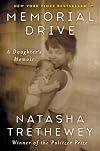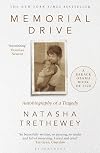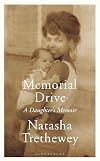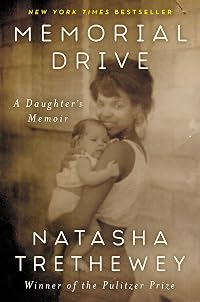
Memorial Drive: A Daughter's Memoir
by Natasha Trethewey
On This Page
Description
An Instant New York Times BestsellerA New York Times Notable Book
One of Barack Obama's Favorite Books of 2020
Named One of the Best Books of the Year by: The Washington Post, NPR, Shelf Awareness, Esquire, Electric Literature, Slate, The Los Angeles Times, USA Today, and InStyle
A chillingly personal and exquisitely wrought memoir of a daughter reckoning with the brutal murder of her mother at the hands of her former stepfather, and the moving, intimate story of a poet coming into her own show more in the wake of a tragedy
At age nineteen, Natasha Trethewey had her world turned upside down when her former stepfather shot and killed her mother. Grieving and still new to adulthood, she confronted the twin pulls of life and death in the aftermath of unimaginable trauma and now explores the way this experience lastingly shaped the artist she became.
With penetrating insight and a searing voice that moves from the wrenching to the elegiac, Pulitzer Prize–winning poet Natasha Trethewey explores this profound experience of pain, loss, and grief as an entry point into understanding the tragic course of her mother's life and the way her own life has been shaped by a legacy of fierce love and resilience. Moving through her mother's history in the deeply segregated South and through her own girlhood as a "child of miscegenation" in Mississippi, Trethewey plumbs her sense of dislocation and displacement in the lead-up to the harrowing crime that took place on Memorial Drive in Atlanta in 1985.
Memorial Drive is a compelling and searching look at a shared human experience of sudden loss and absence but also a piercing glimpse at the enduring ripple effects of white racism and domestic abuse. Animated by unforgettable prose and inflected by a poet's attention to language, this is a luminous, urgent, and visceral memoir from one of our most important contemporary writers and thinkers.
. show less
Tags
Recommendations











Member Reviews
An extremely personal account of violence, both the racial and gender sort, in one woman's life and the lingering effects. Trethewey's mother suffered through an abusive relationship, hers more physically abusive, while her daughter suffered severe emotional abuse at the hands of the same man. No matter that Trethewey's mother notified the police, and had a patrol officer in the area on the very day she was murdered. Trethewey recounts the fallout from her mother's murder and the fallout from existing as a bi-racial child in the south. She reconnects with her mother's ghost after the officer who was first on the scene gives her the case file years later, and works through her own identity at the same time. An Obama recommended book from show more 2020, and highly recommended by the Dawg. show less
*E-ARC received from Edelweiss Plus with the understanding that I would post an honest review. No money or other goods were exchanged, and all views are my own.*
Natasha Trethewey is one of my favorite poets, so when I saw she had written a memoir I was really excited to read it. This book, though short, packs a powerful punch as the author explores her relationship with her mother, piecing together events that led up to her mother's murder at the hands of her stepfather.
Fans of Trethewey's poetry may be aware of the outline of the story, and even those who don't will find out where the story is leading soon. This is a riveting book, reflective and raw, as Trethewey attempts to make sense - this time in prose - of a defining trauma in show more her life. Reading her memories, her gaps of memory, and transcripts from the trial, I was crying by the time I finished. This memoir touches on issues such as race and domestic abuse, all through the prism of a daughter's love for her mother. I'll be recommending it far and wide to my library patrons. show less
Natasha Trethewey is one of my favorite poets, so when I saw she had written a memoir I was really excited to read it. This book, though short, packs a powerful punch as the author explores her relationship with her mother, piecing together events that led up to her mother's murder at the hands of her stepfather.
Fans of Trethewey's poetry may be aware of the outline of the story, and even those who don't will find out where the story is leading soon. This is a riveting book, reflective and raw, as Trethewey attempts to make sense - this time in prose - of a defining trauma in show more her life. Reading her memories, her gaps of memory, and transcripts from the trial, I was crying by the time I finished. This memoir touches on issues such as race and domestic abuse, all through the prism of a daughter's love for her mother. I'll be recommending it far and wide to my library patrons. show less
This Pulitzer Prize winner, subtitled "A Daughter's Memoir", is THE story of domestic violence and murder - preventable, infuriating, heartbreaking. The audiobook is read by the author in a pain-filled yet calmly measured voice that should be played in every courtroom in every country. Natasha's early idyllic Mississippi childhood with her mother Gwen, her white Scandinavian father, and her grandmother come to an abrupt end when her parents split up and Gwen moves them to Atlanta, then a progressive step up from the Deep South. The inclusion of transcripts from taped phone calls between the murderous stepfather and Gwen, in a futile attempt to gather evidence which was never acted upon by indifferent law enforcement, is heart-stopping. show more There are questions - what happened to Natasha's father, brother, grandmother, and stepfather after his release from prison, but the reader can only wish that the writing provided catharsis and even a small measure of comfort. show less
A couple of poems in Natasha Trethewey’s poetry collection Monument led me to finally read this memoir, and I finished it in one day. The word for the book is enthralling.
Natasha’s stepfather murdered her mother when Natasha was 19, and away at college. This is the story of her childhood up to and including that event. It took Trethewey three decades to be able to look back and reflect on what went on.
Her story almost seems a gruesome fairy tale. She is the child of a black mother from New Orleans and a white father from Canada, who met as college students working in the 1960s civil rights movement. Her early years in Mississippi were happy, although once the Ku Klux Klan burned a cross in the front yard. But her parents’ show more marriage did not survive, and mother and daughter moved to Atlanta, where her mother met and married the evil stepfather. Who eventually murdered her.
The most fascinating aspect of the book for me is the interplay of remembering and forgetting after trauma; why and what we choose to forget, and what we are unable to forget. So much of the past is lost to us. Remembering the past is like striking a match: scenes flare up, brightly lit for a moment before they fade away. The book is a succession of such moments, some gentle, some horrendous.
And the nagging question: did this really happen to me? Toward the middle of the book, Trethewey includes police reports and other documentation, as if to convince herself of the extent of the tragedy. Here’s the proof, she seems to be saying. You don’t have to believe just me.
This is a masterly exploration of the effects of profound trauma. The good news is that through her poetry and her work, Natasha Trethewey survived it, and even thrived. show less
Natasha’s stepfather murdered her mother when Natasha was 19, and away at college. This is the story of her childhood up to and including that event. It took Trethewey three decades to be able to look back and reflect on what went on.
Her story almost seems a gruesome fairy tale. She is the child of a black mother from New Orleans and a white father from Canada, who met as college students working in the 1960s civil rights movement. Her early years in Mississippi were happy, although once the Ku Klux Klan burned a cross in the front yard. But her parents’ show more marriage did not survive, and mother and daughter moved to Atlanta, where her mother met and married the evil stepfather. Who eventually murdered her.
The most fascinating aspect of the book for me is the interplay of remembering and forgetting after trauma; why and what we choose to forget, and what we are unable to forget. So much of the past is lost to us. Remembering the past is like striking a match: scenes flare up, brightly lit for a moment before they fade away. The book is a succession of such moments, some gentle, some horrendous.
And the nagging question: did this really happen to me? Toward the middle of the book, Trethewey includes police reports and other documentation, as if to convince herself of the extent of the tragedy. Here’s the proof, she seems to be saying. You don’t have to believe just me.
This is a masterly exploration of the effects of profound trauma. The good news is that through her poetry and her work, Natasha Trethewey survived it, and even thrived. show less
Memorial Drive - Natasha Tretheway
5 stars
“Scientists tell us there are different ways that the brain records and stores memory, that trauma is inscribed differently than other types of events.”
Briefly stated, this is a memoir of a family tragedy. Natasha Tretheway’s mother was murdered by her stepfather when Tretheway was nineteen. That event is foreshadowed in everything she relates of her earlier childhood; her parent’s marriage, their divorce, her experience as a mixed race child during the early days of southern desegregation.
Tretheway is a poet. Last year, I was moved by her grief stricken poems in Monument: Poems New and Selected. The trauma and grief are also present in this memoir, but there’s also a certain show more detachment. She speaks of selective memory and the ways that humans process trauma. She quotes Robert Frost when describing the value of metaphor, beyond the written word, but in understanding a life. She selects childhood memories and describes dreams that go beyond a statement of the stark facts of a violent event. The prose is moving and thought provoking.
This is a book about the murder of her young mother and her own lifetime of processing that trauma. It is about domestic abuse and its worst consequences. It is also a book about racism. Tretheway was born in 1966. The times may have been changing, but the racism is there. All of the time.
You can read her poem, Imperatives for Carrying on in the Aftermath at poetryfoundation.org . show less
5 stars
“Scientists tell us there are different ways that the brain records and stores memory, that trauma is inscribed differently than other types of events.”
Briefly stated, this is a memoir of a family tragedy. Natasha Tretheway’s mother was murdered by her stepfather when Tretheway was nineteen. That event is foreshadowed in everything she relates of her earlier childhood; her parent’s marriage, their divorce, her experience as a mixed race child during the early days of southern desegregation.
Tretheway is a poet. Last year, I was moved by her grief stricken poems in Monument: Poems New and Selected. The trauma and grief are also present in this memoir, but there’s also a certain show more detachment. She speaks of selective memory and the ways that humans process trauma. She quotes Robert Frost when describing the value of metaphor, beyond the written word, but in understanding a life. She selects childhood memories and describes dreams that go beyond a statement of the stark facts of a violent event. The prose is moving and thought provoking.
This is a book about the murder of her young mother and her own lifetime of processing that trauma. It is about domestic abuse and its worst consequences. It is also a book about racism. Tretheway was born in 1966. The times may have been changing, but the racism is there. All of the time.
You can read her poem, Imperatives for Carrying on in the Aftermath at poetryfoundation.org . show less
Gorgeous and haunting and clearly a catharsis for the writer. Though it is a horrific experience, she gives it context and meaning and manages to make the very personal also universal. Her mother's murder is the biggest thing Trethewey confronts here, but there are so many moments and issues woven into it, that delving into this topic must have been a deep dive. I love that it isn't a linear recounting, but also includes impressions - her [] chapters - and includes her point of view as a child as well as the retrospective she brings to it as an adult. Growing up in the 60s in rural MS as the child of a black woman and a white man could be a story in itself. Witnessing that union drift apart and moving with her now single mother to show more Atlanta in 1972 could also be a single story. And then living with an abusive step-father, a baby half-brother and her mother in a new family configuration also has its own arc, but the strands are all woven together masterfully. Trethewey's powerful command of words and her thoughtful reflection are what make this so beautiful. She gains much from each facet of her life, despite its losses. Describing her foundation, she says: "My father believed - as the poet Robert Frost cautioned - that one must have a thorough education in figurative language. My mother, who'd majored in literature and theater in college must have believed as well in the necessity of an education in metaphor...." 24 "In my grandmother's house the act of remembering [a visit from the Klan], recounting that story was meant to ensure my future safety, protection gained through knowledge and the vigilance it brings, a certain hyperawareness..."(36) "For a long time I tried to forget as much as I could of the twelve years between 1973 and 1985...I chose to mark the calendar year just after my mother and I left Mississippi as ending, and the moment of loss - her death- as beginning." (51) Though she blames herself for her mother's death for various small reasons that only a helpless child would attach to the incident, it is really the system that failed her. The police knew she was directly threatened but did not maintain their vigilance on watch. There is much for Trethewey to reckon with here, but she does it with beautiful words and graceful thoughts, coming to various conclusions for herself and for society, one of which: "What matters is the transformative power of metaphor and the story we tell ourselves about the arc and meaning of our lives. (208) By sharing her story, she touches others. show less
In her riveting memoir, Pulitzer Prize-winning poet Natasha Trethewey examines the interplay of grief and memory as she attempted to come to terms with her mother’s brutal murder thirty years ago. Natasha was born in Mississippi in 1966 to an African-American mother and a white Canadian father when miscegenation was still illegal. Although she spent her early years in the warmth of her mother’s loving extended family, both Natasha and her parents were constantly subjected to the Gulfport white community's disdain and racism.
Natasha’s parents divorced when she was six. She moved with her mother to Atlanta, where her Mother worked and studied to become a social worker. She also met and married Joel, an African- American Vietnam show more veteran. Joel became physically abusive, and the abuse gradually spiraled out of control.
In her memoir, Natasha shares her recollections of Joel’s toxic behavior and her mother’s attempts to get help, leave and divorce Joel, followed by his relentless stalking. Natasha is 19, and her mother is 40 when Joel shoots her in her apartment's parking lot. Twenty years later, Natasha obtains the police files on the case. She includes the transcriptions of her stepfather’s final threatening phone calls to her mother in the memoir. These revelations cause her to relive and reexamine the trauma anew.
Memorial Drive is beautifully written. I listened to the author read the book on audio. It was a moving experience. show less
Natasha’s parents divorced when she was six. She moved with her mother to Atlanta, where her Mother worked and studied to become a social worker. She also met and married Joel, an African- American Vietnam show more veteran. Joel became physically abusive, and the abuse gradually spiraled out of control.
In her memoir, Natasha shares her recollections of Joel’s toxic behavior and her mother’s attempts to get help, leave and divorce Joel, followed by his relentless stalking. Natasha is 19, and her mother is 40 when Joel shoots her in her apartment's parking lot. Twenty years later, Natasha obtains the police files on the case. She includes the transcriptions of her stepfather’s final threatening phone calls to her mother in the memoir. These revelations cause her to relive and reexamine the trauma anew.
Memorial Drive is beautifully written. I listened to the author read the book on audio. It was a moving experience. show less
Members
- Recently Added By
Lists

Must-Read Books by Black Authors
114 works; 92 members

Top Five Books of 2020
982 works; 350 members

True Crime
156 works; 1 member

Obama Reads
181 works; 3 members

2021 Notable Books for Adults
24 works; 4 members

Books Read in 2021
5,361 works; 114 members

Memoirs and Nonfiction
4 works; 1 member

Top Five Books of 2023
767 works; 317 members

Best Biographies of Notable Women
279 works; 101 members
Barack Obama's Summer Reading List 2020
17 works; 5 members

Books Read in 2025
4,091 works; 97 members

Books recommended by Barack Obama
295 works; 28 members
Author Information

13+ Works 2,238 Members
Natasha Trethewey was the Poet Jaureate Consultant in Poetry to the Library of Congress, 2012-14. She is the author of four collections of poetry: Thrall, Domestic Work, Bellocq's Ophelia, and Native Cuard, for which she was awarded the Pulitzer Prize. She is the Robert W. Woodruff Professor of English and Creative Writing at Emory University.
Awards and Honors
Awards
Distinctions
Notable Lists
Common Knowledge
- Original publication date
- 2020
- People/Characters
- Natasha Trethewey; Gwendolyn Ann Turnbough Grimmette (mother of Natasha Trethewey); Eric Trethewey (father of Natasha Trethewey); Emmett Till; Medgar Evers; Robert Frost (show all 27); Son McGee; Lizzie McGee; Sugar McGee; Leretta Dixon Turnbough (grandmother of Natasha Trethewey); Narcissus; Ralph Turnbough; Joel T. Grimmette, Jr.; Cassandra; Joey Grimmette (son of Joel T. Grimmette, Jr.); Mrs. Messick (teacher); Richard M. Nixon; Jimmy Carter; Bill Withers; Roberta Flack; Otis Redding; Cynthia (author's friend); Rena Bishop; John Sweet (lawyer); Brett Gadsden (husband of Natasha Trethewey); Gregory Orr; Lorca
- Important places
- Atlanta, Georgia, USA; Gulfport, Mississippi, USA; New Orleans, Louisiana, USA; Decatur, Georgia, USA
- Epigraph
- The past beats inside me like a second heart. - John Banville, The Sea
All journeys have secret destinations of which the traveler is unaware. - Martin Buber - Dedication
- In memory of the women who made me:
FRANCES DIXON INGRAHAM
LERETTA DIXON TURNBOUGH
and
GWENDOLYN ANN TURNBOUGH (NÈE),
my mother - First words
- Three weeks after my mother is dead I dream of her: We walk a rutted path, an oval track around which we are making our slow revolution: side by side, so close our shoulders nearly touch, neither of us speaking, both of us in... (show all) our traces.
- Last words
- (Click to show. Warning: May contain spoilers.)For several miles we'd drive like that: so close we seemed conjoined, and I could feel her heart beating against me as if I had not one, but two.
- Blurbers
- Karr, Mary; Jackson, Mitchell S.; Limón, Ada
- Original language
- English
Classifications
Statistics
- Members
- 708
- Popularity
- 40,192
- Reviews
- 39
- Rating
- (4.28)
- Languages
- English, French, German, Spanish
- Media
- Paper, Audiobook, Ebook
- ISBNs
- 19
- ASINs
- 4