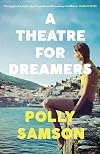
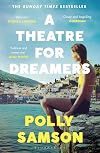
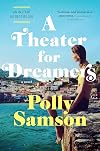
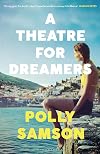
A Theatre for Dreamers
by Polly Samson
On This Page
Description
"Sublime and immersive . . . If you wish you could disappear to a Greek island right now, I highly recommend."—Jojo Moyes, #1 bestselling author of Me Before You
"This gorgeous, glimmering summer read is itself perfect summer: irresistible and deep, Samson's lyric sentences pulling you into unforgettable sunlight and shadow."
—Amy Bloom, New York Times bestselling author of White Houses
It’s 1960, and the world teeters on the edge of cultural, political, sexual, and artistic show more revolution. On the Greek island of Hydra, a proto-commune of poets, painters, and musicians revel in dreams at the feet of their unofficial leaders, the writers Charmian Clift and George Johnston, troubled queen and king of bohemia. At the center of this circle of misfit artists are the captivating and inscrutable Axel Jensen, his magnetic wife Marianne Ihlen, and a young Canadian ingenue poet named Leonard Cohen.
When eighteen-year-old Erica stumbles into their world, she’s fresh off the boat from London with nothing but a bundle of blank notebooks and a burning desire to leave home in the wake of her mother’s death. Among these artists, she will find an unraveling utopia where everything is tested—the nature of art, relationships, and her own innocence.
Intoxicating and immersive, A Theater for Dreamers is a spellbinding tour-de-force about the beauty between naïveté and cruelty, chaos and utopia, artist and muse—and about the wars waged between men and women on the battlegrounds of genius. Roiling with the heat of a Grecian summer, A Theater for Dreamers is, according to the Guardian, “a blissful piece of escapism” and “a surefire summer hit.”. show less
Tags
Recommendations


























Member Reviews
There are no bigger secrets that our parent's lives, unless it is the secrets kept between lovers.
When Erica's mother dies she discovers she didn't know her mother at all. She had only seen the woman who stayed with an abusive husband and father. How did she secretly stash money away for her daughter's future, and where did that secret car come from, and how was it used?
Erica is nineteen and in love with the older, beautiful, wannabe writer Jimmy. When Erica's previous neighbor, her mother's friend Charmain, sends her newest book and invitation to visit her on the Greek island of Hydra, Erica uses her inheritance to take her and Jimmy to Greece.
Hydra is paradise on earth, nestled between the cliffs and the sea, with marble streets and show more exotic foods and floral odors competing with the smell of sponges piled on the fishing boats.
Charmain and her husband Gordon are the center of a group of ex-pat young people, artists and writers and poets and their muses. Erica finds a surrogate mother in her, and Charmain tries to guide the teenager to prepare for a fuller life, warning her of the pitfalls of love and men and being bound to a supporting role.
In the early 1960s, these Bohemians are seeking meaning in a world threatened by Atomic destruction, rejecting the conformity of the 1950s. And yet, the men still hold to old fashioned ideas about women and love and sex, and the women comply to keep their men. Charmain imagines another way of living, not merely being a man's muse and caretaker to protect his creative process.
A natural observer, Erica tries to puzzle out the twisted relationships around her, noting the tension in the marriages of Axle and Marianne Jensen and Charmain and Gordon. When Leonard Cohen arrives on the island, already published at age 25, he is ready to claim Marianne when her husband abandons her and their son for another woman. She is the perfect muse and compliant help-meet for a creative man.
As relationships topple, and alcohol and drugs fuel craziness, Erica is forced to alter her idea of her future.
Hydra is central to the novel, with lush descriptions vividly rendering its beauty and challenges. The Greek traditions are observed, the seasonal changes described. I dreamed of it at night, especially after viewing photographs online of the historical denizens of Hydra during this time. Samson's descriptions of these people, their clothing, is so detailed, arising from these photographs.
I also dreamed of Cohen's music, So Long, Marianne, That's No Way to Say Goodbye, and especially The Stranger Song, from Cohen's 1967 record album that I purchased at age 16. I was surprised to learn that the songs Cohen sang at the group gatherings were folk songs like I Ride an Old Paint. I always loved that folk song, and had a 45 record of it when I was a girl.
I read this book during a cold spell in spring, immersed in the bright light and sea air of a place I will never see, but feel as if I had. I loved this book for taking me to another place, and for the interesting and deeply flawed characters, and for its insight into women's role in men's lives.
I received a free ebook from the publisher through NetGalley. My review is fair and unbiased. show less
When Erica's mother dies she discovers she didn't know her mother at all. She had only seen the woman who stayed with an abusive husband and father. How did she secretly stash money away for her daughter's future, and where did that secret car come from, and how was it used?
Erica is nineteen and in love with the older, beautiful, wannabe writer Jimmy. When Erica's previous neighbor, her mother's friend Charmain, sends her newest book and invitation to visit her on the Greek island of Hydra, Erica uses her inheritance to take her and Jimmy to Greece.
Hydra is paradise on earth, nestled between the cliffs and the sea, with marble streets and show more exotic foods and floral odors competing with the smell of sponges piled on the fishing boats.
Charmain and her husband Gordon are the center of a group of ex-pat young people, artists and writers and poets and their muses. Erica finds a surrogate mother in her, and Charmain tries to guide the teenager to prepare for a fuller life, warning her of the pitfalls of love and men and being bound to a supporting role.
In the early 1960s, these Bohemians are seeking meaning in a world threatened by Atomic destruction, rejecting the conformity of the 1950s. And yet, the men still hold to old fashioned ideas about women and love and sex, and the women comply to keep their men. Charmain imagines another way of living, not merely being a man's muse and caretaker to protect his creative process.
A natural observer, Erica tries to puzzle out the twisted relationships around her, noting the tension in the marriages of Axle and Marianne Jensen and Charmain and Gordon. When Leonard Cohen arrives on the island, already published at age 25, he is ready to claim Marianne when her husband abandons her and their son for another woman. She is the perfect muse and compliant help-meet for a creative man.
As relationships topple, and alcohol and drugs fuel craziness, Erica is forced to alter her idea of her future.
Hydra is central to the novel, with lush descriptions vividly rendering its beauty and challenges. The Greek traditions are observed, the seasonal changes described. I dreamed of it at night, especially after viewing photographs online of the historical denizens of Hydra during this time. Samson's descriptions of these people, their clothing, is so detailed, arising from these photographs.
I also dreamed of Cohen's music, So Long, Marianne, That's No Way to Say Goodbye, and especially The Stranger Song, from Cohen's 1967 record album that I purchased at age 16. I was surprised to learn that the songs Cohen sang at the group gatherings were folk songs like I Ride an Old Paint. I always loved that folk song, and had a 45 record of it when I was a girl.
I read this book during a cold spell in spring, immersed in the bright light and sea air of a place I will never see, but feel as if I had. I loved this book for taking me to another place, and for the interesting and deeply flawed characters, and for its insight into women's role in men's lives.
I received a free ebook from the publisher through NetGalley. My review is fair and unbiased. show less
I am a little late to the party when it comes to this much-lauded April release A Theatre for Dreamers. From its opening lines, I was transfixed by the languorous beauty of Samson’s prose and the emotional depth and honesty of Erica’s narrative.
It’s a climb from the port and I take the steps of Donkey Shit Lane at a steady pace, a heart-shaped stone in my pocket. I walk along and, though there’s no one to witness, I resist the urge to stop and rest at the standing posts after the steepest part. I watch my step, a stumble can so easily become a fall, a thought that disgusts the gazelle still living within my stiffening body.
So much is alluded to and indeed foretold in this reflective opening paragraph… The bohemian adventures show more of the past to be revealed, the fleeting nature of youth, and the deep shadows, contradictions and scorched legacies seemingly inevitable in the lives of those that shine the brightest living life close to the sun.
The iconic movie setting, the Greek island of Hydra, its inhabitants and various deprivations, are largely depicted through the golden-hued, escapist filter of Erica’s youthful and previously cloistered perspective. But Samson brings the scuff marks into focus over time. Indeed the enduring setting, and its seasons, is perhaps the most well-drawn of all the characters in this novel. Continue reading > https://www.bookloverbookreviews.com/2020/07/a-theatre-for-dreamers-by-polly-sam... show less
It’s a climb from the port and I take the steps of Donkey Shit Lane at a steady pace, a heart-shaped stone in my pocket. I walk along and, though there’s no one to witness, I resist the urge to stop and rest at the standing posts after the steepest part. I watch my step, a stumble can so easily become a fall, a thought that disgusts the gazelle still living within my stiffening body.
So much is alluded to and indeed foretold in this reflective opening paragraph… The bohemian adventures show more of the past to be revealed, the fleeting nature of youth, and the deep shadows, contradictions and scorched legacies seemingly inevitable in the lives of those that shine the brightest living life close to the sun.
The iconic movie setting, the Greek island of Hydra, its inhabitants and various deprivations, are largely depicted through the golden-hued, escapist filter of Erica’s youthful and previously cloistered perspective. But Samson brings the scuff marks into focus over time. Indeed the enduring setting, and its seasons, is perhaps the most well-drawn of all the characters in this novel. Continue reading > https://www.bookloverbookreviews.com/2020/07/a-theatre-for-dreamers-by-polly-sam... show less
I have no memory of where I came across 'A Theatre for Dreamers' or why exactly I decided to read it. Given that it only recently came out, I can only assume there was a review in the Guardian. Funnily enough, my experience of it was analogous to the previous novel I read, [b:Nova|85863|Nova|Samuel R. Delany|https://i.gr-assets.com/images/S/compressed.photo.goodreads.com/books/1320491578l/85863._SY75_.jpg|953787], although the two were published 50 years apart in different genres. 'A Theatre for Dreamers' follows Erica, a girl of 17 who travels to the Greek island of Hydra in 1960 using an unexpected bequest from her mother. Her brother, boyfriend, and a group of friends accompany her. They settle into an expat community of artists on show more the island, which includes an old friend of Erica's mother. The plot of the novel is almost entirely interpersonal romantic drama, featuring constant adultery, frequent domestic abuse, unwanted pregnancies, and an exhausting amount of sexual jealousy. There is also a certain amount of artistic rivalry and jealousy. Like a fool, I only realised near the end that the character named Leonard was Leonard Cohen and the novel was fictionalising real events. I'm not sure it would have made a great difference had I noticed this earlier, though. While living on Hydra, Erica mourns her mother and contemplates what she wants from life. There is a strong theme of women's art being suppressed by the expectation that they'll support male artists, do all the cooking and housework, and raise children.
The similarity of reading experience with [b:Nova|85863|Nova|Samuel R. Delany|https://i.gr-assets.com/images/S/compressed.photo.goodreads.com/books/1320491578l/85863._SY75_.jpg|953787] was this: I liked the setting far more than the characters and plot. Samson's lush descriptions of Hydra transported me on a miniature holiday there, which was lovely. In reality I hate temperatures above 23°C and get easily sunburnt, thus prefer to appreciate such places vicariously. I think Samson strikes a pretty good balance between the idyllic and inconvenient aspects of living on Hydra in 1960. Being young, energetic, and somewhat naive, Erica is much less bothered by them than someone older would be. So 'A Theatre for Dreamers' is escapist to read in that respect. However, the romantic conflicts of the plot were much less to my taste and the ending exceedingly downbeat. Somehow all the extremes of emotion didn't move me greatly. Maybe this was due to Erica's limited perspective? Somehow the gossipy manner in which events were conveyed felt a bit tawdry, even voyeuristic. Perhaps the interpersonal intricacies would be more appealing to someone familiar with the group depicted, but I much preferred the place to the people. show less
The similarity of reading experience with [b:Nova|85863|Nova|Samuel R. Delany|https://i.gr-assets.com/images/S/compressed.photo.goodreads.com/books/1320491578l/85863._SY75_.jpg|953787] was this: I liked the setting far more than the characters and plot. Samson's lush descriptions of Hydra transported me on a miniature holiday there, which was lovely. In reality I hate temperatures above 23°C and get easily sunburnt, thus prefer to appreciate such places vicariously. I think Samson strikes a pretty good balance between the idyllic and inconvenient aspects of living on Hydra in 1960. Being young, energetic, and somewhat naive, Erica is much less bothered by them than someone older would be. So 'A Theatre for Dreamers' is escapist to read in that respect. However, the romantic conflicts of the plot were much less to my taste and the ending exceedingly downbeat. Somehow all the extremes of emotion didn't move me greatly. Maybe this was due to Erica's limited perspective? Somehow the gossipy manner in which events were conveyed felt a bit tawdry, even voyeuristic. Perhaps the interpersonal intricacies would be more appealing to someone familiar with the group depicted, but I much preferred the place to the people. show less
Mama Mia meets 80s soap operas meets the Bloomsbury Set/Algonquin Round Table. It is 1960, and 18-year-old Erica’s mother has just died, leaving her and her older brother the legacy of some money and a car that they didn’t know she had. She knew they would need to escape their oppressive father. And that is just what they do - escape to the Greek island of Hydros, to paint and to write and to experience life. They land under the auspices of their mother’s old acquaintance, Charmian Clift and husband George Johnston, writers both, and “queen and king of bohemia.” In this gorgeous, sensuous setting, (the food, the booze, the sun, the sea!) ensconced in the artist colony, Erica has her eyes opened, not only to the 60s vibe, but show more also to the challenges of relationships of all kinds, and the cost of creativity. show less
This novel is mesmerizing, bringing all the life, love and drama of a bohemian, hippy generation to life.
It’s the 1960’s, and Ericka flees her oppressive father along with her first love, Jimmy, her brother and his girlfriend. With a small inheritance and a vague invitation from a friend of her mother’s, Ericka arrives on the Greek island of Hydra looking for a place to belong. She finds one among an expatriate community of troubled, free-spirited artists, about whom one character says, “they hop like bloody fleas from bed to bed.”
This is a character-driven novel, and I was as absorbed as Ericka in the struggling marriage of the dazzling Charmain and the angry, sickly George; and beautiful, young Marianne, torn between her show more love for the brilliant novelist husband who abandons her with a baby and the young poet, Leonard Cohen, who wants to step into his place.
This is a glittering story of beautiful young artists drinking, loving, making mistakes and making art against the backdrop of a beautiful island.
Thank you to the publisher for the advance review copy of this book in exchange for an honest review. show less
It’s the 1960’s, and Ericka flees her oppressive father along with her first love, Jimmy, her brother and his girlfriend. With a small inheritance and a vague invitation from a friend of her mother’s, Ericka arrives on the Greek island of Hydra looking for a place to belong. She finds one among an expatriate community of troubled, free-spirited artists, about whom one character says, “they hop like bloody fleas from bed to bed.”
This is a character-driven novel, and I was as absorbed as Ericka in the struggling marriage of the dazzling Charmain and the angry, sickly George; and beautiful, young Marianne, torn between her show more love for the brilliant novelist husband who abandons her with a baby and the young poet, Leonard Cohen, who wants to step into his place.
This is a glittering story of beautiful young artists drinking, loving, making mistakes and making art against the backdrop of a beautiful island.
Thank you to the publisher for the advance review copy of this book in exchange for an honest review. show less
I was interested to drop into this world of these two Australian authors who lived so long in Greece. It's a warts and all "expose" of a period I had held in romantic esteem. The reality is far from romantic. And as usual for this kind of thing in this period - the standing of women in that world left a lot to be desired.
Ingenue meets glamourous sophisticates in fabulous location is such a well trodden literary path. This one mixes the real (Leonard Cohen's time on Hydra) with vivid descriptions of the Greek island of Hydra and life there where travellers (not tourists yet, of course) meet a rooted island community. Read this one on your summer travels!
Members
- Recently Added By
Lists

Anticipated 2021 Reads
231 works; 7 members

Maybe This Year? Books to Look Forward To
412 works; 9 members

el
1,139 works; 1 member
Author Information
8+ Works 358 Members
Awards and Honors
Distinctions
The Guardian Book of the Day (2020-05-16)
Common Knowledge
- Canonical title
- A Theatre for Dreamers
- Alternate titles
- A Theater for Dreamers
Classifications
Statistics
- Members
- 192
- Popularity
- 170,641
- Reviews
- 12
- Rating
- (3.32)
- Languages
- English, Finnish, German
- Media
- Paper, Audiobook, Ebook
- ISBNs
- 21
- ASINs
- 5