Sisters
by Daisy Johnson
On This Page
Description
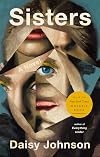
"'One of her generation's most intriguing authors' (Entertainment Weekly), Daisy Johnson is the youngest writer to have been shortlisted for the Man Booker Prize. Now she returns with Sisters, a haunting story about two sisters caught in a powerful emotional web and wrestling to understand where one ends and the other begins. Born just ten months apart, July and September are thick as thieves, never needing anyone but each other. Now, following a case of school bullying, the teens have moved show more away with their single mother to a long-abandoned family home near the shore. In their new, isolated life, July finds that the deep bond she has always shared with September is shifting in ways she cannot entirely understand. A creeping sense of dread and unease descends inside the house. Meanwhile, outside, the sisters push boundaries of behavior -- until a series of shocking encounter tests the limits of their shared experience, and forces shocking revelations about the girls' past and future. Written with radically inventive language and imagery by an author whose work has been described as "entrancing" (The New Yorker), "a force of nature" (New York Times Book Review), and "weird and wild and wonderfully unsettling" (Celeste Ng), Sisters is a one-two punch of wild fury and heartache -- a taut, powerful, and deeply moving account of sibling love and what happens when two sisters must face each other's darkest impulses"-- show lessTags
Recommendations


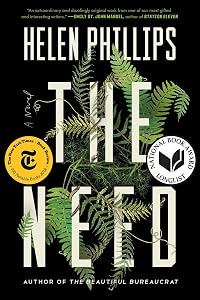
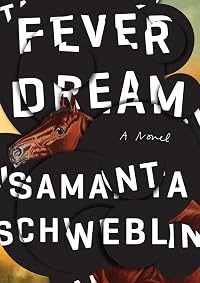
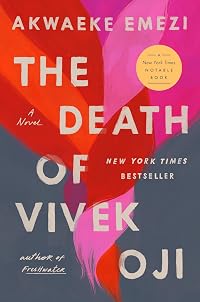

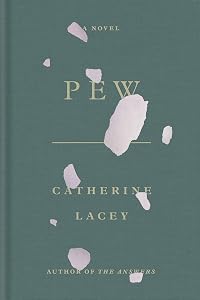






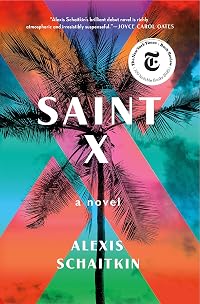

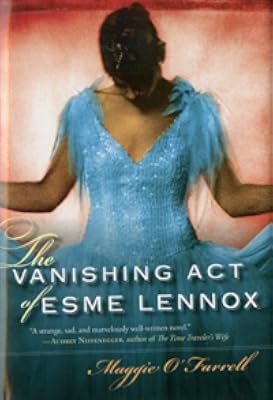
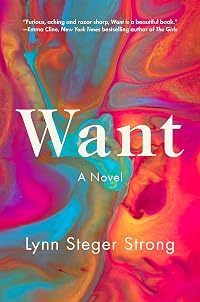

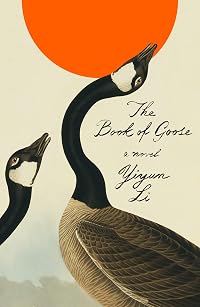



Member Reviews
July and September, sisters born less than a year apart, have been taken by their mother to an isolated house on the Yorkshire coast. There was an incident at school back in Oxford, and their mother isn't doing very well, spending long hours in her room with the door closed as July and her older sister figure out how to pass the time.
This novel is told from the close point-of-view of July, as she avoids thinking about the incident at school. She and her sister have always been so close, moving in tandem and insisting on sharing a birthday. But isolated and without any adult guidance, July is beginning to realize that she doesn't always want to do what September wants.
I love deeply interior novels like this one, where all we see is show more what a character sees and thinks and experiences. It can be claustrophobic, but also intimate. Here, July is a teenager whose feelings are confused and contradictory and Johnson has given her such a distinctive, uncertain voice. Hiding a crucial event can seem like authorial manipulation, but Johnson is an assured enough writer to pull it off beautifully. I very much enjoyed this one. show less
This novel is told from the close point-of-view of July, as she avoids thinking about the incident at school. She and her sister have always been so close, moving in tandem and insisting on sharing a birthday. But isolated and without any adult guidance, July is beginning to realize that she doesn't always want to do what September wants.
I love deeply interior novels like this one, where all we see is show more what a character sees and thinks and experiences. It can be claustrophobic, but also intimate. Here, July is a teenager whose feelings are confused and contradictory and Johnson has given her such a distinctive, uncertain voice. Hiding a crucial event can seem like authorial manipulation, but Johnson is an assured enough writer to pull it off beautifully. I very much enjoyed this one. show less
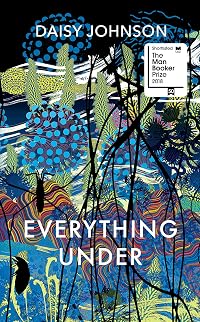
An obsessive sibling bond is the driving force behind Daisy Johnson’s novel Sisters, her gothic-tinged follow-up to her first novel, the Booker Prize-shortlisted Everything Under. September and July are the sisters in question, teenage daughters of Sheela and Peter. Born ten months apart, the girls might as well be twins, they are that close in every respect. So close that their teachers have expressed concern, stating that their connection leaves them “isolated, uninterested, conjoined, young for their age, sometimes moved to great cruelty.” As the novel begins, we learn that Sheela, July and September are fleeing the aftermath of a catastrophic event that took place at the girls’ school, leaving their home in Oxford for a show more house in coastal Yorkshire. It is soon revealed that Peter is dead—victim of a drowning incident—that he was violent and abusive and had been separated from his wife and children for several years at the time of his death. The house in Yorkshire was Peter’s childhood home and belongs to Peter’s sister. Sheela and the girls have been there before; in fact September was born there. But “Settle House,” as it is known, is run down, secluded, creepy: hardly a comforting refuge. Sheela spends most of her time locked in her room, either working (she writes books for children based on her daughters’ fictional adventures) or sleeping, venturing out at night for food and to perform household chores. In the meantime, the girls play games and explore the house and surrounding area. At one point, July and September join a group of young people partying after dark on the beach, an encounter that, in July’s boozy recollection, results in September losing her virginity. At an early point the reader will realize that September’s personality dominates the relationship—that she has a vengeful streak and enjoys taking risks and pushing boundaries—and that July is the follower. Particularly alarming (because of its potential for violence) is the game “September says,” in which July must comply with whatever her sister tells her to do so long as the directive is prefaced by the phrase “September says.” (ie, “September says eat all the mayonnaise.”) Along the way, Johnson drops veiled hints regarding the triggering event that drove the family out of Oxford. This taut, disturbing narrative comes to us mainly via July’s twitchy first-person perspective, briefly interrupted by third-person sections told from Sheela’s more passive point of view. As the action approaches a climax, July grows increasingly distressed by memories pushing through to the surface, and as her agitation deepens the story becomes fractured and surreal. Sisters, blending elements of horror and suspense, generates a peculiar kind of unease. Readers will respond to the ending in a variety of ways, which will make for some lively book-club discussions. But there can be no doubt that Daisy Johnson’s edgy talent and uniquely skewed perspective on the human psyche set her apart from the majority of her contemporaries. show less
Good…but what bugged me about it? This is the kind of book I wish I could write so it feels important to pinpoint what felt off here… All the reviews laud the withholding, the mystery at the heart of the book. But it felt cheap to me. I believe the withholding in the Saunder’s short story “Escape from Spiderhead,” but this controlled the novel—every page was in thrall to big reveal that was coming.
In the Saunders story…you wonder but then you get absorbed in other things of real consequence. This book is an elaborate and overwrought shell game.
I don’t buy the psychological damage that justifies the withholding and when we reach the big reveal…it’s a let down. But if you build something up THAT MUCH, the reveal is show more bound to disappoint.
There is much to admire here. Great, disturbing, engrossing prose. The twisted relationship between the sisters and the history of abuse that makes it believable. I think the novel mistakes what’s interesting in the story: it’s not “what really happened during the storm!” but rather why a sister would abuse, why one would accept abuse, how an abused sister would mourn their dominating and cruel but devoted older sibling, and how she would feel emancipated when that sister died. How that conflict between grief and relief would be overwhelming for a young woman.
Remedy: the story shouldn’t fixate on the withheld mystery but disclose in flashes —understated flashes.
The reveal should come earlier and the real conflict can proceed from there. show less
In the Saunders story…you wonder but then you get absorbed in other things of real consequence. This book is an elaborate and overwrought shell game.
I don’t buy the psychological damage that justifies the withholding and when we reach the big reveal…it’s a let down. But if you build something up THAT MUCH, the reveal is show more bound to disappoint.
There is much to admire here. Great, disturbing, engrossing prose. The twisted relationship between the sisters and the history of abuse that makes it believable. I think the novel mistakes what’s interesting in the story: it’s not “what really happened during the storm!” but rather why a sister would abuse, why one would accept abuse, how an abused sister would mourn their dominating and cruel but devoted older sibling, and how she would feel emancipated when that sister died. How that conflict between grief and relief would be overwhelming for a young woman.
Remedy: the story shouldn’t fixate on the withheld mystery but disclose in flashes —understated flashes.
The reveal should come earlier and the real conflict can proceed from there. show less
''My sister is a black hole.
My sister is a tornado.
My sister is the end of the line my sister is the locked door
my sister is a shot in the dark.
My sister is waiting for me.
My sister is a falling tree.
My sister is a bricked-up window.
My sister is a wishbone my sister is the night train
my sister is the last packet of crisps my sister
is a long lie-in.
My sister is a forest on fire,
My sister is a sinking ship.
My sister is the last house on the street.''
Two sisters. September and July. A broken mother. A house that stands witness to an unfolding drama, a silent observer of two lives that try to find a direction, in a society that is always ready to judge and condemn.
This is the new triumph by Daisy Johnson, one of the most brilliant, most show more unique writers of our generation.
''This the year we are houses, lights on in every window, doors that won't quite shut.''
''The house is going to float away and take my darling girls with it.''
September and July are two ordinary teenagers who face the same problems like any other teenager in the world. Acceptance, uncertainty, desire, coping with the despicable attitude of the ''popular'' students and the absence of the father. Their mother is fighting against her own demons and the two girls are practically left to look after themselves, their only support being the bond between sisters. Daisy Johnson uses poetic language to depict the daily life and the issues that require strength and resilience. However, this novel is far from an ordinary contemporary account of a family. It is a haunting mystery of the past and the uncertain, fragile future.
''Something is screaming in the wall.''
Set in the North York moors, the house becomes a character, a significant, misty presence looming over the small family. With evident traces of depression and desperate actions of self-harm, darkness has engulfed the two girls. The house seems alive, full of sounds and shadows, full of memories and lurking threats. The rain doesn't stop, the birds are menacing, the ants are crawling inside the walls, whispers and cracks and the fragile mind of July who struggles to understand her sister and the world around her. What has happened to this house? What has happened to this family? Johnson's outstanding writing leaves the answers to us...
''There are so many noises she cannot sleep. In the night, mostly, thumps and thundering, the sound of many footsteps, the crash of windows opening and closing, sudden explosions which sound like shouting. Sometimes she goes rushing out, still half-asleep, but there is never anyone there.''
Following the mysterious Fen and the haunting Everything Under, Daisy Johnson gives us one more masterpiece in Sisters. An earthy, raw, brave hymn to sisterhood and family relationships, an elegy for the darkness we are called to fight against from an early age, a moving account of carrying on when all else is fading...
How fortunate and grateful we must feel for Daisy Johnson's presence in the literary world...
''The Settle House is load-bearing. Here is what it bears: Mum's endless sadness, September's frightful wrath, my quiet failures to ever do quite what anyone needs me to do, the seasons, the death of small animals in the scrublands around it, every word that we say in love or anger to one another.''
Many thanks to Random House UK and NetGalley for the ARC in exchange for an honest review.
My reviews can also be found on https://theopinionatedreaderblog.wordpress.com/ show less
My sister is a tornado.
My sister is the end of the line my sister is the locked door
my sister is a shot in the dark.
My sister is waiting for me.
My sister is a falling tree.
My sister is a bricked-up window.
My sister is a wishbone my sister is the night train
my sister is the last packet of crisps my sister
is a long lie-in.
My sister is a forest on fire,
My sister is a sinking ship.
My sister is the last house on the street.''
Two sisters. September and July. A broken mother. A house that stands witness to an unfolding drama, a silent observer of two lives that try to find a direction, in a society that is always ready to judge and condemn.
This is the new triumph by Daisy Johnson, one of the most brilliant, most show more unique writers of our generation.
''This the year we are houses, lights on in every window, doors that won't quite shut.''
''The house is going to float away and take my darling girls with it.''
September and July are two ordinary teenagers who face the same problems like any other teenager in the world. Acceptance, uncertainty, desire, coping with the despicable attitude of the ''popular'' students and the absence of the father. Their mother is fighting against her own demons and the two girls are practically left to look after themselves, their only support being the bond between sisters. Daisy Johnson uses poetic language to depict the daily life and the issues that require strength and resilience. However, this novel is far from an ordinary contemporary account of a family. It is a haunting mystery of the past and the uncertain, fragile future.
''Something is screaming in the wall.''
Set in the North York moors, the house becomes a character, a significant, misty presence looming over the small family. With evident traces of depression and desperate actions of self-harm, darkness has engulfed the two girls. The house seems alive, full of sounds and shadows, full of memories and lurking threats. The rain doesn't stop, the birds are menacing, the ants are crawling inside the walls, whispers and cracks and the fragile mind of July who struggles to understand her sister and the world around her. What has happened to this house? What has happened to this family? Johnson's outstanding writing leaves the answers to us...
''There are so many noises she cannot sleep. In the night, mostly, thumps and thundering, the sound of many footsteps, the crash of windows opening and closing, sudden explosions which sound like shouting. Sometimes she goes rushing out, still half-asleep, but there is never anyone there.''
Following the mysterious Fen and the haunting Everything Under, Daisy Johnson gives us one more masterpiece in Sisters. An earthy, raw, brave hymn to sisterhood and family relationships, an elegy for the darkness we are called to fight against from an early age, a moving account of carrying on when all else is fading...
How fortunate and grateful we must feel for Daisy Johnson's presence in the literary world...
''The Settle House is load-bearing. Here is what it bears: Mum's endless sadness, September's frightful wrath, my quiet failures to ever do quite what anyone needs me to do, the seasons, the death of small animals in the scrublands around it, every word that we say in love or anger to one another.''
Many thanks to Random House UK and NetGalley for the ARC in exchange for an honest review.
My reviews can also be found on https://theopinionatedreaderblog.wordpress.com/ show less
'The Settle House is load-bearing. Here is what it bears: Mum's endless sadness, September's fitful wrath, my quiet failures to ever do quite what anyone needs me to do, the seasons, the death of small animals in the scrub-lands around it, every word that we say in love or anger to one another.'
Following on from the Booker-shortlisted 'Everything Under', Daisy Johnson's new novel underlines her position as one of the finest young novelists around. This is a compelling, taut, haunting tale that will draw you in and leave you gasping for air. Sheela drives her two daughters, September and July, from Oxford to the isolated Settle House, owned by her late husband's family. From the get-go there are serious overtones of gothic/horror: the show more house is somewhat dilapidated, yet seems to live and breath like an organism; as the family arrive the rain clouds gather; Sheela locks herself away in her room, leaving the two 16-year-olds to fend for themselves. If fans of Shirley Jackson think this sounds familiar then yes, Johnson is clearly paying homage to Jackson. But have no fear, for this book very much stands on its own merits, primarily driven by Johnson's starkly beautiful prose. We see most of the book through the eyes of the younger July, and as the events that led to the family escaping Oxford to this Yorkshire retreat are slowly revealed, the relationship between the two sisters changes drastically.
In many ways this is an almost impossible book to review, because the response hinges so much on the plot. The 'twist', if you want to put it in those terms, is not necessarily a surprise but it will unnerve you, and the final few pages just ramp up the tension even more. Admirably, Johnson refuses to wrap everything up in a nice neat little package, leaving the reader to close the book with a certain sense of unease.
Although the book is relatively short, the depth of Johnson's prose means that you must take time to savour the words on the page. She wonderfully builds the gothic tension, but through the stark beauty comes moments of sheer lyricism: 'Dreams were tangles, dreams were marshes, dreams were the coffin our father was buried in.' Or: 'In the Settle House my body is disconnecting from itself, losing shape and form, tangling with memory.' Few writers of her generation can write prose like this, which is simultaneously lyrical and unsettling.
Genuinely creepy and beautiful. 5 stars. show less
Following on from the Booker-shortlisted 'Everything Under', Daisy Johnson's new novel underlines her position as one of the finest young novelists around. This is a compelling, taut, haunting tale that will draw you in and leave you gasping for air. Sheela drives her two daughters, September and July, from Oxford to the isolated Settle House, owned by her late husband's family. From the get-go there are serious overtones of gothic/horror: the show more house is somewhat dilapidated, yet seems to live and breath like an organism; as the family arrive the rain clouds gather; Sheela locks herself away in her room, leaving the two 16-year-olds to fend for themselves. If fans of Shirley Jackson think this sounds familiar then yes, Johnson is clearly paying homage to Jackson. But have no fear, for this book very much stands on its own merits, primarily driven by Johnson's starkly beautiful prose. We see most of the book through the eyes of the younger July, and as the events that led to the family escaping Oxford to this Yorkshire retreat are slowly revealed, the relationship between the two sisters changes drastically.
In many ways this is an almost impossible book to review, because the response hinges so much on the plot. The 'twist', if you want to put it in those terms, is not necessarily a surprise but it will unnerve you, and the final few pages just ramp up the tension even more. Admirably, Johnson refuses to wrap everything up in a nice neat little package, leaving the reader to close the book with a certain sense of unease.
Although the book is relatively short, the depth of Johnson's prose means that you must take time to savour the words on the page. She wonderfully builds the gothic tension, but through the stark beauty comes moments of sheer lyricism: 'Dreams were tangles, dreams were marshes, dreams were the coffin our father was buried in.' Or: 'In the Settle House my body is disconnecting from itself, losing shape and form, tangling with memory.' Few writers of her generation can write prose like this, which is simultaneously lyrical and unsettling.
Genuinely creepy and beautiful. 5 stars. show less
In the acknowledgments section at the end of the book, Daisy Johnson thanks her mother “for watching horror films she doesn’t really want to watch with [her]”. I am not surprised. Sisters is a horror story. Of course, given that Johnson is a Booker-shortlisted author, her latest novel will be admired by many readers who would not generally touch the genre with a barge pole. But make no mistake – it’s horror alright.
Sisters starts with that most Gothic of tropes – the haunted house. Sheela and her two teenage daughters July and September leave Oxford and arrive at a cottage in Yorkshire. The place is “rankled, bentoutashape, dirtyallover”. It’s creepy and unwelcoming (literally so… they cannot find the key supposedly show more hidden beneath a stone frog and the girls have to jump in through a window). Throughout the novel the house heaves and sighs as if alive, as if its walls and ceilings were pressing upon its new inhabitants. The house also has a habit of hijacking the thoughts of the characters. In one of the novel’s many surreal moments, July sees a bird force itself out of one of the house’s walls. Sheela, the mother, finds parallels between herself and the cottage:
She has always known that houses are bodies and that her body is a house in more ways than most. She had housed those beautiful daughters, hadn’t she, and she had housed depression all through her life like a smaller, weightier child… There are so many noises she cannot sleep. In the night, mostly, thumps and thundering, the sound of many footsteps, the crash of windows opening and closing, the crash of windows opening and closing, sudden explosions which sound like shouting… At times, awoken in the darkness, she things again about how that house is, more than any other, a body.
There are other horror tropes aplenty. For much of the novel, the first person narrator is July. It soon becomes clear that she has an unhealthily close relationship with her sister September, who is just ten months older than she is. They are inseparable in a manner which is at times touching and loving, but more often, than not, disturbing. The disorientating thought processes of July are challenging to follow, but suggest that she is in thrall to September, who has the stronger character of the two and a violent streak to go with it. We also realise that the family is blighted by mental health problems, violence and abuse. There are certain chapters of the novel which are presented in the third person from Sheela’s perspective. The narrative in these segments is clearer, and solves some of the many questions raised by July’s account. However, the mother’s explanations only serve to confirm the past episodes of rage and abuse which still cast a shadow over the family. The feeling of dread and terror is ever present. More importantly, the novel is underpinned by that niggling doubt which often characterises the best Gothic tales – is there any truth to the novel’s apparently supernatural or fantastical elements?
What is brilliant about Sisters is the way in which Johnson combines striking images and poetic language with horror and thriller elements to convey the ramblings of disturbed teenage minds. What is less impressive is the plot and the way it is handled. As the novel progresses, one cannot help suspecting that the author is holding back key details, in order to build up to a Night-Shyamalan-like twist and which does, eventually, arrive (that is why most reviews of the novel are peppered with *spoiler alerts*). Yet, the twist is underwhelming and not really worth the contrivances leading to the final revelation.
So, do read Sisters for the insightful characterizations, the great writing and for its original use of genre tropes. However, if its page-turning plots you're after, there are plenty of psychological thrillers that are probably better at providing thrills and chills.
3.5* show less
Sisters starts with that most Gothic of tropes – the haunted house. Sheela and her two teenage daughters July and September leave Oxford and arrive at a cottage in Yorkshire. The place is “rankled, bentoutashape, dirtyallover”. It’s creepy and unwelcoming (literally so… they cannot find the key supposedly show more hidden beneath a stone frog and the girls have to jump in through a window). Throughout the novel the house heaves and sighs as if alive, as if its walls and ceilings were pressing upon its new inhabitants. The house also has a habit of hijacking the thoughts of the characters. In one of the novel’s many surreal moments, July sees a bird force itself out of one of the house’s walls. Sheela, the mother, finds parallels between herself and the cottage:
She has always known that houses are bodies and that her body is a house in more ways than most. She had housed those beautiful daughters, hadn’t she, and she had housed depression all through her life like a smaller, weightier child… There are so many noises she cannot sleep. In the night, mostly, thumps and thundering, the sound of many footsteps, the crash of windows opening and closing, the crash of windows opening and closing, sudden explosions which sound like shouting… At times, awoken in the darkness, she things again about how that house is, more than any other, a body.
There are other horror tropes aplenty. For much of the novel, the first person narrator is July. It soon becomes clear that she has an unhealthily close relationship with her sister September, who is just ten months older than she is. They are inseparable in a manner which is at times touching and loving, but more often, than not, disturbing. The disorientating thought processes of July are challenging to follow, but suggest that she is in thrall to September, who has the stronger character of the two and a violent streak to go with it. We also realise that the family is blighted by mental health problems, violence and abuse. There are certain chapters of the novel which are presented in the third person from Sheela’s perspective. The narrative in these segments is clearer, and solves some of the many questions raised by July’s account. However, the mother’s explanations only serve to confirm the past episodes of rage and abuse which still cast a shadow over the family. The feeling of dread and terror is ever present. More importantly, the novel is underpinned by that niggling doubt which often characterises the best Gothic tales – is there any truth to the novel’s apparently supernatural or fantastical elements?
What is brilliant about Sisters is the way in which Johnson combines striking images and poetic language with horror and thriller elements to convey the ramblings of disturbed teenage minds. What is less impressive is the plot and the way it is handled. As the novel progresses, one cannot help suspecting that the author is holding back key details, in order to build up to a Night-Shyamalan-like twist and which does, eventually, arrive (that is why most reviews of the novel are peppered with *spoiler alerts*). Yet, the twist is underwhelming and not really worth the contrivances leading to the final revelation.
So, do read Sisters for the insightful characterizations, the great writing and for its original use of genre tropes. However, if its page-turning plots you're after, there are plenty of psychological thrillers that are probably better at providing thrills and chills.
3.5* show less
Sisters is an eerie, disconcerting novel about a sadomasochistic, self-sacrificing, and unhealthily symbiotic relationship between two sisters, September and July, born just ten months apart. Living isolated in Yorkshire after an incident at school back in Oxford changes their world, the novel’s claustrophobic and insular world is mirrored by Johnson’s shining prose here.
At times like a chamber drama, and at other times taking a step back to paint broader strokes like a twisted folk tale, the story itself is fairly predictable; however, it’s in the way Johnson paints the inner world of July—not to mention her creepy, taut, supple sentences—that really shines.
Sisters is definitely new territory for Johnson, and that hesitancy show more does make itself manifest here.
3.5 stars rounded up show less
At times like a chamber drama, and at other times taking a step back to paint broader strokes like a twisted folk tale, the story itself is fairly predictable; however, it’s in the way Johnson paints the inner world of July—not to mention her creepy, taut, supple sentences—that really shines.
Sisters is definitely new territory for Johnson, and that hesitancy show more does make itself manifest here.
3.5 stars rounded up show less
Members
- Recently Added By
Lists

Best Books With Sisters
130 works; 30 members

Books Read in 2022
5,166 works; 114 members

Shirley Jackson Award Winners and Shortlist 2007-2020
77 works; 6 members
Author Information

10+ Works 1,728 Members
Some Editions
Awards and Honors
Awards
Distinctions
Common Knowledge
- Canonical title
- Sisters
- Original title
- Sisters
- Original publication date
- 2020
- Publisher's editor
- Fletcher, Ana
- Canonical DDC/MDS
- 823.92
- Canonical LCC
- PR6110.O417
Classifications
Statistics
- Members
- 566
- Popularity
- 52,154
- Reviews
- 25
- Rating
- (3.44)
- Languages
- 6 — Dutch, English, French, Italian, Spanish, Swedish
- Media
- Paper, Audiobook, Ebook
- ISBNs
- 17
- ASINs
- 5