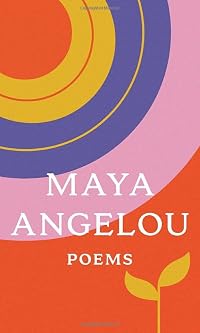
Maya Angelou: Poems
by Maya Angelou
On This Page
Description
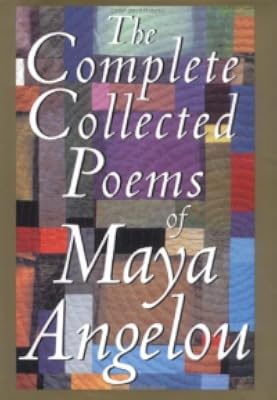
An anthology of the author's poems, divided into the four sections named on the title page.Tags
Recommendations
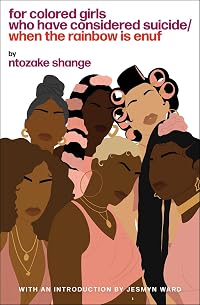
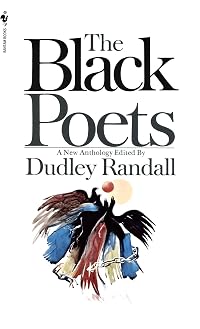
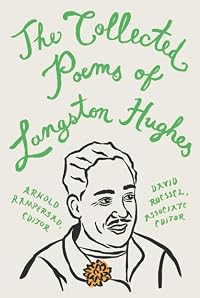
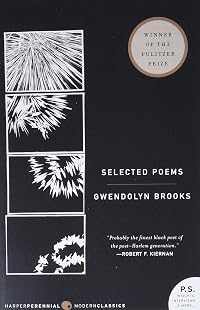





Member Reviews
Angelou is a first-rate autobiographer, and a mediocre poet, though a fine aloudreader and stage presence in an era when even Obama's first inaugural poet had no idea how to aloudread her own poem. Angelou fulfills the limited popular American (Romantic) idea of a poet--one who talks, ad infinitum, about oneself and one's problems (or in Angelou's case, problems over which she triumphs*). We are still stuck in the Romantic period, two centuries after Wordsworth and Coleridge (then Keats and Shelley and Byron) first started writing poems about themselves.
Chaucer didn't. Shakespeare didn't in his plays, and in the sonnets, he gives a stage version of "self." Moliere didn't. Dryden didn't. Austen didn't. Dickens didn't really, even in show more Copperfield (a very dif feel from what his childhood must have felt like). The list goes on.
Arguably, poets have the least interesting of lives, if they have the time and place to write. Not as interesting as a plumber's life, even--though I have known one good plumber-poet. The most interesting lives--say, a teenager in Mali, a refugee in Syria, a Parisian Jew at the start of WWII--are often too overwhelming to write well about, in the midst. Hemingway determined that all 20C writers would have to try to live "exciting" lives, in order to write about them. Poets don't bother. They find themselves endlessly interesting, though nobody else does.
In Angelou's case, she combines sentimentality (Give me a cool drink of water 'fore I die...) with a triumphant tone of overcoming which always signals Public Relations. Then she adds a supcon of platitudes, like "one thing I cry for / ..believe in enough to die for...everyman's responsibility to man."
If Bill Clinton had valued poetry more and politics less, Gwendolyn Brooks would have been his Inaugural poet. JFK had the respect for poetry--and the political genius--to select a political enemy, longtime Republican, to grace his Inaugural, Frost. show less
Chaucer didn't. Shakespeare didn't in his plays, and in the sonnets, he gives a stage version of "self." Moliere didn't. Dryden didn't. Austen didn't. Dickens didn't really, even in show more Copperfield (a very dif feel from what his childhood must have felt like). The list goes on.
Arguably, poets have the least interesting of lives, if they have the time and place to write. Not as interesting as a plumber's life, even--though I have known one good plumber-poet. The most interesting lives--say, a teenager in Mali, a refugee in Syria, a Parisian Jew at the start of WWII--are often too overwhelming to write well about, in the midst. Hemingway determined that all 20C writers would have to try to live "exciting" lives, in order to write about them. Poets don't bother. They find themselves endlessly interesting, though nobody else does.
In Angelou's case, she combines sentimentality (Give me a cool drink of water 'fore I die...) with a triumphant tone of overcoming which always signals Public Relations. Then she adds a supcon of platitudes, like "one thing I cry for / ..believe in enough to die for...everyman's responsibility to man."
If Bill Clinton had valued poetry more and politics less, Gwendolyn Brooks would have been his Inaugural poet. JFK had the respect for poetry--and the political genius--to select a political enemy, longtime Republican, to grace his Inaugural, Frost. show less
Maya Angelou is a gifted and phenomenal writer. This collection of poems speak with so much heart and wisdom. She writes these poems with anger, celebration, rage, honesty, and hope in an artistically powerful voice. I admire how she effortlessly uses metaphor and rhyme that doesn't feel forced. This is my very first Maya Angelou's work that I've read, and I'd highly recommend this book to everyone. Whether you're a fan of poems collection or not, you're still going to be in love with this one.
I had to read this for school, so I was not originally very excited. Haha. But, as I started to read, I was captured by the imagery and informal language that Maya Angelou puts into her writing. Being a writer myself, I appreciated it more than some of my peers. I read some of the poems aloud to myself and the flow is really good, definitely a good book for contemporary poetry lovers. While non-poetry lovers might not be able to appreciate it as much, the good images help to make some of the poems more like a story.
I'm not a big fan of poetry and although some of these poems were good, I wasn't blown away by any of them. I did like one called "Remembrance" just because it was a little naughty but otherwise the poems were ok.
I read this book because I enjoy reading poetry. Maya Angelou is a true poet. Poetry has the ability to convey any emotion that you are feeling from happy to sad to in between. Children of all ages should be introduced to poetry but this book is probably for sixth graders.
Maya Angelou knows how to rhyme and how to be powerful with her words. Some of the poems in here are really amazing. This is a compilation of four different books of poetry by Maya Angelou.
Inv. br. 4157/2025
Members
- Recently Added By
Lists

Poetry Corner
187 works; 15 members
Author Information

129+ Works 40,757 Members
Maya Angelou was born Marguerite Annie Johnson on April 4, 1928 in Saint Louis, Missouri. At the age of 16, she became not only the first black streetcar conductor in San Francisco but the first woman conductor. In the mid-1950s, she toured Europe with a production of the opera Porgy and Bess. In 1957, she recorded her first album, Calypso Lady. show more In 1958, she became a part of the Harlem Writers Guild in New York and played a queen in The Blacks, an off-Broadway production by French dramatist Jean Genet. In 1960, she moved to Cairo, where she edited The Arab Observer, an English-language weekly newspaper. The following year, she went to Ghana where she was features editor of The African Review and taught music and drama at the University of Ghana. In 1964, she moved back to the U.S. to become a civil rights activist by helping Malcolm X build his new coalition, the Organization of African American Unity, and became the northern coordinator of the Southern Christian Leadership Conference. Even though she never went to college, she taught American studies for years at Wake Forest University in Winston-Salem. In 1993, she became only the second poet in United States history to write and recite an original poem at a Presidential Inauguration when she read On the Pulse of Morning at President Bill Clinton's Inauguration Ceremony. She wrote numerous books during her lifetime including: I Know Why the Caged Bird Sings, Just Give Me a Cool Drink of Water 'Fore I Die, All God's Children Need Traveling Shoes, Wouldn't Take Nothing for My Journey Now, and Mom and Me and Mom. In 2011, President Barack Obama gave her the Medal of Freedom, the country's highest civilian honor, for her collected works of poetry, fiction and nonfiction. She appeared in the movie Roots and was nominated for Best Supporting Actress in 1977 for her role in the movie. She also played a part in the movie, How to Make an American Quilt and wrote and produced Afro-Americans in the Arts, a PBS special for which she received a Golden Eagle Award. She was a three-time Grammy winner. She died on May 28, 2014 at the age of 86. (Bowker Author Biography) show less
Common Knowledge
- First words
- They went home and told their wives,/ that never once in all their lives,/ had they know a girl like me,/ But...They went home.
- Last words
- (Click to show. Warning: May contain spoilers.)I've heard the news/ that winter too will pass,/ that spring's a sign/ that summer's due at last./ But until I see you/ lying in green grass,/ my life has turned to blue.
Classifications
Statistics
- Members
- 1,212
- Popularity
- 20,470
- Reviews
- 7
- Rating
- (4.08)
- Languages
- English
- Media
- Paper
- ISBNs
- 5
- ASINs
- 4