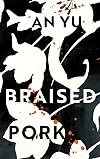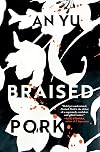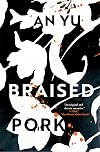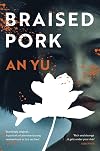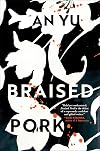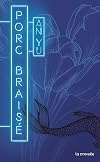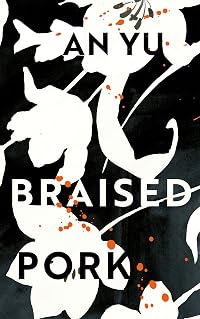
Braised Pork
by An Yu
On This Page
Description
"One autumn morning, Jia Jia walks into the bathroom of her lavish Beijing apartment to find her husband dead. One minute she was breakfasting with him and packing for an upcoming trip, the next, she finds him motionless in their bathtub. Like something out of a dream, next to the tub Jia Jia discovers a pencil sketch of a strange watery figure, an image that swims into Jia Jia's mind and won't leave. The mysterious drawing launches Jia Jia on an odyssey across contemporary Beijing, from its show more high-rise apartments to its hidden bars, as her path crosses some of the people who call the city home, including a jaded bartender who may be able to offer her the kind of love she had long thought impossible. Jia Jia's journey takes her to the high plains of Tibet, and even to a shadowy, watery otherworld, a place she both yearns and fears to go. An atmospheric and cinematic evocation of middle-class urban China, An Yu's Braised Pork explores the intimate strangeness of grief, the indelible mysteries of unseen worlds, and the self-discovery of a newly empowered young woman"-- show lessTags
Recommendations










Member Reviews
Let me say upfront that my review of Braised Prok is shaped by the fact that I'd been thinking of it as a mystery novel, which it isn't. A mysterious novel, yes. A mystery novel, no. I kept waiting for the kinds of moves I anticipate in a mystery novel and was puzzled at not finding them. I'm now writing this review in retrospect, reinterpreting my impressions to fit the novel's actual intent.
Braised Pork is a sort of liquid, drifting read. The action seems to be driven by invisible currents, as much as by human intention. The characters feel as if they're seen through water or watery glass. They have interesting characteristics, but the reader is never sure she's seeing them clearly.
Once you give yourself to the novel's style and show more rhythm, Braised Pork offers a lot to mull over. The central character, Wu Jia Jia, married not for love, but as a result of rational thought. She and her husband didn't share passion, but did share a sense of the the purpose of married life and their roles in it. When he husband dies—probably by suicide, though that's never definitively stated—Jia Jia finds herself exploring her world in ways she'd never imagined possible.
Jia Jia's explorations are set off by a sketch made by her husband of a "fish-man," a creature with a fish's body and a man's head. This image is impossible to let go of, but at the same time is elusive. Jia Jia is a painter, but every time she tries to pain the fish-man she finds it impossible to depict his face. The novel follows her search for a clearer vision of this creature—and in this search Jia Jia makes some unanticipated discoveries about herself and her family.
Braised Pork is a gem of a book, once the reader accepts it for what it is. Immerse yourself in it when you feel willing to float, to let images assemble gradually.
I received an electronic review copy of this book from the publisher via EdelweissPlus. The opinions are my own. show less
Braised Pork is a sort of liquid, drifting read. The action seems to be driven by invisible currents, as much as by human intention. The characters feel as if they're seen through water or watery glass. They have interesting characteristics, but the reader is never sure she's seeing them clearly.
Once you give yourself to the novel's style and show more rhythm, Braised Pork offers a lot to mull over. The central character, Wu Jia Jia, married not for love, but as a result of rational thought. She and her husband didn't share passion, but did share a sense of the the purpose of married life and their roles in it. When he husband dies—probably by suicide, though that's never definitively stated—Jia Jia finds herself exploring her world in ways she'd never imagined possible.
Jia Jia's explorations are set off by a sketch made by her husband of a "fish-man," a creature with a fish's body and a man's head. This image is impossible to let go of, but at the same time is elusive. Jia Jia is a painter, but every time she tries to pain the fish-man she finds it impossible to depict his face. The novel follows her search for a clearer vision of this creature—and in this search Jia Jia makes some unanticipated discoveries about herself and her family.
Braised Pork is a gem of a book, once the reader accepts it for what it is. Immerse yourself in it when you feel willing to float, to let images assemble gradually.
I received an electronic review copy of this book from the publisher via EdelweissPlus. The opinions are my own. show less
‘We explain things that we don’t understand by using other things that we don’t understand.’
When Wu Jia Jia finds her husband dead in their bathroom, bent over the bath with his head submerged (we never find out if it is suicide or an accident), her life is totally changed. Left with only the apartment they shared and a small amount of money, she frequents a local bar where she meets Leo, has a brief affair, and ultimately moves in with her aunt and grandmother to save money. All this time she is haunted by an enigmatic drawing left by her husband in the bathroom, a fish with a man’s head. She is tormented by dreams where she finds herself immersed in the ‘world of water’, and as she struggles to sketch what she sees we show more are drawn into a world where the surreal, the magic realist, mingles with what we assume is real.
Following in her husband’s footsteps, Jia Jia takes a trip to Tibet, and from here the story unravels in a series of remarkable inter-connections where memory and reality become blurred with this myth (or vision) of the fish-man, whose connections with Jia Jia go deeper then even she could imagine. Along the way she meets Ren Qi, who is searching for his missing wife, and Grandpa, an enigmatic old man who has some connection to the fish-man carvings in a small Tibetan village.
This wonderful book reminds me of the world of the magic realists mixed with the cinematic vision of Guillermo del Toro. As Jia Jia’s story becomes a quest to find the truth about the world of water, it also becomes a search for who we are, about family, and about finding ‘home’. The braised pork of the title refers to a small incident late in the book where Jia Jia has a meal with her estranged father, who finally reveals the truth behind the fish-man story. The simple act of eating braised pork, her favourite meal as a child, releases a wave of emotion for Jia Jia that signifies a re-connection with her past, her memories and her family.
Quietly understated, full of slightly elusive imagery and metaphors, An Yu’s novel is a complex and moving story of one woman’s search for meaning. There is sheer beauty in her use of language, finding depth in simplicity: ‘She could not remember the details, only the existence of details’. This is not a novel that shows you the answers, only the questions. It is a novel to make you think and rethink the issues of loss and grief, of family and the intangible space between our ‘normal’ world and what lies beyond. Elegant and profoundly moving, this is a stunning debut from this Chinese-American author, and clearly signals an important new voice in fiction. 5 stars, no question. show less
When Wu Jia Jia finds her husband dead in their bathroom, bent over the bath with his head submerged (we never find out if it is suicide or an accident), her life is totally changed. Left with only the apartment they shared and a small amount of money, she frequents a local bar where she meets Leo, has a brief affair, and ultimately moves in with her aunt and grandmother to save money. All this time she is haunted by an enigmatic drawing left by her husband in the bathroom, a fish with a man’s head. She is tormented by dreams where she finds herself immersed in the ‘world of water’, and as she struggles to sketch what she sees we show more are drawn into a world where the surreal, the magic realist, mingles with what we assume is real.
Following in her husband’s footsteps, Jia Jia takes a trip to Tibet, and from here the story unravels in a series of remarkable inter-connections where memory and reality become blurred with this myth (or vision) of the fish-man, whose connections with Jia Jia go deeper then even she could imagine. Along the way she meets Ren Qi, who is searching for his missing wife, and Grandpa, an enigmatic old man who has some connection to the fish-man carvings in a small Tibetan village.
This wonderful book reminds me of the world of the magic realists mixed with the cinematic vision of Guillermo del Toro. As Jia Jia’s story becomes a quest to find the truth about the world of water, it also becomes a search for who we are, about family, and about finding ‘home’. The braised pork of the title refers to a small incident late in the book where Jia Jia has a meal with her estranged father, who finally reveals the truth behind the fish-man story. The simple act of eating braised pork, her favourite meal as a child, releases a wave of emotion for Jia Jia that signifies a re-connection with her past, her memories and her family.
Quietly understated, full of slightly elusive imagery and metaphors, An Yu’s novel is a complex and moving story of one woman’s search for meaning. There is sheer beauty in her use of language, finding depth in simplicity: ‘She could not remember the details, only the existence of details’. This is not a novel that shows you the answers, only the questions. It is a novel to make you think and rethink the issues of loss and grief, of family and the intangible space between our ‘normal’ world and what lies beyond. Elegant and profoundly moving, this is a stunning debut from this Chinese-American author, and clearly signals an important new voice in fiction. 5 stars, no question. show less
An Yu’s debut novel Braised Pork starts with the grotesque death of businessman Chen Hang in his Beijing apartment. His young wife Jia Jia discovers him drowned in a half-filled bath, face down and “his rump sticking out from the water”. Is it suicide or a freak accident? Jia Jia can’t really say, especially since the couple have long been drifting apart and Chen Hang rarely opened up to her. Jia Jia only has two clues to try to get to the heart of the mystery. One is the strange sketch of what she calls “the fish-man”, a fish with a human head, which she finds in the bathroom close to her husband’s lifeless body. Another is a related, unsettling dream which Chen Hang had whilst on a solitary trip to Tibet and which he had show more uncharacteristically phoned to tell her about.
Jia Jia’s marriage was built on convenience, not love. Yet this does not make it any easier for her to come to terms with her loss and with the upheaval – both practical and emotional – which her husband’s death brings. This unforeseen tragedy also triggers memories of older pains, including her parents’ separation and her mother’s death. Jia Jia believes that the solution of the “fish-man” enigma might give her the replies she craves, and she finally decides to get to the bottom of the mystery, by recreating Chen Hang’s trip to Tibet. It will become a voyage of (self-) discovery.
An Yu has given us a strange little novel which I’m not sure I managed to come to grips with. There is a strong element of magical realism, characterised by mythical figures (such as the “Grandpa” character Jia Jia meets in Tibet) and obscure dream sequences featuring a mysterious “water world”. Indeed, imagery relating to water permeates the whole novel – a Kindle search tells me that the word “water” is explicitly mentioned 107 times in the book. That, of course, does not include other more oblique allusions and images, including the aquarium bought by Jia Jia’s aunt, the description of the lakes and rivers of Tibet and the smog-tainted snow of Beijing, and even the unexpected mention of Maurice Ravel’s Jeux d’Eau in the final paragraphs of the novel. Jia herself is compared to water: Leo, the barman with whom she attempts a relationship, tells her she is “like water…your beauty is soft and quiet”.
The meaning behind these watery metaphors remains frustratingly elusive. Do they symbolise tears of grief? Is the dark “watery world” a symbol of depression? Few answers are given. And perhaps the author’s intention is precisely that. The magical elements add an aura of mystery and lyricism to what is, at heart, a touching portrayal of a young widow struggling to overcome her loss and make peace with her past.
Braised Pork is an unusual dish, and I’m not sure all its ingredients fit together. But despite my head-scratching, I certainly enjoyed reading it. Apparently, Harvill Secker bought 26-year old An Yu’s debut after a seven-way auction, and have committed to publishing her second novel. This author is going places.
(Full review at https://endsoftheword.blogspot.com/2019/11/braised-pork-an-yu-novel.html ) show less
Jia Jia’s marriage was built on convenience, not love. Yet this does not make it any easier for her to come to terms with her loss and with the upheaval – both practical and emotional – which her husband’s death brings. This unforeseen tragedy also triggers memories of older pains, including her parents’ separation and her mother’s death. Jia Jia believes that the solution of the “fish-man” enigma might give her the replies she craves, and she finally decides to get to the bottom of the mystery, by recreating Chen Hang’s trip to Tibet. It will become a voyage of (self-) discovery.
An Yu has given us a strange little novel which I’m not sure I managed to come to grips with. There is a strong element of magical realism, characterised by mythical figures (such as the “Grandpa” character Jia Jia meets in Tibet) and obscure dream sequences featuring a mysterious “water world”. Indeed, imagery relating to water permeates the whole novel – a Kindle search tells me that the word “water” is explicitly mentioned 107 times in the book. That, of course, does not include other more oblique allusions and images, including the aquarium bought by Jia Jia’s aunt, the description of the lakes and rivers of Tibet and the smog-tainted snow of Beijing, and even the unexpected mention of Maurice Ravel’s Jeux d’Eau in the final paragraphs of the novel. Jia herself is compared to water: Leo, the barman with whom she attempts a relationship, tells her she is “like water…your beauty is soft and quiet”.
The meaning behind these watery metaphors remains frustratingly elusive. Do they symbolise tears of grief? Is the dark “watery world” a symbol of depression? Few answers are given. And perhaps the author’s intention is precisely that. The magical elements add an aura of mystery and lyricism to what is, at heart, a touching portrayal of a young widow struggling to overcome her loss and make peace with her past.
Braised Pork is an unusual dish, and I’m not sure all its ingredients fit together. But despite my head-scratching, I certainly enjoyed reading it. Apparently, Harvill Secker bought 26-year old An Yu’s debut after a seven-way auction, and have committed to publishing her second novel. This author is going places.
(Full review at https://endsoftheword.blogspot.com/2019/11/braised-pork-an-yu-novel.html ) show less
I’ve just finished this book and have realised something so profound (to me) that i need to write this note before it fades.
A few years ago i spent a year or so reading Japanese novels, in me they induced a strange state that was both perplexing and peaceful. What I found so strange was the apparent lack of plot, characters even, and resolution.
So, I have just finished another Oriental book which all these same hallmarks. One thing became clear to me about the characters, they just seem to bump into each as if at random yet can have seemingly deep relationships in no time at all. They also have characters that have known each other’s for years yet seen peripheral to each other.
In this i saw the clue about why there is so little show more Oriental literature in the West. Indeed you could say so little Oriental culture in the West (Kung Fu, Ninjas or Jackie Chan are about as real as Santa Claus.
On our side the characters have to have back stories, the more heart rending the better, and the main couple have to be either drawn to each other or thrust apart by tectonic strength forces. I think about Wuthering Heights, Pride and Prejudice, Romeo and Juliet, etc, etc.
Either that or it’s the old story of a man trying to kill a woman and another man trying to stop him.
Our stories have to have a plot, and the thicker the better, think Girl On A Train, Gone Girl, etc etc.
When I think of my own life I see all this too, the strongest relationships I’ve had with women have been on the same scale, forces of attraction that changes worlds, forces that can never ever lead to stasis. And forces that when played out, because that’s what they do, lead to a vacuum that in some instances can never be filled and memories that never seem to fade, even though the participants are long gone.
For years now i have lived with an Oriental woman. We have never known or felt those tectonic scale forces between us. Instead of that leading to a staleness or boredom, as it would in a story from the West, I am in a most peaceful and harmonious relationship. If there is any tectonic nonsense it comes from me!
A while back there was some stuff going on in her family and I asked how she felt about it, her reply was, “what’s that got to do with anything?”
For me that statement was about one of the key differences I have felt between or two cultures. To call her’s pragmatic would be correct in my terms but not in her terms. For her decisions seem to be based on things like duty and correctness, again words that we know but have completely different meanings across our two cultures.
I’m going to digress here for a sec. In the glorious sixties there was a tv series called Monkey that was based on a traditional Chinese legend. It seemed too run forever and made no sense anywhere at all. What carried it was the characters who were magical figures that could do supernatural things. This story too, has its star crossed lovers, but apart from a few opening episodes they never saw each other again, except for one episode where we see the man and his band of men crossing a mountain top on horseback in a time of war. They are surrounded by a thick fog that leaves them virtually blind but through the fog they can hear another band of men approaching through the fog. But if it enemies or friends? The tension builds until finally when practically face to face the other group are seen and they are not the enemy, as the two groups pass, the young man sees the love of his life passing by with the other group. They stare at each other for just a second or two before the fog closes in again. In a western tale theirs would be a hugging and kissing reunion, but in Monkey what happens is a voiceover that says, “Is romantic love just an illusion? Can a man ever love a woman as anything but a sister”. And that’s it!
Watch this episode (https://m.youtube.com/watch?v=fIeBOIZigJ0&list=PLydSDdJET5aLDzTo7PHhEon-ldrsDrLps&index=7) to get an idea.
So we come back to this book, Braised Pork by An Yu, a story seemingly without a plot and not much of a story either and yet it has something quite different about it, a bit like seeing someone else’s dreams. But it’s more than that, there is a flow to it, the story is about water but it’s not that kind of flow, although that is a strong part of the story at the same time.
Confused? Well, yes and no at the same time.
In this book the characters appear from nowhere (just as ours appear from backstories) and meaningful relationships are formed. The story jumps around all over the place, just as ours would form and follow a narrative. The difference I perceived was that where our characters are in a fixed narrative, theirs are like leaves being carried along in a current of water subject to both wind and force, the seemingly randomness of their story is like the unfolding of a river as it flows towards the sea, that unseen and invisible resolution that, though not part of the story, is the major force at work.
Sounds weird? You bet. Worth reading, that too! Make sense? No chance, but to me, more real than almost anything I’ve read for a long time. show less
A few years ago i spent a year or so reading Japanese novels, in me they induced a strange state that was both perplexing and peaceful. What I found so strange was the apparent lack of plot, characters even, and resolution.
So, I have just finished another Oriental book which all these same hallmarks. One thing became clear to me about the characters, they just seem to bump into each as if at random yet can have seemingly deep relationships in no time at all. They also have characters that have known each other’s for years yet seen peripheral to each other.
In this i saw the clue about why there is so little show more Oriental literature in the West. Indeed you could say so little Oriental culture in the West (Kung Fu, Ninjas or Jackie Chan are about as real as Santa Claus.
On our side the characters have to have back stories, the more heart rending the better, and the main couple have to be either drawn to each other or thrust apart by tectonic strength forces. I think about Wuthering Heights, Pride and Prejudice, Romeo and Juliet, etc, etc.
Either that or it’s the old story of a man trying to kill a woman and another man trying to stop him.
Our stories have to have a plot, and the thicker the better, think Girl On A Train, Gone Girl, etc etc.
When I think of my own life I see all this too, the strongest relationships I’ve had with women have been on the same scale, forces of attraction that changes worlds, forces that can never ever lead to stasis. And forces that when played out, because that’s what they do, lead to a vacuum that in some instances can never be filled and memories that never seem to fade, even though the participants are long gone.
For years now i have lived with an Oriental woman. We have never known or felt those tectonic scale forces between us. Instead of that leading to a staleness or boredom, as it would in a story from the West, I am in a most peaceful and harmonious relationship. If there is any tectonic nonsense it comes from me!
A while back there was some stuff going on in her family and I asked how she felt about it, her reply was, “what’s that got to do with anything?”
For me that statement was about one of the key differences I have felt between or two cultures. To call her’s pragmatic would be correct in my terms but not in her terms. For her decisions seem to be based on things like duty and correctness, again words that we know but have completely different meanings across our two cultures.
I’m going to digress here for a sec. In the glorious sixties there was a tv series called Monkey that was based on a traditional Chinese legend. It seemed too run forever and made no sense anywhere at all. What carried it was the characters who were magical figures that could do supernatural things. This story too, has its star crossed lovers, but apart from a few opening episodes they never saw each other again, except for one episode where we see the man and his band of men crossing a mountain top on horseback in a time of war. They are surrounded by a thick fog that leaves them virtually blind but through the fog they can hear another band of men approaching through the fog. But if it enemies or friends? The tension builds until finally when practically face to face the other group are seen and they are not the enemy, as the two groups pass, the young man sees the love of his life passing by with the other group. They stare at each other for just a second or two before the fog closes in again. In a western tale theirs would be a hugging and kissing reunion, but in Monkey what happens is a voiceover that says, “Is romantic love just an illusion? Can a man ever love a woman as anything but a sister”. And that’s it!
Watch this episode (https://m.youtube.com/watch?v=fIeBOIZigJ0&list=PLydSDdJET5aLDzTo7PHhEon-ldrsDrLps&index=7) to get an idea.
So we come back to this book, Braised Pork by An Yu, a story seemingly without a plot and not much of a story either and yet it has something quite different about it, a bit like seeing someone else’s dreams. But it’s more than that, there is a flow to it, the story is about water but it’s not that kind of flow, although that is a strong part of the story at the same time.
Confused? Well, yes and no at the same time.
In this book the characters appear from nowhere (just as ours appear from backstories) and meaningful relationships are formed. The story jumps around all over the place, just as ours would form and follow a narrative. The difference I perceived was that where our characters are in a fixed narrative, theirs are like leaves being carried along in a current of water subject to both wind and force, the seemingly randomness of their story is like the unfolding of a river as it flows towards the sea, that unseen and invisible resolution that, though not part of the story, is the major force at work.
Sounds weird? You bet. Worth reading, that too! Make sense? No chance, but to me, more real than almost anything I’ve read for a long time. show less
An Yu’s debut novel Braised Pork starts with the grotesque death of businessman Chen Hang in his Beijing apartment. His young wife Jia Jia discovers him drowned in a half-filled bath, face down and “his rump sticking out from the water”. Is it suicide or a freak accident? Jia Jia can’t really say, especially since the couple have long been drifting apart and Chen Hang rarely opened up to her. Jia Jia only has two clues to try to get to the heart of the mystery. One is the strange sketch of what she calls “the fish-man”, a fish with a human head, which she finds in the bathroom close to her husband’s lifeless body. Another is a related, unsettling dream which Chen Hang had whilst on a solitary trip to Tibet and which he had show more uncharacteristically phoned to tell her about.
Jia Jia’s marriage was built on convenience, not love. Yet this does not make it any easier for her to come to terms with her loss and with the upheaval – both practical and emotional – which her husband’s death brings. This unforeseen tragedy also triggers memories of older pains, including her parents’ separation and her mother’s death. Jia Jia believes that the solution of the “fish-man” enigma might give her the replies she craves, and she finally decides to get to the bottom of the mystery, by recreating Chen Hang’s trip to Tibet. It will become a voyage of (self-) discovery.
An Yu has given us a strange little novel which I’m not sure I managed to come to grips with. There is a strong element of magical realism, characterised by mythical figures (such as the “Grandpa” character Jia Jia meets in Tibet) and obscure dream sequences featuring a mysterious “water world”. Indeed, imagery relating to water permeates the whole novel – a Kindle search tells me that the word “water” is explicitly mentioned 107 times in the book. That, of course, does not include other more oblique allusions and images, including the aquarium bought by Jia Jia’s aunt, the description of the lakes and rivers of Tibet and the smog-tainted snow of Beijing, and even the unexpected mention of Maurice Ravel’s Jeux d’Eau in the final paragraphs of the novel. Jia herself is compared to water: Leo, the barman with whom she attempts a relationship, tells her she is “like water…your beauty is soft and quiet”.
The meaning behind these watery metaphors remains frustratingly elusive. Do they symbolise tears of grief? Is the dark “watery world” a symbol of depression? Few answers are given. And perhaps the author’s intention is precisely that. The magical elements add an aura of mystery and lyricism to what is, at heart, a touching portrayal of a young widow struggling to overcome her loss and make peace with her past.
Braised Pork is an unusual dish, and I’m not sure all its ingredients fit together. But despite my head-scratching, I certainly enjoyed reading it. Apparently, Harvill Secker bought 26-year old An Yu’s debut after a seven-way auction, and have committed to publishing her second novel. This author is going places.
(Full review at https://endsoftheword.blogspot.com/2019/11/braised-pork-an-yu-novel.html ) show less
Jia Jia’s marriage was built on convenience, not love. Yet this does not make it any easier for her to come to terms with her loss and with the upheaval – both practical and emotional – which her husband’s death brings. This unforeseen tragedy also triggers memories of older pains, including her parents’ separation and her mother’s death. Jia Jia believes that the solution of the “fish-man” enigma might give her the replies she craves, and she finally decides to get to the bottom of the mystery, by recreating Chen Hang’s trip to Tibet. It will become a voyage of (self-) discovery.
An Yu has given us a strange little novel which I’m not sure I managed to come to grips with. There is a strong element of magical realism, characterised by mythical figures (such as the “Grandpa” character Jia Jia meets in Tibet) and obscure dream sequences featuring a mysterious “water world”. Indeed, imagery relating to water permeates the whole novel – a Kindle search tells me that the word “water” is explicitly mentioned 107 times in the book. That, of course, does not include other more oblique allusions and images, including the aquarium bought by Jia Jia’s aunt, the description of the lakes and rivers of Tibet and the smog-tainted snow of Beijing, and even the unexpected mention of Maurice Ravel’s Jeux d’Eau in the final paragraphs of the novel. Jia herself is compared to water: Leo, the barman with whom she attempts a relationship, tells her she is “like water…your beauty is soft and quiet”.
The meaning behind these watery metaphors remains frustratingly elusive. Do they symbolise tears of grief? Is the dark “watery world” a symbol of depression? Few answers are given. And perhaps the author’s intention is precisely that. The magical elements add an aura of mystery and lyricism to what is, at heart, a touching portrayal of a young widow struggling to overcome her loss and make peace with her past.
Braised Pork is an unusual dish, and I’m not sure all its ingredients fit together. But despite my head-scratching, I certainly enjoyed reading it. Apparently, Harvill Secker bought 26-year old An Yu’s debut after a seven-way auction, and have committed to publishing her second novel. This author is going places.
(Full review at https://endsoftheword.blogspot.com/2019/11/braised-pork-an-yu-novel.html ) show less
Thanks to NetGalley and Edelweiss for my ARC.
A debut novel with a gripping name paired with beautiful artwork. Totally sold on the superficial notes which are in fact in this readers opinion not superficial. I come to many of my first reads like this art work title and synopsis. Braised Pork. I mean if that does not make you at least want to pick it up you have no literary soul. BRAISED PORK. Awesome title. In short because the book is better read and experienced that given a synopsis which the publisher has done with great intrigue. The main protagonist Jia Jia lives in Beijing and comes come to her apartment to find that her husband, Chen Hang, who moments before was living is now dead. Dead in a bathtub. Dead in a bathtub with an show more unfolding piece of paper ((que the scene from No Country for Old men with that little wrapper unfolding "you stand to win it all")) on the paper is something that will set Jia Jia off on a journey. As nearly all novel journeys go Jia Jia will have to have adventures and meditate on her past to get anywhere at all.
The sense of adventure in the story is heightened and altered by a deft use of magical realism where strange things are not explained. Is it real? Is what is happening not real? Who knows?! and who cares because that is the effect - ite beautiful and creepy and unsettling. In moves Murakamiesqe and harkening to the feelings the films by Guillermo del Toro bring to mind An Yu has written a debut that is profound and a joy to read because the story is engrossing and the writing is just so good. The unexplained allusions to water in dreams in descriptions in setting are just so good and baffling but that makes it good. In that way the work is cinematic and gave this reader pause to reflect and think about what they heck An Yu means. This in turn heightens the joy of reading it to flip back a section and reread things to get a better grip of the oblique thing being said.
Braised pork is searching and a story about a woman finding herself in an adventure tale spanning Beijing and Tibet and its just beautiful. In turns of phrase both mysterious and poetic An Yu has burst forth in a compelling mysteriously weird magic-realist drama-thriller.
Get it. show less
A debut novel with a gripping name paired with beautiful artwork. Totally sold on the superficial notes which are in fact in this readers opinion not superficial. I come to many of my first reads like this art work title and synopsis. Braised Pork. I mean if that does not make you at least want to pick it up you have no literary soul. BRAISED PORK. Awesome title. In short because the book is better read and experienced that given a synopsis which the publisher has done with great intrigue. The main protagonist Jia Jia lives in Beijing and comes come to her apartment to find that her husband, Chen Hang, who moments before was living is now dead. Dead in a bathtub. Dead in a bathtub with an show more unfolding piece of paper ((que the scene from No Country for Old men with that little wrapper unfolding "you stand to win it all")) on the paper is something that will set Jia Jia off on a journey. As nearly all novel journeys go Jia Jia will have to have adventures and meditate on her past to get anywhere at all.
The sense of adventure in the story is heightened and altered by a deft use of magical realism where strange things are not explained. Is it real? Is what is happening not real? Who knows?! and who cares because that is the effect - ite beautiful and creepy and unsettling. In moves Murakamiesqe and harkening to the feelings the films by Guillermo del Toro bring to mind An Yu has written a debut that is profound and a joy to read because the story is engrossing and the writing is just so good. The unexplained allusions to water in dreams in descriptions in setting are just so good and baffling but that makes it good. In that way the work is cinematic and gave this reader pause to reflect and think about what they heck An Yu means. This in turn heightens the joy of reading it to flip back a section and reread things to get a better grip of the oblique thing being said.
Braised pork is searching and a story about a woman finding herself in an adventure tale spanning Beijing and Tibet and its just beautiful. In turns of phrase both mysterious and poetic An Yu has burst forth in a compelling mysteriously weird magic-realist drama-thriller.
Get it. show less
Just awful Orientalist tosh that plays into Western perceptions of Asian restrain- eye-rolling similes like "her skin was like white jade" and unoriginal detours into Murakami-esque surrealism combine to make this an utterly unsatisfying read. That it's even a lead debut baffles me
Members
- Recently Added By
Lists

World Books
51 works; 4 members

New Fiction
3 works; 2 members

Global Reads: Books Set in East Asia
139 works; 12 members

BookTok Adult
115 works; 2 members

Fiction: Asia
85 works; 2 members
Author Information

3 Works 441 Members
Some Editions
Awards and Honors
Distinctions
The Guardian Book of the Day (2019-12-30)
Common Knowledge
- Important places
- Beijing, Nyingchi, Lhasa
Classifications
Statistics
- Members
- 207
- Popularity
- 158,070
- Reviews
- 13
- Rating
- (3.68)
- Languages
- English, French
- Media
- Paper, Audiobook, Ebook
- ISBNs
- 11
- ASINs
- 6