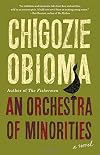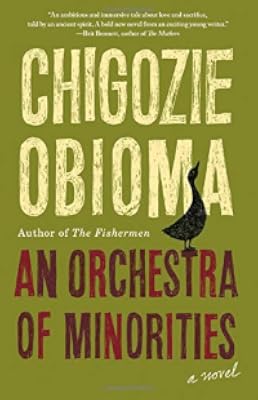
An Orchestra of Minorities
by Chigozie Obioma
On This Page
Description
A heartbreaking story about a Nigerian poultry farmer who sacrifices everything to win the woman he loves, by Man Booker Finalist and author of The Fishermen, Chigozie Obioma."It is more than a superb and tragic novel; it's a historical treasure."-Boston Globe
Set on the outskirts of Umuahia, Nigeria and narrated by a chi, or guardian spirit, An Orchestra of Minorities tells the story of Chinonso, a young poultry farmer whose soul is ignited when he sees a woman attempting to jump from a show more highway bridge. Horrified by her recklessness, Chinonso joins her on the roadside and hurls two of his prized chickens into the water below to express the severity of such a fall. The woman, Ndali, is stopped her in her tracks.
Bonded by this night on the bridge, Chinonso and Ndali fall in love. But Ndali is from a wealthy family and struggles to imagine a future near a chicken coop. When her family objects to the union because he is uneducated, Chinonso sells most of his possessions to attend a college in Cyprus. But when he arrives he discovers there is no place at the school for him, and that he has been utterly duped by the young Nigerian who has made the arrangements... Penniless, homeless, and furious at a world which continues to relegate him to the sidelines, Chinonso gets further away from his dream, from Ndali and the farm he called home.
Spanning continents, traversing the earth and cosmic spaces, and told by a narrator who has lived for hundreds of years, the novel is a contemporary twist of Homer's Odyssey. Written in the mythic style of the Igbo literary tradition, Chigozie Obioma weaves a heart-wrenching epic about destiny and determination. show less
Tags
Recommendations



Member Reviews
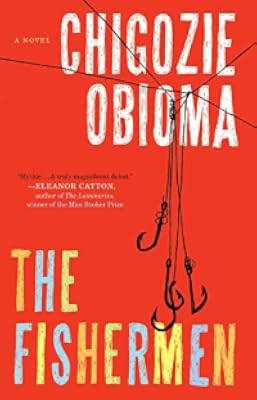
Many of you will remember that [book:The Fishermen|22875103] by Chigozie Obioma was one of my favourite books in 2015 and I couldn't stop talking about it. It was shortlisted for the Man Booker Prize and I was disappointed when it didn't win. Since then, Chigozie Obioma has been busy writing An Orchestra of Minorities and you can imagine how excited I was to read this; just holding it filled me with giddy anticipation.
Our main character Chinonso is a young poultry farmer living in Nigeria and his story is narrated by his chi or guardian spirit. The novel is bursting with Igbo cosmology and Chinonso's chi has come to plead the case of his host before Chukwu, Creator of All at the magnificent court of Bechukwu, in Eluigwe. In telling his show more host's story to the court, we learn about Chinonso and the foreshadowing that his life is is about to undertake a tragic turn.
Chinonso is a poor farmer and after thwarting Ndali's suicide attempt, they fall in love. Ndali is educated and from the upper classes and her family vehemently oppose the match. This is a powerful story of love, heartache, misfortune and tragedy and covers a multitude of topics, including the westernisation of Nigeria, the disparity between classes, the notions of revenge and forgiveness and the complexities of love.
The entire book is narrated by Chinonso’s chi, who is testifying to the ‘elders/spirits’ on behalf of his host because of a crime he may have committed. The chi goes into great detail to paint the picture leading up to the event, however by the end of the book we’re left completely hanging. We learn about the event that was foreshadowed early in the book, however we never learn the outcome for Ndali or Chinonso.
What I found even more baffling is that we never hear a response from the court of elder spirits to the testimony provided by Chinonso's chi. There is no judgement - or response - provided at all. Given the chi’s testimony (the book) goes into so much detail about Chinonso’s life, to have the entire situation completely unresolved at the end of 500+ pages was quite a shock.
In fact, I was so rattled that I asked the publisher if I was missing something, or if there was going to be a sequel. I received the following info which you can read here: https://www.carpelibrum.net/2019/02/review-orchestra-of-minorities-by.html
I understand messy and ambiguous endings, but this story was cut short before we found out where it was going to end up. I was looking forward to the wisdom of the elder spirits and Chukwu, but sadly this never came.
Ultimately, An Orchestra of Minorities was just too open-ended for me and the lack of a conclusion greatly affected what had been a 4 or 5 star read until that point.
* Copy courtesy of Hachette Australia * show less
Our main character Chinonso is a young poultry farmer living in Nigeria and his story is narrated by his chi or guardian spirit. The novel is bursting with Igbo cosmology and Chinonso's chi has come to plead the case of his host before Chukwu, Creator of All at the magnificent court of Bechukwu, in Eluigwe. In telling his show more host's story to the court, we learn about Chinonso and the foreshadowing that his life is is about to undertake a tragic turn.
Chinonso is a poor farmer and after thwarting Ndali's suicide attempt, they fall in love. Ndali is educated and from the upper classes and her family vehemently oppose the match. This is a powerful story of love, heartache, misfortune and tragedy and covers a multitude of topics, including the westernisation of Nigeria, the disparity between classes, the notions of revenge and forgiveness and the complexities of love.
The entire book is narrated by Chinonso’s chi, who is testifying to the ‘elders/spirits’ on behalf of his host because of a crime he may have committed. The chi goes into great detail to paint the picture leading up to the event, however by the end of the book we’re left completely hanging. We learn about the event that was foreshadowed early in the book, however we never learn the outcome for Ndali or Chinonso.
What I found even more baffling is that we never hear a response from the court of elder spirits to the testimony provided by Chinonso's chi. There is no judgement - or response - provided at all. Given the chi’s testimony (the book) goes into so much detail about Chinonso’s life, to have the entire situation completely unresolved at the end of 500+ pages was quite a shock.
In fact, I was so rattled that I asked the publisher if I was missing something, or if there was going to be a sequel. I received the following info which you can read here: https://www.carpelibrum.net/2019/02/review-orchestra-of-minorities-by.html
I understand messy and ambiguous endings, but this story was cut short before we found out where it was going to end up. I was looking forward to the wisdom of the elder spirits and Chukwu, but sadly this never came.
Ultimately, An Orchestra of Minorities was just too open-ended for me and the lack of a conclusion greatly affected what had been a 4 or 5 star read until that point.
* Copy courtesy of Hachette Australia * show less
This is the story of Chinonso, an Igbo poultry farmer in Nigeria. One day, returning from the market, Chinonso sees a woman, Ndali, contemplating suicide, and intervenes to stop her. He goes on his way but they meet again, and he falls deeply in love with her, a love that Ndali reciprocates.
Unfortunately for Chinonso, Ndali comes from a wealthy family who consider him far beneath her. Most especially, they scorn his lack of an education. Chinonso resolves to win their respect, and her hand, by selling everything he has and going to Cyprus to gain a degree in business. This rash decision leads to dire events that cause his downfall.
Chinonso's story is related by his guardian spirit, or chi, as part of an extensive appeal to Chukwu and show more the other Igbo gods over some grave wrong that Chinonso has committed. This narrative device allows Obiomo to invest a great deal of Igbo culture and history into the story, turning it into something very different. Comparisons have been made to The Odyssey, which Obiomo references in his story, but I think that they are somewhat tenuous, and this book stands by itself as a devastating and tragic tale. show less
Unfortunately for Chinonso, Ndali comes from a wealthy family who consider him far beneath her. Most especially, they scorn his lack of an education. Chinonso resolves to win their respect, and her hand, by selling everything he has and going to Cyprus to gain a degree in business. This rash decision leads to dire events that cause his downfall.
Chinonso's story is related by his guardian spirit, or chi, as part of an extensive appeal to Chukwu and show more the other Igbo gods over some grave wrong that Chinonso has committed. This narrative device allows Obiomo to invest a great deal of Igbo culture and history into the story, turning it into something very different. Comparisons have been made to The Odyssey, which Obiomo references in his story, but I think that they are somewhat tenuous, and this book stands by itself as a devastating and tragic tale. show less
I liked [The Fishermen] in 2015. I like this book as well. I am, however, at a loss to comprehend how this religious tract with its absolutely inescapable christian last act can be Booker-worthy. I liked the Igbo chi-narrator, a daemon for for fans of His Dark Materials fans as a reference point:
But then we descend into some unpleasant monotheistic revenge porn. Like Job, the subject of the Divine Bar Bet, a man is driven to the edge of madness by his (inexplicable and unexplained) love for some woman:
And thus begins a thoroughly nasty fall into female objectification, the assertion of property rights, and a sort of ragey nastiness that I intensely disliked.
So the three stars? All for the chi, for the ancient creature both on top of Life and curiously clueless about the way we live it now. "I have seen it many times." But mostly for this utterly perfect moment:
She rattled a string of cowries and performed the ritual of authentication to ensure I was not an evil spirit pretending to be a chi:show more
‘What are the seven keys to the throne room of Chukwu?’ she said.
— Seven shells of a young snail, seven cowries from the Omambala river, seven feathers of a bald vulture, seven leaves from an anunuebe tree, the shell of a seven-year-old tortoise, seven lobes of kola nuts and seven white hens.
‘Welcome,
spirit one,’ she said. ‘You may proceed.’ I thanked her and bowed.
But then we descend into some unpleasant monotheistic revenge porn. Like Job, the subject of the Divine Bar Bet, a man is driven to the edge of madness by his (inexplicable and unexplained) love for some woman:
Egbunu, the man of rage – he is one whom life has dealt a heavy hand. A man who, like others, had simply found a woman he loved. He’d courted her like others do, nurtured her, only to find that all he’d done had been in vain. He wakes up one day to find himself incarcerated. He has been wronged by man and history, and it is the consciousness of this wrong that births the change in him. In the moment the change begins, a great darkness enters him through the chink in his soul. For my host, it was a crawly, multi-legged darkness shaped like a rapidly procreating millipede that burrowed into his life in the first years of his incarceration.
And thus begins a thoroughly nasty fall into female objectification, the assertion of property rights, and a sort of ragey nastiness that I intensely disliked.
So the three stars? All for the chi, for the ancient creature both on top of Life and curiously clueless about the way we live it now. "I have seen it many times." But mostly for this utterly perfect moment:
Guardian spirits of mankind, have we thought about the powers that passion creates in human beings? Have we considered why a man could run through a field of fire to get to a woman he loves? Have we thought about the impact of love on the body of lovers? Have we considered the symmetry of its power? Have we considered what poetry incites in their souls, and the impress of endearments on a softened heart?show less
If the prey do not produce their version of the tale, the predators will always be the heroes in the story of the hunt.
It was the Johannesburg Review of Books that alerted me to Nigerian author Chigozie Obioma's new novel. They published an interview with the author before the book was released, the catalyst for me to pounce on it as soon as it hit the shelves at the library. Since then it has been reviewed by Linda Jaivin at The Saturday Paper (paywalled, but you can access one free viewing per week) and there's an extract at The Monthly as well, for readers to sample the author's style.
The extract — without any context — may confuse readers a little because the narrator addresses Chukwu, Egbunu, Ebubedike, Gaganaogw, and Agujiegbe show more as he tells his tale, and he also addresses a would-be suicide as his Mommy (when she isn't). Well, unless you already know that Chukwu is the supreme being in Igbo cosmology, you need to read Chapter One to understand that these names and honorifics are the old fathers of the spirit world, before whom Chinonso's chi argues his case lest Ala raise her hand against him. Chinoso has broken a moral code that merits her retribution, and his chi (guardian spirit) is desperate to explain the circumstances.
This is why I have hastened here to testify of all I have witnessed and to persuade you and the great goddess that if what I fear has happened is true, let it be understood that he has committed this great crime in error, unknowingly—
Although I will narrate most things in my own words, they will be true because he and I are one. His voice is my voice. To speak of his words as if he were distinct from me is to render my own words as if they were spoken by another. (p.4)
Obioma shot to international literary fame when in 2015 his debut novel The Fishermen was shortlisted for the Booker (see my review), and this novel has an idiosyncratic narrative voice as well. The chi is discursive, fulsome, and very persuasive as he retells the story of a self-made man not good enough for the nouveau-riche of Nigeria. When Chinonso is comprehensively insulted, shamed, and threatened because of his love for the wealthy Ndali who loves him in return, she tells him that it's not because he is a lowly poultry farmer, because her father could easily buy him a business, a job, a property to make him acceptable. What her father objects to is that he doesn't have an education, in a society where a degree in something or other is a prerequisite that supersedes honesty, integrity, determination, compassion or hard work. To her, his status doesn't matter, but it's an insuperable obstacle all the same.
That 'deficiency' is the one thing that Chinonso thinks he can change, so (#NoSpoiler as the back blurb tells us so) he sells most of his possessions to attend university in Cyprus. The tragedy that unfolds there is perhaps a common story, but in Obioma's novel, this love story-thriller is unputdownable. Will Chinonso's Penelope wait for him during the years of his unwilling Odyssey? show less
It was the Johannesburg Review of Books that alerted me to Nigerian author Chigozie Obioma's new novel. They published an interview with the author before the book was released, the catalyst for me to pounce on it as soon as it hit the shelves at the library. Since then it has been reviewed by Linda Jaivin at The Saturday Paper (paywalled, but you can access one free viewing per week) and there's an extract at The Monthly as well, for readers to sample the author's style.
The extract — without any context — may confuse readers a little because the narrator addresses Chukwu, Egbunu, Ebubedike, Gaganaogw, and Agujiegbe show more as he tells his tale, and he also addresses a would-be suicide as his Mommy (when she isn't). Well, unless you already know that Chukwu is the supreme being in Igbo cosmology, you need to read Chapter One to understand that these names and honorifics are the old fathers of the spirit world, before whom Chinonso's chi argues his case lest Ala raise her hand against him. Chinoso has broken a moral code that merits her retribution, and his chi (guardian spirit) is desperate to explain the circumstances.
This is why I have hastened here to testify of all I have witnessed and to persuade you and the great goddess that if what I fear has happened is true, let it be understood that he has committed this great crime in error, unknowingly—
Although I will narrate most things in my own words, they will be true because he and I are one. His voice is my voice. To speak of his words as if he were distinct from me is to render my own words as if they were spoken by another. (p.4)
Obioma shot to international literary fame when in 2015 his debut novel The Fishermen was shortlisted for the Booker (see my review), and this novel has an idiosyncratic narrative voice as well. The chi is discursive, fulsome, and very persuasive as he retells the story of a self-made man not good enough for the nouveau-riche of Nigeria. When Chinonso is comprehensively insulted, shamed, and threatened because of his love for the wealthy Ndali who loves him in return, she tells him that it's not because he is a lowly poultry farmer, because her father could easily buy him a business, a job, a property to make him acceptable. What her father objects to is that he doesn't have an education, in a society where a degree in something or other is a prerequisite that supersedes honesty, integrity, determination, compassion or hard work. To her, his status doesn't matter, but it's an insuperable obstacle all the same.
That 'deficiency' is the one thing that Chinonso thinks he can change, so (#NoSpoiler as the back blurb tells us so) he sells most of his possessions to attend university in Cyprus. The tragedy that unfolds there is perhaps a common story, but in Obioma's novel, this love story-thriller is unputdownable. Will Chinonso's Penelope wait for him during the years of his unwilling Odyssey? show less
There are so many wonderful aspects of this novel but my god it socks you right in the gut.
The gorgeous title refers to a description of chickens as they mourn the death of one of their flock and it is a central theme. Power relations stretched across culture, class, and interpersonal obligation are the main moves but what makes this novel so breathtaking is its narrative point of view. It is told from the perspective of the protagonist's "chi" as it defends him in a mystical court of judgement. Chi is unlike any concept I've come across before. It is sort of a transcendent spirit, consciousness, soul, and double persona all rolled into one and it is stunning to see how this doubling of the main character provides a rich texture to the show more narrative.
I'm honestly beside myself. Obioma's prose at times melts into the forward progression of the narrative and at others comes out of nowhere with a line of blistering grace. Pieces of my heart snagged on some of those barbs and I just had to leave them there. show less
The gorgeous title refers to a description of chickens as they mourn the death of one of their flock and it is a central theme. Power relations stretched across culture, class, and interpersonal obligation are the main moves but what makes this novel so breathtaking is its narrative point of view. It is told from the perspective of the protagonist's "chi" as it defends him in a mystical court of judgement. Chi is unlike any concept I've come across before. It is sort of a transcendent spirit, consciousness, soul, and double persona all rolled into one and it is stunning to see how this doubling of the main character provides a rich texture to the show more narrative.
I'm honestly beside myself. Obioma's prose at times melts into the forward progression of the narrative and at others comes out of nowhere with a line of blistering grace. Pieces of my heart snagged on some of those barbs and I just had to leave them there. show less
There are so many wonderful aspects of this novel but my god it socks you right in the gut.
The gorgeous title refers to a description of chickens as they mourn the death of one of their flock and it is a central theme. Power relations stretched across culture, class, and interpersonal obligation are the main moves but what makes this novel so breathtaking is its narrative point of view. It is told from the perspective of the protagonist's "chi" as it defends him in a mystical court of judgement. Chi is unlike any concept I've come across before. It is sort of a transcendent spirit, consciousness, soul, and double persona all rolled into one and it is stunning to see how this doubling of the main character provides a rich texture to the show more narrative.
I'm honestly beside myself. Obioma's prose at times melts into the forward progression of the narrative and at others comes out of nowhere with a line of blistering grace. Pieces of my heart snagged on some of those barbs and I just had to leave them there. show less
The gorgeous title refers to a description of chickens as they mourn the death of one of their flock and it is a central theme. Power relations stretched across culture, class, and interpersonal obligation are the main moves but what makes this novel so breathtaking is its narrative point of view. It is told from the perspective of the protagonist's "chi" as it defends him in a mystical court of judgement. Chi is unlike any concept I've come across before. It is sort of a transcendent spirit, consciousness, soul, and double persona all rolled into one and it is stunning to see how this doubling of the main character provides a rich texture to the show more narrative.
I'm honestly beside myself. Obioma's prose at times melts into the forward progression of the narrative and at others comes out of nowhere with a line of blistering grace. Pieces of my heart snagged on some of those barbs and I just had to leave them there. show less
I feel conflicted about this story. I appreciate its grand scope and design, and the Igbo cosmology, but there were glaring issues in pacing. I was reminded of the writing style of Dickens, in which every detail is painfully laid out significant or not, and I couldn't help wonder if this story would have been better in an episodic format. The writing is sophisticated, complex, and dense. A slow read to be sure, but not undeserving of your time. Due to this style, Chinonso's character was well-developed, and we, the readers, know him completely, in his lowest of lows and highest of highs. The character development of the First Incantation paid off in the Second and Third, as we glumly followed poor decision after poor decision, and show more ultimately, saw our protagonist become consumed by illogical rage. When the prose focused on Chinonso's life I was captivated, but often Obioma disrupted the story by yanking us out of the earthly realm into the chi's narrative, which droned on and on with an unfortunate verbose proclivity. A particularly infuriating instance came at the end of the Second Incantantation. I had planned to set the book down for the evening at this juncture but at the height of the action, I was entranced and turned into part three eagerly. Yet, the story came to a grinding halt as Chinonso's chi began lecturing anew. In fact, I found it so infuriating that I did set the novel down for the evening and did not pick it up again for several weeks. When I finally did, I found the remainder of the story uneven and repetitive. That is not to say that Obioma's depiction of Chinonso's spiral is not realistic, but the writing of it lagged. By the last four pages, I was begging for any redemption. Ultimately, the ending left me disappointed and a bit regretful. I am still struggling to decide if the payout here was worth the buy-in.
Although it was not an enjoyable read, Obioma's An Orchestra of Minorities is incredibly in-tune with human emotion and suffering, especially for the most vulnerable members of a society - the lonely. Ironically, I was most excited about this book because it was narrated by a chi...and yet, that very character is the book's undoing. show less
Although it was not an enjoyable read, Obioma's An Orchestra of Minorities is incredibly in-tune with human emotion and suffering, especially for the most vulnerable members of a society - the lonely. Ironically, I was most excited about this book because it was narrated by a chi...and yet, that very character is the book's undoing. show less
Members
- Recently Added By
Lists

Booker Prize
491 works; 62 members

Unread books
1,063 works; 83 members

africa diaspora novels
10 works; 1 member

Kirkus Starred Fiction Reviews of Books Published in 2019
411 works; 12 members
Author Information

9+ Works 2,108 Members
Chigozie Obioma is a Nigerian novelist who wrote, The Fishermen, and will be featured at the Ubud Writers and Readers Festival 2015 program. He made the Man Booker Prize for Fiction 2015 shortlist. He also made the shortlist for the UK¿s £10,000 (A$21,394) Guardian First Book Award. (Bowker Author Biography)
Some Editions
Awards and Honors
Awards
Distinctions
Notable Lists
Work Relationships
Is abridged in
Common Knowledge
- Canonical title*
- Das Weinen der Vögel
- Original title
- An Orchestra of Minorities
- Original publication date
- 2019
- People/Characters
- Chinonso; Ndali
- Important places
- Umuahia, Nigeria; Cyprus
- Epigraph
- If the prey do not produce their version of the tale, the predators will always be the heroes in the stories of the hunt.
—Igbo proverb
In a general way, we may visualize a person's chi as his other identity in spiritland—his spirit being complementing his terrestrial human being; for nothing can stand alone, there must always be another thing standing besi... (show all)de it.
—Chinua Achebe, "Chi in Igbo Cosmology"
Uwa mu asaa, uwa mu asato! This is the primal factor in determining the state of a newborn's true identity. Even though humans exist on the earth in material form, they harbor a chi and an onyeuwa because of the univer... (show all)sal law which demands that where one thing stands, another must stand beside it, and thus compels the duality of all things. It is also the basic principle on which the Igbo concept of reincarnation stands. Do you ever wonder why a newborn child sees a particular individual for the first time and from that moment develops hatred for that person without cause? ... It is often because the child may have identified that individual as an enemy in some past existence, and it might be that the child has returned to the world in their sixth, seventh, or event eighth cycle of reincarnation to settle an ancient score! Sometimes, too, a thing or an event can reincarnate during a lifetime. This is why you find a man who once owned something but loses it may find himself in possession of something similar years later.
—Dibi Njokwuji of Nkpa, voice recording - Dedication
- To J.K.
We've not forgotten - First words
- OBASIDINELU - I stand
before you here in the magnificent court of Bechukwu, in Eluigwe, the land of eternal, luminous light, where the perceptual song of the flute serenades the air-- - Quotations
- "Even when hawks steal their children, what do they do? Nothing, Nonso. Nothing. How do they defend themselves? They have no sharp fingers, no poisonous tongue like snakes, no sharp teeth, no claws!" She stood up then and wa... (show all)lked slowly away to a distance. "So when hawks attack them, what do they do? They only cry and wail, Nonso. Cry and wail, finish." She slapped her palms together in a sliding gesture, as if she was dusting one palm with the other.
He raised his head again and saw that her eyes were closed.
"Like even now. You see. Why? Because they are umu-obere-ihe, minorities. See what the powerful have done to us in this country. See what they have done to you. And weak things." - Last words
- (Click to show. Warning: May contain spoilers.)And he will not know that it happened long ago, and had merely been patiently waiting for him to notice.
- Publisher's editor
- Clain, Judy; Ahmed, Ailah
- Blurbers
- Dennis-Benn, Nicole; Clement, Jennifer; Ndibe, Okey; Bennett, Brit
*Some information comes from Common Knowledge in other languages. Click "Edit" for more information.
Classifications
Statistics
- Members
- 699
- Popularity
- 41,032
- Reviews
- 26
- Rating
- (3.74)
- Languages
- 6 — English, French, German, Polish, Portuguese, Swedish
- Media
- Paper, Audiobook, Ebook
- ISBNs
- 25
- ASINs
- 5