St. Elmo
by Augusta J. Evans
On This Page
Description
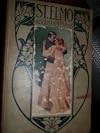
St.Elmo was the most famed and beloved novel by Augusta Jane Evans, a June 2015 inductee into the Alabama Writers Hall of Fame.First published in 1866, Evans's rich tale of the relationship between the dashing and worldly St.Tags
Recommendations
















Member Reviews
Yikes! I would have liked to finish this novel, just so I could say I read all the books on my Women Writers Challenge, but it just ain’t gonna happen. A mere 100 pages in on this 522 page work and I have had to endure:
The souls of our dead need not the aid of Sandalphon to interpret the whispers that rise tremulously from the world of sin and wrestling, that float up among the stars, through the gates of pearl, down the golden streets of New Jerusalem.
and:
In delirious visions she saw her grandfather now struggling in the grasp of Phlegyas, and now writhing in the fiery tomb of Uberti, with jets of flame leaping through his white hair, and his shrunken hands stretched appealingly toward her, as she had seen those of the doom show more Ghibelline leader, in the hideous Dante picture.
Finally:
Symmetrical and grand as that temple of Juno, in shrouded Pompeii, whose polished shafts gleamed centuries ago in the morning sunshine of a day of woe, whose untimely night has endured for nineteen hundred years, so, in the glorious flush of his youth, this man had stood facing a noble and possibly a sanctified future…
Well, you get the gist. It goes on and on this way and at no point do you care a pittance what happens to any of the characters introduced here. As a matter of fact, the heroine prays around page 25 that the Lord will see fit to take her from her woeful lot, and I devoutly wished he would.
I suspect the point in writing this book was to display for the world the author’s considerable knowledge of Classical references and demonstrate the extent of her Classical education. I can sympathize. What else was she to do with it? I will not read the rest of the book to prove this point--but I’m betting I could tell you precisely what happens to the main character and the gentleman that she finds so crude and unkind on first encounter. I don’t see much in the way of originality or creativity on display here.
I am calling the challenge done, writing this book off as a bad idea, and moving on to something I hope will be infinitely better. After all, there are William Gay’s and Lee Smith’s that I have yet to read!
BTW, Amazon, I want my 99-cents back. show less
The souls of our dead need not the aid of Sandalphon to interpret the whispers that rise tremulously from the world of sin and wrestling, that float up among the stars, through the gates of pearl, down the golden streets of New Jerusalem.
and:
In delirious visions she saw her grandfather now struggling in the grasp of Phlegyas, and now writhing in the fiery tomb of Uberti, with jets of flame leaping through his white hair, and his shrunken hands stretched appealingly toward her, as she had seen those of the doom show more Ghibelline leader, in the hideous Dante picture.
Finally:
Symmetrical and grand as that temple of Juno, in shrouded Pompeii, whose polished shafts gleamed centuries ago in the morning sunshine of a day of woe, whose untimely night has endured for nineteen hundred years, so, in the glorious flush of his youth, this man had stood facing a noble and possibly a sanctified future…
Well, you get the gist. It goes on and on this way and at no point do you care a pittance what happens to any of the characters introduced here. As a matter of fact, the heroine prays around page 25 that the Lord will see fit to take her from her woeful lot, and I devoutly wished he would.
I suspect the point in writing this book was to display for the world the author’s considerable knowledge of Classical references and demonstrate the extent of her Classical education. I can sympathize. What else was she to do with it? I will not read the rest of the book to prove this point--but I’m betting I could tell you precisely what happens to the main character and the gentleman that she finds so crude and unkind on first encounter. I don’t see much in the way of originality or creativity on display here.
I am calling the challenge done, writing this book off as a bad idea, and moving on to something I hope will be infinitely better. After all, there are William Gay’s and Lee Smith’s that I have yet to read!
BTW, Amazon, I want my 99-cents back. show less
It may be worth comparing this extremely successful novel published in 1867 (but largely forgotten today) with the disastrously unsuccessful Pierre, or the Ambiguities which basically destroyed Herman Melville's career as a writer - but is still in print and widely read. Both books have repeated reference to Shakespeare and the Bible, both have a writer as a principal character who travels to New York in an attempt to succeed in the highly competitive literary environment there. Edna Earl, Evans' heroine, is a Tennessean orphan rescued from a train wreck by a wealthy widow in Georgia who has a cynical, world-weary but well-informed and handsome son, St. Elmo Murray. Edna is beautiful, industrious, amiable, pious and talented - she turns show more down no less than four marriage proposals before St. Elmo finally wins her hand by repenting and becoming a Christian minister. Melville's Pierre seems to be less of a character which antebellum novel readers could identify with. He's a Yankee, not so very talented but very idealistic - so much so that he feels a religious commitment to rescue his newly discovered half-sister Isabel from workhouse bondage by eloping to New York with her - unfortunately alienating his wealthy mother (but not his ex-fiancee, Lucy Tartan, who joins him and Isabel in a menage a trois in Manhatten!) Pierre is a tragedy which explores the sins of a father being visited on the subsequent generation. St. Elmo is a romance filled with zeal to proselyte for Christianity - a Christianity that denies any validity in the movements toward racial and sexual equality and regards John C. Calhoun as a statesman on a par with George Washington.
Pierre, like other tragedies, poses difficult questions about life, love, idealism and Providence which have retained their resonance well into this new century. St. Elmo is a facile period piece - revealing much about the Reconstruction Era's literary tastes and displaying a good deal of Classical erudition, appreciation and knowledge of flora and fauna, fashion, and then existing medical lore. It attempts to move its readers by presenting a near perfect heroine who, in the end, even learns to 'Judge not that ye be not judged' and is united with the man of her dreams - who's soul her righteousness has helped redeem.
Pierre, on the other hand, is hardly sure what righteousness is - only that whatever it is this world will give it rough treatment. show less
Pierre, like other tragedies, poses difficult questions about life, love, idealism and Providence which have retained their resonance well into this new century. St. Elmo is a facile period piece - revealing much about the Reconstruction Era's literary tastes and displaying a good deal of Classical erudition, appreciation and knowledge of flora and fauna, fashion, and then existing medical lore. It attempts to move its readers by presenting a near perfect heroine who, in the end, even learns to 'Judge not that ye be not judged' and is united with the man of her dreams - who's soul her righteousness has helped redeem.
Pierre, on the other hand, is hardly sure what righteousness is - only that whatever it is this world will give it rough treatment. show less
testing book review section
Ratings
Members
- Recently Added By
Lists

Fiction (Mostly) in Selective Bibliography of American Literature 1775-1900
431 works; 3 members
Author Information

15+ Works 459 Members
Awards and Honors
Common Knowledge
- Original publication date
- 1866
- People/Characters
- Edna Earle; St. Elmo Murray
- Important places
- Columbus, Georgia, USA
- Related movies
- St. Elmo (1914 | IMDb)
- Epigraph
- "Ah! the true rule is -- a true wife in her husband's house is his servant; it is in his heart that she is queen. Whatever of the best he can conceive, it is her part to be; whatever of the highest he can hope, it is hers to... (show all) promise; all that is dark in him she must purge into purity; all that is failing in him she must strengthen into truth; from her, through all the world's clamor, he must win his praise; in her, through all the world's warfare, he must find his peace." --John Ruskin
- First words
- "He stood and measured the earth; and the everlasting mountains were scattered, the perpetual hills did bow."
These words of the prophet upon Shigionoth were sung by a sweet, happy, childish voice, and to a strange, wild, ... (show all)anomalous tune -- solemn as the Hebrew chant of Deborah, and fully as triumphant. - Last words
- (Click to show. Warning: May contain spoilers.)Edna looked reverently up at his beaming countenance, whence the shadows of hate and scorn had long since passed; and, as his splendid eyes came back to hers, reading in her beautiful, pure face all her love and confidence and happy hope, he drew her closer to his bosom, and laid his dark cheek on hers, saying fondly and proudly:
"My wife, my life. Oh! we will walk this world,
Yoked in all exercise of noble end,
And so through those dark gates across the wild
That no man knows. My hopes and thine are one;
Accomplish thou my manhood, and thyself,
Lay thy sweet hands in mine and trust to me."
Classifications
Statistics
- Members
- 216
- Popularity
- 151,214
- Reviews
- 3
- Rating
- (3.50)
- Languages
- English
- Media
- Paper, Audiobook, Ebook
- ISBNs
- 38
- ASINs
- 19