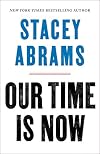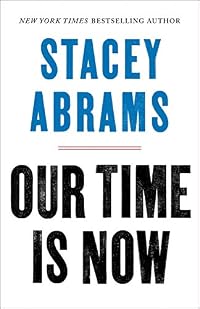
Our Time Is Now: Power, Purpose, and the Fight for a Fair America
by Stacey Abrams
On This Page
Description
"This is a narrative that describes the urgency that compels me and millions more to push for a different American story than the one being told today. It's a story that is one part danger, one part action, and all true. It's a story about how and why we fight for our democracy and win."This program is read by the author
Celebrated national leader and bestselling author Stacey Abrams offers a blueprint to end voter suppression, empower our citizens, and take back our country. A recognized show more expert on fair voting and civic engagement, Abrams chronicles a chilling account of how the right to vote and the principle of democracy have been and continue to be under attack. Abrams would have been the first African American woman governor, but experienced these effects firsthand, despite running the most innovative race in modern politics as the Democratic nominee in Georgia. Abrams didn't win, but she has not conceded. The audiobook compellingly argues for the importance of robust voter protections, an elevation of identity politics, engagement in the census, and a return to moral international leadership.
Our Time Is Now draws on extensive research from national organizations and renowned scholars, as well as anecdotes from her life and others' who have fought throughout our country's history for the power to be heard. The stakes could not be higher. Here are concrete solutions and inspiration to stand up for who we are—now.
A Macmillan Audio production from Henry Holt and Company
"In a voice full of grace, warmth, and determination, politician and activist Stacey Abrams provides listeners with a road map for building a more just and democratic nation...In a clear, direct delivery, Abrams shares her message with the fire and poise of an inspiring public speaker. This audiobook is a call to action." — AudioFile Magazine
. show less
Tags
Recommendations






Member Reviews
After losing the 2018 Georgia governor’s race by a slim margin in a questionable election (her opponent was Georgia’s chief elections officer and refused to step down during the campaign), Stacey Abrams decided to change the voting landscape in her state. She set up Fair Fight America to register voters and protect their rights at the polls. She later founded another organization called Fair Count in an effort to include under-represented communities in the 2020 census. In Our Time is Now, she details the many insidious ways that governments suppress voters, the importance of the census in securing needed infrastructure and representation in communities, and ways to address all these issues.
Five stars for content and three stars for show more editing means four stars overall. The book could have done with another round of editing for clarity and to eliminate some repetitiveness. Otherwise…
Reading Our Time is Now in the wake of the 2020 election felt a bit like a victory dance.
Anyone who isn’t outraged by voter suppression doesn’t have a good concept of what “government by the people” means. As a white woman, I’ve never experienced anything like what Ms. Abrams details in these pages. This review keeps turning into a book report because I want everyone to be aware of the issues that she brings to light. Just getting registered to vote in some states is almost impossible. Casting your vote when polling places change without warning and there are only a handful of aging machines to serve a large community turns into an hours-long ordeal. This makes voting impossible for those who can’t take that kind of time off of work.
She points to the overturning of the Voting Rights Act in 2013 as a turning point in voter suppression. The Act, signed into law in 1965, ensured federal oversight of voting practices in states that had a history of voter suppression. States have been free to act with impunity since then and many of them have.
After detailing many of the ways in which voter suppression occurs, Ms. Abrams addresses gerrymandering. She does point out that both parties are guilty of arranging district lines to promote their own interests. This only reinforces that things should be supervised by independent commissions who are as free as possible from outside influence.
She then outlines the purpose of the census and how it directly impacts communities. Minority communities generally have low response rates because they they tend to distrust the government. She points to education as the key to this vital process. Numbers of representatives, infrastructure spending, school locations, public transportation and more rely heavily on these numbers.
The most important section, in my opinion, detailed Ms. Abrams’s ideas for combatting all these anti-democratic practices. Voter education and outreach are the biggest components. She gives evidence from her own campaign of the large impact minority voters can have if they know their rights, fight for them, and show up at the polls rather than giving in to pressure and giving up. Once these communities elect candidates who are sympathetic to their causes, government can start setting some of these wrongs to right.
Knowing that Georgia, long considered a true red state, voted blue in 2020 shows how much difference one determined woman can make. She reached out to minority voters and made sure they knew their rights. Legal advisers were on standby throughout the election to help with suspected voter suppression. And these communities, which so many have tried to silence for so long, raised their voices and were heard. I get chill bumps just thinking about it.
I highly recommend this book for all voters. Government policies could strip any of us of the right to vote. Those of us who are less likely to experience voter suppression (generally white voters) can learn the obstacles that others face and how to be advocates for change. The book didn’t shy away from tough issues but it did leave me with hope that, working together, we can continue to steer our country toward the ideal we know it can be. show less
Five stars for content and three stars for show more editing means four stars overall. The book could have done with another round of editing for clarity and to eliminate some repetitiveness. Otherwise…
Reading Our Time is Now in the wake of the 2020 election felt a bit like a victory dance.
Anyone who isn’t outraged by voter suppression doesn’t have a good concept of what “government by the people” means. As a white woman, I’ve never experienced anything like what Ms. Abrams details in these pages. This review keeps turning into a book report because I want everyone to be aware of the issues that she brings to light. Just getting registered to vote in some states is almost impossible. Casting your vote when polling places change without warning and there are only a handful of aging machines to serve a large community turns into an hours-long ordeal. This makes voting impossible for those who can’t take that kind of time off of work.
She points to the overturning of the Voting Rights Act in 2013 as a turning point in voter suppression. The Act, signed into law in 1965, ensured federal oversight of voting practices in states that had a history of voter suppression. States have been free to act with impunity since then and many of them have.
After detailing many of the ways in which voter suppression occurs, Ms. Abrams addresses gerrymandering. She does point out that both parties are guilty of arranging district lines to promote their own interests. This only reinforces that things should be supervised by independent commissions who are as free as possible from outside influence.
She then outlines the purpose of the census and how it directly impacts communities. Minority communities generally have low response rates because they they tend to distrust the government. She points to education as the key to this vital process. Numbers of representatives, infrastructure spending, school locations, public transportation and more rely heavily on these numbers.
The most important section, in my opinion, detailed Ms. Abrams’s ideas for combatting all these anti-democratic practices. Voter education and outreach are the biggest components. She gives evidence from her own campaign of the large impact minority voters can have if they know their rights, fight for them, and show up at the polls rather than giving in to pressure and giving up. Once these communities elect candidates who are sympathetic to their causes, government can start setting some of these wrongs to right.
Knowing that Georgia, long considered a true red state, voted blue in 2020 shows how much difference one determined woman can make. She reached out to minority voters and made sure they knew their rights. Legal advisers were on standby throughout the election to help with suspected voter suppression. And these communities, which so many have tried to silence for so long, raised their voices and were heard. I get chill bumps just thinking about it.
I highly recommend this book for all voters. Government policies could strip any of us of the right to vote. Those of us who are less likely to experience voter suppression (generally white voters) can learn the obstacles that others face and how to be advocates for change. The book didn’t shy away from tough issues but it did leave me with hope that, working together, we can continue to steer our country toward the ideal we know it can be. show less
Breathing easy after this most recent election? Don’t. Love democracy but worried about its future here in the US? The work starts now, and Stacey Abrams eloquently breaks down how and why the old way of doing things just doesn’t cut it anymore. I am inspired by her focus on local governments and am making a list of what I can do in Nebraska. This book is 100% worth your time if you believe in a better America.
Most readers are probably aware of the many ways it's difficult to vote - from obstacles to registering to voting to ensuring your vote is counted - but seeing them all together in a single narrative is compelling. Abrams ranges widely, also discussing identity politics in an interesting, non-accusatory way, while telling the stories of her own political journey. Her concluding chapters add to our understanding of this impressive woman - her international experience came as a surprise, and her corporate career as a Yale-educated tax attorney was news to me too. Worth the read
If you're an American citizen with the right to vote, then you should read this book.
Confession: Political discussions make my eyes glaze over. I'm an avid reader of social justice, sociology, and psychology, but I rarely read politics. While the basis of this book is politics, focusing on voter rights and suppression, the heart of this book is social justice. When the votes of entire groups of people are suppressed based on the color of their skin and/or their lack of financial resources, that's a social problem.
Stacey Abrams lays out the history of voter suppression, from the early poll taxes to the current, less obvious but far more insidious methods of controlling our vote. She offers a lot of insight from her own experiences in show more Georgia, sharing stories that give us a clear view of how rampant voter suppression still is within our supposed democracy.
Corruption thrives when left unchallenged in the darkness, so read this book, shine the light, and demand the changes a true democracy deserves.
*I received a copy of this book from the publisher.* show less
Confession: Political discussions make my eyes glaze over. I'm an avid reader of social justice, sociology, and psychology, but I rarely read politics. While the basis of this book is politics, focusing on voter rights and suppression, the heart of this book is social justice. When the votes of entire groups of people are suppressed based on the color of their skin and/or their lack of financial resources, that's a social problem.
Stacey Abrams lays out the history of voter suppression, from the early poll taxes to the current, less obvious but far more insidious methods of controlling our vote. She offers a lot of insight from her own experiences in show more Georgia, sharing stories that give us a clear view of how rampant voter suppression still is within our supposed democracy.
Corruption thrives when left unchallenged in the darkness, so read this book, shine the light, and demand the changes a true democracy deserves.
*I received a copy of this book from the publisher.* show less
Abrams lays out all the ways voter suppression works during the present--not necessarily new news to anyone who has followed voting and elections, but it is striking all the same. One of the many reasons I love Abrams is her optimism for all the opportunity we have to grow as a country, and it comes across loud and clear here and is super energizing.
This book is important, and kudos are due to the articulate Stacy Abrams for highlighting the perils of voter suppression in a democracy. Harkening back to a famous 1966 speech by Martin Luther King in which he urged his followers to participate by voting in order to be heard, and to register at least ten others in the upcoming primary. Abrams goes through the many painstaking efforts by those in power to disenfranchise the poor, the minorities using a myriad of dirty tricks, such as moving polling places, especially to police stations, voter ID 'exact match' verification, inadequate machinery, manipulating voting hours, gerrymandering, providing provisional ballots, making it difficult to obtain absentee ballots, and having elections show more on a work day. In 27 of 36 OECD countries, national elections are held on the weekend, and in two more, it is a national holiday, all to allow citizens the ability and not just the right to vote. Lots of compelling story telling by an agitator. Abrams tells a funny story about a civils rights leader (Hosea William) who said what cleans clothes in a washing machine is not just the water and soap, but the mechanism that shakes them. I think her strong political beliefs about populism and Trump detracted from her message, but unfortunately are things that need to be said now, before the 2020 election.
It is also time to eliminate the electoral college, which systemically denies the validity of one person, one vote since in two Presidential elections in the 21st century, the victor lost the popular vote. show less
It is also time to eliminate the electoral college, which systemically denies the validity of one person, one vote since in two Presidential elections in the 21st century, the victor lost the popular vote. show less
Our Time Is Now provides a very good explanation of serious problems with our voting system, and offers solutions for these problems. In addition to this book, I would recommend Ari Berman's Give Us the Ballot for a more comprehensive history of these issues.
Members
- Recently Added By
Lists

Black Authors
381 works; 29 members

List of Removed Books from Nimitz Library
353 works; 1 member

Patriarchy and white supremacy de-programming
69 works; 1 member
Author Information

18+ Works 3,627 Members
Some Editions
Awards and Honors
Distinctions
Common Knowledge
- Canonical title
- Our Time Is Now: Power, Purpose, and the Fight for a Fair America
- Original title
- Our Time Is Now: Power, Purpose, and the Fight for a Fair America
- Original publication date
- 2020-06-09
- People/Characters
- Stacey Abrams
- Important places
- USA
- Blurbers
- Washington, Kerry
- Original language
- English
Classifications
- Genres
- Politics and Government, General Nonfiction, Nonfiction
- DDC/MDS
- 324.60973 — Society, Government, and Culture Political science Politics & Elections Suffrage, Voting Rights, Voting and Electoral Systems
- LCC
- JK1994 .A37 — Political Science Political institutions and public administration (United States) Political institutions and public administration United States Political rights. Practical politics Electoral system
- BISAC
Statistics
- Members
- 427
- Popularity
- 71,652
- Reviews
- 7
- Rating
- (4.36)
- Languages
- English, Italian
- Media
- Paper, Audiobook, Ebook
- ISBNs
- 8
- ASINs
- 2