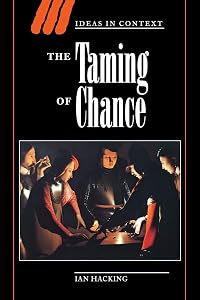
The Taming of Chance
by Ian Hacking
On This Page
Description
In this important study Ian Hacking continues the enquiry into the origins and development of certain characteristic modes of contemporary thought undertaken in such previous works as the best-selling The Emergence of Probability. Professor Hacking shows how by the late-nineteenth century it became possible to think of statistical patterns as explanatory in themselves, and to regard the world as not necessarily deterministic in character. In the same period the idea of human nature was show more displaced by a model of normal people with laws of dispersion. These two parallel transformations fed into each other, so that chance made the world seem less capricious: it was legitimated because it brought order out of chaos. Combining detailed scientific historical research with characteristic philosophic breadth and verve, The Taming of Chance brings out the relations between philosophy, the physical sciences, mathematics and the development of social institutions, and provides a unique and authoritative analysis of the 'probabilisation' of the western world. show lessTags
Recommendations
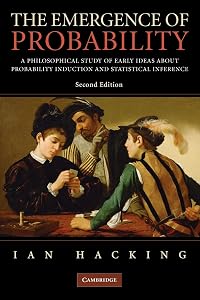
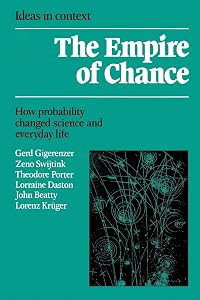



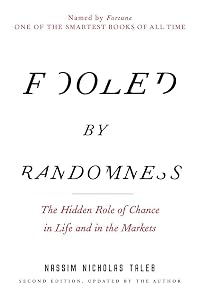
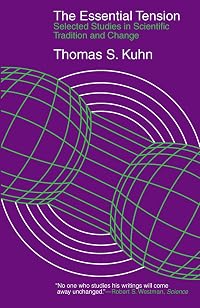






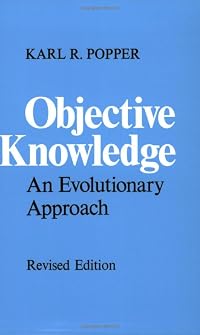
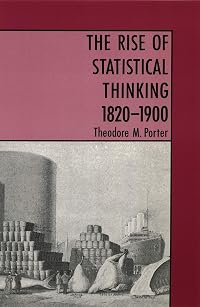

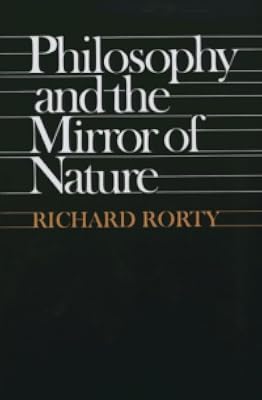


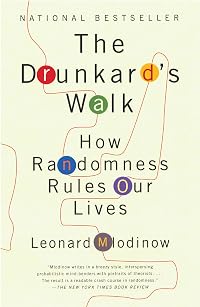
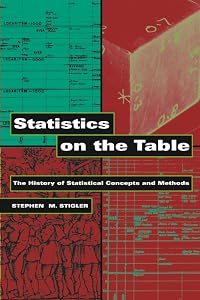

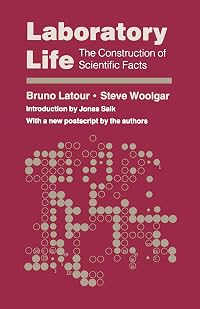

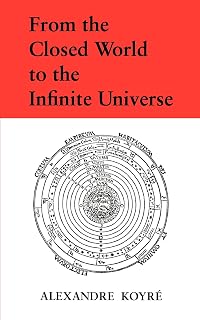



Member Recommendations

Member Reviews
If you look at the table of contents in this book, you'll see that it has 23 chapters. Nearly all of them are less than 10 pages long, with uninformative headings like "Bureaux", "Regimental chests" and "The mineralogical conception of society". This is a good indication of how fragmented and confusing this book is.
You wouldn't know it from the strange headings, but each chapter deals with some particular field of inquiry where statistical methods and statistical thinking became prominent in the 19th century. That may sound interesting, but unfortunately the author just dumped a truckload of short biographies into every chapter. Person A studied this and that, worked here and there and was in regular contact with persons B and C. They show more in turn studied this and that and thought so and so about chance and statistics. It goes on like this for the entire book, detail after detail after detail. But these collected details aren't very interesting without a broader perspective. A good account of the history of ideas should include some generalizations too.
The author actually states on page 1 that his intention is to argue that two 19th century transformations are connected. The first transformation is the idea of a world which is regular without being causally determined. The second transformation is the emergence of a society governed by statistical information. So apparently his intention was to make a general argument, but he really fails miserably in putting it together. I just finished the book and I don't recall a single passage where he would have clearly argued the connection he claims on page 1. Whereas good books in the history of ideas contain a general analysis supported by selected examples, this one seems to contain only examples. There's no general argument so readers are forced to draw their own conclusions.
Maybe this book will have some appeal to people with biographical interests. But I like books that concentrate on broader developments which took place above and beyond any particular researcher. I was disappointed to find that this book did not offer anything on that front. So if you're looking to understand the growth of statistics as a general phenomenon, you'll have too look somewhere else. show less
You wouldn't know it from the strange headings, but each chapter deals with some particular field of inquiry where statistical methods and statistical thinking became prominent in the 19th century. That may sound interesting, but unfortunately the author just dumped a truckload of short biographies into every chapter. Person A studied this and that, worked here and there and was in regular contact with persons B and C. They show more in turn studied this and that and thought so and so about chance and statistics. It goes on like this for the entire book, detail after detail after detail. But these collected details aren't very interesting without a broader perspective. A good account of the history of ideas should include some generalizations too.
The author actually states on page 1 that his intention is to argue that two 19th century transformations are connected. The first transformation is the idea of a world which is regular without being causally determined. The second transformation is the emergence of a society governed by statistical information. So apparently his intention was to make a general argument, but he really fails miserably in putting it together. I just finished the book and I don't recall a single passage where he would have clearly argued the connection he claims on page 1. Whereas good books in the history of ideas contain a general analysis supported by selected examples, this one seems to contain only examples. There's no general argument so readers are forced to draw their own conclusions.
Maybe this book will have some appeal to people with biographical interests. But I like books that concentrate on broader developments which took place above and beyond any particular researcher. I was disappointed to find that this book did not offer anything on that front. So if you're looking to understand the growth of statistics as a general phenomenon, you'll have too look somewhere else. show less
100 HAC 2
Ratings
Members
- Recently Added By
Lists

Modern Library 100 Best Nonfiction Books
100 works; 8 members

Books referenced in History by Numbers by Pat Hudson
88 works; 1 member
Author Information

35+ Works 2,459 Members
Ian Hacking holds the chair of philosophy and history of scientific concepts at the College de France
Awards and Honors
Notable Lists
Series
Belongs to Publisher Series
Ideas in Context (17)
Common Knowledge
- Canonical title
- The Taming of Chance
- Original publication date
- 1990
- First words
- The most decisive conceptual event of twentieth century physics has been the discovery that the world is not deterministic.
Classifications
- Genres
- Nonfiction, Philosophy, Science & Nature, History, General Nonfiction
- DDC/MDS
- 123.3 — Philosophy & psychology Epistemology (how do you know what you know?) Determinism and indeterminism Chance
- LCC
- BD595 .H33 — Philosophy, Psychology and Religion Speculative philosophy Speculative philosophy Cosmology
- BISAC
Statistics
- Members
- 279
- Popularity
- 115,603
- Reviews
- 2
- Rating
- (3.76)
- Languages
- English, Italian, Spanish, Turkish
- Media
- Paper, Ebook
- ISBNs
- 8
- ASINs
- 2