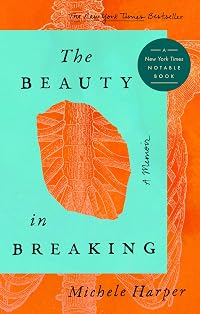
The Beauty in Breaking: A Memoir
by Michele Harper
On This Page
Description
A NEW YORK TIMES BESTSELLERA New York Times Notable Book
“Riveting, heartbreaking, sometimes difficult, always inspiring.” —The New York Times Book Review
“An incredibly moving memoir about what it means to be a doctor.” —Ellen Pompeo
As seen/heard on Fresh Air, The Daily Show with Trevor Noah, NBC Nightly News, MSNBC, Weekend Edition, and more
An emergency room physician explores how a life of service to others taught her how to heal herself.
Michele Harper is a female, African show more American emergency room physician in a profession that is overwhelmingly male and white. Brought up in Washington, D.C., in a complicated family, she went to Harvard, where she met her husband. They stayed together through medical school until two months before she was scheduled to join the staff of a hospital in central Philadelphia, when he told her he couldn’t move with her. Her marriage at an end, Harper began her new life in a new city, in a new job, as a newly single woman.
In the ensuing years, as Harper learned to become an effective ER physician, bringing insight and empathy to every patient encounter, she came to understand that each of us is broken—physically, emotionally, psychically. How we recognize those breaks, how we try to mend them, and where we go from there are all crucial parts of the healing process.
The Beauty in Breaking is the poignant true story of Harper’s journey toward self-healing. Each of the patients Harper writes about taught her something important about recuperation and recovery. How to let go of fear even when the future is murky: How to tell the truth when it’s simpler to overlook it. How to understand that compassion isn’t the same as justice. As she shines a light on the systemic disenfranchisement of the patients she treats as they struggle to maintain their health and dignity, Harper comes to understand the importance of allowing ourselves to make peace with the past as we draw support from the present. In this hopeful, moving, and beautiful book, she passes along the precious, necessary lessons that she has learned as a daughter, a woman, and a physician. show less
Tags
Recommendations



















Member Recommendations
Member Reviews
While The Beauty In Breaking is a memoir that incorporates Harper’s medical career as an ER doctor, what she really highlights is the power of growth and healing. She narrates her internal journey as a black woman in a profession that even in 2020 has pervasive racism and gender inequality.
She shares about how paths through broken systems – whether it is complex family dynamics or systemic racism – can ultimately lead us forward. In personal stories and narrative, she shares that there is truly is beauty in the breaking points of life.
“Brokenness can be a remarkable gift. If we allow it, it can expand our space to transform.”
She shares about how paths through broken systems – whether it is complex family dynamics or systemic racism – can ultimately lead us forward. In personal stories and narrative, she shares that there is truly is beauty in the breaking points of life.
“Brokenness can be a remarkable gift. If we allow it, it can expand our space to transform.”
Michele Harper is an emergency room doctor, and in this memoir she talks about her own life (including her abusive childhood and the problems of sexism and racism that she has faced), about treating her patients, about her views on medicine and spirituality, and about all the ways she's seen the US medical system and other institutions fail people, especially people of color.
I'm finding this a hard one to review, because, man, I wanted to like it a lot more than I did. Or, really, to like it at all. Dr. Harper is someone who's endured a lot, who's accomplished a lot, and who is clearly a very caring and committed doctor, and one who isn't afraid to admit to her mistakes, all of which I respect. (Although, I have to say, I find it rather show more dismaying that she comes down as an advocate for the pseudoscience of "complementary medicine," which she thoroughly conflates with uncontroversial healthy lifestyle choices.) And I do applaud her for the way she so forthrightly says some things that I think very much need to be said and listened to when it comes to the ways in which the institutions that are supposed to help keep us all healthy, safe, and supported fail to do so in depressing and discriminatory ways.
Actually, the chapters where she explicitly does that calling-out of biased and inadequate systems are the best in the book, and I did find them worth reading. But for so much of the rest of it, I found her writing hard to get along with, as it's often stilted and sometimes vaguely purple, and features a lot of her giving compassionate but terribly didactic-for-the-reader lectures to patients. I'm sure a lot of my issues with it have to do with the fact that books that deliberately set out to be inspirational often backfire badly for me, and ones that go on about emotional and/or physical healing as a spiritual process tend to lose me very quickly. But I could tell that this book was just not really going to be for me early on when, in the course of talking about an incredibly sad incident in which Harper and her colleagues tried everything they could to resuscitate a tiny baby who was already beyond saving and then had to inform the family of what happened, she started going on about the spirits of sweet departed cherubs whispering their last words into their parents' ears and giving them butterfly kisses, and... I'm sorry. I can't. I just can't. I know Dr. Harper's heart is absolutely in the right place, and I can't even imagine what it's like to have experiences like that as part of your normal work day, but I read lines like that and I can't help seeing it as human tragedy turned into a sappy Hallmark card, and my brain just kind of shuts down. show less
I'm finding this a hard one to review, because, man, I wanted to like it a lot more than I did. Or, really, to like it at all. Dr. Harper is someone who's endured a lot, who's accomplished a lot, and who is clearly a very caring and committed doctor, and one who isn't afraid to admit to her mistakes, all of which I respect. (Although, I have to say, I find it rather show more dismaying that she comes down as an advocate for the pseudoscience of "complementary medicine," which she thoroughly conflates with uncontroversial healthy lifestyle choices.) And I do applaud her for the way she so forthrightly says some things that I think very much need to be said and listened to when it comes to the ways in which the institutions that are supposed to help keep us all healthy, safe, and supported fail to do so in depressing and discriminatory ways.
Actually, the chapters where she explicitly does that calling-out of biased and inadequate systems are the best in the book, and I did find them worth reading. But for so much of the rest of it, I found her writing hard to get along with, as it's often stilted and sometimes vaguely purple, and features a lot of her giving compassionate but terribly didactic-for-the-reader lectures to patients. I'm sure a lot of my issues with it have to do with the fact that books that deliberately set out to be inspirational often backfire badly for me, and ones that go on about emotional and/or physical healing as a spiritual process tend to lose me very quickly. But I could tell that this book was just not really going to be for me early on when, in the course of talking about an incredibly sad incident in which Harper and her colleagues tried everything they could to resuscitate a tiny baby who was already beyond saving and then had to inform the family of what happened, she started going on about the spirits of sweet departed cherubs whispering their last words into their parents' ears and giving them butterfly kisses, and... I'm sorry. I can't. I just can't. I know Dr. Harper's heart is absolutely in the right place, and I can't even imagine what it's like to have experiences like that as part of your normal work day, but I read lines like that and I can't help seeing it as human tragedy turned into a sappy Hallmark card, and my brain just kind of shuts down. show less
In this poignant memoir, Michele Harper writes about the abusive household in which she was raised as part of a wealthy African-American family. Her upbringing led her to want to help other people heal. She goes to Harvard for undergraduate work and then attends the Renaissance School of Medicine at Stony Brook University. She marries and divorces before she finishes her final residency and then dedicates her time to being a healer and the most ethical emergency room doctor possible. She spends considerable time self-healing and finding balance in her own life, from the Japanese art of Kintsukuroi to yoga and the use of incense. She is always seeking to love herself and be at peace with her own body and spirit as she attends to show more others.
After the initial narrative about her journey to the world of medicine, each subsequent chapter focuses on a particular patient who made an impression on her. In many cases, she learned lessons from the patient she decided to spotlight. Still, the incidents often reaffirmed what she already knew and provided entertaining and thought-provoking information for the reader. I gained many insights into the world of medicine. I confirmed my beliefs about the sometimes indecipherable differences between physical and mental health that provide continual challenges for the medical profession and society.
I loved Michele Harper’s writing. She communicated passion for her profession and compassion for her patients. She also tackled serious issues such as institutional racism and classism with anecdotes that enhanced my awareness. Michele Harper also qualifies other nuances of inequities inherent in the United States culture. Her beautiful prose gives real-life examples of the microaggressions and blatant racism that people of color face in America’s institutions. I was particularly struck by Lauren, a clueless resident doctor reporting to Dr. Harper, who phoned the hospital’s ethics department because she didn’t believe a Black patient who was under arrest by the police should be allowed to opt out of his treatment.
https://quipsandquotes.net/?p=623 show less
After the initial narrative about her journey to the world of medicine, each subsequent chapter focuses on a particular patient who made an impression on her. In many cases, she learned lessons from the patient she decided to spotlight. Still, the incidents often reaffirmed what she already knew and provided entertaining and thought-provoking information for the reader. I gained many insights into the world of medicine. I confirmed my beliefs about the sometimes indecipherable differences between physical and mental health that provide continual challenges for the medical profession and society.
I loved Michele Harper’s writing. She communicated passion for her profession and compassion for her patients. She also tackled serious issues such as institutional racism and classism with anecdotes that enhanced my awareness. Michele Harper also qualifies other nuances of inequities inherent in the United States culture. Her beautiful prose gives real-life examples of the microaggressions and blatant racism that people of color face in America’s institutions. I was particularly struck by Lauren, a clueless resident doctor reporting to Dr. Harper, who phoned the hospital’s ethics department because she didn’t believe a Black patient who was under arrest by the police should be allowed to opt out of his treatment.
https://quipsandquotes.net/?p=623 show less
I love medical memoirs. I gravitate toward them by default, so when this one showed up on my radar, it was a no-brainer. Harper's story is poignant and at times heartbreaking: exactly what you'd expect from a memoir written by an ER doctor who spends part of her career working for a VA hospital in Philadelphia.
There's also a deeply spiritual bent in Harper's storytelling that I didn't expect but fully appreciated. Her spirituality is non-traditional (she mentions the goddess a handful of times), but that's exactly that made it so appealing. I hadn't realized how much it would touch my soul to see my own spiritual beliefs reflected back at me in a mainstream book by a highly-respected doctor.
Although the dialogue was at times stilted and show more Harper's turns of phrase occasionally awkward and convoluted, there's also so much beauty in this book. In the writing, in the storytelling, and in the deeply human stories of love and loss. show less
There's also a deeply spiritual bent in Harper's storytelling that I didn't expect but fully appreciated. Her spirituality is non-traditional (she mentions the goddess a handful of times), but that's exactly that made it so appealing. I hadn't realized how much it would touch my soul to see my own spiritual beliefs reflected back at me in a mainstream book by a highly-respected doctor.
Although the dialogue was at times stilted and show more Harper's turns of phrase occasionally awkward and convoluted, there's also so much beauty in this book. In the writing, in the storytelling, and in the deeply human stories of love and loss. show less
Dr. Michele Harper writes this memoir as a Philadelphia ER physician. The book is structured around eleven or so stories of different patients that she treated at various points in her career. Along the way, Dr. Harper discusses her own path into and in medicine. Having completed her residency in New York and having worked at a few different hospitals in Philly (the last hospital mentioned in the memoir, where [I think] a majority of the mentioned cases took place, being the Philadelphia VA), Dr. Harper discusses her experiences in medicine as a woman of color in the field of medicine.
I really enjoy memoirs, and I often find medical memoirs really interesting. Though I appreciated Dr. Harper's perspective, this memoir unfortunately show more wasn't my favorite. I'm hesitant to say that a memoir ought to have a "message" or similar, but I don't think I'm totally clear on what the main takeaway of this book was. The book was partially a recount of a number of patient stories, a description of Harper's own childhood trauma and career trajectory, and a (slightly preachy) reflection on the benefits of yoga and meditation. I didn't feel that some of these threads were as fully developed as they might have been (I especially think that the book could have benefited from discussing more of her adolescence/young adulthood), and the bridging between them was a little confusing sometimes. The audiobook narrator, from my perspective, also went a little over-the-top with some of the voice acting with some of the patients, which didn't help my listening experience.
At the same time, I do think that the book does have things going for it. One aspect that I found really interesting were Dr. Harper's comments on the hospital system; it was really interesting to read about the more professional/systemic aspects of practicing medicine, since that is something that I've read less about. I also found her comments on how her work at the hospital interacted with larger societal systems really noteworthy--two particular points that stood out to me were the case the patients Dominic (with discussions of when patients can be examined against their will) and Paul (again with discussions related to the legal system, here particularly with psychiatry and the prison system). show less
I really enjoy memoirs, and I often find medical memoirs really interesting. Though I appreciated Dr. Harper's perspective, this memoir unfortunately show more wasn't my favorite. I'm hesitant to say that a memoir ought to have a "message" or similar, but I don't think I'm totally clear on what the main takeaway of this book was. The book was partially a recount of a number of patient stories, a description of Harper's own childhood trauma and career trajectory, and a (slightly preachy) reflection on the benefits of yoga and meditation. I didn't feel that some of these threads were as fully developed as they might have been (I especially think that the book could have benefited from discussing more of her adolescence/young adulthood), and the bridging between them was a little confusing sometimes. The audiobook narrator, from my perspective, also went a little over-the-top with some of the voice acting with some of the patients, which didn't help my listening experience.
At the same time, I do think that the book does have things going for it. One aspect that I found really interesting were Dr. Harper's comments on the hospital system; it was really interesting to read about the more professional/systemic aspects of practicing medicine, since that is something that I've read less about. I also found her comments on how her work at the hospital interacted with larger societal systems really noteworthy--two particular points that stood out to me were the case the patients Dominic (with discussions of when patients can be examined against their will) and Paul (again with discussions related to the legal system, here particularly with psychiatry and the prison system). show less
I simply couldn't put this memoir down. It's a debut unlike any other; If you think this a medical career memoir you'd be wrong and pleasantly surprised. Michele brings to light what is often forgotten in the medical shows: First you become a doctor and then you discover how to become a healer.
The Beauty in Breaking: A Memoir, Michele Harper, author; Nicole Lewis, narrator
In spite of efforts to thwart her desire to heal, to rise up the ranks in the medical profession because she was highly qualified, well trained and filled with the compassion to do a better job than many already in the field, she soldiered on and on, always grasping hope from the mouth of despair. Turned down for a job no one else applied for, a job for which she was perfect, she did not quit, she simply moved on to a place she hoped to fare better. She brought her healing hopes to the VA Hospital. She works to aid those less advantaged, people of color, women and men who are underrepresented, prisoners who are not afforded basic civil rights, women who are show more abused and ignored, women who were refused the same rights that men were happily afforded in some instances, even when roadblocks were placed before her. Michele Harper is the Emergency Room doctor we all hope to find if we are in a traumatic situation that brings us there.
Michele Harper has written a compelling book, in beautiful prose, with clarity and compassion. It is through her eyes that we glimpse the world of those in pain, those who need help in the direst of situations, if not in all eyes, then at least in their own, that is certain. She guides those she can, to better health, calms those who need support, and comforts those who have lost all hope. From the words on the pages of this book, one can only admire this woman who seems largely selfless and without animus toward anyone. Her desire is to heal.
There are moments highlighted, when one learns that she understands, as a woman of color, the plight of those less fortunate, less advantaged, and there are moments when she promotes the ideas of male toxicity and systemic racism with which some readers may not agree, but she uses examples of such injustice to fortify her reasons for these beliefs. They are anecdotal, and they are colored by the opinions of someone who has experienced a large dose of some of the abusive behavior she describes. The readers can draw their own conclusions regarding her philosophy, but they can not dispute the humanity of this woman or her efforts to heal and save all those who come before her with a grace and kindness, a sincere interest and effort to better the world through the influence of love. Her confidence and courage is inspiring. Her efforts area heroic. show less
In spite of efforts to thwart her desire to heal, to rise up the ranks in the medical profession because she was highly qualified, well trained and filled with the compassion to do a better job than many already in the field, she soldiered on and on, always grasping hope from the mouth of despair. Turned down for a job no one else applied for, a job for which she was perfect, she did not quit, she simply moved on to a place she hoped to fare better. She brought her healing hopes to the VA Hospital. She works to aid those less advantaged, people of color, women and men who are underrepresented, prisoners who are not afforded basic civil rights, women who are show more abused and ignored, women who were refused the same rights that men were happily afforded in some instances, even when roadblocks were placed before her. Michele Harper is the Emergency Room doctor we all hope to find if we are in a traumatic situation that brings us there.
Michele Harper has written a compelling book, in beautiful prose, with clarity and compassion. It is through her eyes that we glimpse the world of those in pain, those who need help in the direst of situations, if not in all eyes, then at least in their own, that is certain. She guides those she can, to better health, calms those who need support, and comforts those who have lost all hope. From the words on the pages of this book, one can only admire this woman who seems largely selfless and without animus toward anyone. Her desire is to heal.
There are moments highlighted, when one learns that she understands, as a woman of color, the plight of those less fortunate, less advantaged, and there are moments when she promotes the ideas of male toxicity and systemic racism with which some readers may not agree, but she uses examples of such injustice to fortify her reasons for these beliefs. They are anecdotal, and they are colored by the opinions of someone who has experienced a large dose of some of the abusive behavior she describes. The readers can draw their own conclusions regarding her philosophy, but they can not dispute the humanity of this woman or her efforts to heal and save all those who come before her with a grace and kindness, a sincere interest and effort to better the world through the influence of love. Her confidence and courage is inspiring. Her efforts area heroic. show less
Members
- Recently Added By
Lists


Author Information

1 Work 754 Members
Some Editions
Awards and Honors
Awards
Distinctions
Notable Lists
Common Knowledge
- Original publication date
- 2020
- Quotations
- As a black woman, I navigate an American landscape that claims to be post-racial when every waking moment reveals the contrary, an American landscape that requires all women to pound tenaciously against the proverbial glass c... (show all)eiling, which we’ve since discovered is made of palladium, the kind of glass that would sooner bow than shatter.
Two of my patients spiked fevers, one became hypoxic, one had chest pain, and another went into rapid heart rate, which made me go into an even faster arrhythmia.
We are not yet at a time in America when the attributed or perceived actions of as brown or black or queer or Muslim “wrongdoer” are considered singular. Instead, such accused are seen as emblematic of an entire demograph... (show all)ic, one labeled guilty before charged.
I wrote about these moments so we always remember the power of our actions, so we always remember that beneath the most superficial layer of our skin, we are all the same. In that sameness is our common entitlement to respect... (show all), our human entitlement to love.
There were nights when I was worried about his safety driving while black. But that was during an era in DC when black men of affluence were spared the violence upon our men of color. Those times have since changed; in this o... (show all)ne way, our country has moved closer to class equality.
Most administrative duties involve managing minutiae with the goal of maximizing profits for hospital systems. Second to that is minimizing financial losses. Somewhere far distant to both those priorities is patient care. &nb... (show all)sp;And way beyond what the mind’s eye can see is consideration for the wellness of the providers who are supposed to deliver that care with excellence.
It is only in speaking of abuses that we can address them. It is only in speaking of violence that the cycle can be broken instead of replicated day after day in our subconscious, year after year in our lives.
I marveled at how she had waited, how she had known. I marveled at how she hadn’t left until all her family had arrived. How she had returned to say her last good-byes and only then had taken her final rest.
Classifications
- Genres
- Biography & Memoir, Nonfiction, General Nonfiction
- DDC/MDS
- 616.02 — Applied science & technology Medicine & health Diseases, Allergies, Skin Conditions Pathology; Diseases; Treatment First aid; Emergency; Euthanasia
- LCC
- RA975.5 .E5 .H37 — Medicine Public aspects of medicine Public aspects of medicine Medical centers. Hospitals. Dispensaries. Clinics
- BISAC
Statistics
- Members
- 754
- Popularity
- 37,267
- Reviews
- 25
- Rating
- (3.69)
- Languages
- English
- Media
- Paper, Audiobook, Ebook
- ISBNs
- 5
- ASINs
- 2