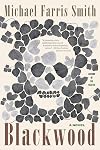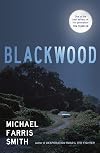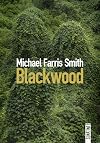
Blackwood
by Michael Farris Smith
On This Page
Description
In this timeless, mythical tale of unforgiving justice and elusive grace, rural Mississippi townsfolk shoulder the pain of generations as something dangerous lurks in the enigmatic kudzu of the woods.Tags
Recommendations
















Member Reviews
Michael Farris Smith does not write bright, cheery books. Thank goodness he doesn’t try. It would probably be ugly.
This is just the second of Smith’s books that I’ve read. The first was Rivers. Rivers was as dire and bleak as anything I’ve ever read. Blackwood lives in the same world — a Deep South that has declined. It isn’t in decline, it has declined.
As a native of the South, I want to defend it from the bleak portrayal, but, as a reader and (I think) a realist about the kinds of spiritual decline that can take hold in the places he writes about, I’m an admirer of Smith’s writing.
The central character in Blackwood is Colburn Evans, usually just “Colburn” in the story. As a young boy, Colburn witnessed his show more father’s suicide, maybe even participated in it. That suicide has haunted Colburn even as he left Red Bluff, and now it has brought him back for a final confrontation.
Other central characters include Celia, owner of Red Bluff’s one bar. Celia is tied to Colburn not only because the two fall in love, but also because Celia’s mother was a palm reader and gave a final reading to Colburn’s father just before his suicide. She documented her readings, and her notes on the reading she gave Colburn’s father are in the house that Celia has inherited from her and in which she and Colburn make love.
And there is the homeless family — spoken of as “the man,” “the woman,” and “the boy.” “The man” in particular serves as a kind of catalyst for evil. In not giving him a name (“the man” repeatedly refuses the local sheriff’s attempts to find out his identity), Smith makes him almost a mythological symbol rather than a human being.
You could also say the main character in the book is the town of Red Bluff, Mississippi. Like he did in Rivers, Smith paints a world that is hard, dark, mysterious, and possessed of a menacing autonomy of its own. It’s a setting in which only bad things are going to happen.
More specifically, that character is the kudzu that engulfs much of Red Bluff. The kudzu hides two ominous landmarks — an abandoned house with a story of its own to tell and a pit that feels like the entrance to some sort of local hell.
I read the book at a fast pace, faster than I wanted. But I needed to find out what happened! It’s not just that you buy into the characters, you also buy into the play of forces that Smith sets in motion — Colburn’s guilt, the homeless family’s burden of hopelessness, Celia’s life that is seemingly suspended in limbo, and the kudzu waiting to reveal a thriving underworld of menace and loss. show less
This is just the second of Smith’s books that I’ve read. The first was Rivers. Rivers was as dire and bleak as anything I’ve ever read. Blackwood lives in the same world — a Deep South that has declined. It isn’t in decline, it has declined.
As a native of the South, I want to defend it from the bleak portrayal, but, as a reader and (I think) a realist about the kinds of spiritual decline that can take hold in the places he writes about, I’m an admirer of Smith’s writing.
The central character in Blackwood is Colburn Evans, usually just “Colburn” in the story. As a young boy, Colburn witnessed his show more father’s suicide, maybe even participated in it. That suicide has haunted Colburn even as he left Red Bluff, and now it has brought him back for a final confrontation.
Other central characters include Celia, owner of Red Bluff’s one bar. Celia is tied to Colburn not only because the two fall in love, but also because Celia’s mother was a palm reader and gave a final reading to Colburn’s father just before his suicide. She documented her readings, and her notes on the reading she gave Colburn’s father are in the house that Celia has inherited from her and in which she and Colburn make love.
And there is the homeless family — spoken of as “the man,” “the woman,” and “the boy.” “The man” in particular serves as a kind of catalyst for evil. In not giving him a name (“the man” repeatedly refuses the local sheriff’s attempts to find out his identity), Smith makes him almost a mythological symbol rather than a human being.
You could also say the main character in the book is the town of Red Bluff, Mississippi. Like he did in Rivers, Smith paints a world that is hard, dark, mysterious, and possessed of a menacing autonomy of its own. It’s a setting in which only bad things are going to happen.
More specifically, that character is the kudzu that engulfs much of Red Bluff. The kudzu hides two ominous landmarks — an abandoned house with a story of its own to tell and a pit that feels like the entrance to some sort of local hell.
I read the book at a fast pace, faster than I wanted. But I needed to find out what happened! It’s not just that you buy into the characters, you also buy into the play of forces that Smith sets in motion — Colburn’s guilt, the homeless family’s burden of hopelessness, Celia’s life that is seemingly suspended in limbo, and the kudzu waiting to reveal a thriving underworld of menace and loss. show less
Michael Farris Smith put my heart in my throat in the first chapter of this book and it stayed there even after I had closed the last page. It is difficult to describe the atmosphere of threat and foreboding this book carries, the way you feel the lurking evil in your bones, the way the kudzu takes on a life of its own and sucks the air out of your lungs. It recalled for me a twilight when I entered an old deserted house on a dare, and the goosebumps I felt travel down my spine when the wind made a sound in the rafters that mimicked footsteps overhead. There is no wind at all here, and the footsteps are real. As with most things that are truly frightening to me, this fright arises from the absolute feeling that it could happen, that the show more characters are flesh and blood and that they are much scarier than anything you might conjure up from the supernatural world of imagination.
Underneath all that dark, oppressive frightfulness, however, is a story of loneliness, alienation and desperation; lost souls that you wish could be saved, that you fear for. Each of the characters is a person just a little outside the norm or living on the edge of society, either ignored or harassed because of their differences and strangers to everyone, even themselves. Even the sheriff, who is a good and diligent man, is at odds to understand what is really going on beneath the dirty surfaces and strained minds that surround him. The town of Red Bluff, Mississippi is itself a dying place, and seems to invite the kinds of derelict souls who wander in and cannot resolve to leave. The kudzu that engulfs the town physically echoes the evil that invades its spirit. Life itself is being strangled.
I fell in love with [a:Michael Farris Smith|4309584|Michael Farris Smith|https://images.gr-assets.com/authors/1559765635p2/4309584.jpg] when I read [b:Rivers|16130400|Rivers|Michael Farris Smith|https://i.gr-assets.com/images/S/compressed.photo.goodreads.com/books/1374595954l/16130400._SY75_.jpg|21955410]. He has a raw, unflinching eye. He is Southern Gothic at its best. This book is a dangerous joy ride; but don’t be too afraid, just make sure you buckle up before the journey begins. show less
Underneath all that dark, oppressive frightfulness, however, is a story of loneliness, alienation and desperation; lost souls that you wish could be saved, that you fear for. Each of the characters is a person just a little outside the norm or living on the edge of society, either ignored or harassed because of their differences and strangers to everyone, even themselves. Even the sheriff, who is a good and diligent man, is at odds to understand what is really going on beneath the dirty surfaces and strained minds that surround him. The town of Red Bluff, Mississippi is itself a dying place, and seems to invite the kinds of derelict souls who wander in and cannot resolve to leave. The kudzu that engulfs the town physically echoes the evil that invades its spirit. Life itself is being strangled.
I fell in love with [a:Michael Farris Smith|4309584|Michael Farris Smith|https://images.gr-assets.com/authors/1559765635p2/4309584.jpg] when I read [b:Rivers|16130400|Rivers|Michael Farris Smith|https://i.gr-assets.com/images/S/compressed.photo.goodreads.com/books/1374595954l/16130400._SY75_.jpg|21955410]. He has a raw, unflinching eye. He is Southern Gothic at its best. This book is a dangerous joy ride; but don’t be too afraid, just make sure you buckle up before the journey begins. show less
I remember heading east on family vacations from our home in Northern Louisiana driving initially on Hwy 80, later I-20. As we crossed into Mississippi near Vicksburg, I saw waves of kudzu on both side of the road enveloping much in its path like some blob-like creature.
This describes the terrain around Red Bluff, Mississippi with the prolific kudzu cresting and submerging everything in its path, including trees, caves, and abandoned homes. Colburn, a junkyard sculpture, returns to his childhood home to wrestle with the ghosts of his past, an earlier time when he believed he was born into a damned world where there was nothing to do but accept the rejection waiting for him. Colburn is haunted by the death of an older brother before he show more was born, an incident for which his parents blamed themselves. This self-loathing resulted in the suicide of his father, which Colburn witnessed. As monumental as these past ghosts are, what currently exists within the kudzu is much worse.
I was thoroughly entrapped in this rural community with the writer's detail character descriptions, especially their psychological motivations. One could also including the encroaching kudzu as a character with the various ominous sounds coming from its bowels. This is the first work read from this Southern author; it won't be my last. show less
This describes the terrain around Red Bluff, Mississippi with the prolific kudzu cresting and submerging everything in its path, including trees, caves, and abandoned homes. Colburn, a junkyard sculpture, returns to his childhood home to wrestle with the ghosts of his past, an earlier time when he believed he was born into a damned world where there was nothing to do but accept the rejection waiting for him. Colburn is haunted by the death of an older brother before he show more was born, an incident for which his parents blamed themselves. This self-loathing resulted in the suicide of his father, which Colburn witnessed. As monumental as these past ghosts are, what currently exists within the kudzu is much worse.
I was thoroughly entrapped in this rural community with the writer's detail character descriptions, especially their psychological motivations. One could also including the encroaching kudzu as a character with the various ominous sounds coming from its bowels. This is the first work read from this Southern author; it won't be my last. show less
Loved, loved, loved it. Writing is spare and clean but conveys so much. Several passages I was so wowed by that I read them over and over, marveling at how the author communicated a half a dozen different emotions in two or three lean, understated paragraphs. The kudzu was perhaps the tiniest bit heavy handed as a metaphor but this book still simply defines atmosphere. Tremendous talent.
Southern gothic from William Faulkner's hometown. A dark story about man coming home to shape scrap metal in the Mississippi Hill Country. A book about the mysteries of sanctuary and fear, and whatever is under all that kudzu. Full of symbolism and realistic portrayal of small town life in the Deep South. I enjoyed this quick read. There is a kind of Ray Bradbury or early Stephen King-esque feeling add-on that could be excised or developed that would make this story stronger.
Readers like myself who have followed this author from the beginning, know what to expect from his novels. Southern, gothic grit, with a dark, dark tone. This book is no exception and it starts out with a bang, well, not a bang exactly, let's just say a shocking event. From there it takes off, and the events build from there. A young man returning for answers, another man, woman and buy who are looking for some kind of life, a place to stop. A young woman, whose mother may have had answers but us now gone, and a sheriff who is clearly over his head.
There is clearly something wrong in the town of Red Bluffs, Mississippi, but where does it originate?
"This place is one big ghost story. Stories about the valley. Stories about the man who show more killer himself. It's what we do."
Kudzu covers everything left alone, even Colton's old house, but what else lives there. Things will get much worse, before answers are found. What and who will be left?
As usual I couldn't stop reading this darn book, but either I missed something or some questions remain unanswered. Even so, this was an exciting ride.
ARC from Netgalley. show less
There is clearly something wrong in the town of Red Bluffs, Mississippi, but where does it originate?
"This place is one big ghost story. Stories about the valley. Stories about the man who show more killer himself. It's what we do."
Kudzu covers everything left alone, even Colton's old house, but what else lives there. Things will get much worse, before answers are found. What and who will be left?
As usual I couldn't stop reading this darn book, but either I missed something or some questions remain unanswered. Even so, this was an exciting ride.
ARC from Netgalley. show less
Not as good as Redemption Road, but still excellent southern gothic writing.
I kind of felt this book would have been far better as a short story or novella. It does drag in parts and yet there is also lack of character development a wired combination but there it is.
Still a good book.
I kind of felt this book would have been far better as a short story or novella. It does drag in parts and yet there is also lack of character development a wired combination but there it is.
Still a good book.
Members
- Recently Added By
Published Reviews
In Smith’s haunting, engrossing latest (after The Fighter), strangers awaken an evil force lurking in a small Southern town. In 1976 Red Bluff, Miss., storefronts are empty and boarded up after a long economic downturn.... After twin boys disappear, four lives intersect and secrets begin to emerge from 20 years earlier.... As the four enter the dark landscape, their dangerous search for the show more missing twins driven by a need for redemption, they confront an evil on a scale they’d never imagined. Smith’s meditation on the darkness of the human heart offers a moving update to the Southern gothic tradition. show less
added by Lemeritus
No mere metaphor in Smith's hands, the novel's ever present kudzu vines are a malevolent force, "strands of bondage" with the power to disappear people, cars, and entire houses, concealing ghostly caves and tunnels once dug by slaves. Such is the power of Smith's pitch-black poetic vision that the deeper you get into the book, the more entwined you are by its creeping effects. "It's like when show more something moves in the dark," says Myer. "You can't see it but you know it's there. I wonder if that's where we are." A gleaming, dark masterpiece by one of Southern fiction's leading voices. show less
added by Lemeritus
Lists

Fiction: Crime, Detective, Mystery
350 works; 3 members
Author Information

Awards and Honors
Distinctions
Common Knowledge
- Original publication date
- 2020
- Epigraph
- Foxes have dens and birds have nest, but the Son of Man has no place to lay his head. -Matthew 8:20
- First words
- Colburn was standing with his mother in the kitchen when she said go fetch your father. The long light of an August day bleeding through the windows. His face and hands dirty from playing football in the neighbor's yard. His ... (show all)mother wiped the sweat from his face with a dishtowel. Held his chin in her hand and gazed at him. You'll be twelve soon. I can't believe it. He asked where his father was and she said out back in the workshop. Go tell him it's time for super. -Chapter 1
- Canonical DDC/MDS
- 813.6
- Canonical LCC
- PS3619.M592234
Classifications
Statistics
- Members
- 155
- Popularity
- 211,527
- Reviews
- 10
- Rating
- (3.69)
- Languages
- English, French
- Media
- Paper, Audiobook, Ebook
- ISBNs
- 18
- ASINs
- 3