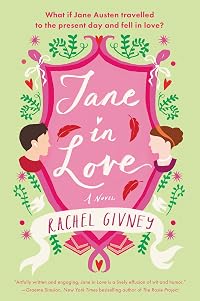
Jane in Love
by Rachel Givney
On This Page
Description
"Bath, England, 1803. At 28, Jane Austen prefers walking and reading to balls and assemblies; she dreams of someday publishing her carefully crafted stories. Already on the shelf and in grave danger of becoming a spinster, Jane goes searching for a radical solution--and as a result, seemingly by accident, time-travels. She lands in... Bath, England, present day. The film set of Northanger Abbey. Sofia Wentworth is a Hollywood actress starring in a new period film, an attempt to reinvent her show more flagging career and, secretly, an attempt to reinvent her failing marriage. When Sofia meets Jane, she marvels at the young actress who can't seem to "break character," even off set. And Jane--acquainting herself with the horseless steel carriages and seriously shocking fashion of the twenty-first century-- meets Sofia, a woman unlike anyone she's ever met before. Then she meets Fred, Sofia's brother, who has the audacity to be handsome, clever, and kind-hearted. What happens when Jane, against her better judgement, falls in love with Fred And when Sofia learns the truth about her new friend Jane. And worst of all, if Jane stays with Fred, will she ever achieve her dream, the one she's now seen come true"--Amazon.com. show lessTags
Recommendations





Member Reviews
My review origin story for picking up this novel is that someone commented how they couldn't finish because the couple - Jane Austen and her 21st century boyfriend - wouldn't get their HEA (I hate the romance genre with a passion, so I'm sort of glad this was enough to 'disqualify' the title). However, on actually wasting money and time reading all 434 pages (WAY too long for such a basic concept), I can suggest a few other reasons to DNF. Why would any woman, especially a female author, choose to DUMB DOWN Jane Austen to the level of 'I need a husband' and 'the little life would swallow up everything, murdering the whim to nurture anything but itself' (marriage and children)? Austen was one of the most talented writers EVER, still in show more print and taught in schools as noted here, but let's create an alternate reality where she sits at home and cooks for her man? ('She was his slave, happily, she realised.') Pfft.
That said, I don't think historical accuracy was this budding author's vibe. Here Jane is the daughter of Mr and Mrs Bennet who scorn her writing to the point of burning her manuscripts, and she is humiliated by 'Mr Withers' marrying another woman a la Marianne. I get that turning Jane into a spurned lover is a plot device to send her into the future, but how depressing to rob her of ANY agency. We also get the standard social media mash-up of Victorian mores - and fashion - in the Regency era, with leg of mutton sleeves and Jane being scandalised by décolletage (do not cross the streams!) There's even a scene where Jane 'discovers' coffee for the first time and gets that cliched buzz (they had coffee in 1803, hun). Even Jane 'objected to so many details of her life being arranged so inaccurately and haphazardly' and I quite agree!
That said, even the modern day characters and setting feel weirdly dated, with Sofia the 'movie star' sounding more old-fashioned than Jane herself, and everyone acting like they live in the 1990s rather than 2020 (a bonus point for NOT featuring Covid!) Instead of Googling information, Sofia opts for visiting libraries - a welcome shout-out but not even slightly believable. And of course the dialogue is all over the place, mainly, I suspect, because I was reading an American edition of the Australian author's story - 'oh, you mean gasoline?' instead of petrol, when Austen wouldn't have known what paraffin smelt like in the first place. 'WASPs always had the best booze'?! I don't even know where to start with that line, coming from an English character written by an Aussie author.
Nitpicking aside, the 'romance' is just dull. Jane finds herself in 2020 and falls instantly in Lizzie and Darcy love with the first man she sees, the boring teacher brother of her modern day counterpart? The author REALLY saw Jane Austen as some desperate, sex-starved, pathetic old hag, didn't she? There's a lot of horseless carriage and moving staircase scenes, to really convince readers that Jane is from Ye Olde Englande, and any attempt at formal speech is given over to just tacking 'sir' onto the end of sentences, plus the standard 'oops, you almost caught me naked!' offerings, and then possibly the most far-fetched near death scene in the history of melodramas. Jane has to choose between her two-week strong love for Fred Wentworth (yep, she went there) and her talent and fame as England's most beloved female author (Sofia's FIRST EDITION novels given as a GIFT start disappearing the longer Jane stays in the future), and it's such a torment! She loves him for being a man and paying attention to her! She held a baby once and now feels her natural calling! Oh, what to do!
I'm just glad that the author let Jane Austen come to her senses and that this wasn't a full-on capital Romance novel, or I might have been sick. show less
That said, I don't think historical accuracy was this budding author's vibe. Here Jane is the daughter of Mr and Mrs Bennet who scorn her writing to the point of burning her manuscripts, and she is humiliated by 'Mr Withers' marrying another woman a la Marianne. I get that turning Jane into a spurned lover is a plot device to send her into the future, but how depressing to rob her of ANY agency. We also get the standard social media mash-up of Victorian mores - and fashion - in the Regency era, with leg of mutton sleeves and Jane being scandalised by décolletage (do not cross the streams!) There's even a scene where Jane 'discovers' coffee for the first time and gets that cliched buzz (they had coffee in 1803, hun). Even Jane 'objected to so many details of her life being arranged so inaccurately and haphazardly' and I quite agree!
That said, even the modern day characters and setting feel weirdly dated, with Sofia the 'movie star' sounding more old-fashioned than Jane herself, and everyone acting like they live in the 1990s rather than 2020 (a bonus point for NOT featuring Covid!) Instead of Googling information, Sofia opts for visiting libraries - a welcome shout-out but not even slightly believable. And of course the dialogue is all over the place, mainly, I suspect, because I was reading an American edition of the Australian author's story - 'oh, you mean gasoline?' instead of petrol, when Austen wouldn't have known what paraffin smelt like in the first place. 'WASPs always had the best booze'?! I don't even know where to start with that line, coming from an English character written by an Aussie author.
Nitpicking aside, the 'romance' is just dull. Jane finds herself in 2020 and falls instantly in Lizzie and Darcy love with the first man she sees, the boring teacher brother of her modern day counterpart? The author REALLY saw Jane Austen as some desperate, sex-starved, pathetic old hag, didn't she? There's a lot of horseless carriage and moving staircase scenes, to really convince readers that Jane is from Ye Olde Englande, and any attempt at formal speech is given over to just tacking 'sir' onto the end of sentences, plus the standard 'oops, you almost caught me naked!' offerings, and then possibly the most far-fetched near death scene in the history of melodramas. Jane has to choose between her two-week strong love for Fred Wentworth (yep, she went there) and her talent and fame as England's most beloved female author (Sofia's FIRST EDITION novels given as a GIFT start disappearing the longer Jane stays in the future), and it's such a torment! She loves him for being a man and paying attention to her! She held a baby once and now feels her natural calling! Oh, what to do!
I'm just glad that the author let Jane Austen come to her senses and that this wasn't a full-on capital Romance novel, or I might have been sick. show less
An enjoyable mix of humor, romance, and reverence for Jane Austen.
Pressured by her mother to marry, a pre-published era Jane Austen enlists a matchmaker/witch for help and winds up transported to present day. Jane’s dropped directly into the rehearsal of a Jane Austen movie adaptation, where befriending a famous actress threatens to change the course of literary history, not to mention Jane Austen’s day to day life.
The famous actress, Sofia, has been known throughout her career for her hotness more than for her acting, so now that she’s aging, insecurities are creeping in and those insecurities are multiplied with working on a movie directed by her ex and playing second fiddle to a new young starlet.
Sofia’s situation is a bit show more predictable/cliche at times and initially she comes off shallow though she does grow on you as her character grows, you see how much she genuinely cares for her brother, she’s a good friend to Jane and she has a couple fantastic scenes opposite the young starlet.
I loved Jane, obviously I don’t know what the real Jane was like but this Jane pretty well meets my ideal of who she would be. Her responses to the differences between Jane’s time and now were endlessly entertaining, her wonder and confusion, the sugar purchasing, and maybe best of all the genuinely touching reaction she has to meeting an openly gay man.
It was kind of lovely to see Jane fall in love and with a truly good guy, yet at the same time, perhaps my favorite thing about this book is how much respect it shows to real life Jane and the choices she made. show less
Pressured by her mother to marry, a pre-published era Jane Austen enlists a matchmaker/witch for help and winds up transported to present day. Jane’s dropped directly into the rehearsal of a Jane Austen movie adaptation, where befriending a famous actress threatens to change the course of literary history, not to mention Jane Austen’s day to day life.
The famous actress, Sofia, has been known throughout her career for her hotness more than for her acting, so now that she’s aging, insecurities are creeping in and those insecurities are multiplied with working on a movie directed by her ex and playing second fiddle to a new young starlet.
Sofia’s situation is a bit show more predictable/cliche at times and initially she comes off shallow though she does grow on you as her character grows, you see how much she genuinely cares for her brother, she’s a good friend to Jane and she has a couple fantastic scenes opposite the young starlet.
I loved Jane, obviously I don’t know what the real Jane was like but this Jane pretty well meets my ideal of who she would be. Her responses to the differences between Jane’s time and now were endlessly entertaining, her wonder and confusion, the sugar purchasing, and maybe best of all the genuinely touching reaction she has to meeting an openly gay man.
It was kind of lovely to see Jane fall in love and with a truly good guy, yet at the same time, perhaps my favorite thing about this book is how much respect it shows to real life Jane and the choices she made. show less
I don’t think it’s any secret that I am a fan of Jane Austen’s works. I enjoy reading her novels (I even keep one in reserve to break out in case of reading slumps). I like to read reimaginings of her novels too, or any that claim to be inspired by them. My only caveat is that they must be well written, and here Rachel Givney has delivered in spades with Jane in Love. Not only is this novel original in plot, but it is heartfelt, amusing and true to the spirit of Jane Austen herself.
The story starts with Jane Austen living in Bath and hating the life there with a passion. She is unmarried, and lacking in prospects in this town of matchmaking. Jane just wants to be left alone to write, but her mother has burned her first manuscript show more (First Impressions) and effectively told Jane to get her head out of the clouds. The family is then all aflutter as a handsome suitor takes an interest in Jane, only to be let down. Bereft and angry, Jane decides to try a spell for love and happiness given to her by a dubious woman in London. She finds herself in Bath, current day and on a film set. (Luckily, it’s a new version of Northanger Abbey). It’s there that she meets Sofia Wentworth and her brother Fred. Sofia is convinced that Jane is an actor, trying to bamboozle her into a Candid Camera like stunt. As Sofia begins to realise that Jane just might be telling the truth, Jane and Fred are beginning to fall in love. But the longer Jane stays in the present, the more her writing legacy disappears from history. It seems that the more comfortable Jane becomes, the less she writes. That’s bad new for Sofia too, as her role as Mrs Allen is meant to be a plan to get her husband back. Love or legacy? Which should Jane choose?
Jane in Love raises all kinds of personal dilemmas for both Jane and Sofia. Jane is unhappy in her own time, and seems to fit much better in the modern era where she can have a job and remain unmarried without anyone blinking an eye. But is her own happiness the ‘right’ price to pay for leaving a legacy of novels beloved of millions? What price should she put on family? Duty? Sofia has some things to learn from Jane too. Once the hottest film star in Hollywood, her age now puts her in ‘character’ roles and Sofia is not happy at losing her crown to someone younger and less talented. She finds her age somewhat difficult to accept in addition to the end of her own marriage. Surely she can win her ex-husband back with her beauty? From Jane, Sofia starts to learn to be comfortable in her own skin and to accept that she doesn’t need to be the most beautiful to get somewhere in her career. Jane is also a good mentor to Fred, gently guiding him to developing greater confidence in himself. It takes time for these to be established in the novel, but in the mean time the reactions of Jane to the modern world are rather delightful. Her joy at surviving the ‘moving staircase’ (aka the escalator on the Tube) will bring a smile to anyone’s face. Her astute observations of everyone being enamoured with little boxes (aka smartphones) brought a feeling of guilt to this modern reader at the lack of interaction with others and the natural world. (Of course, as she writes on a black box staring at a brightly lit bigger box).
Jane’s speech is also true to the time period, and Fred and Sofia seem to adjust their own to avoid too much slang. It’s quite quaint and brings that overall Austen feel to the modern day. I loved the clash of modern and old, such as Sofia being a former Batgirl next to one of the greatest writers in history. I felt rather sorry for Jane in the end, and rather torn between her choices. Givney helps to ease the pain though with some light moments involving a bag of sugar from Sainsbury’s and a character name. This is a sweet, witty book that is a worthy addition to the stories about Jane Austen shelf.
Thank you to Penguin for the copy of this book. My review is honest.
http://samstillreading.wordpress.com show less
The story starts with Jane Austen living in Bath and hating the life there with a passion. She is unmarried, and lacking in prospects in this town of matchmaking. Jane just wants to be left alone to write, but her mother has burned her first manuscript show more (First Impressions) and effectively told Jane to get her head out of the clouds. The family is then all aflutter as a handsome suitor takes an interest in Jane, only to be let down. Bereft and angry, Jane decides to try a spell for love and happiness given to her by a dubious woman in London. She finds herself in Bath, current day and on a film set. (Luckily, it’s a new version of Northanger Abbey). It’s there that she meets Sofia Wentworth and her brother Fred. Sofia is convinced that Jane is an actor, trying to bamboozle her into a Candid Camera like stunt. As Sofia begins to realise that Jane just might be telling the truth, Jane and Fred are beginning to fall in love. But the longer Jane stays in the present, the more her writing legacy disappears from history. It seems that the more comfortable Jane becomes, the less she writes. That’s bad new for Sofia too, as her role as Mrs Allen is meant to be a plan to get her husband back. Love or legacy? Which should Jane choose?
Jane in Love raises all kinds of personal dilemmas for both Jane and Sofia. Jane is unhappy in her own time, and seems to fit much better in the modern era where she can have a job and remain unmarried without anyone blinking an eye. But is her own happiness the ‘right’ price to pay for leaving a legacy of novels beloved of millions? What price should she put on family? Duty? Sofia has some things to learn from Jane too. Once the hottest film star in Hollywood, her age now puts her in ‘character’ roles and Sofia is not happy at losing her crown to someone younger and less talented. She finds her age somewhat difficult to accept in addition to the end of her own marriage. Surely she can win her ex-husband back with her beauty? From Jane, Sofia starts to learn to be comfortable in her own skin and to accept that she doesn’t need to be the most beautiful to get somewhere in her career. Jane is also a good mentor to Fred, gently guiding him to developing greater confidence in himself. It takes time for these to be established in the novel, but in the mean time the reactions of Jane to the modern world are rather delightful. Her joy at surviving the ‘moving staircase’ (aka the escalator on the Tube) will bring a smile to anyone’s face. Her astute observations of everyone being enamoured with little boxes (aka smartphones) brought a feeling of guilt to this modern reader at the lack of interaction with others and the natural world. (Of course, as she writes on a black box staring at a brightly lit bigger box).
Jane’s speech is also true to the time period, and Fred and Sofia seem to adjust their own to avoid too much slang. It’s quite quaint and brings that overall Austen feel to the modern day. I loved the clash of modern and old, such as Sofia being a former Batgirl next to one of the greatest writers in history. I felt rather sorry for Jane in the end, and rather torn between her choices. Givney helps to ease the pain though with some light moments involving a bag of sugar from Sainsbury’s and a character name. This is a sweet, witty book that is a worthy addition to the stories about Jane Austen shelf.
Thank you to Penguin for the copy of this book. My review is honest.
http://samstillreading.wordpress.com show less
You know I love a good Jane Austen variation, so I couldn't resist Jane in Love by Rachel Givney. When a matchmaker promises Jane Austen a spell to bring her to her one true love, Jane finds herself in Bath in 2020, well, in an alternate 2020 with crowds, movie filming, and open businesses. At one point, Jane asks if the current 6-month drought is the apocalypse, and I longed for an alternate history where that was what we'd worry about in 2020. Her period clothes and speech just make her seem like another Janeite visiting Bath, an adorable twist.
The sharp wit is what keeps me coming back to Jane Austen novels, so I was slightly disappointed by this version of Jane as a bewildered time-traveler. For too much of the novel, she's more show more acted-upon than active, and she spends far too long playing with electric lights or self-inking pens. Constantly noting that people spend a lot of time on their mysterious talking boxes made Jane seem like a boomer bemoaning technology.
As Jane stays in 2020, though, her disappearance from 1803 affects the timeline, and her books start popping out of existence. This may be one of my favorite wibbly-wobbly timey-wimey plots! This is bad news for Jane's legacy, obviously, but also bad news for Sofia, Jane's friend in 2020, since she's hoping to make her acting comeback in a Northanger Abbey movie. I thought Sofia's worries about being sidelined as an over-thirty actress nicely mirrored Jane's struggles as an almost-thirty spinster.
The very heavy choice of work vs love didn't really work for me. I did like Fred a lot, but Jane's decisions didn't pull me in with tragedy, because the choices were to hang around 2020, cooking dinners for her love, or to return to 1803 and become a successful author. It felt a bit too heavy to be sympathetic and intriguing.
Not a huge win for me, although I really enjoyed the scenes visiting modern Bath with time-traveling Jane. show less
The sharp wit is what keeps me coming back to Jane Austen novels, so I was slightly disappointed by this version of Jane as a bewildered time-traveler. For too much of the novel, she's more show more acted-upon than active, and she spends far too long playing with electric lights or self-inking pens. Constantly noting that people spend a lot of time on their mysterious talking boxes made Jane seem like a boomer bemoaning technology.
As Jane stays in 2020, though, her disappearance from 1803 affects the timeline, and her books start popping out of existence. This may be one of my favorite wibbly-wobbly timey-wimey plots! This is bad news for Jane's legacy, obviously, but also bad news for Sofia, Jane's friend in 2020, since she's hoping to make her acting comeback in a Northanger Abbey movie. I thought Sofia's worries about being sidelined as an over-thirty actress nicely mirrored Jane's struggles as an almost-thirty spinster.
The very heavy choice of work vs love didn't really work for me. I did like Fred a lot, but Jane's decisions didn't pull me in with tragedy, because the choices were to hang around 2020, cooking dinners for her love, or to return to 1803 and become a successful author. It felt a bit too heavy to be sympathetic and intriguing.
Not a huge win for me, although I really enjoyed the scenes visiting modern Bath with time-traveling Jane. show less
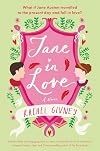
I was drawn to this primarily because of its cover and the description. It delivered only on one count, the cover paints it as a romance but this is not a romance. However, it is a well written women's fiction and I enjoyed it once I shifted my expectations.
I always love a good sismance and therefore enjoyed Jane and Sophia's relationship. The book also had witty banter and I enjoyed its touching on women's issues.
In conclusion, a nice summer read. And if you are an Austen fan, you should really enjoy it.
Thanks Netgalley for the ARC
I always love a good sismance and therefore enjoyed Jane and Sophia's relationship. The book also had witty banter and I enjoyed its touching on women's issues.
In conclusion, a nice summer read. And if you are an Austen fan, you should really enjoy it.
Thanks Netgalley for the ARC
Oh my, but I enjoyed reading this book! You know how some books you want to keep going, even as they come to their inevitable end, because you've enjoyed the journey so much? This is one of those books. Cleverly conceived and written, with enjoyable characters and twists, even as you know that the story must have a bittersweet ending if it's to remain true to Jane Austen's actual life. My review does not do this story justice, so please read it for yourself. I look forward to future books from this author!
I didn't actually expect to like this, but in fact I loved it. Just a nice, fun story with enough twists to keep it interesting.
Members
- Recently Added By
Lists

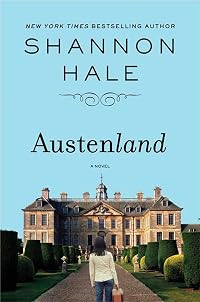
Austenland
165 works; 12 members

Books Read in 2023
5,547 works; 145 members

Quiet on Set!
11 works; 1 member
Author Information

3 Works 263 Members
Some Editions
Common Knowledge
- Canonical title
- Jane in Love
- People/Characters
- Jane Austen; Sofia Wentworth; Fred Wentworth; Dave Croft; Courtney Smith; Jack Travers
- Important places
- Bath, England, UK
- Epigraph
- All geniuses born women are lost to the public good.
--Stendhal - First words
- As Jane climbed over a hedge and landed in a pool of mud, some of which flew upward and came to rest on her boots, gown, and face, she paused for a moment, pondering whether behavior like this might be the reason she struggle... (show all)d to find a husband.
- Blurbers
- Simsion, Graeme; Graeme-Evans, Posie
Classifications
Statistics
- Members
- 241
- Popularity
- 135,025
- Reviews
- 12
- Rating
- (3.65)
- Languages
- English, Hungarian
- Media
- Paper, Audiobook, Ebook
- ISBNs
- 14
- ASINs
- 2