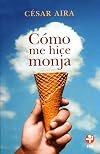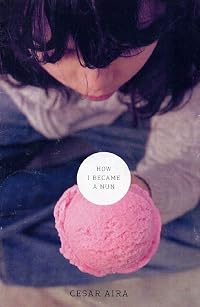
How I Became a Nun
by César Aira
On This Page
Description
Narrative of childhood experience bristles with dramatic humor at each stage of growing up: a first ice cream, school, reading, games, friendship. The novel begins in Aira's hometown, Coronel Pringles. As self-awareness grows, the story rushes forward in a torrent of anecdotes which transform a world of uneventful happiness into something else: the anecdote becomes adventure, and adventure, fable, and then legend.Tags
Recommendations





Member Reviews
Questo romanzo breve (o racconto lungo) è emblamatico dello stile di César Aira. Quello che personalmente mi ha colpito qui è la nebulosità di alcuni snodi, la dimensione essenzialmente mentale del racconto, che è essenzialmente fuori dagli schemi narrativi attesi. Intendiamoci, c'è una trama che si sviluppa dalla prima all'ultima pagina, ma la sensazione è che sia un gustoso e surreale pretesto per sorreggere ancora più gustose fantasticherie (nel senso più alto del termine, potremmo dire: riflessioni). Allo stesso tempo c'è l'invito a seguire questi "salti" senza voler troppo razionalizzare, affascinati dalla potenza creatrice e spiazzante della scrittura dell'autore.
This is the first thing I’ve read by Aira, an Argentinian who has published 30 books; I liked it. It is quirky. For example, no one becomes a nun in this book, and the story is told by a child in the first person, but that person, the same person, is alternately a boy and a girl. This is obviously unreal, but in another sense it is not: a child, whether a boy or a girl experiences the same fears, longings, family connections, difficulties, what Aira calls “the furious cruelty of beginnings”, and a child’s reality, unreal though it may be in the adult world, is every bit as real to the child….who is to say which is real and which is not? A little confusing at first, but this confusion of reality is the leitmotif of the novel in show more which Aira ponders how a “reality” can be coherent and believable in and of itself, and there can be any number of these, even though these would not be considered real in the context of the “real” world, and how then do these different realities connect or communicate. Maybe “nun” is just a metaphor for different but connecting realities.
There can even be cascading realities like the images one sees looking into mirrors facing each other. Soap operas on the radio, for instance, are a “…kind of reality. A reality that couldn’t be seen, only heard, that existed as voices and sounds. It was up to me to provide the images. But within this reality there came a moment—my favourite—when the Father [God] spoke, and at that point everyone, not just me, had to provide an image. God was the radio within the radio.” And, in an eerily prescient comment (the book was published in 1993), our protagonist notes, after listening to a completely terrible singer on the radio, that, “The mass media provide an ultimate refuge for the truly inexplicable”. We have that ultimate refuge today in the so-called “reality” TV shows that are prime examples of Aira’s constructed realities connecting and communicating with the “real” reality. But which, in fact, is real…they are both real, in a sense, and what colours the communication and the perception is which side of the reality you are looking from.
Time itself has no ultimate reality because we now know that in certain circumstances the passage of time itself depends on the frame of reference of the observer. But in a sense we knew this intuitively before Einstein and in the novel, the child constructs his/her own time/reality. From a certain perspective these would be considered daydreams, but to the child it is a perfectly believable, complex, constructed, satisfying world. In fact, we all construct our own realities…there are as many “realities” as there are people in the world, no two can be the same and what powers the world is how these realities cohere, coexist, construct a larger “reality” of the world in which our individual realities fit but again, those constructs, which we know as societies, vary across the world and we are back to the cascading images.
Communication within and between realities is key. The novel begins with a surreal image…the father of the child protagonist drowning an ice-cream vendor in a vat of his own ice cream. The whole thing starts with a miscommunication and misunderstanding between father and child that then spirals out of control with more miscommunication between father and vendor. This leads to tragedy in the father going to prison, and a much greater tragedy at the end of the book where Aira presents the ultimate reality, the one that trumps and terminates all others, the one reality that we all know but can’t really share: death.
I said this novel is quirky, but the ideas and images resonate after you put it down show less
There can even be cascading realities like the images one sees looking into mirrors facing each other. Soap operas on the radio, for instance, are a “…kind of reality. A reality that couldn’t be seen, only heard, that existed as voices and sounds. It was up to me to provide the images. But within this reality there came a moment—my favourite—when the Father [God] spoke, and at that point everyone, not just me, had to provide an image. God was the radio within the radio.” And, in an eerily prescient comment (the book was published in 1993), our protagonist notes, after listening to a completely terrible singer on the radio, that, “The mass media provide an ultimate refuge for the truly inexplicable”. We have that ultimate refuge today in the so-called “reality” TV shows that are prime examples of Aira’s constructed realities connecting and communicating with the “real” reality. But which, in fact, is real…they are both real, in a sense, and what colours the communication and the perception is which side of the reality you are looking from.
Time itself has no ultimate reality because we now know that in certain circumstances the passage of time itself depends on the frame of reference of the observer. But in a sense we knew this intuitively before Einstein and in the novel, the child constructs his/her own time/reality. From a certain perspective these would be considered daydreams, but to the child it is a perfectly believable, complex, constructed, satisfying world. In fact, we all construct our own realities…there are as many “realities” as there are people in the world, no two can be the same and what powers the world is how these realities cohere, coexist, construct a larger “reality” of the world in which our individual realities fit but again, those constructs, which we know as societies, vary across the world and we are back to the cascading images.
Communication within and between realities is key. The novel begins with a surreal image…the father of the child protagonist drowning an ice-cream vendor in a vat of his own ice cream. The whole thing starts with a miscommunication and misunderstanding between father and child that then spirals out of control with more miscommunication between father and vendor. This leads to tragedy in the father going to prison, and a much greater tragedy at the end of the book where Aira presents the ultimate reality, the one that trumps and terminates all others, the one reality that we all know but can’t really share: death.
I said this novel is quirky, but the ideas and images resonate after you put it down show less
How I Became a Nun is the truncated life story of a six year old boy, called Cesar Aira. His entire existence is sandwiched between two unsavoury incidents involving strawberry ice cream. Seen through the boy's eyes, Argentina becomes a surreal and nonsensical place. The child's perspective is retained throughout, allowing flights of fancy and comic misunderstanding. This particular child's flights of fancy are a tad more disturbing than most. Aira is a strange, solitary child, given to describing himself as a girl (and bemused by the failure of others to recognise his gender), and believing him/herself to be an almost invisible presence in the world. A disturbing precociousness pervades his thoughts, and result in actions that often show more feel psychopathic, particularly with respect to his parents. Aira's narrative is mostly aimless whimsy, an internal monologue of a disturbed child, and feels like it was written purely for the joy of writing. When I ask my brain if it liked the book, it nods heartily. When I ask it what it was all about, it just sort of wanders off, whistling nonchalantly, with its hands in its pockets. There may be something that I was missing here (or many somethings), but I like the idea that How I Became a Nun is fantastical nonsense written purely for Aira’s own pleasure. I would be happy to read more in this vein, and happy to recommend it to others. show less
After Silvina Ocampo's Viaje Olvidado, I decided to read another book about growing up in Argentina. The two novellas and one short story that make up Cómo me hice monja are set in the author's childhood hometown of Coronel Pringles, Argentina, with a brief sojourn in Rosario as well. I have held a longstanding fascination with the town of Coronel Pringles because I grew up in the United States, eating Pringles and watching Pringles commercials. These stories satisfied my desire to learn more about this town in the south of Buenos Aires province that shares its name with the chips that come in a tube, and one of them also made me laugh much more than I expected to when i picked up this book.
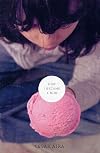
All three stories are told by César Aira, show more and are about his Pringles and Rosario childhood. He tends to refer to himself in the femenine, although the other characters all treat him like a boy and use masculine endings when speaking to him. The title story was my favorite. It is a chronicle of events from the family's time in Rosario, and they are bizarre and hilarious, told from the child's peculiar perspective. The story begins with her father taking her for her first ice cream, at the age of six, after the family has moved to Rosario, where ice cream is available for purchase (unlike in Pringles). Her father is excited about having the chance to introduce his son to such a delicious treat, and is confident that little César, like everyone else, will like ice cream. César takes his first bite of strawberry ice cream and is disgusted. It's gross, it's absolutely filthy, how can anyone like this? You get the feeling that his father has been confused by his son's progress in life so far, little César has maybe been disappointing or odd in ways that have strongly affected his father, and this is just too much. His father is angry, he berates César, he forces him to take another bite and another, César is bawling, they're lucky there's not a bunch of people around because he's making a scene, he's saying that ice cream is sour and acrid and he hates it, and neither side will give in. Finally, César's dad grabs the melting strawberry ice cream and tastes it, and it's rancid. César ends up in the hospital from the tainted dessert, and his father ends up in jail after violently complaining to the ice cream store owner.
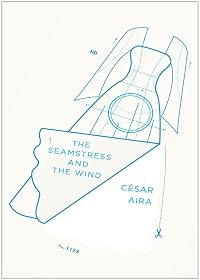
The story continues with a series of incidents where César, an odd little boy, does funny things and exasperates her mother. She has an intense persistence in saying and doing things that are unpleasant or embarrassing to her mom, and the entire story is absolutely hilarious. Young César reminds me a bit of Oskar from The Tin Drum in the way that she imposes her slightly-unhinged will onto the world and people around him. I was slightly disappointed by the second novella, La costurera y el viento (The Seamstress and the Wind), but only because I wanted to read more about little César and her adventures. In the second story, César is the narrator, but the story is about her neighbors in Coronel Pringles, who depart on a mad dash across Patagonia in search of a missing boy. You learn a lot about their backgrounds, their vices and their lives in Pringles, and the various parties streaking across the bleak landscape collide in an increasingly explosive manner. The book then ends with a short story explaining a game that César and Omar (the missing boy in the second story) used to play when they were kids. It's a counting game where they go back and forth naming bigger and bigger numbers. When subjected to detailed analysis, it really is an interesting game, and as César considers the endless variations that they recurred to as they counted numbers, he derives some interesting implications. The ways that they try to outsmart each other and the ways that they determine what is acceptable and what is unacceptable in a game of escalating number counting really have a lot to do with their future adult lives, as well as universal human motivations.
It looks like the title story from my Spanish edition has been translated to English as How I Became a Nun. I would highly recommend this book, and I´m curious as to how the translator tackled the gender issue in translation. Spanish provides a lot more opportunities to differentiate between gender through adjective endings, and I wonder how this could be captured in English. show less
All three stories are told by César Aira, show more and are about his Pringles and Rosario childhood. He tends to refer to himself in the femenine, although the other characters all treat him like a boy and use masculine endings when speaking to him. The title story was my favorite. It is a chronicle of events from the family's time in Rosario, and they are bizarre and hilarious, told from the child's peculiar perspective. The story begins with her father taking her for her first ice cream, at the age of six, after the family has moved to Rosario, where ice cream is available for purchase (unlike in Pringles). Her father is excited about having the chance to introduce his son to such a delicious treat, and is confident that little César, like everyone else, will like ice cream. César takes his first bite of strawberry ice cream and is disgusted. It's gross, it's absolutely filthy, how can anyone like this? You get the feeling that his father has been confused by his son's progress in life so far, little César has maybe been disappointing or odd in ways that have strongly affected his father, and this is just too much. His father is angry, he berates César, he forces him to take another bite and another, César is bawling, they're lucky there's not a bunch of people around because he's making a scene, he's saying that ice cream is sour and acrid and he hates it, and neither side will give in. Finally, César's dad grabs the melting strawberry ice cream and tastes it, and it's rancid. César ends up in the hospital from the tainted dessert, and his father ends up in jail after violently complaining to the ice cream store owner.
The story continues with a series of incidents where César, an odd little boy, does funny things and exasperates her mother. She has an intense persistence in saying and doing things that are unpleasant or embarrassing to her mom, and the entire story is absolutely hilarious. Young César reminds me a bit of Oskar from The Tin Drum in the way that she imposes her slightly-unhinged will onto the world and people around him. I was slightly disappointed by the second novella, La costurera y el viento (The Seamstress and the Wind), but only because I wanted to read more about little César and her adventures. In the second story, César is the narrator, but the story is about her neighbors in Coronel Pringles, who depart on a mad dash across Patagonia in search of a missing boy. You learn a lot about their backgrounds, their vices and their lives in Pringles, and the various parties streaking across the bleak landscape collide in an increasingly explosive manner. The book then ends with a short story explaining a game that César and Omar (the missing boy in the second story) used to play when they were kids. It's a counting game where they go back and forth naming bigger and bigger numbers. When subjected to detailed analysis, it really is an interesting game, and as César considers the endless variations that they recurred to as they counted numbers, he derives some interesting implications. The ways that they try to outsmart each other and the ways that they determine what is acceptable and what is unacceptable in a game of escalating number counting really have a lot to do with their future adult lives, as well as universal human motivations.
It looks like the title story from my Spanish edition has been translated to English as How I Became a Nun. I would highly recommend this book, and I´m curious as to how the translator tackled the gender issue in translation. Spanish provides a lot more opportunities to differentiate between gender through adjective endings, and I wonder how this could be captured in English. show less
"Because reality, the only sphere in which I could have acted, kept withdrawing at the speed of my desire to enter it"
Certainly he is becoming one of my favorite writers. Certainly he writes two books which I have read thus far, both unlike each other and unlike anything else I've read, this one telling the story of a childhood, of a girl who is sometimes the author himself (a man), resembling a child's point of view that is obviously too grown up to be a true child's view. The author himself who is one of my favorites now because his writing tracks the dirt at the opening of 'reading' so that grooves have already formed where he plays with his little ideas. 'Plays' is the right word because he is a true tinkler, playing with philosophy show more rather than philosophizing, rather than explaining. What is remarkable is that his novels are not exercises in idea-making, there is no central idea either, it is a rather unfocused affair where each idea rises and falls and is soon forgotten; they are rather like a child's toys laid out on the floor so as to take up as much space. Things are askew just enough to be weird, but not weird enough to be unrealistic, so that you are constantly unsure: in fact Aira is one of the few who can write prose that is both absolutely crazy/wild/experimental and yet completely conforming to 'realism'. His characters are complex, not just a ghost summoned by ideas, but quirky untidy actual people, and his ideas are untidy too, and existing in a sort of believable reality. Also, Aira never falls into cliche. He fills his book with mysteries and inconsistencies, one here, a little thing off there, none of which are actual mistakes. Aira is truly one of the best writers today, and is criminally under-read.
The beginning and end of the story are the worst parts. There he seems intent to make a "story" of it, whereas the middle of the story goes show less
The first two chapters are absolutely excruciating to read: incredibly well managed, funny, weird, tense, well conceived, and utterly bizarre. The narrator is a boy, but then again, he might be a girl: that's strange enough, because the ambiguity is managed offhandedly -- someone refers to the protagonist as "he," and someone else as "she." (The offhandedness of references to gender outdoes Yann Martel's attempt at the same insouciance.) The child is offered a strawberry ice cream. It's a special treat, because he, or she, has never had ice cream. He, or she, nearly gags on it, and Aira's description is intense and nauseating. And then -- this is only a "spoiler" for chapter 2, not for the rest of the book (and the information is show more available in published reviews) -- the father flies into a rage and kills the ice-cream vendor.
After that utterly unique start the book unravels, or rather, Aira relaxes into a sequence of set-pieces that could have been independent short stories. It's a Bildungsroman, and you follow the little girl, or boy, through various adventures to an ending that aspires to be as willfully strange as the opening.
I'd argue that the problem here is the lingering pernicious influence of magic realism. This isn't magic realism, because nothing is supernatural, and it's programmatically unromantic and unsentimental. But it's determinedly quirky and persistently exaggeratedly eccentric, and those traits, I think, are leftovers -- echoes -- of the little frissons and surrealist pleasures of magic realism.
Aira is a stupendously talented storyteller, and I intend to read everything of his that is translated. On this case, the form is episodic for no clear reason (why not a more linear narrative, when Aira shows he's a master of it in the first two chapters?), and the eccentricities are artificially concocted. (It's amazing that Bolaño liked him, because they are so different -- that makes me rethink Bolaño.) It will be interesting to see if his other books have different strengths, or if he is caught in a structureless collages of short-form set pieces. show less
After that utterly unique start the book unravels, or rather, Aira relaxes into a sequence of set-pieces that could have been independent short stories. It's a Bildungsroman, and you follow the little girl, or boy, through various adventures to an ending that aspires to be as willfully strange as the opening.
I'd argue that the problem here is the lingering pernicious influence of magic realism. This isn't magic realism, because nothing is supernatural, and it's programmatically unromantic and unsentimental. But it's determinedly quirky and persistently exaggeratedly eccentric, and those traits, I think, are leftovers -- echoes -- of the little frissons and surrealist pleasures of magic realism.
Aira is a stupendously talented storyteller, and I intend to read everything of his that is translated. On this case, the form is episodic for no clear reason (why not a more linear narrative, when Aira shows he's a master of it in the first two chapters?), and the eccentricities are artificially concocted. (It's amazing that Bolaño liked him, because they are so different -- that makes me rethink Bolaño.) It will be interesting to see if his other books have different strengths, or if he is caught in a structureless collages of short-form set pieces. show less
I came across an article somewhere that hotly recommended Aira's work — the most exciting Argentine novelist of our time, or words to that effect — so I thought I'd give him a try. Discovering that his novels are short — this one's barely more than a novella — encouraged my experimental zeal.
Despite the title, our narrator may be a boy rather than a girl: sometimes the text says one, sometimes the other. This is either annoying or amusing in a whimsical sort of a way, depending on the reader's mood/temperament; personally I rather enjoyed the uncertainty, as a sort of nose-thumbing at a very basic narrative convention. There's a far bigger nose-thumbing at narrative conventions later, but to find out what it is you'll have to show more either read the book or bribe me.
Whatever, the book starts with our hero(ine) being fed tainted ice cream by a negligent vendor; our hero(ine)'s father, irate, promptly smothers the vendor in his own poisoned confection. To say that the rest of the book is the tale of what happens to the child over the next few months/years as Dad's in prison would be technically accurate, but really the novel's overarching story isn't all that important — to the point that it's quite often lost sight of. Instead the main focus is on a succession of lesser stories, anecdote-style accounts of
some of the quirky events in the narrator's young life. And it's in these that Aira shows his real narrative power: I was both rapt and grinning a lot.
Overall, though, this is a fairly slight work. I enjoyed it, but I can't imagine I'll be making any concerted effort to hunt down other Aira novels . . . although if I see one on a shelf somewhere I might well pick it up. show less
Despite the title, our narrator may be a boy rather than a girl: sometimes the text says one, sometimes the other. This is either annoying or amusing in a whimsical sort of a way, depending on the reader's mood/temperament; personally I rather enjoyed the uncertainty, as a sort of nose-thumbing at a very basic narrative convention. There's a far bigger nose-thumbing at narrative conventions later, but to find out what it is you'll have to show more either read the book or bribe me.
Whatever, the book starts with our hero(ine) being fed tainted ice cream by a negligent vendor; our hero(ine)'s father, irate, promptly smothers the vendor in his own poisoned confection. To say that the rest of the book is the tale of what happens to the child over the next few months/years as Dad's in prison would be technically accurate, but really the novel's overarching story isn't all that important — to the point that it's quite often lost sight of. Instead the main focus is on a succession of lesser stories, anecdote-style accounts of
some of the quirky events in the narrator's young life. And it's in these that Aira shows his real narrative power: I was both rapt and grinning a lot.
Overall, though, this is a fairly slight work. I enjoyed it, but I can't imagine I'll be making any concerted effort to hunt down other Aira novels . . . although if I see one on a shelf somewhere I might well pick it up. show less
Members
- Recently Added By
Lists

Schwob Nederland
207 works; 2 members

Las 100 mejores novelas de la literatura hispanoamericana
96 works; 1 member
Las 100 mejores novelas de la literatura hispanoamericana (cicutadry)
100 works; 1 member
Author Information

169+ Works 5,016 Members
Some Editions
Awards and Honors
Awards
Notable Lists
Work Relationships
Common Knowledge
- Canonical title
- How I Became a Nun
- Original title
- Cómo me hice monja
- Original publication date
- 1993; 2006 (English translation) (English translation)
- Blurbers
- Bolaño, Roberto; Lytal, Benjamin; Doty, Mark
- Original language
- Spanish
Classifications
- Genres
- Fiction and Literature, General Fiction
- DDC/MDS
- 863.64 — Literature & rhetoric Spanish Literature Spanish fiction 20th Century 1945-2000
- LCC
- PQ7798.1 .I7 .C6613 — Language and Literature French, Italian, Spanish and Portuguese literatures Spanish literature Provincial, local, colonial, etc. Spanish America
- BISAC
Statistics
- Members
- 388
- Popularity
- 80,458
- Reviews
- 21
- Rating
- (3.69)
- Languages
- 8 — Dutch, English, German, Italian, Norwegian (Bokmål), Norwegian, Spanish, Swedish
- Media
- Paper, Ebook
- ISBNs
- 13
- ASINs
- 3