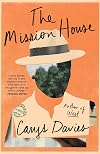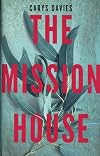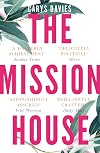
The Mission House
by Carys Davies
On This Page
Description
From the multiple award-winning author of West and The Redemption of Galen Pike, a captivating and propulsive novel following an Englishman seeking refuge in a remote hill town in India who finds himself caught in the crossfire of local tensions and violence. Fleeing his demons and the dark undercurrents of contemporary life in the UK, Hilary Byrd takes refuge in a former British hill station in South India. Charmed by the foreignness of his new surroundings and by the familiarity of show more everything the British have left behind, he finds solace in life's simple pleasures, travelling by rickshaw around the small town with his driver Jamshed and staying in a mission house beside the local presbytery where the Padre and his adoptive daughter Priscilla have taken Hilary under their wing. The Padre is concerned for Priscilla's future, and as Hilary's friendship with the young woman grows, he begins to wonder whether his purpose lies in this new relationship. But religious tensions are brewing and the mission house may not be the safe haven it seems. The Mission House boldly and imaginatively explores post-colonial ideas in a world fractured between faith and non-belief, young and old, imperial past and nationalistic present. Tenderly subversive and meticulously crafted, it is a deeply human story of the wonders and terrors of connection in a modern world. show lessTags
Recommendations















Member Reviews
Rating: 4* of five
The Publisher Says: In The Mission House, Hilary Byrd flees his demons and the dark undercurrents of contemporary life in England for a former British hill station in south India. Charmed by the foreignness of his new surroundings and by the familiarity of everything the British have left behind, he finds solace in life’s simple pleasures, travelling by rickshaw around the small town with his driver Jamshed and staying in a mission house beside the local presbytery where, after a chance meeting, the Padre and his adoptive daughter Priscilla take Hilary under their wing.
The Padre is concerned for Priscilla’s future, and as Hilary’s friendship with the young woman grows, he begins to wonder whether his purpose lies show more in this new relationship. But religious tensions are brewing and the mission house may not be the safe haven it seems
I RECEIVED A DRC FROM THE PUBLISHER VIA NETGALLEY. THANK YOU.
My Review: Hilary Byrd is coming unglued. He's in the early stages of a mental breakdown, he's fast departing the middle-aged years with their gradual loss of the pleasant illusion of a limitless future, and he's at odds with modern England at every turn. His rock of a sister can't seem to save him from this sense of being cut off, so for once in his life he takes a decision. He decides, about his own life's direction, that he will go Find Himself in India.
She disapproves of this, really for quite sensible reasons, but the time to be sensible is past.
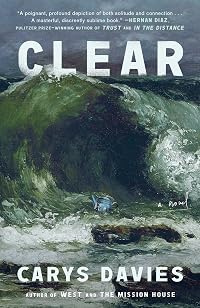
I was ready, at that point, to stop reading for good. After all, I liked—a lot—but didn't love Author Carys's novella West, with its gorgeous sentences and its superbly concentrated plotting. I thought this read would be a similar exercise. So I put it down at this rather mundane point, and didn't pick it up until I read this year's glorious paean to Love, and lovingkindness, Clear.
This turbocharged my willingness to look further into this take on self-discovery through travel to "exotic" locale...a drearily bourgeois genre that I really, really do not like. Elizabeth Gilbert and Peter Mayles ruined it for me with their icky Othering search for "Authenticity" which comes across to me in this elder stage of my life as "authentoxicity." I am shocked at anyone, in the twenty-first century, who can make it all the way through a story like those without thinking, "interrogate your privilege, or at the very least recognize it!" That is, of course, the person of the Twenties talking to people of the Nineties...societal advances do not travel against time's arrow.
But this story isn't of its time...its time is now...nor is it about another time, it's set now. Just not here. Ooty, the old British "hill station" where the book is set, is in South India. Are your feelies itching as much as mine right now? I mean...hill station! That really übercolonial concept of "place the colonizers go to escape the commonfolk when it gets too hot." And a British guy rents a mission house, where the imperialists of the spirit retired from their efforts to screw up the indigenous population's relationship to their own souls with the caustic bleach of christiainty!
The icks are building steadily.
This, then, was not the most satifying of follow-up reads to my joyously absorbed Clear. I'm not revealing my dark corners when I say that all things christian leave me coldly hostile. Hilary isn't much of a christian, demonstrating a glancing awareness of but no familiarity with the mythos. His occupancy of a younger colonialist man's living quarters that were built as, and still serve as, a locus for slopping this terrible blighting thought pollution all over poor India (which, not coincidentally, has its own history of exporting religious intolerance). That young man's rush home to Canada is, permaybehaps, intended to serve as a kind of Divine Will's invitation for void-of-course Hilary to come be a white savior. I got that vibe as his relationship with Priscilla deepened, mostly because of "the Padre," who I took against from giddy-up to whoa.
Nonetheless, I can say that my tonal twangs where I was likely meant to thrum instead, were idiosyncratic to me. I think a person less repulsed by christian overtones might not even see them in this story. My discomfort with the ableist misogyny, the colonialist-Finding-Himself in the former colony, and that really terrible Padre, means all my stars are for the beautiful sentences, unfolded with the inevitability of flower petals obeying Bernoulli's spiral.
Not my most resounding recommendation, I fear. show less
The Publisher Says: In The Mission House, Hilary Byrd flees his demons and the dark undercurrents of contemporary life in England for a former British hill station in south India. Charmed by the foreignness of his new surroundings and by the familiarity of everything the British have left behind, he finds solace in life’s simple pleasures, travelling by rickshaw around the small town with his driver Jamshed and staying in a mission house beside the local presbytery where, after a chance meeting, the Padre and his adoptive daughter Priscilla take Hilary under their wing.
The Padre is concerned for Priscilla’s future, and as Hilary’s friendship with the young woman grows, he begins to wonder whether his purpose lies show more in this new relationship. But religious tensions are brewing and the mission house may not be the safe haven it seems
I RECEIVED A DRC FROM THE PUBLISHER VIA NETGALLEY. THANK YOU.
My Review: Hilary Byrd is coming unglued. He's in the early stages of a mental breakdown, he's fast departing the middle-aged years with their gradual loss of the pleasant illusion of a limitless future, and he's at odds with modern England at every turn. His rock of a sister can't seem to save him from this sense of being cut off, so for once in his life he takes a decision. He decides, about his own life's direction, that he will go Find Himself in India.
She disapproves of this, really for quite sensible reasons, but the time to be sensible is past.
I was ready, at that point, to stop reading for good. After all, I liked—a lot—but didn't love Author Carys's novella West, with its gorgeous sentences and its superbly concentrated plotting. I thought this read would be a similar exercise. So I put it down at this rather mundane point, and didn't pick it up until I read this year's glorious paean to Love, and lovingkindness, Clear.
This turbocharged my willingness to look further into this take on self-discovery through travel to "exotic" locale...a drearily bourgeois genre that I really, really do not like. Elizabeth Gilbert and Peter Mayles ruined it for me with their icky Othering search for "Authenticity" which comes across to me in this elder stage of my life as "authentoxicity." I am shocked at anyone, in the twenty-first century, who can make it all the way through a story like those without thinking, "interrogate your privilege, or at the very least recognize it!" That is, of course, the person of the Twenties talking to people of the Nineties...societal advances do not travel against time's arrow.
But this story isn't of its time...its time is now...nor is it about another time, it's set now. Just not here. Ooty, the old British "hill station" where the book is set, is in South India. Are your feelies itching as much as mine right now? I mean...hill station! That really übercolonial concept of "place the colonizers go to escape the commonfolk when it gets too hot." And a British guy rents a mission house, where the imperialists of the spirit retired from their efforts to screw up the indigenous population's relationship to their own souls with the caustic bleach of christiainty!
The icks are building steadily.
This, then, was not the most satifying of follow-up reads to my joyously absorbed Clear. I'm not revealing my dark corners when I say that all things christian leave me coldly hostile. Hilary isn't much of a christian, demonstrating a glancing awareness of but no familiarity with the mythos. His occupancy of a younger colonialist man's living quarters that were built as, and still serve as, a locus for slopping this terrible blighting thought pollution all over poor India (which, not coincidentally, has its own history of exporting religious intolerance). That young man's rush home to Canada is, permaybehaps, intended to serve as a kind of Divine Will's invitation for void-of-course Hilary to come be a white savior. I got that vibe as his relationship with Priscilla deepened, mostly because of "the Padre," who I took against from giddy-up to whoa.
Nonetheless, I can say that my tonal twangs where I was likely meant to thrum instead, were idiosyncratic to me. I think a person less repulsed by christian overtones might not even see them in this story. My discomfort with the ableist misogyny, the colonialist-Finding-Himself in the former colony, and that really terrible Padre, means all my stars are for the beautiful sentences, unfolded with the inevitability of flower petals obeying Bernoulli's spiral.
Not my most resounding recommendation, I fear. show less
Transformation comes in many forms. For Hilary Byrd, it begins when he reaches the high hills in India where an old mission house will become his lodging for a time. Life in Petts Wood, UK, has been a disappointment. As has he, he imagines. But others are also in the process of transformation. His auto-rickshaw driver’s nephew, Ravi, is transforming himself into a country and western singer, one piece of apparel at a time. And malformed Priscilla, who is missing her thumbs and has one leg shorter than the other, is becoming someone desirable and desired, and possibly also a country and western singer. But more things are changing than any of them know and even if transubstantiation is not an option, there are still opportunities for show more sacrifice.
Carys Davies writes of a modern India that has been utterly shaped over decades more than two centuries earlier by the British. It too is now misshapen , so much so that even plant species commonly thought to be native (e.g. eucalyptus) are in fact merely an invasive species which sprouted from seeds inadvertently carried in a soldier’s backpack. Davies writes beautifully. So much so, that even if the central figures and locale of the story are not of immediate interest, you will find yourself swept along.
Gently recommended. show less
Carys Davies writes of a modern India that has been utterly shaped over decades more than two centuries earlier by the British. It too is now misshapen , so much so that even plant species commonly thought to be native (e.g. eucalyptus) are in fact merely an invasive species which sprouted from seeds inadvertently carried in a soldier’s backpack. Davies writes beautifully. So much so, that even if the central figures and locale of the story are not of immediate interest, you will find yourself swept along.
Gently recommended. show less
"What was it, exactly, that he liked so much? Was it because it had an aura of home, or because it felt completely strange and new?"~from The Mission House by Carys Davies
I enjoyed Carys Davies last novel West so immediately requested his new novel The Mission House.
Hillary Byrd was no longer comfortable in a changed England and sought escape by traveling to India. He was still miserable until he learned about the beautiful climate of the hills. He rents the house of a missionary on leave and discovers the village has all the comforts he requires, the legacy of the British army. For the first time in years he was content.
His host, a padre, has taken in a young woman, Priscilla, and asks Byrd to help polish her education to fit her for show more marriage. While teaching her English and sewing and baking, Byrd is drawn to her. The padre despairs for her future after he is gone and seeks a husband. Byrd is jealous.
Priscilla may be deformed and dependent, but she has dreams and is determined to make her own future.
Byrd can't escape the tribalism running rampant in the world, people "wanting to be surrounded only by people who were the same as they were," seeking an imaginary ideal past. He left it behind in England only to fatally discover it alive in India.
Byrd is condescending toward the natives; even his love for Priscilla is a parable of colonialism. Byrd uses his dedicated native driver thoughtlessly, spilling out his thoughts and grievances on their daily jaunts, but he never sees the man as a person. The ending is both ironic and tragic, Byrd's last action misguided but noble.
The novel wields a big impact in 272 pages. The writing is quiet and introspective, but there is a powerful story here.
I received a free galley from the publisher through NetGalley. My review is fair and unbiased. show less
I enjoyed Carys Davies last novel West so immediately requested his new novel The Mission House.
Hillary Byrd was no longer comfortable in a changed England and sought escape by traveling to India. He was still miserable until he learned about the beautiful climate of the hills. He rents the house of a missionary on leave and discovers the village has all the comforts he requires, the legacy of the British army. For the first time in years he was content.
His host, a padre, has taken in a young woman, Priscilla, and asks Byrd to help polish her education to fit her for show more marriage. While teaching her English and sewing and baking, Byrd is drawn to her. The padre despairs for her future after he is gone and seeks a husband. Byrd is jealous.
Priscilla may be deformed and dependent, but she has dreams and is determined to make her own future.
Byrd can't escape the tribalism running rampant in the world, people "wanting to be surrounded only by people who were the same as they were," seeking an imaginary ideal past. He left it behind in England only to fatally discover it alive in India.
Byrd is condescending toward the natives; even his love for Priscilla is a parable of colonialism. Byrd uses his dedicated native driver thoughtlessly, spilling out his thoughts and grievances on their daily jaunts, but he never sees the man as a person. The ending is both ironic and tragic, Byrd's last action misguided but noble.
The novel wields a big impact in 272 pages. The writing is quiet and introspective, but there is a powerful story here.
I received a free galley from the publisher through NetGalley. My review is fair and unbiased. show less
The Mission House by Carys Davis
Narrated by James Langton.
Hilary Byrd is a nice elderly gentle man from Petts Wood, UK. It is the first half of the 21st century and he’s come to India to escape his depression. Like so many westerners before him, travelers, hippies and modern tourists, expecting a miracle somehow; envisioning India as something it is not.
We find Hilary Byrd in a mountain village in southern India where he’s staying in the house of the local Padre who has kindly taken him in. Here he is sitting in the house of an Australian woman at a Bible study.
Thackeray had been reading. The world was created, the Earth and the Heavens and the Garden of Eden. Adam and from Adam’s rib Eve. The serpent have been and gone and now show more Adam in the voice of Stephen Thakeray was explaining to God why he had eaten of the Tree of Knowledge of Good and Evil. Adam in the voice of Stephen Thackeray was telling God the woman made him do it. There was a brief pause during which the headmaster glanced at his wife and looked afraid as if stealing himself for an attack from her corner of the sofa.
At first glance the book could be read as an E M Forester’s Passage to India a hundred years on, but Davies’ The Mission House is more subtle. Though it too encompasses the ignored (by the British) impossibility of coexistence of conquered and conquered, her tale is told from viewpoints of individuals from both groups.
The Mission House starts gently, and I found the first chapters reminiscent of R K Naryan’s stories of Indian everyday life. Eighty yeas and two cultures lie between the two writers, but there’s a timeless quality in the descriptions of comings and goings of small-town Indian life, and of the inevitable culture clash that occurs when East meets West. A clash that continues unacknowledged by foreigners to the country.
A third way through the book we see Byrd is in trouble. Sexless and godless through out his longe life, he suddenly falls for the local Padre’s niece, Priscilla. She’s decades younger and her marriage is being organized Indian style by her uncle.
Upon finding that Pricilla is a Christian Byrd joins the Padre’s church and starts attending services and Bible studies. He tries to woo young Priscilla, teaching her to write and to make English cakes. He wonders about himself, even his appearance, his pathetic lie of being a Christian, and confides his thoughts to another older man Jamshed, his auto-rickshaw driver.
Jamshed has a nephew, Ravi a young barber who wants to be a Country and Western star. As the story evolves life seems peaceful. The locals know there are riots and violence in the cities but feel they are safe in their little town in the mountains.
Jamshed is mystified by Byrd’s behavior which changes after he discovers love. He spends his evenings writing down the feelings Byrd has confided to him. He believes Byrd is his friend. Byrd doesn’t give Jamshed a second thought. Ravi and Priscilla fall in love and hide their feelings from the Padre who is looking for a suitable match for Priscilla. There are rumors of a group of anti-Westerners coming to town.
Byrd is a lost man, knowing little about India. He reads a pamphlet on the origin of rickshaws; he is shocked to find the eucalyptus trees he’s been gazing at wonder at are not native to India but brought to India by an Australian soldier during WW1. He can’t understand the internet. He is a man out of his time.
Something is going to happen. It will be described, understated like the rest of Carys Davies’ writing. But even high- up villages are not immune to the happenings in the rest of the world.
As another reviewer commented, gently recommended. show less
Narrated by James Langton.
Hilary Byrd is a nice elderly gentle man from Petts Wood, UK. It is the first half of the 21st century and he’s come to India to escape his depression. Like so many westerners before him, travelers, hippies and modern tourists, expecting a miracle somehow; envisioning India as something it is not.
We find Hilary Byrd in a mountain village in southern India where he’s staying in the house of the local Padre who has kindly taken him in. Here he is sitting in the house of an Australian woman at a Bible study.
Thackeray had been reading. The world was created, the Earth and the Heavens and the Garden of Eden. Adam and from Adam’s rib Eve. The serpent have been and gone and now show more Adam in the voice of Stephen Thakeray was explaining to God why he had eaten of the Tree of Knowledge of Good and Evil. Adam in the voice of Stephen Thackeray was telling God the woman made him do it. There was a brief pause during which the headmaster glanced at his wife and looked afraid as if stealing himself for an attack from her corner of the sofa.
At first glance the book could be read as an E M Forester’s Passage to India a hundred years on, but Davies’ The Mission House is more subtle. Though it too encompasses the ignored (by the British) impossibility of coexistence of conquered and conquered, her tale is told from viewpoints of individuals from both groups.
The Mission House starts gently, and I found the first chapters reminiscent of R K Naryan’s stories of Indian everyday life. Eighty yeas and two cultures lie between the two writers, but there’s a timeless quality in the descriptions of comings and goings of small-town Indian life, and of the inevitable culture clash that occurs when East meets West. A clash that continues unacknowledged by foreigners to the country.
A third way through the book we see Byrd is in trouble. Sexless and godless through out his longe life, he suddenly falls for the local Padre’s niece, Priscilla. She’s decades younger and her marriage is being organized Indian style by her uncle.
Upon finding that Pricilla is a Christian Byrd joins the Padre’s church and starts attending services and Bible studies. He tries to woo young Priscilla, teaching her to write and to make English cakes. He wonders about himself, even his appearance, his pathetic lie of being a Christian, and confides his thoughts to another older man Jamshed, his auto-rickshaw driver.
Jamshed has a nephew, Ravi a young barber who wants to be a Country and Western star. As the story evolves life seems peaceful. The locals know there are riots and violence in the cities but feel they are safe in their little town in the mountains.
Jamshed is mystified by Byrd’s behavior which changes after he discovers love. He spends his evenings writing down the feelings Byrd has confided to him. He believes Byrd is his friend. Byrd doesn’t give Jamshed a second thought. Ravi and Priscilla fall in love and hide their feelings from the Padre who is looking for a suitable match for Priscilla. There are rumors of a group of anti-Westerners coming to town.
Byrd is a lost man, knowing little about India. He reads a pamphlet on the origin of rickshaws; he is shocked to find the eucalyptus trees he’s been gazing at wonder at are not native to India but brought to India by an Australian soldier during WW1. He can’t understand the internet. He is a man out of his time.
Something is going to happen. It will be described, understated like the rest of Carys Davies’ writing. But even high- up villages are not immune to the happenings in the rest of the world.
As another reviewer commented, gently recommended. show less
Neat little novel set in an old British hill station in the Nilgiri hills of Tamil Nadu, involving a 50-odd years old burnt-out British bachelor and former librarian, who mis-reads the generous hospitality of an Indian priest and his adopted handicapped daughter.
In this slow burner, the Britisher Byrd, grows fond of the girl, teaching her sewing, reading and baking. Once he has fallen in love with her, the old priest announces he has found a suitable partner for her – the previous occupant of the mission house, a young Canadian missionary. Disappointed Byrd decides to return to good old Blighty and give up on life. But then a freak, Modi style, incident occurs, and the novel achieves its climax. The girl elopes with a boy who sings show more Westerns, on his horse. The Canadian missionary decides to abort his flight back to India, thus evading marriage out of pious pity. And a bunch of Hindu fundies butchers Byrd to death mistaking him for the Canadian missionary.
Byrd exemplifies the old fashioned, gallant colonial gaze, misinterpreting the new violence-fraught Indian society, seeking the ‘purity’ that Modi could not impose as a gang leader, but can indirectly put in motion by spreading a toxic mix of violence and populism married with some misinformed historical Hindu revisionism. The innocent auto rikshaw driver, Jamshed, loses both his stalwart client and his odd-ball nephew. show less
In this slow burner, the Britisher Byrd, grows fond of the girl, teaching her sewing, reading and baking. Once he has fallen in love with her, the old priest announces he has found a suitable partner for her – the previous occupant of the mission house, a young Canadian missionary. Disappointed Byrd decides to return to good old Blighty and give up on life. But then a freak, Modi style, incident occurs, and the novel achieves its climax. The girl elopes with a boy who sings show more Westerns, on his horse. The Canadian missionary decides to abort his flight back to India, thus evading marriage out of pious pity. And a bunch of Hindu fundies butchers Byrd to death mistaking him for the Canadian missionary.
Byrd exemplifies the old fashioned, gallant colonial gaze, misinterpreting the new violence-fraught Indian society, seeking the ‘purity’ that Modi could not impose as a gang leader, but can indirectly put in motion by spreading a toxic mix of violence and populism married with some misinformed historical Hindu revisionism. The innocent auto rikshaw driver, Jamshed, loses both his stalwart client and his odd-ball nephew. show less
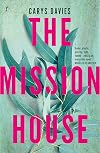
t first glance, the cover design for the Australian edition of Welsh author Carys Davies doesn't seem to have anything to do with The Mission House. But it does: those eucalyptus leaves symbolise the ubiquity of things — and people — that are out of place. Just like the central character in the novel when he notices that these leaves are everywhere in the Indian town where he has sought refuge. Hilary Byrd feels out of place in the modern world, but postcolonial India isn't a place for him either.
Hilary Byrd is a quiet, gentle and shy man, a librarian who hasn't adapted to the way libraries have morphed into places not primarily for reading. They are now community places where books and reading are only a part of what's on offer. show more There was a child performing an on-again/off-again tantrum in my library yesterday, and I went out of my way to be friendly to the young mum not coping very well with two kids under four because I guessed she was feeling that she was being judged. But it was easy for me. I was out of there in five minutes. Some librarians have to put up with this kind of bratty behaviour all day, every day. And then there's the awful rudeness, foul language and abuse of people who don't respect the fact that they are in a shared space, as depicted in The Mission House. The modern world of entitlement is no place for a gentle soul like Hilary Byrd.
Gradually it is revealed that Hilary Byrd descended into deep depression, from which his loving sister Wyn has rescued him more than once, but his impulsive flight to India has put him out of her reach. There he is rescued from confusion and doubt and running out of money by the Christian Padre who lets him stay in a room vacated by the young missionary who was supposed to replace him. And then, after a fall in the town, Hilary is rescued again by Jamshed, an auto-rickshaw driver who becomes a patient listener to Hilary's anxieties while driving him around the town each day.
At page 30, the author signals that Ooty, a hill station in South India, is not going to be the safe haven that Hilary craves.
To read the rest of my review please visit https://anzlitlovers.com/2023/03/30/the-mission-house-2020-by-carys-davies/ show less
Hilary Byrd is a quiet, gentle and shy man, a librarian who hasn't adapted to the way libraries have morphed into places not primarily for reading. They are now community places where books and reading are only a part of what's on offer. show more There was a child performing an on-again/off-again tantrum in my library yesterday, and I went out of my way to be friendly to the young mum not coping very well with two kids under four because I guessed she was feeling that she was being judged. But it was easy for me. I was out of there in five minutes. Some librarians have to put up with this kind of bratty behaviour all day, every day. And then there's the awful rudeness, foul language and abuse of people who don't respect the fact that they are in a shared space, as depicted in The Mission House. The modern world of entitlement is no place for a gentle soul like Hilary Byrd.
Gradually it is revealed that Hilary Byrd descended into deep depression, from which his loving sister Wyn has rescued him more than once, but his impulsive flight to India has put him out of her reach. There he is rescued from confusion and doubt and running out of money by the Christian Padre who lets him stay in a room vacated by the young missionary who was supposed to replace him. And then, after a fall in the town, Hilary is rescued again by Jamshed, an auto-rickshaw driver who becomes a patient listener to Hilary's anxieties while driving him around the town each day.
At page 30, the author signals that Ooty, a hill station in South India, is not going to be the safe haven that Hilary craves.
In due course, the old driver, Jamshed, will be questioned about the tall tourist, Mr Hilary Byrd.
In a leaf-green room with a small high window and a broken electric heater he will sit for hours during the investigation on a moulded plastic chair and tell the brown-uniformed policeman that looking at the tall Englishman that first day at the terminus, he had seen only money.
Money so that the tank of his auto could always be full, so he did not have to beg his customers for a 100 rupee note when they'd barely set off so that he could call at the Bharat Petroleum Station to buy fuel for his empty tank. Money for a pair of shoes which matched. Money for his nephew's crazy costume.
'Don't leave anything out,' the policeman will say and the old man will nod. Even though there are certain details, now, that do not seem important. (p. 30)
To read the rest of my review please visit https://anzlitlovers.com/2023/03/30/the-mission-house-2020-by-carys-davies/ show less
As soon as I put this book down, I ran over to the library to take out this author's first book, "West". "The Mission House" was like a fairy tale, with both tragedy and comedy. The wonderful cast of misfits found a lasting place in my heart. The low-key atmosphere with the hints of what was to come was completely addictive. Will long remember this one.
Most highly recommended.
Most highly recommended.
Members
- Recently Added By
Lists

Anticipated 2021 Reads
231 works; 7 members

BBC Radio 4 Bookclub
341 works; 13 members

Books Read in 2025
4,091 works; 97 members
Author Information

Some Editions
Awards and Honors
Common Knowledge
- Original publication date
- 2020
Classifications
Statistics
- Members
- 150
- Popularity
- 218,480
- Reviews
- 11
- Rating
- (3.84)
- Languages
- Dutch, English
- Media
- Paper, Audiobook, Ebook
- ISBNs
- 15
- ASINs
- 3