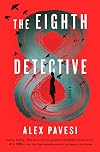
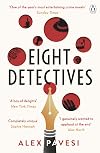
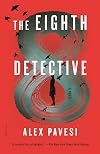
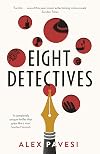
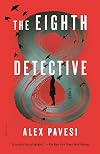
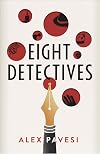
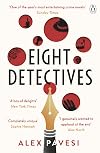
The Eighth Detective: A Novel
by Alex Pavesi
On This Page
Description
"There are rules for murder mysteries. There must be a victim. A suspect. A detective. The rest is just shuffling the sequence. Expanding the permutations. Grant McAllister, a professor of mathematics, once sat down and worked them all out - calculating the different orders and possibilities of a mystery into seven perfect detective stories he quietly published. But that was thirty years ago. Now Grant lives in seclusion on a remote Mediterranean island, counting the rest of his days. Until show more Julia Hart, a sharp, ambitious editor knocks on his door. Julia wishes to republish his book, and together they must revisit those old stories: an author hiding from his past, and an editor, keen to understand it. But there are things in the stories that don't add up. Inconsistencies left by Grant that a sharp-eyed editor begins to suspect are more than mistakes. They may be clues, and Julia finds herself with a mystery of her own to solve. THE EIGHTH DETECTIVE is a cerebral, inventive novel with a modern twist, where nothing is what it seems, and proof that the best mysteries break all the rules"-- show lessTags
Recommendations










Member Reviews
Alex Pavesi's The Eighth Detective is an homage to the classic detective story, and I enjoyed every bit of it. Each of the seven stories is a winner, and when Julia began dissecting them, forgive me if I was rather pleased with myself that the same things that puzzled me were the inconsistencies that she'd found.
But it's not just the stories that held my interest throughout the book. The characters of Grant and Julia did as well. It didn't take me long before I had a list of questions about them. Why was Grant tucked away on such a remote island? Why was it so important that Julia track him down, and surely it was more than her job as an editor that kept her picking away at each tiny item in the stories that didn't make sense to her. show more Between the stories and the dynamics between Julia and Grant, my mind was very happily occupied, and I loved the twist at the end.
In the mood for puzzles? The Eighth Detective will serve up plenty of them on a silver platter. Enjoy them if you dare! show less
But it's not just the stories that held my interest throughout the book. The characters of Grant and Julia did as well. It didn't take me long before I had a list of questions about them. Why was Grant tucked away on such a remote island? Why was it so important that Julia track him down, and surely it was more than her job as an editor that kept her picking away at each tiny item in the stories that didn't make sense to her. show more Between the stories and the dynamics between Julia and Grant, my mind was very happily occupied, and I loved the twist at the end.
In the mood for puzzles? The Eighth Detective will serve up plenty of them on a silver platter. Enjoy them if you dare! show less
My favorite mystery/detective story of 2020!
A publishing agent has discovered a long-forgotten book of short mystery stories. She visits the reclusive author on his Caribbean island hideaway to attempt to convince him to republish them.
The author, Grant McAllister, was a well-known mathematician who conceived of writing mysteries by reducing and intertwining their components as four groups: victim(s), suspects, detective(s), and murderer(s). His stories then illustrate the permutations of this; how few groups can there be and still have a murder mystery? For example, a detective could be the murderer and may or may not be one of the suspects. If the victim is also the killer, can you have anything besides a tale of suicide?
At first show more glance, this may appear to be a collection of short stories; but there are many secrets in this novel. Each of the stories turn into something else, as do the lives of both the author and the publishing agent. And then the whole turns into something completely other.
Twisty, twisty, turny and the most original mystery I’ve read in a long time. I did not see the ending coming! show less
A publishing agent has discovered a long-forgotten book of short mystery stories. She visits the reclusive author on his Caribbean island hideaway to attempt to convince him to republish them.
The author, Grant McAllister, was a well-known mathematician who conceived of writing mysteries by reducing and intertwining their components as four groups: victim(s), suspects, detective(s), and murderer(s). His stories then illustrate the permutations of this; how few groups can there be and still have a murder mystery? For example, a detective could be the murderer and may or may not be one of the suspects. If the victim is also the killer, can you have anything besides a tale of suicide?
At first show more glance, this may appear to be a collection of short stories; but there are many secrets in this novel. Each of the stories turn into something else, as do the lives of both the author and the publishing agent. And then the whole turns into something completely other.
Twisty, twisty, turny and the most original mystery I’ve read in a long time. I did not see the ending coming! show less
Metafiction about mystery stories. Publisher goes to a remote island to visit the author of a small run, out-of-print collection of mystery stories that demonstrate mathematical characteristics of such. Mostly sets, subsets, variations on. Each story they read & discuss illustrates a variation: eg suspects are all killers, only two killers, and so on.)
Contains some spoilers:
The book is a bit plodding but the pay-off is the ending where we find out that the publisher doesn’t believe that the man she is speaking to is the author and has verified this all along by changing the endings of the stories. She then provides the originals. It’s very interesting to see more than one possible solution to a set of circumstances. Shades of show more Anthony Berkeley Cox! There is an additional extra twist as to the authorship of the stories.
Pg. 263 "'The craft, then, is the misdirection: in picking the solution that in some ways seems most unsuitable to the story you’ve written, but in other ways fits perfectly.'
'Yes', Grant said. 'And that is what differentiates a murder mystery from any other story with a surprise at the end. The possibilities are presented to the reader up front. The ending just comes back and points to one of them.'" show less
Contains some spoilers:
The book is a bit plodding but the pay-off is the ending where we find out that the publisher doesn’t believe that the man she is speaking to is the author and has verified this all along by changing the endings of the stories. She then provides the originals. It’s very interesting to see more than one possible solution to a set of circumstances. Shades of show more Anthony Berkeley Cox! There is an additional extra twist as to the authorship of the stories.
Pg. 263 "'The craft, then, is the misdirection: in picking the solution that in some ways seems most unsuitable to the story you’ve written, but in other ways fits perfectly.'
'Yes', Grant said. 'And that is what differentiates a murder mystery from any other story with a surprise at the end. The possibilities are presented to the reader up front. The ending just comes back and points to one of them.'" show less
This was really a fascinating novel, dissecting murder mysteries into what essentially are Venn diagrams. The novels presents 7 cases, each written years ago by a mathematician, who has trimmed the tale of murder into a formula of number of detectives, suspects, killers, and victims. In his later years, he is visited on the Mediterranean island where he now lives, by a young woman who is an editor for a publisher who wishes to print the stories as a book. Together, they review each of the stories, examine the applications of a formula, and discuss inconsistencies found in each. The last bit of the book, after the stories are all read, really took me by surprise for several reasons (not discussed here) but it was a fun ride.
Seven Twisty Shorts Wrapped-Up as a Novel
Review of the Penguin Audio audiobook edition (August 2020)
This was very cleverly done. The premise is that a present-day editor is preparing a reissue edition of an recluse writer's single book of mystery stories that was issued long ago. For this purpose she meets the writer at his island retreat and they examine each story with a view to making edits and corrections as necessary and in order for the editor to obtain background.
The book alternates with readings of the 7 stories followed by discussions between the writer and editor. During the readings it becomes evident that there are embedded contradictions or mis-directions inside each story that may be leading to some sort of secret show more revelation. The stories themselves are built on mathematical permutations on the number of detectives, suspects and victims involved. In the end, it is the editor as the "Eighth Detective" who is called on to solve the mystery that explains the apparent contradictions. Saying much more would be a spoiler.
I listened to the audiobook edition which did make it difficult to spot the story contradictions as they occurred during the story readings. This may have been different if I had had the benefit of the visual memory of reading the words. This did not detract from my enjoyment and appreciation of the clever design of this unique crime novel.
The narration by Emilia Fox in all voices was excellent. show less
Review of the Penguin Audio audiobook edition (August 2020)
This was very cleverly done. The premise is that a present-day editor is preparing a reissue edition of an recluse writer's single book of mystery stories that was issued long ago. For this purpose she meets the writer at his island retreat and they examine each story with a view to making edits and corrections as necessary and in order for the editor to obtain background.
The book alternates with readings of the 7 stories followed by discussions between the writer and editor. During the readings it becomes evident that there are embedded contradictions or mis-directions inside each story that may be leading to some sort of secret show more revelation. The stories themselves are built on mathematical permutations on the number of detectives, suspects and victims involved. In the end, it is the editor as the "Eighth Detective" who is called on to solve the mystery that explains the apparent contradictions. Saying much more would be a spoiler.
I listened to the audiobook edition which did make it difficult to spot the story contradictions as they occurred during the story readings. This may have been different if I had had the benefit of the visual memory of reading the words. This did not detract from my enjoyment and appreciation of the clever design of this unique crime novel.
The narration by Emilia Fox in all voices was excellent. show less
"The Eighth Detective," by Alex Pavesi, is, in part, an analysis of the mystery genre using mathematical principles. The author draws us in by presenting seven self-contained stories, each of which is a homage to the classic detective tales of yesteryear. Julia Hart, a book editor, travels to a remote Mediterranean island to meet with elderly mathematician Grant McAllister. More than twenty-five years earlier, he published a collection of stories that sold few copies. Hart says that her boss may be interested in re-releasing McAllister's book. She interviews Grant and goes over the manuscript with him to decide what changes may be needed prior to publication. Julia asks McAllister probing questions, but his responses are vague and show more evasive. She is especially interested in why he called his book "The White Murders," since this title brings to mind the unsolved slaying of a woman named Elizabeth White in 1940.
The individual mystery stories vary in quality, and after a while, it becomes difficult to keep track of the large cast of sleuths, victims, and suspects. After Julia reads each chapter, she discusses it with Grant and points out inconsistencies and anomalies—words and events that do not fit, but appear to have been inserted into the narrative for some enigmatic purpose. McAllister claims that he wrote "The White Murders" so long ago that he cannot recall exactly why he included the extraneous words and concepts that Julia brings to his attention.
Pavesi is a fine descriptive writer, but his dense plot is difficult to follow. Furthermore, most readers will be baffled by the mathematical concepts that Grant uses to explain how mysteries should be structured. Still, we are curious as to why Julia appears to be so hostile towards Grant. Does she suspect him of something? By the time we reach the last page, our assumptions have been upended and Pavesi has the last laugh at our expense. Although this cerebral and complicated novel spins off in dizzying directions, "The Eighth Detective" is original and colorful enough to please fans of perplexing brainteasers. show less
The individual mystery stories vary in quality, and after a while, it becomes difficult to keep track of the large cast of sleuths, victims, and suspects. After Julia reads each chapter, she discusses it with Grant and points out inconsistencies and anomalies—words and events that do not fit, but appear to have been inserted into the narrative for some enigmatic purpose. McAllister claims that he wrote "The White Murders" so long ago that he cannot recall exactly why he included the extraneous words and concepts that Julia brings to his attention.
Pavesi is a fine descriptive writer, but his dense plot is difficult to follow. Furthermore, most readers will be baffled by the mathematical concepts that Grant uses to explain how mysteries should be structured. Still, we are curious as to why Julia appears to be so hostile towards Grant. Does she suspect him of something? By the time we reach the last page, our assumptions have been upended and Pavesi has the last laugh at our expense. Although this cerebral and complicated novel spins off in dizzying directions, "The Eighth Detective" is original and colorful enough to please fans of perplexing brainteasers. show less
Reading The Eighth Detective (2020) by Alex Pavesi was a bit of a rollercoaster ride. It started promisingly, then got to the point where I thought I hated it, then became intriguing again, and ended with me contemplating re-reading the whole thing in light of knowing the ending. I didn’t do that, but I’m left feeling unsure how to characterize it.
The book is structured as a series of short mystery stories, purportedly written many years ago by a mathematician to prove his thesis that mysteries have a finite structure and can be reduced to just seven variations. Each of the seven stories in the collection are meant to illustrate one of the ways that the essential character types — victim(s), suspects, detective(s), and murderer(s) show more — can be mixed and matched. As the mathematician explains to Julia, the publisher who wants to sell a new edition of the stories:
Pavesi intersperses the seven short mysteries with chapters that recount conversations between Grant and Julia. She reads each story aloud to Grant and then they discuss it, with Julia pressing for explanations of inconsistencies she has noticed, and Grant playing coy about whether they are mistakes or deliberate. Those chapters also serve up another mystery: Why did this successful mathematician retreat to a Mediterranean island and become a virtual hermit? Why doesn’t he want to talk about his previous life?
I found the individual mysteries themselves mediocre at best, and for all I know that’s intentional on Pavesi’s part. After all, they are meant to have been written by a mathematician, not an experienced author. The more interesting bits are the dialogues between Grant and Julia as they discuss each of the stories within the framework of the seven possible permutations Grant originally devised. The mystery of Grant’s origins is probably what kept me reading to the end, just to find out why he was being so secretive. And the surprise twist-within-a-twist ending was clever, but I finished the book feeling a bit unfulfilled, like eating a rice cake when what you really want is a big bowl of ice cream.
But I know a fair number of people who enjoy thinking about how mystery writers structure their stories and would be intrigued by the idea that all mysteries can be reduced to a finite set of variations. Those folks might want to read samples of each supposed type along with an overarching mystery that promises a surprise. If that’s you, The Eighth Detective may be just what you were looking for. show less
The book is structured as a series of short mystery stories, purportedly written many years ago by a mathematician to prove his thesis that mysteries have a finite structure and can be reduced to just seven variations. Each of the seven stories in the collection are meant to illustrate one of the ways that the essential character types — victim(s), suspects, detective(s), and murderer(s) show more — can be mixed and matched. As the mathematician explains to Julia, the publisher who wants to sell a new edition of the stories:
“We mustn’t forget that the central purpose of a murder mystery is to give its readers a handful of suspects and the promise that in about a hundred pages one or more of them will be revealed as the murderers. That’s the beauty of the genre.”
Pavesi intersperses the seven short mysteries with chapters that recount conversations between Grant and Julia. She reads each story aloud to Grant and then they discuss it, with Julia pressing for explanations of inconsistencies she has noticed, and Grant playing coy about whether they are mistakes or deliberate. Those chapters also serve up another mystery: Why did this successful mathematician retreat to a Mediterranean island and become a virtual hermit? Why doesn’t he want to talk about his previous life?
I found the individual mysteries themselves mediocre at best, and for all I know that’s intentional on Pavesi’s part. After all, they are meant to have been written by a mathematician, not an experienced author. The more interesting bits are the dialogues between Grant and Julia as they discuss each of the stories within the framework of the seven possible permutations Grant originally devised. The mystery of Grant’s origins is probably what kept me reading to the end, just to find out why he was being so secretive. And the surprise twist-within-a-twist ending was clever, but I finished the book feeling a bit unfulfilled, like eating a rice cake when what you really want is a big bowl of ice cream.
But I know a fair number of people who enjoy thinking about how mystery writers structure their stories and would be intrigued by the idea that all mysteries can be reduced to a finite set of variations. Those folks might want to read samples of each supposed type along with an overarching mystery that promises a surprise. If that’s you, The Eighth Detective may be just what you were looking for. show less
Members
- Recently Added By
Lists

READ IN 2020
172 works; 1 member

Books Read in 2021
5,361 works; 114 members
Author Information
2 Works 892 Members
Some Editions
Awards and Honors
Awards
Distinctions
Common Knowledge
- Canonical title*
- Het achtste boek
- Original title
- Eight Detectives
- Alternate titles
- The Eighth Detective; Eight Detectives
- Original publication date
- 2020
- People/Characters
- Grant McAllister; Julia Hart
- First words
- The two suspects sat on mismatched furniture in the white and almost featureless lounge, waiting for something to happen.
- Last words
- (Click to show. Warning: May contain spoilers.)But in his soaked white suit he looked like a snowman, already starting to melt.
- Publisher's editor
- Melia, James; Richardson, Joel
- Blurbers
- Finn, A. J.; Land, Ali; North, Alex; Pearl, Matthew; Pinborough, Sarah
- Canonical DDC/MDS
- 823.92
- Canonical LCC
- PR6116.A94
*Some information comes from Common Knowledge in other languages. Click "Edit" for more information.
Classifications
Statistics
- Members
- 788
- Popularity
- 35,447
- Reviews
- 44
- Rating
- (3.33)
- Languages
- 7 — Dutch, English, French, Hungarian, Italian, Portuguese (Portugal), Turkish
- Media
- Paper, Audiobook, Ebook
- ISBNs
- 22
- ASINs
- 5