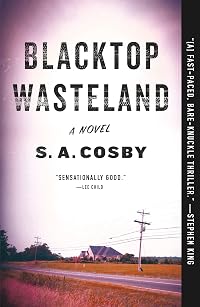
Blacktop Wasteland
by S. A. Cosby
On This Page
Description
"A gritty, voice-driven thriller about a former getaway driver who thought he had escaped the criminal life who is pulled back in by race, poverty, and his own former life of crime. Beauregard "Bug" Montage is a man with many different titles: husband, father, friend, honest car mechanic. But before he gave it up, Bug used to be known from the hills of North Carolina to the beaches of Florida as the best Wheel Man on the East Coast. After a series of financial calamities, Bug feels he has no show more choice but to take one final job as the getaway driver for a daring diamond heist that could solve all his money troubles and allow him to go straight once and for all. Like "Ocean's Eleven" meets "Drive" (but with a mostly black cast of characters), Blacktop Wasteland is a searing, operatic story of sons living up (or down) to their fathers; of a heist gone sideways; of a man ground down by economic desperation; of fast cars and daring chases and identity and love"-- show lessTags
Recommendations











Member Reviews
This definitely qualifies as hard-core crime.
Beauregard Montage (“Bug” for short) has had a career, like his father, of driving. Not taxicabs, buses, or race cars (although he does race his Plymouth Duster in street races for money). He’s a getaway driver, with a great reputation. He’s also a meticulous planner, for both the crime and the getaway, with a photographic memory. He’s got skills.
But he’s gone straight. He doesn’t want to live a replay of his father’s life. His father disappeared when he was growing up, leaving him with memories and mysteries. Bug doesn’t even know if his father is still alive.
So Bug went straight, and he’s trying to be a good husband and father to his wife and kids (including a daughter show more living with his ex). He wants his wife to have what his mother didn’t have — a husband and partner — and his kids to have the father he didn’t have.
He opened his own auto garage, repairing cars for his Red Hill County, Virginia neighbors. All the while he kept his father’s prized Plymouth Duster, modded out as an unbeatable street racing machine, especially with Bug’s skills as a driver.
The problem is that it’s all falling down around him. His mom’s nursing home bills, one daughter’s student loans, another’s upcoming college costs, . . . And his garage has a new competitor in town, one that is winning. He’s deep in the hole.
One thing he’s got going for him is his skills as a getaway driver. And his connections to people who could use him. That’s the temptation he gives in to, and then the hole he’s in just gets deeper and deeper and deeper. And, worst of all, he drags others in with him, including his best friend and partner and his sons.
How do you make a character who lies, steals, kills, and even tortures victims, and who jeopardizes his own family, a sympathetic character?
Well, you can start by making sure his opponents are the bad guys. But more than that, when the author builds the character’s background like Cosby does here, we see the character and his actions in the context of a life. Then it’s easier for us to let empathy go to work.
The less we know about a character, the less we can empathize — that’s pretty simple. That doesn’t mean that the more we know about a character the more we empathize —if the character is a product of a wealthy, privileged childhood and grows up to be a narcissistic, ego-driven nightmare of a person, we don’t empathize.
It’s the content not just the extent of what we know about him.
With Bug you get the desperation. And you get the temptation to think that if you can score one more time, a big enough score, you can pull everything together and get out. And then you get the frustration and the even deeper desperation when that one big score brings complications. Now you’re not out, you’re just deeper in, and worse, you’re dragging everyone you care about in with you.
He pulls it off (with his partners), not clean of course, but he pulls it off. You know there’s more, though — you’re only half way through the book, and besides, these kinds of stories just don’t have neat happy endings.
Bug’s partners are not of the honor-among-thieves types, although the loyalty of Bug’s friends provides both a sharp contrast and a kind of testament to the kind of person Bug would like to be.
One warning — this deserves an XBG rating, for extreme blood and guts. And even torture. The worst of it isn’t hidden behind a curtain, either. It’s right there on the page.
There are also some, to me anyway, over-the-top moments in Beauregard’s driving — special effects on paper. Not a major distraction, but a little bit of a detractor to me. I kind of like a very faint feel of the supernatural in a noirish story, but I’m not a fan of stunt-work.
Final tally for me — 4 stars. Compelling, hard, unrestrained story that’s more than just an entertaining crime story. Its themes of fatherhood and temptation bring it up a level. And very good, engaging writing. show less
Beauregard Montage (“Bug” for short) has had a career, like his father, of driving. Not taxicabs, buses, or race cars (although he does race his Plymouth Duster in street races for money). He’s a getaway driver, with a great reputation. He’s also a meticulous planner, for both the crime and the getaway, with a photographic memory. He’s got skills.
But he’s gone straight. He doesn’t want to live a replay of his father’s life. His father disappeared when he was growing up, leaving him with memories and mysteries. Bug doesn’t even know if his father is still alive.
So Bug went straight, and he’s trying to be a good husband and father to his wife and kids (including a daughter show more living with his ex). He wants his wife to have what his mother didn’t have — a husband and partner — and his kids to have the father he didn’t have.
He opened his own auto garage, repairing cars for his Red Hill County, Virginia neighbors. All the while he kept his father’s prized Plymouth Duster, modded out as an unbeatable street racing machine, especially with Bug’s skills as a driver.
The problem is that it’s all falling down around him. His mom’s nursing home bills, one daughter’s student loans, another’s upcoming college costs, . . . And his garage has a new competitor in town, one that is winning. He’s deep in the hole.
One thing he’s got going for him is his skills as a getaway driver. And his connections to people who could use him. That’s the temptation he gives in to, and then the hole he’s in just gets deeper and deeper and deeper. And, worst of all, he drags others in with him, including his best friend and partner and his sons.
How do you make a character who lies, steals, kills, and even tortures victims, and who jeopardizes his own family, a sympathetic character?
Well, you can start by making sure his opponents are the bad guys. But more than that, when the author builds the character’s background like Cosby does here, we see the character and his actions in the context of a life. Then it’s easier for us to let empathy go to work.
The less we know about a character, the less we can empathize — that’s pretty simple. That doesn’t mean that the more we know about a character the more we empathize —if the character is a product of a wealthy, privileged childhood and grows up to be a narcissistic, ego-driven nightmare of a person, we don’t empathize.
It’s the content not just the extent of what we know about him.
With Bug you get the desperation. And you get the temptation to think that if you can score one more time, a big enough score, you can pull everything together and get out. And then you get the frustration and the even deeper desperation when that one big score brings complications. Now you’re not out, you’re just deeper in, and worse, you’re dragging everyone you care about in with you.
He pulls it off (with his partners), not clean of course, but he pulls it off. You know there’s more, though — you’re only half way through the book, and besides, these kinds of stories just don’t have neat happy endings.
Bug’s partners are not of the honor-among-thieves types, although the loyalty of Bug’s friends provides both a sharp contrast and a kind of testament to the kind of person Bug would like to be.
One warning — this deserves an XBG rating, for extreme blood and guts. And even torture. The worst of it isn’t hidden behind a curtain, either. It’s right there on the page.
There are also some, to me anyway, over-the-top moments in Beauregard’s driving — special effects on paper. Not a major distraction, but a little bit of a detractor to me. I kind of like a very faint feel of the supernatural in a noirish story, but I’m not a fan of stunt-work.
Final tally for me — 4 stars. Compelling, hard, unrestrained story that’s more than just an entertaining crime story. Its themes of fatherhood and temptation bring it up a level. And very good, engaging writing. show less
What a phenomenal crime writer. With his own, fast-paced style, African American main characters, a Cosby thriller reads like a Coen brothers crime movie with the same type of quirky, flawed characters.
Central in this case is Bug, a capable car mechanic and speed-racer. The story opens with Bug and his best friend and workmate joining a street race to earn some money. They win the race but then two (fake) policemen pluck them, leaving them with no money at all. Bug, however, sees through the ploy and beats up the white guy who tempted them for a race, tracks him down, beats him up and recoups some of his money. This sets the tone – duplicitous characters, blatant southern racism (story is set in Virginia), and fast action combined show more with sudden bursts of extreme violence. In the end Bug is tempted to go for one final big hit (robbing some diamonds from a jewellery shop), but ends up sticking his nose in a high level crime network (the diamonds are part of the illegal stash of a network of pimps and drug traffickers). Nice twists and turns in the plot, plus a couple of white brothers, who are deeply flawed (duplicitous and dumb-fuck). Betrayal, loss of friends, neglect of family, it is all there. By the way ‘blacktop’ is an American word, meaning tarmac. show less
Central in this case is Bug, a capable car mechanic and speed-racer. The story opens with Bug and his best friend and workmate joining a street race to earn some money. They win the race but then two (fake) policemen pluck them, leaving them with no money at all. Bug, however, sees through the ploy and beats up the white guy who tempted them for a race, tracks him down, beats him up and recoups some of his money. This sets the tone – duplicitous characters, blatant southern racism (story is set in Virginia), and fast action combined show more with sudden bursts of extreme violence. In the end Bug is tempted to go for one final big hit (robbing some diamonds from a jewellery shop), but ends up sticking his nose in a high level crime network (the diamonds are part of the illegal stash of a network of pimps and drug traffickers). Nice twists and turns in the plot, plus a couple of white brothers, who are deeply flawed (duplicitous and dumb-fuck). Betrayal, loss of friends, neglect of family, it is all there. By the way ‘blacktop’ is an American word, meaning tarmac. show less
“Listen, when you’re a black man in America you live with the weight of people’s low expectations on your back every day. They can crush you right down to the goddamn ground. Think about it like it’s a race. Everybody else has a head start and you dragging those low expectations behind you. Choices give you freedom from those expectations. Allows you to cut ’em loose. Because that’s what freedom is. Being able to let things go. And nothing is more important than freedom. Nothing. You hear me, boy?” Beauregard said. Javon nodded his head. “Alright”.
Blacktop Wasteland is a scorching fast read from the get-go. It's a thriller, it's a crime novel, but what makes it stand out is its vignettes showing the effects of racism. show more Beauregard ("Bug") Montague is a black man who runs an auto repair garage and is trying to raise his family in Appalachia. A new competitor cuts into his business, and as the bills pile up and he needs to find money for his mother in a nursing home and for his daughter to go to college, he has a chance to change his fortune by using his extreme driving skills in a jewelry store heist.
It's about family, about being a better father than yours was, about pride and the fierce thrill of being an expert driver, and about a lot of Black Lives Matter issues being played out right now. Fasten your seatbelt and ride with Bug. This one delivers. show less
Blacktop Wasteland is a scorching fast read from the get-go. It's a thriller, it's a crime novel, but what makes it stand out is its vignettes showing the effects of racism. show more Beauregard ("Bug") Montague is a black man who runs an auto repair garage and is trying to raise his family in Appalachia. A new competitor cuts into his business, and as the bills pile up and he needs to find money for his mother in a nursing home and for his daughter to go to college, he has a chance to change his fortune by using his extreme driving skills in a jewelry store heist.
It's about family, about being a better father than yours was, about pride and the fierce thrill of being an expert driver, and about a lot of Black Lives Matter issues being played out right now. Fasten your seatbelt and ride with Bug. This one delivers. show less
This originally appeared at The Irresponsible Reader.
---
MEET MEAUREGARD MONTAGE
The secret ain't about the motor. That's part of i it, yeah, but that ain't the main thing. The real thing, the thing most people don't want to talk about, is how you drive. If you drive like you scared, you gonna lose. If you drive like you don’t want to have to rebuild the whole engine, you gonna lose. You gotta drive like don't nothing else matter except getting to that line. Drive like you fucking stole it.
Beauregard heard his Daddy's voice every time he drove the Duster.
The first thing we learn about Beauregard (nicknamed "Bug") is that he is both a great mechanic and a great driver. We see that at the start as he wins a street race to help pay his show more monthly bills. The second thing we learn is that he's capable and willing to give a man a beating—both efficient and effective—if he's crossed (read: cheated out of winnings).
Beauregard runs an auto-repair shop in a small Virginia town. He was doing okay for himself until a few months back when a new, better-financed shop opened up in town. Now he's losing customers by the handful, and may not be able to stay open for more than three months.
He's deeply and madly in love with his wife and is a devoted father to two great sons (one complaint—possibly my only one is that we don't get more time with the boys). But one of them needs braces. His wife works too hard, and he'd like to lighten her burden—and provide a nicer home. His daughter (from before he was married, and he never had any kind of custody) can't afford college and plans on working for a while before she can afford it (the reader knows, and I think Beauregard does, too, that she'll never make enough to get there). His mother's in a nursing home, and there's some sort of financial problem there, too.
He's got all that he needs, and it's all about to slip through his fingers.
THE "LIFE"
Beauregard thought about the clichéd scene in every crime movie where the main character who has gotten out of the “Life” buries his weapons under a hundred pounds of concrete only to have to dig them up when his enemies come knocking at his door.
He understood the appeal of the symbolism for filmmakers. It was just unrealistic. You were never out of the Life completely. You were always looking over your shoulder. You always kept a gun within reach, not buried under cement in your basement. Having a gun nearby was the only way you could pretend to relax.
It wasn't all that long ago that Bug* received the bulk of his income from illicit means. He was part of a crew, he was a wheelman for them—among other things. He's a meticulous planner, has an eidetic memory, and can do mental math at a speed I can only envy. He planned whatever the crew was going to do—and woe to anyone who did not stick with his plan to the T, or gave him bad information while planning.
* Beauregard tends to think of himself as "Bug" when he's thinking of the reckless, thrill-seeking lawbreaker side of him, and "Beauregard" when he's living the way he should. I'm following that.
But he decided he needed to be a better father than his own (who never left the Life and left home when it became too dangerous for him to stay). He's been living straight since then. He misses the rush, he misses the work—mostly the driving. But he has better things to focus on now, and he's largely successful.
But is he at the end of that? There are just too many things he needs to pay for and only so much money.
THE TEMPTATION OF BUG
One of his last jobs, before he went straight, was with Ronnie Sessions—he had an idea, Bug came up with the plan, did the elaborate work necessary to pull it off. And then because Ronnie had faulty intel for him, the job fell apart and Bug was out thousands in expenses—and he didn't get the payday. He hasn't seen Ronnie since.
But now Ronnie's back, at just the right time (or wrong, depending on how you look at it). He's got a juicier target. One that will erase most of Beauregard's immediate needs, and will make things more comfortable for a while into the future, too.
After some thinking, some waffling, (this isn't a spoiler, the book needs something like this), he agrees and takes over the operation.
CAR CHASES
I am not a car guy. I know almost nothing about cars, I can do basic maintenance (or I could a long time ago, I'm not sure I'm capable anymore). I'm an adequate driver. I can correctly identify maybe 40% of the cars I see on the road.
However. I am a red-blooded American male. I love car chase/driving scenes.* Like in Blues Brothers, half the TV (and a good number of movies) I grew up watching in the 80s, Bourne Identity, Baby Driver (I could watch the opening sequence on a loop for hours)—the only positive memory I have of the second Matrix movie was the elaborate car chase scene. I could keep going, but you get the point. They're harder to pull off in a book than they are on-screen, but when they work, they really work.
* I realize people who aren't red-blooded American males frequently love them, too, I'm not arguing against that. It just seems more definitional of RBAM.
S. A. Cosby could give everyone lessons on how to do it properly. I don't know that I've read any as good as his. So yes, there's a lot that he has to say about class, race, fatherhood, and more. This novel is beautifully written, with a lyrical nature to some passages that will make you want to reread the paragraphs a few times just to take it all in. But also? It has great car scenes in case you're worried about it being too highbrow and artsy.
OH, IT'S THAT KIND OF BOOK
Men like your Daddy, like me, like you used to be, we don’t die in hospital beds. Ant wasn't perfect. He loved driving, drinking, and women, in that order. He lived life at 100 miles per hour. Men like that, well, they go out on their own terms, usually with a bang.
Fairly early, I decided I knew what kind of book I was reading—we'd see Beauregard and his situation, we'd get a little backstory about his criminal history and why he got out of "the Life," we see the pressures making him think of returning to it (however briefly he intends on it), the temptation to do so, the planning and execution of the robbery, and so on. I was into the idea.
And then the (supposed) central crime is over in a few pages. Which surprised me. And then I noticed I wasn't even halfway done with the book—which meant that the bulk of the book is about what happens as a result of the robbery. And given the tone of the book, we're not talking hijinks and good times. My notes say, "Oh, it's going to be that kind of book.
I'm not going to spoil anything and tell you why it was a mistake for Bug and his fellow thieves to rip off the place they rip off. But, it was a colossal mistake. And the repercussions are big.
Because Cosby had done such a good job making me care about Bug and his family, and the way he wrote the characters who objected to this robbery—I had a really hard time finishing this book. I'd literally have to read a chapter or two and then put the book down for 30+ minutes while I did something else. I just didn't want to know how bad things got for the Montage family.
Still, there was no way I wasn't going to finish the book. I had to know. So, I'd read another chapter or two, and then it'd get too much for me, and I'd start the cycle again. I added a day or two to my reading because of this (I did read the last 50 or so pages without a break, but I wanted one...). I don't react this way to books, I just don't. But, man, this got under my skin and I couldn't do anything else.
SO, WHAT DID I THINK ABOUT BLACKTOP WASTELAND?
Is there any doubt?
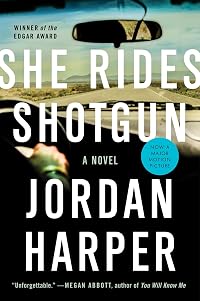
Early on, this made me think of She Rides Shotgun by Jordan Harper. It had a similar sensibility, a book about a father throwing away a chance at...everything...so his kid(s) would have a shot at a decent life. I'd even started jotting down notes for a paragraph or two about that. And then I noticed that the last quote on the back cover is from Harper. So I was definitely not the first reader to see the link. Still, if you read Harper (or wanted to), you'll want to get your hands on this. The converse is true as well.
But let's focus on Blacktop Wasteland. From the first paragraph that made me sit up and say "Oh, this explains the hype," to the devastating last line—and all points in between, Blacktop Wasteland is one of those books that a guy can't describe without seeming hyperbolic.
Fantastic car chases. Great action. Compelling and moving family moments. Race as a deterministic factor in success. Class, too. What does it mean to be a father? Human depravity on display in a variety of ways from criminals small-time and Organized. Human frailty and striving for greatness, too. Blacktop Wasteland has it all. You're not supposed to cry over a Crime Novel—and I didn't. But it wouldn't have taken much to push me over that line.
You're not a Crime Fiction reader? I get that—and don't worry, you can just think of this as General Fiction/Literature and you'll be fine. I'm repeating myself. This is a great novel, go read it. show less
---
MEET MEAUREGARD MONTAGE
The secret ain't about the motor. That's part of i it, yeah, but that ain't the main thing. The real thing, the thing most people don't want to talk about, is how you drive. If you drive like you scared, you gonna lose. If you drive like you don’t want to have to rebuild the whole engine, you gonna lose. You gotta drive like don't nothing else matter except getting to that line. Drive like you fucking stole it.
Beauregard heard his Daddy's voice every time he drove the Duster.
The first thing we learn about Beauregard (nicknamed "Bug") is that he is both a great mechanic and a great driver. We see that at the start as he wins a street race to help pay his show more monthly bills. The second thing we learn is that he's capable and willing to give a man a beating—both efficient and effective—if he's crossed (read: cheated out of winnings).
Beauregard runs an auto-repair shop in a small Virginia town. He was doing okay for himself until a few months back when a new, better-financed shop opened up in town. Now he's losing customers by the handful, and may not be able to stay open for more than three months.
He's deeply and madly in love with his wife and is a devoted father to two great sons (one complaint—possibly my only one is that we don't get more time with the boys). But one of them needs braces. His wife works too hard, and he'd like to lighten her burden—and provide a nicer home. His daughter (from before he was married, and he never had any kind of custody) can't afford college and plans on working for a while before she can afford it (the reader knows, and I think Beauregard does, too, that she'll never make enough to get there). His mother's in a nursing home, and there's some sort of financial problem there, too.
He's got all that he needs, and it's all about to slip through his fingers.
THE "LIFE"
Beauregard thought about the clichéd scene in every crime movie where the main character who has gotten out of the “Life” buries his weapons under a hundred pounds of concrete only to have to dig them up when his enemies come knocking at his door.
He understood the appeal of the symbolism for filmmakers. It was just unrealistic. You were never out of the Life completely. You were always looking over your shoulder. You always kept a gun within reach, not buried under cement in your basement. Having a gun nearby was the only way you could pretend to relax.
It wasn't all that long ago that Bug* received the bulk of his income from illicit means. He was part of a crew, he was a wheelman for them—among other things. He's a meticulous planner, has an eidetic memory, and can do mental math at a speed I can only envy. He planned whatever the crew was going to do—and woe to anyone who did not stick with his plan to the T, or gave him bad information while planning.
* Beauregard tends to think of himself as "Bug" when he's thinking of the reckless, thrill-seeking lawbreaker side of him, and "Beauregard" when he's living the way he should. I'm following that.
But he decided he needed to be a better father than his own (who never left the Life and left home when it became too dangerous for him to stay). He's been living straight since then. He misses the rush, he misses the work—mostly the driving. But he has better things to focus on now, and he's largely successful.
But is he at the end of that? There are just too many things he needs to pay for and only so much money.
THE TEMPTATION OF BUG
One of his last jobs, before he went straight, was with Ronnie Sessions—he had an idea, Bug came up with the plan, did the elaborate work necessary to pull it off. And then because Ronnie had faulty intel for him, the job fell apart and Bug was out thousands in expenses—and he didn't get the payday. He hasn't seen Ronnie since.
But now Ronnie's back, at just the right time (or wrong, depending on how you look at it). He's got a juicier target. One that will erase most of Beauregard's immediate needs, and will make things more comfortable for a while into the future, too.
After some thinking, some waffling, (this isn't a spoiler, the book needs something like this), he agrees and takes over the operation.
CAR CHASES
I am not a car guy. I know almost nothing about cars, I can do basic maintenance (or I could a long time ago, I'm not sure I'm capable anymore). I'm an adequate driver. I can correctly identify maybe 40% of the cars I see on the road.
However. I am a red-blooded American male. I love car chase/driving scenes.* Like in Blues Brothers, half the TV (and a good number of movies) I grew up watching in the 80s, Bourne Identity, Baby Driver (I could watch the opening sequence on a loop for hours)—the only positive memory I have of the second Matrix movie was the elaborate car chase scene. I could keep going, but you get the point. They're harder to pull off in a book than they are on-screen, but when they work, they really work.
* I realize people who aren't red-blooded American males frequently love them, too, I'm not arguing against that. It just seems more definitional of RBAM.
S. A. Cosby could give everyone lessons on how to do it properly. I don't know that I've read any as good as his. So yes, there's a lot that he has to say about class, race, fatherhood, and more. This novel is beautifully written, with a lyrical nature to some passages that will make you want to reread the paragraphs a few times just to take it all in. But also? It has great car scenes in case you're worried about it being too highbrow and artsy.
OH, IT'S THAT KIND OF BOOK
Men like your Daddy, like me, like you used to be, we don’t die in hospital beds. Ant wasn't perfect. He loved driving, drinking, and women, in that order. He lived life at 100 miles per hour. Men like that, well, they go out on their own terms, usually with a bang.
Fairly early, I decided I knew what kind of book I was reading—we'd see Beauregard and his situation, we'd get a little backstory about his criminal history and why he got out of "the Life," we see the pressures making him think of returning to it (however briefly he intends on it), the temptation to do so, the planning and execution of the robbery, and so on. I was into the idea.
And then the (supposed) central crime is over in a few pages. Which surprised me. And then I noticed I wasn't even halfway done with the book—which meant that the bulk of the book is about what happens as a result of the robbery. And given the tone of the book, we're not talking hijinks and good times. My notes say, "Oh, it's going to be that kind of book.
I'm not going to spoil anything and tell you why it was a mistake for Bug and his fellow thieves to rip off the place they rip off. But, it was a colossal mistake. And the repercussions are big.
Because Cosby had done such a good job making me care about Bug and his family, and the way he wrote the characters who objected to this robbery—I had a really hard time finishing this book. I'd literally have to read a chapter or two and then put the book down for 30+ minutes while I did something else. I just didn't want to know how bad things got for the Montage family.
Still, there was no way I wasn't going to finish the book. I had to know. So, I'd read another chapter or two, and then it'd get too much for me, and I'd start the cycle again. I added a day or two to my reading because of this (I did read the last 50 or so pages without a break, but I wanted one...). I don't react this way to books, I just don't. But, man, this got under my skin and I couldn't do anything else.
SO, WHAT DID I THINK ABOUT BLACKTOP WASTELAND?
Is there any doubt?
Early on, this made me think of She Rides Shotgun by Jordan Harper. It had a similar sensibility, a book about a father throwing away a chance at...everything...so his kid(s) would have a shot at a decent life. I'd even started jotting down notes for a paragraph or two about that. And then I noticed that the last quote on the back cover is from Harper. So I was definitely not the first reader to see the link. Still, if you read Harper (or wanted to), you'll want to get your hands on this. The converse is true as well.
But let's focus on Blacktop Wasteland. From the first paragraph that made me sit up and say "Oh, this explains the hype," to the devastating last line—and all points in between, Blacktop Wasteland is one of those books that a guy can't describe without seeming hyperbolic.
Fantastic car chases. Great action. Compelling and moving family moments. Race as a deterministic factor in success. Class, too. What does it mean to be a father? Human depravity on display in a variety of ways from criminals small-time and Organized. Human frailty and striving for greatness, too. Blacktop Wasteland has it all. You're not supposed to cry over a Crime Novel—and I didn't. But it wouldn't have taken much to push me over that line.
You're not a Crime Fiction reader? I get that—and don't worry, you can just think of this as General Fiction/Literature and you'll be fine. I'm repeating myself. This is a great novel, go read it. show less
Blacktop Wasteland by S. A. Cosby is a well written, action packed thriller about a man who commits a crime in order to save his business, his home and his family. But instead of salvation, his decision may cost him everything he has worked so hard to achieve. This story is much more than a thriller however as the author also explores father-son relationships, race, class and identity.
Beauregard “Bug” Montage is a hard working father, husband and mechanic, but he has a criminal past and a reputation as one of the best get-away drivers in the business. He has been living an upstanding life, but circumstances are spiralling out of control as his daughter needs money for college, his cancer-ridden mother is about to be kicked out of show more her care home, the mortgage is due and he is losing business to the new car repair shop in town. He is approached by a former associate who offers a “fool-proof” job of robbing a jewellery story but he isn’t told the truth of the situation and now it’s not just the police that are hunting him down.
Blacktop Wasteland is a gritty, violent story that also manages to paint a vivid picture of what it’s like to be black in America, Bug wants a better life for his children but in order to get it for them, he must get back into crime. A total page-turner, this atmospheric and dark story totally absorbed me. I did find that the author tended to get a little flowery with some of his descriptions, but nevertheless, this was an excellent read. show less
Beauregard “Bug” Montage is a hard working father, husband and mechanic, but he has a criminal past and a reputation as one of the best get-away drivers in the business. He has been living an upstanding life, but circumstances are spiralling out of control as his daughter needs money for college, his cancer-ridden mother is about to be kicked out of show more her care home, the mortgage is due and he is losing business to the new car repair shop in town. He is approached by a former associate who offers a “fool-proof” job of robbing a jewellery story but he isn’t told the truth of the situation and now it’s not just the police that are hunting him down.
Blacktop Wasteland is a gritty, violent story that also manages to paint a vivid picture of what it’s like to be black in America, Bug wants a better life for his children but in order to get it for them, he must get back into crime. A total page-turner, this atmospheric and dark story totally absorbed me. I did find that the author tended to get a little flowery with some of his descriptions, but nevertheless, this was an excellent read. show less
This book takes some of the classic tropes of crime fiction and drama - especially the "one last job" scenario - and makes it all feel entirely fresh. Like all my favorite fiction, crime or not, the characters sing, from the flawed but deeply sympathetic protagonist to the nefarious people who wind up in his orbit.
I often come on here and rant about how crappy a book is. Hell, I think I did that less than three days ago.
So, it's really nice to dive into a book that I expect to be good, and instead, I get something that's damn near perfect. One that ticks all the boxes. One that I actually look forward to picking up again once I've put it down. And one that I put down only because real life intrudes.
Others have talked very well about all the good points of this novel. Go read the other four and five-star reviews. They ain't lying.
As for the book's effect on me, well...I'm going to state right up front that a lot of the stuff Bug is dealing with—a mean, spiteful mother, a long-standing marriage, kids that I love and want to grow up better than show more me, a father that wasn't a good man, and also left his family because other things were more important, and knowing that there's one kind of calling inside me, but the right thing to do is to try and push that down and smother it to be a better man... yeah, I understand every single aspect of that. And it's captured incredibly well here.
But the author is careful and talented enough to ensure it never gets preachy and it never gets dull. The driving scenes are uniformly perfect, and adrenaline-soaked. The family scenes are heartwarming and heartbreaking. The scenes of Beauregard doing everything he can to be a good husband, a good father, and a good man are real and visceral.
And then the author just keeps throwing obstacles up in front of him. He piles them on with glee and when he's done, he finds some more and piles them on top. It never gets stupid, it never gets ridiculous, but it's awful to read, in the best way.
I came in expecting a crime thriller. But this book left a mark on me. Cosby is an author to watch, because he does this stuff well, and he makes it look easy. It ain't easy.
I just noticed that in the book's description, it's described as "operatic". Well, I don't know about that, having never experienced an opera, but I can tell you it's damn near Shakespeare with guns and muscle cars.
Probably one of the best books I've read this year, if not the best. show less
So, it's really nice to dive into a book that I expect to be good, and instead, I get something that's damn near perfect. One that ticks all the boxes. One that I actually look forward to picking up again once I've put it down. And one that I put down only because real life intrudes.
Others have talked very well about all the good points of this novel. Go read the other four and five-star reviews. They ain't lying.
As for the book's effect on me, well...I'm going to state right up front that a lot of the stuff Bug is dealing with—a mean, spiteful mother, a long-standing marriage, kids that I love and want to grow up better than show more me, a father that wasn't a good man, and also left his family because other things were more important, and knowing that there's one kind of calling inside me, but the right thing to do is to try and push that down and smother it to be a better man... yeah, I understand every single aspect of that. And it's captured incredibly well here.
But the author is careful and talented enough to ensure it never gets preachy and it never gets dull. The driving scenes are uniformly perfect, and adrenaline-soaked. The family scenes are heartwarming and heartbreaking. The scenes of Beauregard doing everything he can to be a good husband, a good father, and a good man are real and visceral.
And then the author just keeps throwing obstacles up in front of him. He piles them on with glee and when he's done, he finds some more and piles them on top. It never gets stupid, it never gets ridiculous, but it's awful to read, in the best way.
I came in expecting a crime thriller. But this book left a mark on me. Cosby is an author to watch, because he does this stuff well, and he makes it look easy. It ain't easy.
I just noticed that in the book's description, it's described as "operatic". Well, I don't know about that, having never experienced an opera, but I can tell you it's damn near Shakespeare with guns and muscle cars.
Probably one of the best books I've read this year, if not the best. show less
Members
- Recently Added By
Lists

Best Noir Fiction
160 works; 14 members

Noirvember: The Best Noir
113 works; 56 members

Pleasant Surprises: Books That Exceeded Our Expectations
418 works; 143 members

Recommend the 20 best books you've read in the last five years
2,168 works; 606 members

Top Five Books of 2020
982 works; 350 members

ALA Reading List: Adrenaline 2021-2026
30 works; 2 members

Bitter Southerner Summer Reading Roundup
198 works; 8 members

READ IN 2021
239 works; 4 members

Books Read in 2021
5,361 works; 114 members

Top Five Books of 2023
767 works; 317 members
Author Information

13+ Works 6,916 Members
Some Editions
Awards and Honors
Awards
Distinctions
Common Knowledge
- Canonical title*
- Een laatste uitweg
- Original title
- Blacktop Wasteland
- Original publication date
- 2020-07-14
- People/Characters
- Beauregard "Bug" Montage
- Important places
- Virginia, USA
- Epigraph
- A father is a man who expects his son to be as good a man as he was meant to be.
FRANK A. CLARK - Dedication
- For my father, Roy Cosby
Your reach sometimes exceeded your grasp, but once you got a hold of that steering wheel, you drove it like you stole it.
Ride one, wild man. Ride on. - First words
- Beauregard thought the night sky looked like a painting.
- Last words
- (Click to show. Warning: May contain spoilers.)Finally he whispered, "I don't know if I can."
- Publisher's editor
- Kopprasch, Christine
- Blurbers
- Child, Lee; Lehane, Dennis
- Canonical DDC/MDS
- 813.6
- Canonical LCC
- PS3603.O7988
*Some information comes from Common Knowledge in other languages. Click "Edit" for more information.
Classifications
Statistics
- Members
- 1,578
- Popularity
- 14,465
- Reviews
- 88
- Rating
- (3.98)
- Languages
- 8 — Dutch, English, French, German, Italian, Portuguese, Spanish, Swedish
- Media
- Paper, Audiobook, Ebook
- ISBNs
- 26
- ASINs
- 10