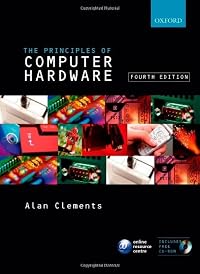
Principles of Computer Hardware
by Alan Clements
On This Page
Description
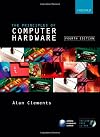
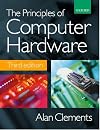
Principles of Computer Hardware, now in its third edition, provides a first course in computer architecture or computer organization for undergraduates. The book covers the core topics of such a course, including Boolean algebra and logic design; number bases and binary arithmetic; the CPU;assembly language; memory systems; and input/output methods and devices. It then goes on to cover the related topics of computer peripherals such as printers; the hardware aspects of the operating system; show more and data communications, and hence provides a broader overview of the subject. Its readable,tutorial-based approach makes it an accessible introduction to the subject. The book has extensive in-depth coverage of two microprocessors, one of which (the 68000) is widely used in education. All chapters in the new edition have been updated. Major updates include: ( powerful softwaresimulations of digital systems to accompany the chapters on digital design; ( a tutorial-based introduction to assembly language, including many examples; ( a completely rewritten chapter on RISC, which now covers the ARM computer. show lessTags
Recommendations


Member Reviews
I really want to read a good book on computer architecture. This is not that book. Honestly, I couldn't even get through the first four chapters.
I take issue with the way the book is formatted. Starting with a discussion of all of digital logic (combinational and sequential) and THEN talking about binary? Discussing error codes and THEN talking about addition? Whatever happened to starting from the known and going to the unknown? From basic to complex?
Also, this book is in the fourth edition. I would assume that lots of copy editing has gone into this book in the 20 years between first and fourth presses. But there are typos, figures that make no sense, and a lot of inconsistencies in phraseology. The author uses many conflicting and show more confusing ways to discuss flip-flop edge transitions in chapter 3, which made it impossible for me to follow the discussion on using D flip-flops for bus arbitration. I spent so long flipping back and forth trying to understand what the author meant by a "rising" and a "falling" edge (I assumed it was self evident, but maybe the British use a different definition than Americans?). This wasn't even the worst part of the book, but by the time I got past this (and I didn't really ever understand it, I just gave up and decided to move on), I was too annoyed to even consider using this book to bolster my understanding of computer architecture.
Apparently my goal remains unfinished, waiting to find a better book to teach me what I want to learn. show less
I take issue with the way the book is formatted. Starting with a discussion of all of digital logic (combinational and sequential) and THEN talking about binary? Discussing error codes and THEN talking about addition? Whatever happened to starting from the known and going to the unknown? From basic to complex?
Also, this book is in the fourth edition. I would assume that lots of copy editing has gone into this book in the 20 years between first and fourth presses. But there are typos, figures that make no sense, and a lot of inconsistencies in phraseology. The author uses many conflicting and show more confusing ways to discuss flip-flop edge transitions in chapter 3, which made it impossible for me to follow the discussion on using D flip-flops for bus arbitration. I spent so long flipping back and forth trying to understand what the author meant by a "rising" and a "falling" edge (I assumed it was self evident, but maybe the British use a different definition than Americans?). This wasn't even the worst part of the book, but by the time I got past this (and I didn't really ever understand it, I just gave up and decided to move on), I was too annoyed to even consider using this book to bolster my understanding of computer architecture.
Apparently my goal remains unfinished, waiting to find a better book to teach me what I want to learn. show less
Ratings
Members
- Recently Added By
Lists

University Presses
155 works; 1 member
Author Information

8 Works 137 Members
Classifications
- Genres
- Technology, Nonfiction
- DDC/MDS
- 621.39 — Applied science & technology Engineering Applied physics Electronics & Computers Computer engineering
- LCC
- TK7888.3 .C62 — Technology Electrical engineering. Electronics. Nuclear engineering Electrical engineering. Electronics. Nuclear Electronics Computer engineering. Computer hardware
- BISAC
Statistics
- Members
- 66
- Popularity
- 472,632
- Reviews
- 1
- Rating
- (3.00)
- Languages
- English
- Media
- Paper, Ebook
- ISBNs
- 11