On This Page
Description
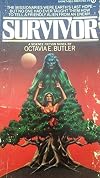
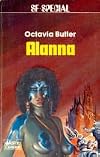
(Patternmaster #4) They fled from an Earth ravaged by plague and violence, seeking to fulfill their holy mission -- to discover a new home for humanity. But instead of landing in a peace-filled paradise, Earth's Missionaries find themselves caught between two warring civilizations -- the Garkohn and the Tehkohn. And only one of the people from Earth, a young girl and "converted" Missionary named Alanna, has the proper survival training to see through the lies of their Garkohn "hosts," who show more extend the hand of friendship to the humans only to enslave them.--Amazon.com show lessTags
Recommendations



















Member Recommendations

sandstone78 One of the two newly published stories in Unexpected Stories gives background on the Kohn and on Diut, a major character in Butler's disowned novel Survivor.
Member Reviews
It seems kind of unfair to give Survivor a “meh” 3-star review after Octavia Butler did everything she could to discourage me from reading it. Well, almost everything. She did publish it (in 1978), and it is part of her excellent Patternist series. But, admittedly, she did later disown it, dismissively referring to it as her “Star Trek novel.” The thing is, I always liked Star Trek.
Anyway, Survivor isn’t bad, it’s just not up to the level of Butler’s other fiction. (At this point, I’ve read all of her published fiction except her last novel, Fledgling.) It's the only novel of hers that takes place on another planet (her short story “Bloodchild” memorably does, too). It starts off slow and a little confusing, as each show more chapter begins in the first person, narrating events that took place before the main narrative; then it switches to a third-person telling of the central narrative. It took a few chapters before I settled into the pattern. It’s a pretty short novel (185 pages), and once it gets going, it pulled me along pretty well.
The Kohn race of aliens native to the world on which the humans are colonists is divided into factions—Tehkohn and Garkohn. The Garkohn are exploiting the human missionaries by addicting them to the local fruit, the meklah, withdrawal from which is usually fatal. But the missionaries have aligned themselves with the Garkohn against the Tehkohn, whom they fear more. The novel opens with a flashback of the main character Alanna, a wild human whose parents were killed by Clayarks, being taken in by a missionary family back on Earth, before they left for the Kohn planet. Then it switches to Alanna being rescued by the missionaries and the Garkohn after she was taken captive by the Tehkohn two years prior.—You can kind of see how it starts off confusing.—Without getting bogged down in describing the plot and themes of the book, I will simply say that none of the big ideas Butler explores in this novel are as mind-blowing or profound as her best science fiction, which I would say are the Lilith’s Brood series (or Xenogenesis trilogy), the Parable novels, and the first two, chronologically, in the Patternist series (Wild Seed and Mind of My Mind). She touches on issues of captivity, religion, survival (naturally), and interbreeding, but not as well as she does in her other books. Still, she pulls off a satisfying climax to the story.
I got hold of an old hardcover edition of the book through my library system (interlibrary loan). Otherwise, I would’ve had to spend hundreds of dollars on a used copy, which—although I’m a huge Octavia Butler fan—I was not prepared to do. Until the Butler estate decides to go against Butler’s wishes and release a new paperback and/or ebook edition of Survivor, the book is only going to get rarer and harder to find. I respect the fact that her estate is respecting her wishes. Maybe it makes sense that only someone committed to reading all of Butler’s work should read the novel she didn’t want out there any longer. But I’m glad I got the chance to read it.
I read the Patternist series almost in chronological order: 1. Wild Seed, 2. Mind of My Mind, 3. Clay’s Ark, 5. Patternmaster, and then 4. Survivor (or 3.5, according to Goodreads). It's still so weird to me that she wrote and published them so completely out of order:
5. Patternmaster (1976)
2. Mind of My Mind (1977)
4. Survivor (1978)
1. Wild Seed (1980)
3. Clay’s Ark (1984)
Clay’s Ark is no doubt the darkest of all the series, perhaps of all her books (and that is saying something). But I really wish she had been able (or willing) to expand on that side of the series. In a way, Survivor is like Clay’s Ark in that it deals with the humans who didn’t evolve telepathic powers—whereas Wild Seed, Mind of My Mind, and Patternmaster all deal with that evolutionary shift. But beyond Clay's Ark, which describes the origin of the Clayarks, we only see the Clayarks, in Patternmaster and Survivor, as remote, animalistic mutations of humans. Maybe Butler just didn’t see a compelling idea in telling about the future of that species, but it does seem full of potential. Then again, Butler died at the young age of 58. No doubt she had many stories left to tell.
If you’re like me, and Octavia Butler is one of your favorite authors and/or you’ve read the other novels in the Patternist series and loved them, you should definitely try to read Survivor. (Get it from your library system, if possible, or wait until her estate finally relents.) It’s the least of her novels, in my opinion, but as someone once said in a completely different context, even bad pizza is melted cheese on bread. That is, how bad could it be? Not bad at all. show less
Anyway, Survivor isn’t bad, it’s just not up to the level of Butler’s other fiction. (At this point, I’ve read all of her published fiction except her last novel, Fledgling.) It's the only novel of hers that takes place on another planet (her short story “Bloodchild” memorably does, too). It starts off slow and a little confusing, as each show more chapter begins in the first person, narrating events that took place before the main narrative; then it switches to a third-person telling of the central narrative. It took a few chapters before I settled into the pattern. It’s a pretty short novel (185 pages), and once it gets going, it pulled me along pretty well.
The Kohn race of aliens native to the world on which the humans are colonists is divided into factions—Tehkohn and Garkohn. The Garkohn are exploiting the human missionaries by addicting them to the local fruit, the meklah, withdrawal from which is usually fatal. But the missionaries have aligned themselves with the Garkohn against the Tehkohn, whom they fear more. The novel opens with a flashback of the main character Alanna, a wild human whose parents were killed by Clayarks, being taken in by a missionary family back on Earth, before they left for the Kohn planet. Then it switches to Alanna being rescued by the missionaries and the Garkohn after she was taken captive by the Tehkohn two years prior.—You can kind of see how it starts off confusing.—Without getting bogged down in describing the plot and themes of the book, I will simply say that none of the big ideas Butler explores in this novel are as mind-blowing or profound as her best science fiction, which I would say are the Lilith’s Brood series (or Xenogenesis trilogy), the Parable novels, and the first two, chronologically, in the Patternist series (Wild Seed and Mind of My Mind). She touches on issues of captivity, religion, survival (naturally), and interbreeding, but not as well as she does in her other books. Still, she pulls off a satisfying climax to the story.
I got hold of an old hardcover edition of the book through my library system (interlibrary loan). Otherwise, I would’ve had to spend hundreds of dollars on a used copy, which—although I’m a huge Octavia Butler fan—I was not prepared to do. Until the Butler estate decides to go against Butler’s wishes and release a new paperback and/or ebook edition of Survivor, the book is only going to get rarer and harder to find. I respect the fact that her estate is respecting her wishes. Maybe it makes sense that only someone committed to reading all of Butler’s work should read the novel she didn’t want out there any longer. But I’m glad I got the chance to read it.
I read the Patternist series almost in chronological order: 1. Wild Seed, 2. Mind of My Mind, 3. Clay’s Ark, 5. Patternmaster, and then 4. Survivor (or 3.5, according to Goodreads). It's still so weird to me that she wrote and published them so completely out of order:
5. Patternmaster (1976)
2. Mind of My Mind (1977)
4. Survivor (1978)
1. Wild Seed (1980)
3. Clay’s Ark (1984)
Clay’s Ark is no doubt the darkest of all the series, perhaps of all her books (and that is saying something). But I really wish she had been able (or willing) to expand on that side of the series. In a way, Survivor is like Clay’s Ark in that it deals with the humans who didn’t evolve telepathic powers—whereas Wild Seed, Mind of My Mind, and Patternmaster all deal with that evolutionary shift. But beyond Clay's Ark, which describes the origin of the Clayarks, we only see the Clayarks, in Patternmaster and Survivor, as remote, animalistic mutations of humans. Maybe Butler just didn’t see a compelling idea in telling about the future of that species, but it does seem full of potential. Then again, Butler died at the young age of 58. No doubt she had many stories left to tell.
If you’re like me, and Octavia Butler is one of your favorite authors and/or you’ve read the other novels in the Patternist series and loved them, you should definitely try to read Survivor. (Get it from your library system, if possible, or wait until her estate finally relents.) It’s the least of her novels, in my opinion, but as someone once said in a completely different context, even bad pizza is melted cheese on bread. That is, how bad could it be? Not bad at all. show less
This book is in the Patternist series, chronologically fourth, but has very little in common with the others. A group of humans has left Earth in an attempt to escape the Clayark disease, but have arrived on a new planet only to find themselves smack dab in the middle of alien clan wars. This is a story of how intolerance and prejudice will bring a people down while acceptance of differences can lead to strength and happiness. As always, Butler is the master of complex relationships and alien lifeforms. I thought this was a great story--not Butler's best, but definitely worth tracking down a copy, if you can.
As I understand it, Butler later disavowed this book, which fits into her other stories about Clay’s Ark and the involuntary transformation of humanity. Alanna is a “wild human,” rescued by strict God-fearing Missionaries on Earth and taught to at least mouth the same prayers they do, though her background (and to some extent her race) keep her apart from the largely-white community. When the Missionaries get a chance to leave a dying Earth and settle on a new planet, they don’t realize that they’re being used and, in some senses, enslaved by the aliens they find. Another competing group of aliens kidnaps Alanna, and when she’s rescued two years later no one—to some extent not even Alanna—is sure where here loyalties show more lie. It’s easy to see Butler’s themes—gender, race, power and power plays, coerced consent and the accommodations people make to survive—but it is true that the story jumps around more, and does a bit less with the alien/human encounter, than Butler at her peak mastery did. show less
I really enjoyed this book. I liked the non-humanity of the Kohn and particularly how they communicate with their skin color. The setup was moderately brilliant in my opinion: not only the political situation of the different Kohn tribes and the humans, but also the way the story is introduced, starting with the recently released Allanah after her kidnapping by the Tehkohn. Within the first chapter, the differences between the Tehkohn and Garkohn are illustrated, together with Allanah's position and the troubles she is facing. Allanah is a most resilient heroine with great mental strength. I really liked her fosterparents, and her fostermother in particular, who shows a mental flexibility that unfortunately her fosterfather is lacking. show more The missionary humans in general I dislike. They display all the negative traits one may expect of such a group and only occasionally (Allanah's fosterfather)the earnestness one would hope to see. Allanah's relationship with Diut shows some less palatable aspects in the beginning, such as him beating her, but admittedly, these spring from cultural differences, and he soon mends his ways. Although he is her superior in Kohn society, Allanah's wild-human-outlook ensures this is not an irritant to the reader. Overall, I really liked this book, and I really don't understand why the author herself didn't. I'm very glad to have read it, and it even sheds some light on events in the Wildseed universe (although you could read this separately). show less
This is the one that Butler did not want to have reissued in the Patternmaster series. I kept trying to figure out why, but there's no way to know. It's bizarre and original like most of her stuff. Alanna is the survivor who survives homelessness on a savage Earth, as a missionary child on an alien planet and as an alien amongst the inhabitants of the planet.
So I finally finished the patternmaster series. Not really a series, as there's no big finale but all the books are linked. I have heard that Butler didn't like this book and didn't want it to be printed again. I'm not sure why.
The only problem I had with it was the changing narrator. She went from 1st person with a human, to 1st person with an alien, and then to 3rd person. It was a bit jarring at times. Sometimes she would label the chapter with the narrators name but then she would change to 3rd person with just a couple lines of space.
As with her other books, this is sturdy work, well written and harsh. No hi-tech gadgets but some pretty cool aliens with a fully developed culture that reminded me of -Speaker for the Dead- in their show more alien-ness. The difference is that she writes shorter stories so her characters aren't as well developed as Card. So I like her stuff but it hasn't blown me away yet. Maybe the Xenogenisis trilogy will, I'm going to try to read that later this year. show less
The only problem I had with it was the changing narrator. She went from 1st person with a human, to 1st person with an alien, and then to 3rd person. It was a bit jarring at times. Sometimes she would label the chapter with the narrators name but then she would change to 3rd person with just a couple lines of space.
As with her other books, this is sturdy work, well written and harsh. No hi-tech gadgets but some pretty cool aliens with a fully developed culture that reminded me of -Speaker for the Dead- in their show more alien-ness. The difference is that she writes shorter stories so her characters aren't as well developed as Card. So I like her stuff but it hasn't blown me away yet. Maybe the Xenogenisis trilogy will, I'm going to try to read that later this year. show less
This remains Butlers most awkward novel and I completely understand why she didn't want it reprinted.
Her writing style is vastly superior in her other novels.
Still, I'm grateful to have read this novel.
Her writing style is vastly superior in her other novels.
Still, I'm grateful to have read this novel.
Members
- Recently Added By
Author Information

58+ Works 55,810 Members
Science-fiction writer and novelist Octavia Estelle Butler was born in Pasadena, California, on June 22, 1947. She earned as Associate of Arts degree from Pasadena City College in 1968 and later attended California State University and the University of California. Her first novel, Patternmaster, was the first in a series about a society run by a show more group of telepaths who are mentally linked to one another. She explored the topics of race, poverty, politics, religion, and human nature in her works. She won a Hugo Award in 1984 for her short story Speech Sounds and a Hugo Award and Nebula Award in 1985 for her novella Bloodchild. She received a MacArthur Grant from the John D. and Catherine T. MacArthur Foundation. The award pays $295,000 over a five-year period to creative people who push the boundaries of their fields. She died in Lake Forest Park, Washington on February 24, 2006 at the age of 58. (Bowker Author Biography) show less
Some Editions
Series


Work Relationships
Is contained in
Has as a commentary on the text
Common Knowledge
- Canonical title*
- Sopravvissuta
- Original title
- Survivor
- Original publication date
- 1978
- People/Characters
- Alanna Verrick; Diut; Jules Verrick; Niela Verrick
- First words
- I didn't know enough to appreciate my foster father the way I should have when we met back on Earth.
- Last words
- (Click to show. Warning: May contain spoilers.)A few moments later, Diut came over, looked at her, put his good arm around her, and led her out of the gate and around to where most of his Tehkohn waited.
*Some information comes from Common Knowledge in other languages. Click "Edit" for more information.
Classifications
Statistics
- Members
- 401
- Popularity
- 77,234
- Reviews
- 10
- Rating
- (3.78)
- Languages
- English, French, German, Italian
- Media
- Paper
- ISBNs
- 7
- ASINs
- 4