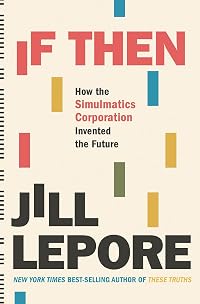
If Then: How the Simulmatics Corporation Invented the Future
by Jill Lepore
On This Page
Description
"A brilliant, revelatory account of the Cold War origins of the data-mad, algorithmic twenty-first century, from the author of the acclaimed international bestseller, These Truths. The Simulmatics Corporation, founded in 1959, mined data, targeted voters, accelerated news, manipulated consumers, destabilized politics, and disordered knowledge--decades before Facebook, Google, Amazon, and Cambridge Analytica. Silicon Valley likes to imagine it has no past but the scientists of Simulmatics are show more the long-dead grandfathers of Mark Zuckerberg and Elon Musk. Borrowing from psychological warfare, they used computers to predict and direct human behavior, deploying their "People Machine" from New York, Cambridge, and Saigon for clients that included John Kennedy's presidential campaign, the New York Times, Young & Rubicam, and, during the Vietnam War, the Department of Defense. Jill Lepore, distinguished Harvard historian and New Yorker staff writer, unearthed from the archives the almost unbelievable story of this long-vanished corporation, and of the women hidden behind it. In the 1950s and 1960s, Lepore argues, Simulmatics invented the future by building the machine in which the world now finds itself trapped and tormented, algorithm by algorithm"-- show lessTags
Recommendations






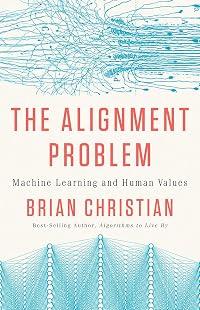
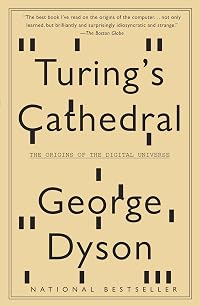


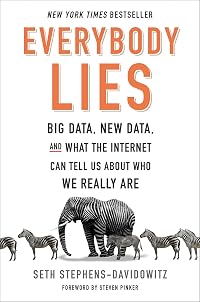



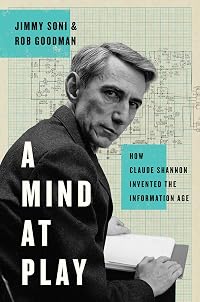























Member Reviews
This book is getting the highest possible rating, despite going off-topic at points, because of the importance of the story. I had actually heard of Simulatics before, in the context of the intelligence analysis follies of the Vietnam War, so I felt the need to read it sooner than later. It turns out that strategic analysis was not really the original mission of the company; advertising executive Ed Greenfield was fascinated with the potential of computer simulation in regards to salesmanship, and what he really wanted to sell to the American public was an Adlai Stevenson presidency. Adlai didn't bite, but JFK did, and the firm made a contribution to Kennedy's wafer-thin victory over Nixon; mostly in making a substantive argument that show more JFK really had to pursue the support of Black voters if he really wanted to have a chance.
Here's the problem: Even at the time, thoughtful insiders suspected that this trial run of "big data" was ethically and morally dubious, and considering the performance of firms such as Cambridge Analytica and Facebook, this turns out to be prescient. It certainly prevented the firm from receiving a wider embrace in the political world; particularly after the Kennedy brothers soured on the self-promotion of the founders of the firm.
The next issue is that Greenfield and his merry men often seemed to be better at padding their expense accounts, rather than offering useful analysis. Part of this is a commentary on the limitations of the behavioral sciences of the time (a topic which Lepore describes with cold venom), and part is that these men might have thought that they were masters of universe (a precursor of Silicon Valley arrogance), but Greenfield could never collect enough resources to really make his vision work. Even before American debate over the value of the Vietnam War turned incandescent, damn few social-science practitioners were prepared to go to Saigon, and those that did seemed to be mediocrities.
In the end, the firm collapsed due to mismanagement, and basically wrecked Ed Greenfield's life. While the firm showed the way to the future, about the only person to come well out of the experience was the political scientist, and commentator on technology, Ithiel de Sola Pool, and even he probably wanted to live down his participation. Pool spent quality time dodging the hatred of anti-war protestors at MIT during the late '60s.
Besides being an examination of the roots of a controversial major industry, there is also a life and times quality about this book. Some readers are going to be uncomfortable with this, as Lepore writes with real anger about the inadequacies of period, particularly in regards to the irony of how a group of men who proposed to analyze human behavior couldn't even understand their own wives. There's a lot of sadness that acts as the mortar to the building blocks of this story. To Lepore, the glamor of the "New Frontier" was just toxic froth on roiling waters. If Lepore had the right angle, I'd enjoy seeing her write about Talcott Parsons and the vision of the social sciences being as predictive as actual science; in part, I received my undergraduate and graduate education from professors who still bore the scars of that experience. show less
Here's the problem: Even at the time, thoughtful insiders suspected that this trial run of "big data" was ethically and morally dubious, and considering the performance of firms such as Cambridge Analytica and Facebook, this turns out to be prescient. It certainly prevented the firm from receiving a wider embrace in the political world; particularly after the Kennedy brothers soured on the self-promotion of the founders of the firm.
The next issue is that Greenfield and his merry men often seemed to be better at padding their expense accounts, rather than offering useful analysis. Part of this is a commentary on the limitations of the behavioral sciences of the time (a topic which Lepore describes with cold venom), and part is that these men might have thought that they were masters of universe (a precursor of Silicon Valley arrogance), but Greenfield could never collect enough resources to really make his vision work. Even before American debate over the value of the Vietnam War turned incandescent, damn few social-science practitioners were prepared to go to Saigon, and those that did seemed to be mediocrities.
In the end, the firm collapsed due to mismanagement, and basically wrecked Ed Greenfield's life. While the firm showed the way to the future, about the only person to come well out of the experience was the political scientist, and commentator on technology, Ithiel de Sola Pool, and even he probably wanted to live down his participation. Pool spent quality time dodging the hatred of anti-war protestors at MIT during the late '60s.
Besides being an examination of the roots of a controversial major industry, there is also a life and times quality about this book. Some readers are going to be uncomfortable with this, as Lepore writes with real anger about the inadequacies of period, particularly in regards to the irony of how a group of men who proposed to analyze human behavior couldn't even understand their own wives. There's a lot of sadness that acts as the mortar to the building blocks of this story. To Lepore, the glamor of the "New Frontier" was just toxic froth on roiling waters. If Lepore had the right angle, I'd enjoy seeing her write about Talcott Parsons and the vision of the social sciences being as predictive as actual science; in part, I received my undergraduate and graduate education from professors who still bore the scars of that experience. show less
It is reasonable to assert that attempts to predict, and manipulate, human behavior using computers is a recent phenomenon, started by companies like Facebook and Cambridge Analytica. According to this book, such an assertion is also very wrong.
It was the early 1960's, the days of UNIVAC and ENIAC. A corporation called Simulmatics was part of John F. Kennedy's presidential campaign. They were the first to use computer simulation and prediction to chop the US electorate into hundreds of categories. That way, they could test various campaign slogans and statements, to see how they would work. It led to much speculation about computers taking over America, and about office workers being fired by electronic bosses. In 1961, Simulmatics show more targeted segmented consumers with customized advertising messages.
In 1963, Simulmatics attempted to simulate a developing nation's entire economy, with a view toward halting socialism. The Vietnam War was raging, so, in 1965, Simulmatics opened an office in Saigon. Their intention was to do psychological research as a way to wage war with computer run data analysis (these were also days of Robert McNamara's "whiz kids" in the Pentagon). Back in America, in 1967 and 1968, the company attempted to build a machine to predict race riots. It went bankrupt soon after.
This a fascinating book that illuminates a lesser-known bit of American history. Attempts to predict human behavior, with computers, have gone on for many years, even by white liberals (like the employees of Simulmatics). This book is very highly recommended. show less
It was the early 1960's, the days of UNIVAC and ENIAC. A corporation called Simulmatics was part of John F. Kennedy's presidential campaign. They were the first to use computer simulation and prediction to chop the US electorate into hundreds of categories. That way, they could test various campaign slogans and statements, to see how they would work. It led to much speculation about computers taking over America, and about office workers being fired by electronic bosses. In 1961, Simulmatics show more targeted segmented consumers with customized advertising messages.
In 1963, Simulmatics attempted to simulate a developing nation's entire economy, with a view toward halting socialism. The Vietnam War was raging, so, in 1965, Simulmatics opened an office in Saigon. Their intention was to do psychological research as a way to wage war with computer run data analysis (these were also days of Robert McNamara's "whiz kids" in the Pentagon). Back in America, in 1967 and 1968, the company attempted to build a machine to predict race riots. It went bankrupt soon after.
This a fascinating book that illuminates a lesser-known bit of American history. Attempts to predict human behavior, with computers, have gone on for many years, even by white liberals (like the employees of Simulmatics). This book is very highly recommended. show less
I really looked forward to this book. I enjoy Jill Lepore's commentary on The New Yorker Radio Hour and subscribe to her podcast The Last Archive. It was by listening to the podcast that I learned about this book, subtitled provocatively How the Simulmatics Corporation Invented the Future. I was astounded. Could this be the same Simulmatics Corporation I knew about more than 50 years ago? Yes indeed!
The research in this book is excellent. Jill Lepore interviewed several of the descendants of the people involved in creating Simulmatics, Edward Greenfield, Ithiel de sola Pool, William McPhee, Eugene Burdick, etc. When available she went through papers they left behind. She clearly sees the basic over promising and under delivering that show more made Simulmatics a rising rocket which sputtered and fell to earth within a decade. The story is fascinating. I knew of the polling used by the Kennedy 1960 campaign and interviewed people at Louis Harris for a term paper for my political science course as an undergraduate at Brooklyn College in 1966. I had just learned how to program in Fortran and knew that computers could be used to tabulate survey data. I learned what was really going on by Reading If Then.
Almost everything I read in If Then made perfect sense. The facts are indisputable. The story is fascinating. But there are problems.
How did their simulation work? The basic description is they divided the U.S. population into 480 groups. I had hoped I would learn what they did with those groups and how they came up with their recommended strategies. Unfortunately Lepore never helps us here. If you want to know how it worked there is a much better source - Candidates. Issues & Strategies: a computer simulation of the 1960 and 1964 elections by Ithiel de Sola Pool, Robert P. Abelson and Samuel Popkin. At the end of that book the authors readily admit that with the increasing power of computers they would no longer see the need to use the 480 groups and instead would go the individual level. In a sense their model was just an accident of not having enough computer power. Not a very strong recommendation for their previous work. Lepore does not seem to have picked up on this point.
Lepore clearly wanted to go in the direction Burdick did - raise the alarm about computers and behavioral scientists and their ability to control candidates. But she wanted to do history rather than just a muckraking novel which was more Burdick's style. But does mixing politics and computers always produce unseemly results? Lepore is correct that there was overhyping, huckstering going on. And yes when elections end in some unexpected way there is someone claiming "It was me! It was my secret sauce!" After the Reagan landslide CACI claimed their Acorn clusters was the answer. In 2016 Cambridge Analytics claimed their using The Big Five Model with Facebook made the difference. All of these misrepresented what went on. They, as well as Simulmatics, had the same limitation - they were trying to explain a dynamic event, an election, using demographics. Demographics have only limited ability to explain political behavior. There's much more going on. And just like the influence of money in politics, the advantage disappears when both sides have it. Lepore doesn't like mixing computers with politics. Yes sometimes it's unseemly, but not necessarily so.
More importantly the basic issue is found in the subtitle: How the Simulmatics Corporation invented the Future. No evidence is presented to support that assertion. At best Lepore points to the use of computers in politics and the extensive impact of computers all around us. That is also true. But the connection to Simulmatics is weak at best. Yes Ithiel de Sola Pool went on to others things and was prescient in predicting how computers might be used in the future. But he was far from the only one. Inventor of the future? Sounds like tooting the horn too loudly.
Another distracting aspect of this book is a wandering focus. Instead to building it's case just following a timeline it takes side trips. There is an analysis of congressional hearings into a national data center. For Lepore this was relevant because there was an attempt to combine various Federal data into something sinister, a threat to individual privacy. For Lepore Simulmatics was also a combining of data with ominous implications. Pool was an early proponent of "Big Data" which is what the national data center might have sounded like. Another side trip was Vietnam. This was more understandable as it was Simulmatics last stand. But it did dilute the message which Lepore seemed to be making. Clearly they were unimportant and losing any influence. That does not sound like something we need to be concerned about. Evil geniuses who no one listens to don't seem to be what we need to be concerned about.
My last issue is Lepore's focus on the term Computer men. Lepore calls one of her podcasts The Computer men. She correctly points out the term computer scientist did not exist in the sixties and seventies. She asserts they were all men and they were called Computer men. That caught my attention. I had become interested in this area in the early sixties. We had programmers, system analysts, mathematicians, electrical engineers, but no computer men. I checked several authorities, Oxford English dictionary, Merriam-Webster's, Etymologies on line. None of them have heard of the term computer man. Where did Lepore come up with it. I'm guessing here but I would not be surprised if she heard the ex-wives and their descendants use the term. Giving that almost all of their marriages ended in divorce I would not be surprised if it was a "cute" term they used derogatorily to describe their husbands who spent time away from them with the evil siren, the computer. I would love to be wrong on this. If anyone knows the real story please let me know.
All in all I learned a lot by reading this. I just needed to see some of the conclusions as on shaky ground. show less
The research in this book is excellent. Jill Lepore interviewed several of the descendants of the people involved in creating Simulmatics, Edward Greenfield, Ithiel de sola Pool, William McPhee, Eugene Burdick, etc. When available she went through papers they left behind. She clearly sees the basic over promising and under delivering that show more made Simulmatics a rising rocket which sputtered and fell to earth within a decade. The story is fascinating. I knew of the polling used by the Kennedy 1960 campaign and interviewed people at Louis Harris for a term paper for my political science course as an undergraduate at Brooklyn College in 1966. I had just learned how to program in Fortran and knew that computers could be used to tabulate survey data. I learned what was really going on by Reading If Then.
Almost everything I read in If Then made perfect sense. The facts are indisputable. The story is fascinating. But there are problems.
How did their simulation work? The basic description is they divided the U.S. population into 480 groups. I had hoped I would learn what they did with those groups and how they came up with their recommended strategies. Unfortunately Lepore never helps us here. If you want to know how it worked there is a much better source - Candidates. Issues & Strategies: a computer simulation of the 1960 and 1964 elections by Ithiel de Sola Pool, Robert P. Abelson and Samuel Popkin. At the end of that book the authors readily admit that with the increasing power of computers they would no longer see the need to use the 480 groups and instead would go the individual level. In a sense their model was just an accident of not having enough computer power. Not a very strong recommendation for their previous work. Lepore does not seem to have picked up on this point.
Lepore clearly wanted to go in the direction Burdick did - raise the alarm about computers and behavioral scientists and their ability to control candidates. But she wanted to do history rather than just a muckraking novel which was more Burdick's style. But does mixing politics and computers always produce unseemly results? Lepore is correct that there was overhyping, huckstering going on. And yes when elections end in some unexpected way there is someone claiming "It was me! It was my secret sauce!" After the Reagan landslide CACI claimed their Acorn clusters was the answer. In 2016 Cambridge Analytics claimed their using The Big Five Model with Facebook made the difference. All of these misrepresented what went on. They, as well as Simulmatics, had the same limitation - they were trying to explain a dynamic event, an election, using demographics. Demographics have only limited ability to explain political behavior. There's much more going on. And just like the influence of money in politics, the advantage disappears when both sides have it. Lepore doesn't like mixing computers with politics. Yes sometimes it's unseemly, but not necessarily so.
More importantly the basic issue is found in the subtitle: How the Simulmatics Corporation invented the Future. No evidence is presented to support that assertion. At best Lepore points to the use of computers in politics and the extensive impact of computers all around us. That is also true. But the connection to Simulmatics is weak at best. Yes Ithiel de Sola Pool went on to others things and was prescient in predicting how computers might be used in the future. But he was far from the only one. Inventor of the future? Sounds like tooting the horn too loudly.
Another distracting aspect of this book is a wandering focus. Instead to building it's case just following a timeline it takes side trips. There is an analysis of congressional hearings into a national data center. For Lepore this was relevant because there was an attempt to combine various Federal data into something sinister, a threat to individual privacy. For Lepore Simulmatics was also a combining of data with ominous implications. Pool was an early proponent of "Big Data" which is what the national data center might have sounded like. Another side trip was Vietnam. This was more understandable as it was Simulmatics last stand. But it did dilute the message which Lepore seemed to be making. Clearly they were unimportant and losing any influence. That does not sound like something we need to be concerned about. Evil geniuses who no one listens to don't seem to be what we need to be concerned about.
My last issue is Lepore's focus on the term Computer men. Lepore calls one of her podcasts The Computer men. She correctly points out the term computer scientist did not exist in the sixties and seventies. She asserts they were all men and they were called Computer men. That caught my attention. I had become interested in this area in the early sixties. We had programmers, system analysts, mathematicians, electrical engineers, but no computer men. I checked several authorities, Oxford English dictionary, Merriam-Webster's, Etymologies on line. None of them have heard of the term computer man. Where did Lepore come up with it. I'm guessing here but I would not be surprised if she heard the ex-wives and their descendants use the term. Giving that almost all of their marriages ended in divorce I would not be surprised if it was a "cute" term they used derogatorily to describe their husbands who spent time away from them with the evil siren, the computer. I would love to be wrong on this. If anyone knows the real story please let me know.
All in all I learned a lot by reading this. I just needed to see some of the conclusions as on shaky ground. show less
If Then is a fascinating and flawed account of how Simulmatics, a pioneering market research team, prefigured much of contemporary concerns around big data and surveillance capitalism, while failing in almost every venture it embarked on. Lepore bounces between her primary protagonists and the great events that they failed to substantially influence or capitalize on to paint a picture of the 60s as a decade when a utopian dream of technocratic moderation became a nightmare of simulated insanity.
Ed Greenfeld, the founder of Simulmatics, was a Madison Avenue ad man and backslapping hustlers, who frustrated at the perennial failure of his favored candidate Adlai Stevenson in 1952 and 1956, teamed up with social scientists in the nascent show more fields of behavioral science to create an election in a box, a computerized data model that would give a cannier Democrat an oraclucular advantage. The first few reports went to the Kennedy campaign in the summer of 1960 suggested that he should embrace civil rights and Catholicism; that the votes of racists and anti-Catholics had already been lost, and he could shore up support among African-Americans and non-bigots. Kennedy famously won by a narrow margin. An article in Harper's Magazine by Thomas Morgan sold Simulmatics as a magic people machine that gave the Kennedy campaign strategic insights (Morgan would shortly join the company), but Simulmatics proved best at selling itself, and failed to land subsequent opportunities.
Madison Avenue was rightfully skeptical of the shoddy data bases and under theorized models of consumer behavior. An attempt to use computers to model the 1964 election in near real time for the New York Times collapsed under a tidal waves of bugs and lack of technical experience with actual IBM mainframes. The most successful project was an expansion to Saigon, to try and simulate how communist insurgencies could be defeated, but Simulmatics was never more than a tertiary player in McNamara's data-driven war. After failing to deliver on an expensive contract, their efforts were cancelled by ARPA.
Meanwhile, the personnelle of Simulmatics imploded in their own way. Ed Greenfeld sunk into alcoholism. Mathematician Bill McPhee was committed to an insane asylum for a time, and then mostly failed to deal with his bipolar disorder. Political scientist/novelist Eugene Burdick (The Ugly American, among other didactic 60s political thrillers) used his insider access to skewer the company in his 1964 novel The 480, a reference to the 480 identified categories of people in the Simulmatics database. Burdick died shortly thereafter of a heart attack. Ithial de Sola Pool, a Trotskyite turned ardent cold warrior, pushed Simulmatics ever closer to the defense establishment, while fighting the rising peace movement in American universities. Everybody's marriage fell apart.
A last gasp at predicting urban race riots collapsed in 1968, and Simulmatics suffered an undignified bankruptcy in 1970. Ithiel de Sola Pool had the longest successful career, serving as a neoconservative prophet of the nascent internet until his death in 1984. Much like cybernetics, another trendy 1950s computerized synthesis, Simulmatics abilities never matched its ambitions. Yet, as Lepore shows, the concerns raised then are the same as our current concerns around Facebook, face news, information warfare, and all that postmodern jazz. Nothing is new under the sun, except in 2021 computers are fast enough and data models rich enough that it actually works.
Lepore ably blends the "Mad Men but real" flawed personalities with the great events of this time, but I wish she'd been a little more detailed as an intellectual and technical historian. I'm a lover of obsolete ideas and obsolete machines, and I'd have liked a little more detail on how it worked. Still, a fascinating book on a mostly forgotten group of visionaries. show less
Ed Greenfeld, the founder of Simulmatics, was a Madison Avenue ad man and backslapping hustlers, who frustrated at the perennial failure of his favored candidate Adlai Stevenson in 1952 and 1956, teamed up with social scientists in the nascent show more fields of behavioral science to create an election in a box, a computerized data model that would give a cannier Democrat an oraclucular advantage. The first few reports went to the Kennedy campaign in the summer of 1960 suggested that he should embrace civil rights and Catholicism; that the votes of racists and anti-Catholics had already been lost, and he could shore up support among African-Americans and non-bigots. Kennedy famously won by a narrow margin. An article in Harper's Magazine by Thomas Morgan sold Simulmatics as a magic people machine that gave the Kennedy campaign strategic insights (Morgan would shortly join the company), but Simulmatics proved best at selling itself, and failed to land subsequent opportunities.
Madison Avenue was rightfully skeptical of the shoddy data bases and under theorized models of consumer behavior. An attempt to use computers to model the 1964 election in near real time for the New York Times collapsed under a tidal waves of bugs and lack of technical experience with actual IBM mainframes. The most successful project was an expansion to Saigon, to try and simulate how communist insurgencies could be defeated, but Simulmatics was never more than a tertiary player in McNamara's data-driven war. After failing to deliver on an expensive contract, their efforts were cancelled by ARPA.
Meanwhile, the personnelle of Simulmatics imploded in their own way. Ed Greenfeld sunk into alcoholism. Mathematician Bill McPhee was committed to an insane asylum for a time, and then mostly failed to deal with his bipolar disorder. Political scientist/novelist Eugene Burdick (The Ugly American, among other didactic 60s political thrillers) used his insider access to skewer the company in his 1964 novel The 480, a reference to the 480 identified categories of people in the Simulmatics database. Burdick died shortly thereafter of a heart attack. Ithial de Sola Pool, a Trotskyite turned ardent cold warrior, pushed Simulmatics ever closer to the defense establishment, while fighting the rising peace movement in American universities. Everybody's marriage fell apart.
A last gasp at predicting urban race riots collapsed in 1968, and Simulmatics suffered an undignified bankruptcy in 1970. Ithiel de Sola Pool had the longest successful career, serving as a neoconservative prophet of the nascent internet until his death in 1984. Much like cybernetics, another trendy 1950s computerized synthesis, Simulmatics abilities never matched its ambitions. Yet, as Lepore shows, the concerns raised then are the same as our current concerns around Facebook, face news, information warfare, and all that postmodern jazz. Nothing is new under the sun, except in 2021 computers are fast enough and data models rich enough that it actually works.
Lepore ably blends the "Mad Men but real" flawed personalities with the great events of this time, but I wish she'd been a little more detailed as an intellectual and technical historian. I'm a lover of obsolete ideas and obsolete machines, and I'd have liked a little more detail on how it worked. Still, a fascinating book on a mostly forgotten group of visionaries. show less
Everyone accepts that the Big Tech companies have a massive impact on society today and that this impact manifests itself most clearly in behaviour modification through social media. These companies achieve this impact through ubiquitous technology, primarily mobile phones, complex AI-driven so-called ‘algorithms’ that relentlessly select what to show you next, and ‘big data’, access to huge volumes of information about you and everyone else. It is generally believed that this technology was invented and developed from the 2010s onwards. This book from Jill Lepore sets out to debunk that idea.
After the Second World War we start to see the emergence of the commercial computing industry and the expansion of this technology into show more areas outside the purely military. Almost from the very start social and behavioural scientists saw an opportunity to use computers to analyse large volumes of data with the objectives of, firstly, provide reliable classifications of large numbers of people; secondly, using this data to predict the general responses of these people to particular events or stimuli; and, thirdly, to identify ways to affect the behaviour of these people. Of course, the first area to apply these ideas was in politics - analyse the electorate, understand what impact policies have on voting intentions and influence how those votes are cast. Although mistrusted by almost everyone, these early limited attempts were reasonably successful and laid down almost all the key principles that we understand today as making up ‘social media’ and how it operates.
Lepore follows the creation and short life of one company, Simulmatics, as it used ‘big data’ and ‘algorithms’ to analyse, predict and alter the behaviour of various groups of people to the benefit of its clients. The company, formed in the late 1950s, applied its behavioural science technology to advertising, presidential electioneering and, most disastrously, to the war effort in Vietnam, before bankruptcy wound the organisation up in the early 1970s.
In the 1960s there was a growing awareness of, and antipathy to, the use of this technology and some attempts were made to establish regulatory controls and limits around what ‘privacy’ meant and what could be done with ‘big data’. These failed because everyone was focused on the potential for misuse by government and only a few people, who were ignored, saw the potential for such misuse by commercial companies. So, when private companies started using these technologies to analyse and influence people for profit, there was no regulation to haul them back, and we are where we are.
Lepore’s book is interesting, surprising and eminently readable with good research. She has the ability to use well-selected anecdotes to emphasise her points and keep us interested.
I think this is an excellent history of technology and an important foundation to understand why behavioural science technology has got us into such a muddle and to indicate how we might get out of it. show less
After the Second World War we start to see the emergence of the commercial computing industry and the expansion of this technology into show more areas outside the purely military. Almost from the very start social and behavioural scientists saw an opportunity to use computers to analyse large volumes of data with the objectives of, firstly, provide reliable classifications of large numbers of people; secondly, using this data to predict the general responses of these people to particular events or stimuli; and, thirdly, to identify ways to affect the behaviour of these people. Of course, the first area to apply these ideas was in politics - analyse the electorate, understand what impact policies have on voting intentions and influence how those votes are cast. Although mistrusted by almost everyone, these early limited attempts were reasonably successful and laid down almost all the key principles that we understand today as making up ‘social media’ and how it operates.
Lepore follows the creation and short life of one company, Simulmatics, as it used ‘big data’ and ‘algorithms’ to analyse, predict and alter the behaviour of various groups of people to the benefit of its clients. The company, formed in the late 1950s, applied its behavioural science technology to advertising, presidential electioneering and, most disastrously, to the war effort in Vietnam, before bankruptcy wound the organisation up in the early 1970s.
In the 1960s there was a growing awareness of, and antipathy to, the use of this technology and some attempts were made to establish regulatory controls and limits around what ‘privacy’ meant and what could be done with ‘big data’. These failed because everyone was focused on the potential for misuse by government and only a few people, who were ignored, saw the potential for such misuse by commercial companies. So, when private companies started using these technologies to analyse and influence people for profit, there was no regulation to haul them back, and we are where we are.
Lepore’s book is interesting, surprising and eminently readable with good research. She has the ability to use well-selected anecdotes to emphasise her points and keep us interested.
I think this is an excellent history of technology and an important foundation to understand why behavioural science technology has got us into such a muddle and to indicate how we might get out of it. show less
In the 1950s, long before Cambridge Analytica, the Simulmatics Corporation was founded with the hopes of using computers to collect demographic data and predict election outcomes. They fed different scenarios into their computer programs to see how they would impact elections, and offered campaign advice to politicians such as JFK based on those computer simulations. From there, they also realized that their technology had implications for the marketing and advertising industry. And then, even more controversially, they tried to use the same techniques to predict and sway the outcome of the Vietnam War.
I found this book both fascinating and disappointing. The history of the Simulmatics Corporation is fascinating, especially with the show more benefit of hindsight. Long before Silicon Valley or Facebook or Cambridge Analytica, they were already trying to create the future that we have now. The fact that we think we're doing something new by using computers to make predictions based on big data is Silicon Valley's hubris: we aren't doing anything that previous generations haven't failed at within living memory.
The book claims to be about Simulmatics, but really it's about one Simulmatics employee, Ithiel de Sola Pool. Pool was a lot of the brains behind Simulmatics, and long before the internet existed, he predicted search engines, email, social networks, and big data. He was one of Stewart Brand's main influences, and Brand is perhaps the most influential mind behind the early years of the internet. Pool's life was complicated - as a child of immigrants trying to get a government job under McCarthy, he had to prove his loyalty to America. He was behind a lot of the misguided data collection and psychological warfare efforts in Vietnam, and was reviled for his role there. I actually wish Lepore had focused more on Pool and less on Simulmatics.
The book was disappointing in its lack of focus. For a while, it felt like it was more about the politics of the Democratic Party and Adlai Stevenson than about the rise of big data. There are a lot of people who play very minor roles in the book, yet Lepore spends several pages painting word portraits of them and their backgrounds, only to completely abandon them a few pages later. She spends a lot of time talking about the lives of the wives of Simulmatics board members, and as much as I appreciate the attention paid to the women of the story, that detail doesn't actually have much to do with the matter at hand. In other words, I feel like the book would have really benefited from some heavy editing and better focus. show less
I found this book both fascinating and disappointing. The history of the Simulmatics Corporation is fascinating, especially with the show more benefit of hindsight. Long before Silicon Valley or Facebook or Cambridge Analytica, they were already trying to create the future that we have now. The fact that we think we're doing something new by using computers to make predictions based on big data is Silicon Valley's hubris: we aren't doing anything that previous generations haven't failed at within living memory.
The book claims to be about Simulmatics, but really it's about one Simulmatics employee, Ithiel de Sola Pool. Pool was a lot of the brains behind Simulmatics, and long before the internet existed, he predicted search engines, email, social networks, and big data. He was one of Stewart Brand's main influences, and Brand is perhaps the most influential mind behind the early years of the internet. Pool's life was complicated - as a child of immigrants trying to get a government job under McCarthy, he had to prove his loyalty to America. He was behind a lot of the misguided data collection and psychological warfare efforts in Vietnam, and was reviled for his role there. I actually wish Lepore had focused more on Pool and less on Simulmatics.
The book was disappointing in its lack of focus. For a while, it felt like it was more about the politics of the Democratic Party and Adlai Stevenson than about the rise of big data. There are a lot of people who play very minor roles in the book, yet Lepore spends several pages painting word portraits of them and their backgrounds, only to completely abandon them a few pages later. She spends a lot of time talking about the lives of the wives of Simulmatics board members, and as much as I appreciate the attention paid to the women of the story, that detail doesn't actually have much to do with the matter at hand. In other words, I feel like the book would have really benefited from some heavy editing and better focus. show less
Can't recommend. Lepore does not seem to have put in the time to understand the tech that she's writing about, or its implications in terms of "inventing the future", or the how very far it was from anything like "inventing the future". Simulmatics, from what she writes, does not seem like a particularly visionary enterprise. Instead it seems more like the Theranos of its time - a startup founded on some potentially legitimate and interesting ideas and charismatic leadership that absolutely failed to deliver on its technical promises, and probably never actually had the capacity to back up those promises, and which ultimately had little significance for anyone not directly involved.
Members
- Recently Added By
Lists

Recommend the 20 best books you've read in the last five years
2,168 works; 606 members
Author Information

35+ Works 9,123 Members
Jill Lepore is the David Woods Kemper '41 Professor of American History at Harvard University and a staff writer at The New Yorker. She has written several books including Book of Ages: The Life and Opinions of Jane Franklin, The Whites of Their Eyes: The Tea Party's Revolution and the Battle over American History, The Secret History of Wonder show more Woman, Joe Gould's Teeth, and These Truths: A History of the United States. (Bowker Author Biography) show less
Awards and Honors
Awards
Distinctions
Common Knowledge
- Canonical title
- If Then: How the Simulmatics Corporation Invented the Future
Classifications
- Genres
- Technology, General Nonfiction, History, Nonfiction, Business
- DDC/MDS
- 006.3 — Computer science, information & general works Computer science, knowledge & systems Special computer methods (AI, barcoding, VR, web design, social media) Artificial Intelligence
- LCC
- QA76.9 .D343 .L47 — Science Mathematics Mathematics Instruments and machines Calculating machines Electronic computers. Computer science
- BISAC
Statistics
- Members
- 529
- Popularity
- 56,488
- Reviews
- 20
- Rating
- (3.79)
- Languages
- English, Italian
- Media
- Paper, Audiobook, Ebook
- ISBNs
- 18
- ASINs
- 4