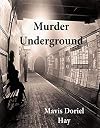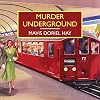
Murder Underground
by Mavis Doriel Hay
On This Page
Description
When Miss Pongleton is found murdered on the stairs of Belsize Park station, her fellow-boarders in the Frampton Hotel are not overwhelmed with grief at the death of a tiresome old woman. But they all have their theories about the identity of the murderer, and help to unravel the mystery of who killed the wealthy 'Pongle'. Several of her fellow residents-even Tuppy the terrier-have a part to play in the events that lead to a dramatic arrest. This classic mystery novel is set in and around show more the Northern Line of the London Underground. It is now republished for the first time since the 1930s, with an introduction by award-winning crime writer Stephen Booth. show lessTags
Recommendations


























Member Reviews
The residents of the Frampton boarding house are shocked to hear that one of their fellow tenants, Euphemia Pongleton (what a name!), has been found dead in Belsize Park tube station. What's more, she's been strangled by a dog leash. Now she may not have been the most popular of the Frampton residents, but that's no excuse to murder her in the Underground. Who could have done the deed and why? Some of the residents take up their own extracurricular investigations.
I very nearly put this book down after the first couple of chapters because I could not stand the pompous, odious Mr. Slocomb, who tries to run the investigation like he knows everything. I didn't want to have to deal with a whole book full of people like that. Fortunately, I show more persevered, and the book ended up being fairly likeable as far as Golden Age mysteries go. The victim's nephew is an upper-class twit straight out of Wodehouse, there's dialect everywhere among the servants, and the police are afflicted with officious tunnel vision. Oh and of course there are a couple of love stories for good measure. It can be slightly bonkers, but Betty, the nephew's love interest, proves a capable sleuth. Worth checking out if you like mysteries set during the interwar years. (Also, once again the British Library adorns it with a very handsome cover for its Crime Classics imprint.) show less
I very nearly put this book down after the first couple of chapters because I could not stand the pompous, odious Mr. Slocomb, who tries to run the investigation like he knows everything. I didn't want to have to deal with a whole book full of people like that. Fortunately, I show more persevered, and the book ended up being fairly likeable as far as Golden Age mysteries go. The victim's nephew is an upper-class twit straight out of Wodehouse, there's dialect everywhere among the servants, and the police are afflicted with officious tunnel vision. Oh and of course there are a couple of love stories for good measure. It can be slightly bonkers, but Betty, the nephew's love interest, proves a capable sleuth. Worth checking out if you like mysteries set during the interwar years. (Also, once again the British Library adorns it with a very handsome cover for its Crime Classics imprint.) show less
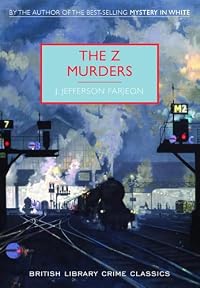
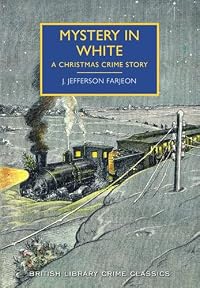
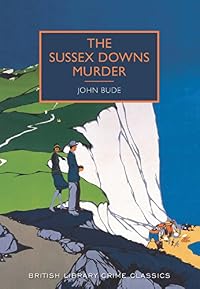
Like John Bude, J. Jefferson Farjeon, and Patricia Wentworth, Mavis Doriel Hay has undeservedly faded into obscurity since her heyday in the Golden Age of detective fiction. A contemporary of Dorothy L. Sayers, Margery Allingham, Josephine Tey, and Dame Agatha Christie, Hay’s novel Murder Underground was praised by no less than Sayers herself, who went on to call one of the novel’s characters and main suspect — the irresponsible, prevaricating dilettante writer Basil Pongleton — “one of the most feckless, exasperating and lifelike literary men that ever confused a trail.”
That said, Murder Underground is no The Murder of Roger Ackroydwhich Murder Underground slightly resembles, with its respected murderer — more like show more Christie’s so-so The Big Four. Still, I enjoyed reading it, although the feckless Basil and other over-the-top characters make so many ridiculous decisions that the novel becomes more of a slapstick comedy than a Golden Age cozy.
In Murder Underground, first released in 1934, the irascible but wealthy spinster Euphemia Pongleton meets her end in a Tube station, strangled by her own dog’s leash. The leash had been stolen from where it usually hung at the entrance to the boarding house where she lived, and suspicion at first falls on a laborer with a slight criminal history. Miss Pongleton’s fellow guests at the boarding house (pompously named the Frampton Private Hotel) theorize about who “done her in,” at first as a lark, but later they plunge into a serious — and ultimately successful — investigation, besting poor police Inspector Caird.
Hay had fun with satirizing the various English stereotypes, from fusty spinster to police plod to ghoulish young women to fastidious bachelor — perhaps too much fun. Even so, readers, even 80 years later, will still enjoy this quick-read, as long as they curb their expectations; therefore, I am still grateful that the British Library has republished the three detective novels Mavis Doriel Hay wrote. show less
That said, Murder Underground is no The Murder of Roger Ackroyd
In Murder Underground, first released in 1934, the irascible but wealthy spinster Euphemia Pongleton meets her end in a Tube station, strangled by her own dog’s leash. The leash had been stolen from where it usually hung at the entrance to the boarding house where she lived, and suspicion at first falls on a laborer with a slight criminal history. Miss Pongleton’s fellow guests at the boarding house (pompously named the Frampton Private Hotel) theorize about who “done her in,” at first as a lark, but later they plunge into a serious — and ultimately successful — investigation, besting poor police Inspector Caird.
Hay had fun with satirizing the various English stereotypes, from fusty spinster to police plod to ghoulish young women to fastidious bachelor — perhaps too much fun. Even so, readers, even 80 years later, will still enjoy this quick-read, as long as they curb their expectations; therefore, I am still grateful that the British Library has republished the three detective novels Mavis Doriel Hay wrote. show less
Clunking narrative, marginal characterisation and a dreadfully blunt reveal. Not recommended.
The setup is good. A residential hotel in North London with a spread of people living there, one who finds herself no longer living. But from there it's downhill. We never meet the first suspect, he's kept offstage. The second is a Woosterish chap who couldn't make himself seem more guilty if he wore a signboard, so clearly it's not him. A typical bit of '30s English morality surfaces as the two jewel thieves are treated so differently: the working class one dismissed and sent to live in Yorkshire (and think yourself lucky it's not Dartmoor, lad), whilst the middle class one kept by his aunt's money and with flexible ideas on property possession show more is lauded by all.
Most of the way through, the author tires of frying up red herrings for us and simply announces "the butler did it"; three times in successive chapters, just to make sure we get the message. Arrest, reconciliations and curtain. There is no drama in this novel. We flip immediately from having literally no clue to suddenly having all of them.
Rewritten, this could make a decent screenplay. The structure is decent, just the focus of the writing is crudely handled, going from a string of distractions suddenly to the conclusion. show less
The setup is good. A residential hotel in North London with a spread of people living there, one who finds herself no longer living. But from there it's downhill. We never meet the first suspect, he's kept offstage. The second is a Woosterish chap who couldn't make himself seem more guilty if he wore a signboard, so clearly it's not him. A typical bit of '30s English morality surfaces as the two jewel thieves are treated so differently: the working class one dismissed and sent to live in Yorkshire (and think yourself lucky it's not Dartmoor, lad), whilst the middle class one kept by his aunt's money and with flexible ideas on property possession show more is lauded by all.
Most of the way through, the author tires of frying up red herrings for us and simply announces "the butler did it"; three times in successive chapters, just to make sure we get the message. Arrest, reconciliations and curtain. There is no drama in this novel. We flip immediately from having literally no clue to suddenly having all of them.
Rewritten, this could make a decent screenplay. The structure is decent, just the focus of the writing is crudely handled, going from a string of distractions suddenly to the conclusion. show less
Miss Euphemia Pongleton is an unpleasant old woman living in a dreary but respectable London boardinghouse. When she is strangled on the steps of the Belsize Park underground station, her fellow boardinghouse residents are surprised rather than saddened; but they soon move past their shock to speculate on who might have done the deed. The police have arrested one suspect, the boyfriend of a maid in the boardinghouse who had been involved with some petty thievery. But the maid is convinced her man is innocent, and the boarders entertain themselves by coming up with alternate theories of the murder. Naturally, Miss Pongleton's nephew Basil, who always seems to need money and who depends on inheriting his aunt's fortune, is a prime show more suspect. But Basil, despite some highly suspicious behavior on the day of the murder, insists that he is innocent. Are his protests a clever ruse, or could someone else in the boardinghouse have wanted Miss Pongleton dead?
This was a very enjoyable Golden Age mystery, although there's really nothing that makes it stand out from the genre as a whole. But sometimes formulaic plots are comforting, and that's why I usually enjoy mysteries from this era. There's the unpleasant murder victim whom we don't need to mourn; a variety of suspects with a variety of motives, secrets, and questionable alibis; the secondary love story; and the amateur detectives who solve the crime without the involvement or assistance of the police. The mystery is well plotted, and I didn't guess who the murderer was (although I suspected almost every character at one point or other). There are also some lovely bits of humor, such as when the boardinghouse residents fight tenaciously -- but silently -- over who gets to sit in Miss Pongleton's chair. All in all, I'd recommend this to fans of Golden Age mysteries, but it's definitely not a stellar example of the genre. show less
This was a very enjoyable Golden Age mystery, although there's really nothing that makes it stand out from the genre as a whole. But sometimes formulaic plots are comforting, and that's why I usually enjoy mysteries from this era. There's the unpleasant murder victim whom we don't need to mourn; a variety of suspects with a variety of motives, secrets, and questionable alibis; the secondary love story; and the amateur detectives who solve the crime without the involvement or assistance of the police. The mystery is well plotted, and I didn't guess who the murderer was (although I suspected almost every character at one point or other). There are also some lovely bits of humor, such as when the boardinghouse residents fight tenaciously -- but silently -- over who gets to sit in Miss Pongleton's chair. All in all, I'd recommend this to fans of Golden Age mysteries, but it's definitely not a stellar example of the genre. show less
Part of the British Library Crime Classics range, MURDER UNDERGROUND follows the case of Ms. Euphemia Pongleton, who was found strangled in the staircase of London's Belsize Park tube station. Under suspicion are her heirs: Her niece Beryl and nephew Basil, as well as the fellow residents and staff of Frampton Private Hotel where Ms. Pongleton lived. Each person has a credible reason to be involved, and The reader learns developments in the investigation along with the characters. I felt that the whodunnit was rather well concealed until the end, which was a great pleasure.
While being necessarily plot-driven, as are most crime novels, this book also featured a generous amount of character detail and development. You really get to know show more these characters, despite the fact that you're with them for less than 300 pages...even though some of them might not be who you are led to believe they are. This masterful blend of characterization and plot in the storytelling was really what kept my interest; I found the book to be a satisfying combination of both. The work read like a literary fiction novel that happened to have a murder at the center. Not a common thing to encounter in the crime fiction genre!
Overall, I found MURDER UNDERGROUND to be completely engrossing, and I hated to put it down. I would be most interested to read this author's other works. show less
While being necessarily plot-driven, as are most crime novels, this book also featured a generous amount of character detail and development. You really get to know show more these characters, despite the fact that you're with them for less than 300 pages...even though some of them might not be who you are led to believe they are. This masterful blend of characterization and plot in the storytelling was really what kept my interest; I found the book to be a satisfying combination of both. The work read like a literary fiction novel that happened to have a murder at the center. Not a common thing to encounter in the crime fiction genre!
Overall, I found MURDER UNDERGROUND to be completely engrossing, and I hated to put it down. I would be most interested to read this author's other works. show less
The British Library provides a great service in republishing various largely forgotten, or at least hard to source, copies of classic crime novels.
This is another of which I had no knowledge of: either as to author (Mavis Doriel Hay) or the book itself. But having picked up a copy at the always interesting Bent Books in west end Brisbane, I am very happy that I read it.
Set in and around the Northern Line of the London Underground, it revolves as to solving the mystery of the murder of the not well liked, elderly Miss Pongleton, who was descending the stairs of the Belize Park station. There are a number of suspects, but much of the fun is watching her nephew, Basil Pongleton, a not very established writer looking to earn enough to be show more able to wed his beloved Beryl, who is widely expected to be the beneficiary of her estate. For reasons which didn't make a lot of sense at the time it happens (but without which there would have not been a book!) Basil does not tell the whole truth as to what he knows of the death of his aunt. And that leads to more and more convoluted dissembling on his part as Basil tries to keep the contradictions straight, whilst the police continue to get closer and closer to nabbing him.
It plays out like a cousin of the shenanigans seen in that classic play (and movie) Arsenic and Old Lace.
The most sensible people in the novel are Beryl and Betty (the later the fiancee of Gerry, another suspect).
The means of identification /capture of the murderer is a little unrealistic, but the identity of the murderer of itself is not beyond the pale.
An amusing romp.
Two interesting snippets:
- I suspect being set in the 1930s but a sign of the times: a number of times people discuss meeting on the following morning and suggest 'pretty early' which turns out to be
10am or later! Times have changed! (see eg p 41)
- 'plane sailing' I always thought it was 'plain sailing' as in plain = easy or ordinary or smooth. But plane sailing is a method of navigating a ship by ignoring the earth's curvature and considering the earth as a plane. In other words, navigating using a method that is simplified. And hence when something is not plane (or plain) sailing, that thing is more complicated than might otherwise have been.
Apparently Hay only wrote 3 books. It would be interesting to see how she approached the other 2, as Hay could not have utilised the clutzy antics of Basil, which are so much of the this book.
Big Ship
22 April 2022 show less
This is another of which I had no knowledge of: either as to author (Mavis Doriel Hay) or the book itself. But having picked up a copy at the always interesting Bent Books in west end Brisbane, I am very happy that I read it.
Set in and around the Northern Line of the London Underground, it revolves as to solving the mystery of the murder of the not well liked, elderly Miss Pongleton, who was descending the stairs of the Belize Park station. There are a number of suspects, but much of the fun is watching her nephew, Basil Pongleton, a not very established writer looking to earn enough to be show more able to wed his beloved Beryl, who is widely expected to be the beneficiary of her estate. For reasons which didn't make a lot of sense at the time it happens (but without which there would have not been a book!) Basil does not tell the whole truth as to what he knows of the death of his aunt. And that leads to more and more convoluted dissembling on his part as Basil tries to keep the contradictions straight, whilst the police continue to get closer and closer to nabbing him.
It plays out like a cousin of the shenanigans seen in that classic play (and movie) Arsenic and Old Lace.
The most sensible people in the novel are Beryl and Betty (the later the fiancee of Gerry, another suspect).
The means of identification /capture of the murderer is a little unrealistic, but the identity of the murderer of itself is not beyond the pale.
An amusing romp.
Two interesting snippets:
- I suspect being set in the 1930s but a sign of the times: a number of times people discuss meeting on the following morning and suggest 'pretty early' which turns out to be
10am or later! Times have changed! (see eg p 41)
- 'plane sailing' I always thought it was 'plain sailing' as in plain = easy or ordinary or smooth. But plane sailing is a method of navigating a ship by ignoring the earth's curvature and considering the earth as a plane. In other words, navigating using a method that is simplified. And hence when something is not plane (or plain) sailing, that thing is more complicated than might otherwise have been.
Apparently Hay only wrote 3 books. It would be interesting to see how she approached the other 2, as Hay could not have utilised the clutzy antics of Basil, which are so much of the this book.
Big Ship
22 April 2022 show less
This is an entertaining Golden Age whodunnit murder mystery set in England in the 1930s. A female resident of the Frampton Private Hotel (an upscale boarding house) in London is strangled with a dog leash on her way to her dentist. Miss Euphemia Pongleton was wealthy, but tight-fisted with her money, and was not liked. No one really mourns her passing. A Frampton housemaid's boyfriend is an early suspect. Miss Pongleton caught him with a stolen broach and threatened to turn him into the police. He was working in the Underground station where she was killed at the time of her murder. He was therefore thought to have motive and opportunity.
The police are in the background for most of the story as Miss Pongleton's family and other show more residents of the Frampton go about protecting each other from suspicion. It's not a police procedural mystery in the usual sense: any sleuthing is done by amateur detectives. In the end the amateurs succeed in identifying the killer for the police.
It's a puzzle type of murder mystery, with the whereabouts of the various suspects at the time of the murder being important to determine. Much of the story is taken up with putting this information together. It is briskly paced and easy to read. The British slang in the dialogue is dated from today's perspective, but can be deciphered without difficulty.
As in most British Library Crime Classics, there is an informative Introduction which provides commentary on the story and background information about the author. The Introduction in this book is by Stephen Booth, a British mystery writer. It's worth reading. show less
The police are in the background for most of the story as Miss Pongleton's family and other show more residents of the Frampton go about protecting each other from suspicion. It's not a police procedural mystery in the usual sense: any sleuthing is done by amateur detectives. In the end the amateurs succeed in identifying the killer for the police.
It's a puzzle type of murder mystery, with the whereabouts of the various suspects at the time of the murder being important to determine. Much of the story is taken up with putting this information together. It is briskly paced and easy to read. The British slang in the dialogue is dated from today's perspective, but can be deciphered without difficulty.
As in most British Library Crime Classics, there is an informative Introduction which provides commentary on the story and background information about the author. The Introduction in this book is by Stephen Booth, a British mystery writer. It's worth reading. show less
Members
- Recently Added By
Lists

British Mystery
469 works; 14 members

Boarding House and Hotel Fiction
73 works; 25 members

Books Read in 2016
4,666 works; 199 members

Books Read in 2022
5,164 works; 113 members

#JustTheFacts2023Gold
60 works; 1 member
Author Information
9 Works 1,205 Members
Some Editions
Series
Belongs to Publisher Series
British Library Crime Classics (Novel)
Common Knowledge
- Canonical title
- Murder Underground
- Original publication date
- 1934
- People/Characters
- Basil Pongleton; Euphemia Pongelton; Cissie Fain; Betty Watson; Joseph Slocomb
- Important places
- London, England, UK; Hampstead, London, England, UK
- First words
- Dozens of Hampstead people must have passed the door of the Frampton Private Hotel - as the boarding house where Miss Euphemia Pongleton lived was grandly called - on a certain Friday morning in March 1934, without noticing a... (show all)nything unusual.
- Last words
- (Click to show. Warning: May contain spoilers.)So we will leave Betty and Basil to their reminiscences as they swing across the Heath in the sunshine.
- Blurbers
- Sayers, Dorothy L.
- Original language*
- English
*Some information comes from Common Knowledge in other languages. Click "Edit" for more information.
Classifications
Statistics
- Members
- 378
- Popularity
- 82,425
- Reviews
- 19
- Rating
- (3.17)
- Languages
- English
- Media
- Paper, Audiobook, Ebook
- ISBNs
- 12
- ASINs
- 7