Native American Wisdom
by Louise Mengelkoch
On This Page
Description
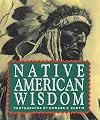
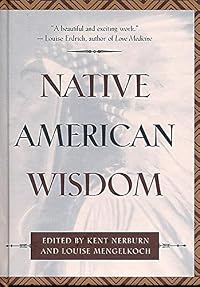
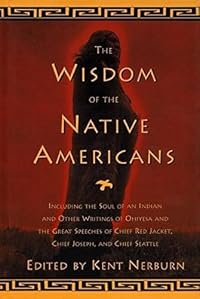
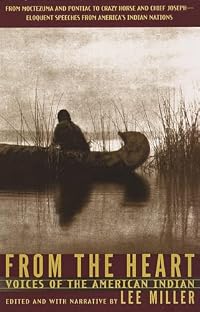
Joseph, Sitting Bull, Red Cloud, Black Elk, Ohiyesa, and many others share their insights on Native American ways of living, learning, and dying. There is something archetypal about the philosophy of the original Americans, especially to the sensibilities of modern European Americans. We recognize it as coming from the earth we walk on, from those who preceded us. As we read the wisdom of these peoples, it is possible to feel a reconnection with our land and ourselves. Taken from orations, show more recorded observations of life and social affairs, and other first-person testimonies, this book selects the best of Native American wisdom and distills it to its essence in short, digestible quotes that are meaningful and timeless - perhaps even more timely now than when they were written. show lessTags
Recommendations



















Member Reviews
It would unconventional to find a truly balanced perspective on the Indians. This collection of quotes shows one very positive side and there is some wisdom to be gleaned. Chief Seattle of the Suqwamish and Duamish: "The red man has ever fled the approach of the white man, as the morning mist flees before the morning sun.... It matters little where we pass the remnants of our days. They will not be many. But why should I mourn the untimely fate of my people? Your time of decay may be distant, but it will surely come, for even the white man, whose God walked and talked with him as a friend with friend, cannot be exempt from the common destiny. We may be brothers, after all. We will see." Chief Joseph (Nez Perce): "It does not require show more many words to speak the truth." Charles Alexander Eastman "Ohiyesa" (Santee Sioux): "It was our belief that the love of possessions is a weakness to be overcome. Its appeal is the the material part, and it allowed its way, it will in time disturb one's spiritual balance." Four Guns (Oglala Sioux): "Many of the white man's ways are past our understanding.... They put a great store upon writing; there is always paper. The white people must think paper has some mysterious power to help them in the world. The Indian needs no writings; words that are true sink deep into his heart, where they remain. He never forgets them. On the other hand, if the white man loses his papers, he is helpless." show less
Very good condition.
Acceptable
Ratings
Members
- Recently Added By
Author Information
1 Work 421 Members
Common Knowledge
- First words
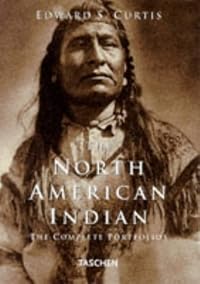
- By 1868, when Edward Sherriff Curtis was born, the Civil War had ended and America's attentioon had shifted to the final taming of the West.
- Last words
- (Click to show. Warning: May contain spoilers.)Look upon these faces of children without number and with children in their arms, that they may face the winds and walk the good road to the day of quiet.
Classifications
Statistics
- Members
- 422
- Popularity
- 73,075
- Reviews
- 3
- Rating
- (4.20)
- Languages
- English
- Media
- Paper, Audiobook, Ebook
- ISBNs
- 7
- UPCs
- 1
- ASINs
- 4