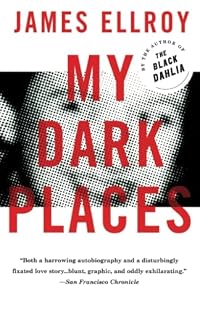
My Dark Places
by James Ellroy
On This Page
Description
The internationally acclaimed author of the L.A. Quartet and The Underworld USA Trilogy presents another literary masterpiece, this time a true crime murder mystery about his own mother.In 1958 Jean Ellroy was murdered, her body dumped on a roadway in a seedy L.A. suburb. Her killer was never found, and the police dismissed her as a casualty of a cheap Saturday night. James Ellroy was ten when his mother died, and he spent the next thirty-six years running from her ghost and attempting show more to exorcize it through crime fiction. In 1994, Ellroy quit running. He went back to L.A., to find out the truth about his mother—and himself.
In My Dark Places, our most uncompromising crime writer tells what happened when he teamed up with a brilliant homicide cop to investigate a murder that everyone else had forgotten—and reclaim the mother he had despised, desired, but never dared to love. What ensues is a epic of loss, fixation, and redemption, a memoir that is also a history of the American way of violence. Biography & Autobiography. True Crime. Nonfiction. Sociology. show less
Tags
Recommendations

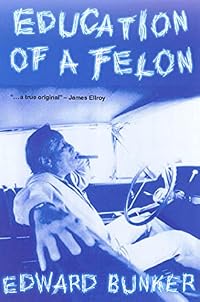
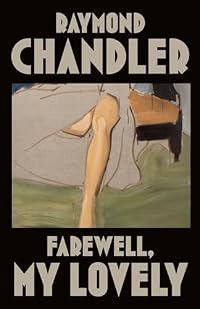
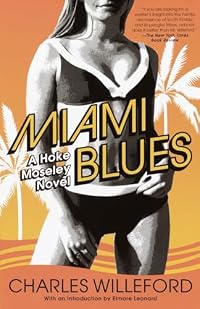
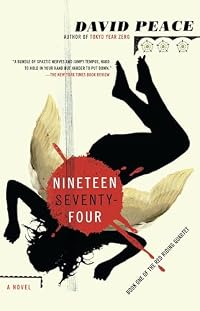
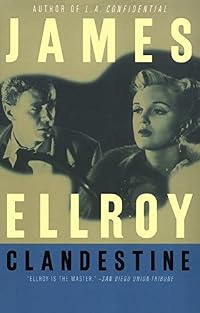
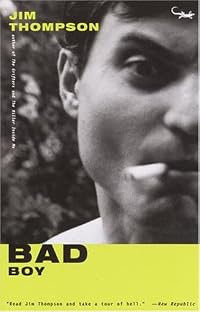
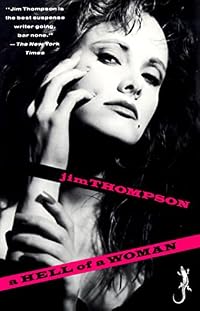
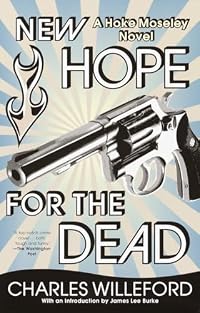
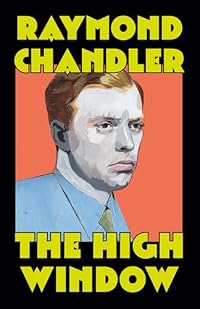
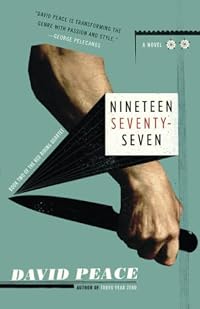
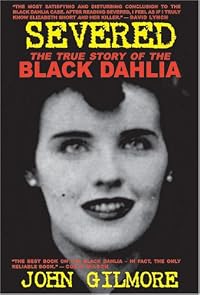
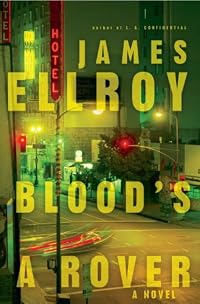
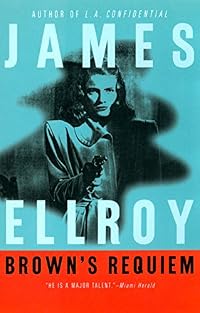
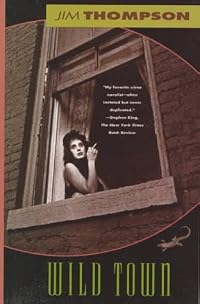
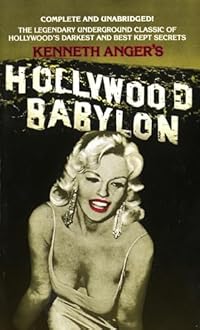
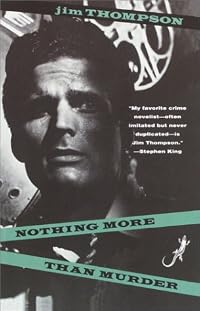
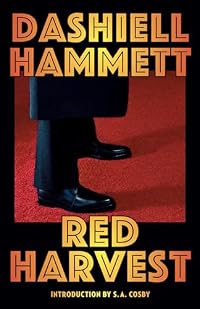
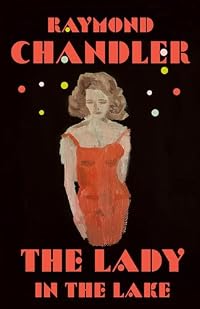
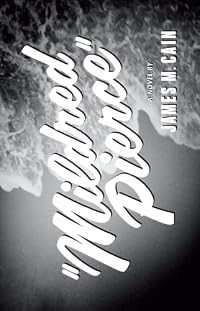
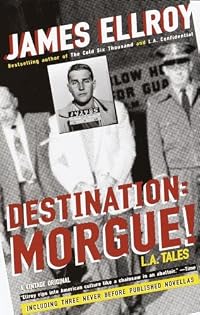


Member Recommendations

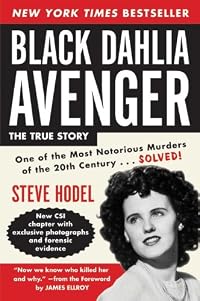
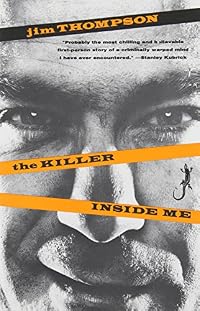
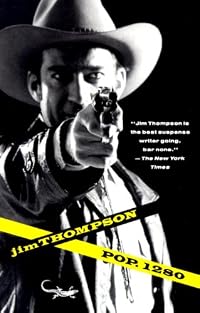
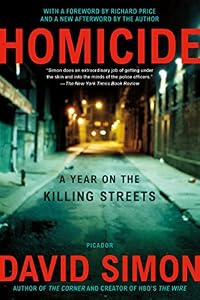
RidgewayGirl Another memoir by a son who lost his mother to murder, this is less a mystery to be solved than a deeper exploration on the impact her death had on him.
Member Reviews
Because there is no secret what this book is about, I didn’t feel the need to mark it as containing spoilers. If, however, you are coming at this book cold, and don’t know the well-publicized story of Ellroy’s dark past, you might want to skip this review.
While I loved the film adaptation of Ellroy’s L.A. Confidential, I must confess that he isn’t a favorite of mine. But I am aware of his work and have read enough to know he’s certainly got something, even if it isn't my cup of tea. In essence, this autobiographical memoir is another crime novel from James Ellroy, and like all great crime novels, this one begins with a compelling murder. Kids playing baseball would find her body in some ivy in El Monte, California. From a show more disheveled dress and an exposed upper chest, to ligatures constricted with such force they were only three inches in diameter, Ellroy describes the crime scene and those opening weeks of the investigation with his familiar staccato style. There is more here than meets the eye, however, because reading this is tantamount to listening in on a therapy session as a patient purges his inner demons. We begin to see a picture of a 10 year old boy whose entire life has been ruled by a crime; not just any crime, but the brutal murder of that pretty redheaded woman in the ivy. Her name was Jean Ellroy. That boy is author James Ellroy.
She got a divorce and started over in El Monte with her son. She tried to balance the two worlds of her drinking and promiscuity with her work as a nurse and the solid life she was trying to give her son. Those two worlds would merge on a King's Row curb. This memoir is a dance of reconciliation for Ellroy, an attempt to separate her death from her life, and make her ghost become a real person. Brutal and unflinching in its honesty, this memoir is not for the squeamish or faint of heart. It is a true crime story that reads like a police procedural. The crimes are real. The people — especially Ellroy — are messed up. The names have not been changed, because there are no innocents.
Once we realize this is Ellroy's love letter to his slain mother, we can't put it down. Ellroy describes in detail and with brutal candor the bitterness between his mother and father, and the war they fought for his loyalty — the worst thing you can do to a kid. Once she was dead, he would obsess over her, and run from her murder his entire adult life. He spouted racist propaganda and hate just to get attention. The parenting skills of his father, which can best be described as permissive neglect, left him with too much freedom and far too much time on his hands. Time he would use for elaborate fantasies about his mother. He formed an obsession with the Betty Short-Black Dahlia murder, who became a surrogate for his mother. And in every fantasy, Ellroy would save women in a way he could not save his own mother, and they would be grateful. His torment led to years of drug and alcohol abuse, finally escalating into voyeurism and crime. This produced temporary highs finally coming to a screeching halt when his mind had had enough, and decided to take a timeout. Once Ellroy got his mind working again, he found work as a golf caddy and began writing crime novels. After some success, he finally decided to face his mother's ghost by solving her murder. Unbelievably, this memoir has just begun.
Detective Bill Stoner was living with dead women as well, and Ellroy brings them all to life for the reader as he takes us into the world of cops and crime. Cops like Stoner knew about obsession. Ellroy explains that almost all homicide cops love the old film "Laura." Because they too have all fallen in love with dead girls, just like Dana Andrews does in this cinematic masterpiece. Stoner was leaving the job after 32 years, the last 12 spent in homicide. Stoner was a well known and respected cop willing to help Ellroy find closure. Stoner was the cop responsible for solving the famous Cotton Club murder, and felt he understood Ellroy, because both were living with dead girls. Ellroy pays homage to the ghosts of Stoner's women along the way, making sure you will always remember names like Bunny Krauch and Susan Hamway. You will remember a baby murdered by proxy. Perhaps foremost, you will remember young and innocent Tracy Lea Stewart. Convictions could never equal closure.
In this dark and mesmerizing memoir the reader spends over a year with Stoner and Ellroy as they probe the memories of old cops and witnesses, and chase down leads. They would go public in GQ Magazine and on TV with Unsolved Mysteries. Though this memoir is brutal and sad, it is also tense and exciting, and at times, very funny. I cannot tell you the ending, or even if there is one. What I have described of this brilliant book is only the tip of the iceberg. It’s not an easy read, it is filled with unpleasantness, and some creepy revelations about Elroy himself. It isn’t for the delicate, so it will definitely not appeal to everyone. But if you can grit your teeth and take it, it is very compelling. A brave if sometimes very unpleasant look inward by Ellroy that you will never forget after turning the final page. Unfortunately, you will never forget a lot of things, so be forewarned, this will definitely take you out of your comfort zone. show less
While I loved the film adaptation of Ellroy’s L.A. Confidential, I must confess that he isn’t a favorite of mine. But I am aware of his work and have read enough to know he’s certainly got something, even if it isn't my cup of tea. In essence, this autobiographical memoir is another crime novel from James Ellroy, and like all great crime novels, this one begins with a compelling murder. Kids playing baseball would find her body in some ivy in El Monte, California. From a show more disheveled dress and an exposed upper chest, to ligatures constricted with such force they were only three inches in diameter, Ellroy describes the crime scene and those opening weeks of the investigation with his familiar staccato style. There is more here than meets the eye, however, because reading this is tantamount to listening in on a therapy session as a patient purges his inner demons. We begin to see a picture of a 10 year old boy whose entire life has been ruled by a crime; not just any crime, but the brutal murder of that pretty redheaded woman in the ivy. Her name was Jean Ellroy. That boy is author James Ellroy.
She got a divorce and started over in El Monte with her son. She tried to balance the two worlds of her drinking and promiscuity with her work as a nurse and the solid life she was trying to give her son. Those two worlds would merge on a King's Row curb. This memoir is a dance of reconciliation for Ellroy, an attempt to separate her death from her life, and make her ghost become a real person. Brutal and unflinching in its honesty, this memoir is not for the squeamish or faint of heart. It is a true crime story that reads like a police procedural. The crimes are real. The people — especially Ellroy — are messed up. The names have not been changed, because there are no innocents.
Once we realize this is Ellroy's love letter to his slain mother, we can't put it down. Ellroy describes in detail and with brutal candor the bitterness between his mother and father, and the war they fought for his loyalty — the worst thing you can do to a kid. Once she was dead, he would obsess over her, and run from her murder his entire adult life. He spouted racist propaganda and hate just to get attention. The parenting skills of his father, which can best be described as permissive neglect, left him with too much freedom and far too much time on his hands. Time he would use for elaborate fantasies about his mother. He formed an obsession with the Betty Short-Black Dahlia murder, who became a surrogate for his mother. And in every fantasy, Ellroy would save women in a way he could not save his own mother, and they would be grateful. His torment led to years of drug and alcohol abuse, finally escalating into voyeurism and crime. This produced temporary highs finally coming to a screeching halt when his mind had had enough, and decided to take a timeout. Once Ellroy got his mind working again, he found work as a golf caddy and began writing crime novels. After some success, he finally decided to face his mother's ghost by solving her murder. Unbelievably, this memoir has just begun.
Detective Bill Stoner was living with dead women as well, and Ellroy brings them all to life for the reader as he takes us into the world of cops and crime. Cops like Stoner knew about obsession. Ellroy explains that almost all homicide cops love the old film "Laura." Because they too have all fallen in love with dead girls, just like Dana Andrews does in this cinematic masterpiece. Stoner was leaving the job after 32 years, the last 12 spent in homicide. Stoner was a well known and respected cop willing to help Ellroy find closure. Stoner was the cop responsible for solving the famous Cotton Club murder, and felt he understood Ellroy, because both were living with dead girls. Ellroy pays homage to the ghosts of Stoner's women along the way, making sure you will always remember names like Bunny Krauch and Susan Hamway. You will remember a baby murdered by proxy. Perhaps foremost, you will remember young and innocent Tracy Lea Stewart. Convictions could never equal closure.
In this dark and mesmerizing memoir the reader spends over a year with Stoner and Ellroy as they probe the memories of old cops and witnesses, and chase down leads. They would go public in GQ Magazine and on TV with Unsolved Mysteries. Though this memoir is brutal and sad, it is also tense and exciting, and at times, very funny. I cannot tell you the ending, or even if there is one. What I have described of this brilliant book is only the tip of the iceberg. It’s not an easy read, it is filled with unpleasantness, and some creepy revelations about Elroy himself. It isn’t for the delicate, so it will definitely not appeal to everyone. But if you can grit your teeth and take it, it is very compelling. A brave if sometimes very unpleasant look inward by Ellroy that you will never forget after turning the final page. Unfortunately, you will never forget a lot of things, so be forewarned, this will definitely take you out of your comfort zone. show less
(7) This started off excellent. I had never read Ellroy before and I was taken in by his gritty, declarative style. The old police files were particularly effective. His honesty about how he was feeling as a boy about his mother and her murder were powerful. Most authors would shy away from such admissions. His subsequent slide into vagrancy and addiction was written with no excuses, yet was strangely poignant. There was a rather quick pivot to him being a successful crime writer and then he returns to LA to try and solve his mother's cold case. It was this part of the book that was less compelling for me.
I felt as if this book was perhaps 100 -150 pages too long. There was quite a bit of detail about a different murder that his cop show more buddy, Stoner, investigated that failed to register with me. It made me almost skim at times - it seems as if it shouldn't have been included as it detracted from the power of the main story. As he and Stoner re-looked at case files and interviewed octogenarians one felt there is a reason for all this detail, but the payoff was never there. Connecting with his mother's family he could have done without trying and reporting ad nauseum to solve her case. In the end, getting to know his mother as a person and not a victim was what he took away.
Overall, I admired Ellroy's willingness to descend into darkness - dark disturbing feelings, realizations, admissions without shame or psychoanalysis. I will definitely plan to read 'The Black Dahlia' at some point. While in the end, this does not quite make it to a top tier book for me, I think it is haunting; I think the author is haunted... show less
I felt as if this book was perhaps 100 -150 pages too long. There was quite a bit of detail about a different murder that his cop show more buddy, Stoner, investigated that failed to register with me. It made me almost skim at times - it seems as if it shouldn't have been included as it detracted from the power of the main story. As he and Stoner re-looked at case files and interviewed octogenarians one felt there is a reason for all this detail, but the payoff was never there. Connecting with his mother's family he could have done without trying and reporting ad nauseum to solve her case. In the end, getting to know his mother as a person and not a victim was what he took away.
Overall, I admired Ellroy's willingness to descend into darkness - dark disturbing feelings, realizations, admissions without shame or psychoanalysis. I will definitely plan to read 'The Black Dahlia' at some point. While in the end, this does not quite make it to a top tier book for me, I think it is haunting; I think the author is haunted... show less
My Dark Places is a memoir as only James Ellroy can write one.
The book comprises three sections—the first is a third-person narrative of his mother’s murder in 1958 and the criminal investigation that failed to solve the crime. For the second part, Mr. Ellroy switches to a first-person POV and tells us the story of his troubled youth and young adulthood. The third, concluding section maintains the first-person perspective and recounts how Mr. Ellroy teamed up with a retired homicide detective to reopen his mother’s murder case 30 years later and search for better answers.
Each section on its own is compelling. Taken together—they don’t quite fit. As a whole, this book feels discordant, as though the author hasn’t entirely show more figured out what he wants to do with these threads.
This sense of disconnection is entirely appropriate. His mother’s murder determined the course of his life, in ways large and small, and he spent much of his life running from the truth of that fact. This is the story of his quest to finally figure out what her murder means, to define the shape and echoes of that event, to determine how that truth fits.
I admire that Mr. Ellroy has the courage to publish a book without fully knowing the answer.
Stylistically, this book has some failings. In the final part of the work, he devotes a great deal of time to an account of a different murder that’s only tangentially related to his mother’s. It’s frustrating. It scatters focus.
Mr. Ellroy’s distinctive writing style works exceptionally well when he describes murder scenes and investigations. When he writes about his truant childhood and his drug-addled young adulthood as a petty criminal, his style becomes reminiscent of Hunter S. Thompson—either Mr. Ellroy is admirably self-aware and brutally honest, or he equals Mr. Thompson’s talent for sheer self-aggrandizement. Or both.
He never finds a fully effective voice for the first-person parts of the story, particularly when it comes to reopening the investigation of his mother’s murder. The patented Ellroy writing style, which gives his fiction its unique character, comes off as gimmicky and false when applied to such a personal story.
Mr. Ellroy makes no bones of the fact that the antiheroes of his fiction are transposed versions of himself. In this memoir, he writes himself as one of his antiheroes—and it doesn’t ring true. The tough and jaded persona of Mr. Ellroy-as-antihero admits too little vulnerability, it dehumanizes him in those moments when the reader needs most to relate to him on an essentially human level.
Mr. Ellroy’s fictional work is built on grand narrative principles—he has strong convictions regarding the inner workings of the criminal psyche, of how the darkest parts of our world work. These convictions lend his fiction tremendous resonance and power, it’s what allows him to dredge in the muck of the underbelly of mankind and transmogrify it into something universal and sublime.
Applied to the tale of his own life, these convictions border on facile—pat answers to the complexity and ambiguity of real human relationships. Insights meant to be profound and illuminating come off as rather pathetic and obvious cookie-cutter amateur psychology. Grand principle becomes oversimplification, and it comes off as an essential inability to face the hard and complicated truth of the real world.
He works so hard to make everything about his life the sublimated aftereffects of his mother, it leaves no room for subtlety or nuance. This is not to say that his conclusions aren't valid, but he beats at the theme with a sledgehammer, rather than chipping away at it like a sculptor.
In a memoir such as this, his typical grand narrative principles constrict. They force the story to fit his preconceived ideas, rather than allowing it be fully personal. These conceits substantially blunt what should be a more deeply moving tale.
In the end, this is an interesting memoir specifically for the fact that no one but Mr. Ellroy could write one quite like it. As an insight into his mind and his obsessions, this work clearly holds interest for Ellroy fans. It’s a fascinating tale, all told, and My Dark Places is worth the read. But it tries too hard to be an Ellroy novel when it should be a more intimate and honest story.
This isn't an Ellroy masterpiece. show less
The book comprises three sections—the first is a third-person narrative of his mother’s murder in 1958 and the criminal investigation that failed to solve the crime. For the second part, Mr. Ellroy switches to a first-person POV and tells us the story of his troubled youth and young adulthood. The third, concluding section maintains the first-person perspective and recounts how Mr. Ellroy teamed up with a retired homicide detective to reopen his mother’s murder case 30 years later and search for better answers.
Each section on its own is compelling. Taken together—they don’t quite fit. As a whole, this book feels discordant, as though the author hasn’t entirely show more figured out what he wants to do with these threads.
This sense of disconnection is entirely appropriate. His mother’s murder determined the course of his life, in ways large and small, and he spent much of his life running from the truth of that fact. This is the story of his quest to finally figure out what her murder means, to define the shape and echoes of that event, to determine how that truth fits.
I admire that Mr. Ellroy has the courage to publish a book without fully knowing the answer.
Stylistically, this book has some failings. In the final part of the work, he devotes a great deal of time to an account of a different murder that’s only tangentially related to his mother’s. It’s frustrating. It scatters focus.
Mr. Ellroy’s distinctive writing style works exceptionally well when he describes murder scenes and investigations. When he writes about his truant childhood and his drug-addled young adulthood as a petty criminal, his style becomes reminiscent of Hunter S. Thompson—either Mr. Ellroy is admirably self-aware and brutally honest, or he equals Mr. Thompson’s talent for sheer self-aggrandizement. Or both.
He never finds a fully effective voice for the first-person parts of the story, particularly when it comes to reopening the investigation of his mother’s murder. The patented Ellroy writing style, which gives his fiction its unique character, comes off as gimmicky and false when applied to such a personal story.
Mr. Ellroy makes no bones of the fact that the antiheroes of his fiction are transposed versions of himself. In this memoir, he writes himself as one of his antiheroes—and it doesn’t ring true. The tough and jaded persona of Mr. Ellroy-as-antihero admits too little vulnerability, it dehumanizes him in those moments when the reader needs most to relate to him on an essentially human level.
Mr. Ellroy’s fictional work is built on grand narrative principles—he has strong convictions regarding the inner workings of the criminal psyche, of how the darkest parts of our world work. These convictions lend his fiction tremendous resonance and power, it’s what allows him to dredge in the muck of the underbelly of mankind and transmogrify it into something universal and sublime.
Applied to the tale of his own life, these convictions border on facile—pat answers to the complexity and ambiguity of real human relationships. Insights meant to be profound and illuminating come off as rather pathetic and obvious cookie-cutter amateur psychology. Grand principle becomes oversimplification, and it comes off as an essential inability to face the hard and complicated truth of the real world.
He works so hard to make everything about his life the sublimated aftereffects of his mother, it leaves no room for subtlety or nuance. This is not to say that his conclusions aren't valid, but he beats at the theme with a sledgehammer, rather than chipping away at it like a sculptor.
In a memoir such as this, his typical grand narrative principles constrict. They force the story to fit his preconceived ideas, rather than allowing it be fully personal. These conceits substantially blunt what should be a more deeply moving tale.
In the end, this is an interesting memoir specifically for the fact that no one but Mr. Ellroy could write one quite like it. As an insight into his mind and his obsessions, this work clearly holds interest for Ellroy fans. It’s a fascinating tale, all told, and My Dark Places is worth the read. But it tries too hard to be an Ellroy novel when it should be a more intimate and honest story.
This isn't an Ellroy masterpiece. show less
Ho comprato questo libro dopo aver ascoltato un'intervista con Ellroy. Poi l'ho lasciato lì perché ho un'allergia per le storie vere, dichiaratamente autobiografiche. Ora l'ho letto, e posso dire che è più romanzo che documento. Ellroy scrive dannatamente bene, Ellroy sa universalizzare in maniera superba la sua personale vicenda, ma non è solo questo. E' che queste pagine sono di un'onestà umana e intellettuale che lascia allibiti. Talmente allibiti da dimenticare che è una storia vera, la sua, perché non ti pare possibile che qualcuno abbia la forza di mostrarsi così. Più che nudo: inerme. Ellroy ha deciso di scriverla, questa storia, e lo fa fino in fondo, senza risparmiarsi nulla, senza nascondersi.
Davvero notevole.
Davvero notevole.
James Elroy carved out a place for himself with a unique voice and a keen eye for a nostalgic, if bloody, tinged Los Angeles. Turns out the seeds of that aesthetic were sown in the childhood loss of his mother in a very violent homicide. He reexamines the cold case several decades later, after the success of his work. The most interesting things in the book were his minutely detailed description of how law enforcement worked homicides in the '50s and handled cold cases in the decades following, and the descriptions of Los Angeles. The least interesting thing was the personal side of the equation, which was a surprise. Throughout, he seems detached from his mother's murder and his own squalid youth. Not as good as I'd expected, show more especially after enjoying some of his fiction. show less
I was thinking about writing a review of this book, when by coincidence I saw a claim made on social media. It was that those labelled "far right extremists" have in fact many positive attributes, one of which is "aversion to drugs, alcohol and pornography."
The book was half a century ago, but if things haven't changed too much, it gives lie to the claim.
Ellroy's book is part autobiography, part investigation into his mother's murder. It's interesting for his account of his early life as a burglar, drug addict, listener to right—wing radio shows, and what these days might be called an edgelord:
"The early '60s were good comic fodder. I took contrary stands on the A-bomb, John Kennedy, civil rights and the Berlin Wall brouhaha. I show more yelled' Free Rudolph Hess! ' and advocated the reinstalment of slavery.
... I invited a few kids to my pad- and watched them recoil at the stench of dogshit [from an unhousetrained pet]. I tried to conform to their standards of normal behaviour and betrayed myself with foul language, poor hygiene and expressed admiration for George Lincoln Rockwell and the American Nazi Party. "(pp. 119-121)
As it turned out, Ellroy got himself together, cleaned up his lifestyle, and became a successful novelist. From the book it seems two things helped him. Firstly, religion, and secondly, a structured abstinence programme/meetings:
"I knew that booze, drugs, and my tenuous abstention from them caused my brain burnout. My rational side told me that. My secondary response derived straight from guilt. God punished me for mentally fucking my mother.
... My lung abscess healed completely. I checked out of the hospital and cut a deal with God.
I told him I wouldn't drink or pop inhalers. I told him I wouldn't steal. All I wanted was my mind back for keeps.
The deal jelled. "
(pp. 160-161)
" I was hungry. I wanted love and sex. I wanted to give my mental stories to the world.
... Lloyd cleaned up in AA. He told me total abstinence was better than booze and dope at its best. I believed him. He was always smarter and stronger and more resourceful than me.
I followed his lead. I said "Fuck it" and shrugged off my old life. "
-p. 164
Early parts of the book make for an unusual crime memoir. There's none of the normal self-aggrandising bullshit of the genre. Instead, in jail:
"I hung out with stupid white guys, stupid black guys and stupid Mexican guys - and swapped stupid stories with them. We had all committed daring crimes and fucked the world's most glamorous women. An old black wino told me he fucked Marilyn Monroe. I said, "No shit-I fucked her too!"
(p. 154)
Even without the murder it's a sad story.
" My mother was drinking more. She'd crank highballs at night and get pissed off, maudlin or effusive. I found her in bed with men a couple of times. The guys had that '50s lounge-lizard look. They probably sold used cars or repossessed them.
... My parents were unable to talk in a civil fashion. They did not exchange words under any circumstances. Their expressions of hatred were reserved for me: He's a weakling; she's a drunk and a whore. I believed him - and wrote her accusations off as hogwash. I was blind to the fact that her accusations carried a greater basis in truth. "
-p. 95 show less
The book was half a century ago, but if things haven't changed too much, it gives lie to the claim.
Ellroy's book is part autobiography, part investigation into his mother's murder. It's interesting for his account of his early life as a burglar, drug addict, listener to right—wing radio shows, and what these days might be called an edgelord:
"The early '60s were good comic fodder. I took contrary stands on the A-bomb, John Kennedy, civil rights and the Berlin Wall brouhaha. I show more yelled' Free Rudolph Hess! ' and advocated the reinstalment of slavery.
... I invited a few kids to my pad- and watched them recoil at the stench of dogshit [from an unhousetrained pet]. I tried to conform to their standards of normal behaviour and betrayed myself with foul language, poor hygiene and expressed admiration for George Lincoln Rockwell and the American Nazi Party. "(pp. 119-121)
As it turned out, Ellroy got himself together, cleaned up his lifestyle, and became a successful novelist. From the book it seems two things helped him. Firstly, religion, and secondly, a structured abstinence programme/meetings:
"I knew that booze, drugs, and my tenuous abstention from them caused my brain burnout. My rational side told me that. My secondary response derived straight from guilt. God punished me for mentally fucking my mother.
... My lung abscess healed completely. I checked out of the hospital and cut a deal with God.
I told him I wouldn't drink or pop inhalers. I told him I wouldn't steal. All I wanted was my mind back for keeps.
The deal jelled. "
(pp. 160-161)
" I was hungry. I wanted love and sex. I wanted to give my mental stories to the world.
... Lloyd cleaned up in AA. He told me total abstinence was better than booze and dope at its best. I believed him. He was always smarter and stronger and more resourceful than me.
I followed his lead. I said "Fuck it" and shrugged off my old life. "
-p. 164
Early parts of the book make for an unusual crime memoir. There's none of the normal self-aggrandising bullshit of the genre. Instead, in jail:
"I hung out with stupid white guys, stupid black guys and stupid Mexican guys - and swapped stupid stories with them. We had all committed daring crimes and fucked the world's most glamorous women. An old black wino told me he fucked Marilyn Monroe. I said, "No shit-I fucked her too!"
(p. 154)
Even without the murder it's a sad story.
" My mother was drinking more. She'd crank highballs at night and get pissed off, maudlin or effusive. I found her in bed with men a couple of times. The guys had that '50s lounge-lizard look. They probably sold used cars or repossessed them.
... My parents were unable to talk in a civil fashion. They did not exchange words under any circumstances. Their expressions of hatred were reserved for me: He's a weakling; she's a drunk and a whore. I believed him - and wrote her accusations off as hogwash. I was blind to the fact that her accusations carried a greater basis in truth. "
-p. 95 show less
A driven, ambitious, talented and successful crime author cashes in on his mother's murder. Does he get away with it? Not quite. The clue is in the final sentence of the book's final chapter. Nevertheless, a fascinating and unique literary failure. "Dead people belong to the live people who claim them most obsessively," writes Ellroy. One wonders if this is either fair or true, altough I have thought the same thing myself.
Also interesting in My Dark Places is Ellroy's off-hand dismissal of his earlier novels.
Also interesting in My Dark Places is Ellroy's off-hand dismissal of his earlier novels.
Members
- Recently Added By
Lists

Read These Too
458 works; 9 members

Books featuring alcoholics
103 works; 18 members
Author Information

James Ellroy was born in Los Angeles in 1948. His L. A. Quartet novels - "The Black Dahlia", "The Big Nowhere", "L. A. Confidential", & "White Jazz" - were international best-sellers. His novel "American Tabloid" was Time magazine's Novel of the Year for 1995; his memoir, "My Dark Places", was a "Time" Best Book of the Year & a "New Yorker Times" show more Notable Book for 1996. He lives in Kansas City. (Publisher Provided) James Ellroy was born in Los Angeles, California on March 4, 1948. His parents were divorced and he moved in with his father after his mother was murdered in 1958. The story of his mother's unsolved murder would become the basis for his 1996 nonfiction work entitled My Dark Places. He attended Fairfax High School, where he sent Nazi pamphlets to girls he liked and criticized JFK, while advocating the reinstatement of slavery. He was eventually expelled for preaching Nazism in his English class. He joined the army after his expulsion from school, but after realizing that he did not belong there, he faked a stutter and convinced the army psychologist that he was not mentally fit for combat. After three months, he received a dishonorable discharge and returned home. His father died soon thereafter. He was thrown in juvenile hall for stealing a steak from the local market. When he got out, his father's friend became his guardian, but by the age of eighteen, he was back on the streets. He was sleeping outside, stealing, drinking and experimenting with drugs. It wasn't long before he was thrown in jail for breaking into a vacant apartment. When he got out of jail, he started a job at an adult book store, his addictions growing progressively larger. He was misusing the drug Benzedrex, a sinus inhalent which nearly drove him to Schizophrenia and his drinking was ruining his health. He contracted pneumonia twice as well as a condition called post-alchohol brain syndrome. Fearing for his sanity, he joined AA, became sober and found a job as a golf caddy. At the age of 30, he wrote his first novel entitled Brown's Requiem, which was published in 1981. His other works include Clandestine, Blood on the Moon, Because the Night, Suicide Hill, Killer on the Road, and The Cold Six Thousand. His works The Black Dahlia and L. A. Confidential were adapted into feature films. Ellroy's title, Perfidia, made the New York Times bestseller list in 2014. 030i show less
Awards and Honors
Awards
Notable Lists
Common Knowledge
- Canonical title
- My Dark Places
- Original title
- My Dark Places
- Original publication date
- 1996
- People/Characters
- James Ellroy; Geneva "Jean" Ellroy
- Important places
- Los Angeles, California, USA
- Dedication
- To Helen Knode
- First words*
- Een paar jongens hebben haar gevonden.
Het slachtoffer was een vierentwintigjarige blonde vrouw. - Last words*
- (Click to show. Warning: May contain spoilers.)Het verhoor werd om één uur 's middags afgesloten.
- Original language*
- Inglese
*Some information comes from Common Knowledge in other languages. Click "Edit" for more information.
Classifications
Statistics
- Members
- 1,739
- Popularity
- 12,608
- Reviews
- 20
- Rating
- (3.86)
- Languages
- 13 — Catalan, Danish, Dutch, English, Finnish, French, German, Italian, Polish, Portuguese, Serbian, Spanish, Swedish
- Media
- Paper, Audiobook, Ebook
- ISBNs
- 48
- ASINs
- 13