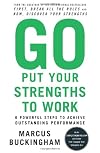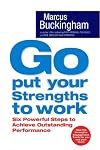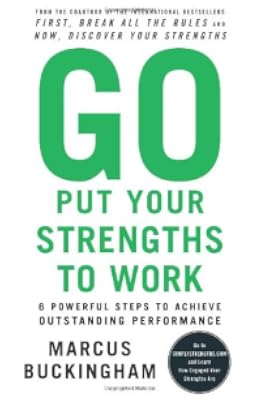
Go Put Your Strengths to Work: 6 Powerful Steps to Achieve Outstanding Performance
by Marcus Buckingham
Strengths Management (3)
On This Page
Description
Consultant Buckingham started the strengths movement that is now sweeping the work world. Now that the movement is in full swing, Buckingham's new book provides a six-step, six-week experience that will reveal the hidden dimensions of your strengths. Buckingham shows you how to seize control of your assets and rewrite your job description under the nose of your boss. You will learn: why your strengths aren't "what you are good at" and your weaknesses aren't "what you are bad at"; how to use show more the four telltale signs to identify your strengths; the steps you can take to push your time at work toward those activities that strengthen you and away from those that don't; how to talk to your boss and your colleagues about your strengths without sounding like you're bragging, and about your weaknesses without sounding like you're whining. Join the strengths movement and thrive!--From publisher description. show lessTags
Recommendations
Member Reviews
I read this books as part of a reading group at work. It is a mediocre book with highly valuable information if you are willing to dig through the business speak and find it. As such, reading it in a group worked well. At our meetings, we were able to weed out the valuable information.
The theme of this book is that people do best when they focus on their strengths. This flies in the face of much popular wisdom which says that you should work to improve in your weakest areas. Instead, the authors of this book are of the opinion that focusing on your weaknesses will, at best, bring you up to mediocre. Focusing on those areas where you have natural talent and passion will bring success. They say that successful teams are balanced, but show more successful individuals invest in developing their unique talents.
This book contains a six step system for discovering and developing your strengths. Buckingham excels at the art of business babble, which makes this book something of a chore to read. However, the system itself is useful. At a high level, the steps in this system are:
1. Attitude realignment: Stop believing the myth that you should work on improving your weaknesses. (I wouldn't really call this a step, but whatever.)
2. Strength discovery: Spend a week noting which activities you love and loathe and turn those into strengths statements. A strength is a specific activity that makes you feel strong. For example, "I evaluate an already defined set of options against a set of well defined criteria" is a strength. "I make decisions" is not. The first one defines specific preconditions that must be met before the strength can apply: both the options and the criteria must be predefined.
3. Use your strengths: Find more way to apply these strengths in your job.
4. Stop your weaknesses: Find ways to spend less time on the activities you loathe.
5. Talk about it: Talk to your manager about how you can use your strengths to improve the team. Then, once you have demonstrated that you're not just trying to get out of work, talk to your manager about those things which drain you and figure out how to spend less time on them or change them to be more in line with your strengths.
6. Build strong habits: Set up a structure which will encourage you to build up your strengths every week. Also, reevaluate your strengths periodically; they will change as your role and interests change.
Our reading group focused mostly on the second step: strength discovery. I found this to be one of the most useful parts of the whole reading group. Just by spending a week being conscious of what I do and do not like, I gained a lot of insight into my work day. The exercise of turning those very specific statements into strengths statements that were general enough to be applicable from week to week without being so general as to be meaningless helped me to figure out why I enjoyed the activities that I enjoyed.
That said, I have been having a hard time focusing on really putting my strengths into practice. I am pretty good at noticing when I am using one of my strengths, but it takes time to figure out how I can spend more time using my strengths. I have not yet taken the time to sit down and do this.
Like any program, the real value is proportional to the amount of time you are willing to put into it. The answers the books give you are just a start. I found Go Put Your Strengths to Work to be valuable starting points in figuring out how I could really apply my strengths to my job. show less
The theme of this book is that people do best when they focus on their strengths. This flies in the face of much popular wisdom which says that you should work to improve in your weakest areas. Instead, the authors of this book are of the opinion that focusing on your weaknesses will, at best, bring you up to mediocre. Focusing on those areas where you have natural talent and passion will bring success. They say that successful teams are balanced, but show more successful individuals invest in developing their unique talents.
This book contains a six step system for discovering and developing your strengths. Buckingham excels at the art of business babble, which makes this book something of a chore to read. However, the system itself is useful. At a high level, the steps in this system are:
1. Attitude realignment: Stop believing the myth that you should work on improving your weaknesses. (I wouldn't really call this a step, but whatever.)
2. Strength discovery: Spend a week noting which activities you love and loathe and turn those into strengths statements. A strength is a specific activity that makes you feel strong. For example, "I evaluate an already defined set of options against a set of well defined criteria" is a strength. "I make decisions" is not. The first one defines specific preconditions that must be met before the strength can apply: both the options and the criteria must be predefined.
3. Use your strengths: Find more way to apply these strengths in your job.
4. Stop your weaknesses: Find ways to spend less time on the activities you loathe.
5. Talk about it: Talk to your manager about how you can use your strengths to improve the team. Then, once you have demonstrated that you're not just trying to get out of work, talk to your manager about those things which drain you and figure out how to spend less time on them or change them to be more in line with your strengths.
6. Build strong habits: Set up a structure which will encourage you to build up your strengths every week. Also, reevaluate your strengths periodically; they will change as your role and interests change.
Our reading group focused mostly on the second step: strength discovery. I found this to be one of the most useful parts of the whole reading group. Just by spending a week being conscious of what I do and do not like, I gained a lot of insight into my work day. The exercise of turning those very specific statements into strengths statements that were general enough to be applicable from week to week without being so general as to be meaningless helped me to figure out why I enjoyed the activities that I enjoyed.
That said, I have been having a hard time focusing on really putting my strengths into practice. I am pretty good at noticing when I am using one of my strengths, but it takes time to figure out how I can spend more time using my strengths. I have not yet taken the time to sit down and do this.
Like any program, the real value is proportional to the amount of time you are willing to put into it. The answers the books give you are just a start. I found Go Put Your Strengths to Work to be valuable starting points in figuring out how I could really apply my strengths to my job. show less
I'll bet I've logged 20+ different types of personality assessments. Some resonate more than others, but none as well as this next step. Buckingham shares a straightforward method for understanding and leveraging personal strengths. They truly are "personal" because he leads the reader to determine exactly how, when, and with whom a general ability becomes a strength. For example, "analyzing data," isn't a strength. What is? "I feel strong when I analyze data about human performance and discover relevant insights." Buckingham shows how using strengths actually makes a person stronger. It's a great next step and one I recommend to anyone looking to reach their full potential.
I think I would have enjoyed this read more if I'd read it closer to its original release date--namely, when SimplyStrengths.com was still an active site (it's since been replaced, with only limited functionality and resources available). So much of the content is dependent on and fleshed out by material presumably on the website at that time.
BUT, that being said, there's still a lot to enjoy and glean from this read. It's practical and applicable, especially if you've read the other books in the series (First, Break All the Rules: What the World's Greatest Managers Do Differently and Now, Discover Your Strengths: The revolutionary Gallup program that shows you how to develop your unique talents and strengths). This is where the rubber show more truly meets the road. show less
BUT, that being said, there's still a lot to enjoy and glean from this read. It's practical and applicable, especially if you've read the other books in the series (First, Break All the Rules: What the World's Greatest Managers Do Differently and Now, Discover Your Strengths: The revolutionary Gallup program that shows you how to develop your unique talents and strengths). This is where the rubber show more truly meets the road. show less
this was good--but to make the optimum use of the exercises he describes, you have to own the book (in order to have the access info for the website). But it's still useful w/o all the bells and whistles. helps clarify what your strengths are, and how to convince your boss (and yourself) that it's legitimate to emphasize your strengths in the workplace. Some provocative ideas.
O autor deste livro trabalhou muitos anos na Gallup e junto com o psicólogo Dr. Donald Clifton. Não sei quando exatamente, mas em algum momento ele saiu da Gallup e abriu a própria empresa. Desconheço os detales dessa deciçao, mas ja ouvi falar que ele tem o talento de "Significancia" muito alto e teve tanto sucesso que provelmente nao quis mais ser um "empleado" da Gallup.
Para quem não conhece o Marcus Buckingham: no mundo anglo-saxono, ele é A (!) estrela dentro dos palestrantes motivacionais no mundo de negocios e cobra carissimo para cada palestra. Mas não é por nada, pois o cara realmente tem uma grandes talentos na área de comunicaçao, excelencia, futurista e contexto.
O livro "Go Put Your Strengths to Work" é o show more primeiro livro que o Marcus escreveu depois de ter saído da Gallup. Como a Gallup é a dona do on-line teste Clifton Strengthsfinder, este livro não contem um código de acesso para este famoso teste! Ele te da um código para um outro teste que o Marcus criou, mas que não chega a ser tão bom com o Strengthsfinder. Mesmo assim, eu recomendo muito este livro, talvez justamente porque ele tão trabalha so com os 34 talentos do Strengthsfinder. Ele aborda o tema de forma diferente. Eu já li quase todos os livros sobre o tema de "strengths", e acho que este livro é o melhor para quem quer descobrir os seus talentos e transformar-los em fortalezas. Recomendo comprar tambem o livro "Strengthsfinder 2.0" para poder fazer este teste excelente. E finalmente, perdão, recomendo visitar o meu blog strengthsfinder.blogspot.com para encontrar uma comunidade de pessoas que ja fizeram este teste. show less
Para quem não conhece o Marcus Buckingham: no mundo anglo-saxono, ele é A (!) estrela dentro dos palestrantes motivacionais no mundo de negocios e cobra carissimo para cada palestra. Mas não é por nada, pois o cara realmente tem uma grandes talentos na área de comunicaçao, excelencia, futurista e contexto.
O livro "Go Put Your Strengths to Work" é o show more primeiro livro que o Marcus escreveu depois de ter saído da Gallup. Como a Gallup é a dona do on-line teste Clifton Strengthsfinder, este livro não contem um código de acesso para este famoso teste! Ele te da um código para um outro teste que o Marcus criou, mas que não chega a ser tão bom com o Strengthsfinder. Mesmo assim, eu recomendo muito este livro, talvez justamente porque ele tão trabalha so com os 34 talentos do Strengthsfinder. Ele aborda o tema de forma diferente. Eu já li quase todos os livros sobre o tema de "strengths", e acho que este livro é o melhor para quem quer descobrir os seus talentos e transformar-los em fortalezas. Recomendo comprar tambem o livro "Strengthsfinder 2.0" para poder fazer este teste excelente. E finalmente, perdão, recomendo visitar o meu blog strengthsfinder.blogspot.com para encontrar uma comunidade de pessoas que ja fizeram este teste. show less
Aug 21, 2008Portuguese
Members
- Recently Added By
Author Information

31+ Works 8,857 Members
British motivational speaker, trainer, and author Marcus Buckingham graduated from Cambridge University with a Master's Degree in Social and Political Science in 1987. He is internationally known as an authority on employee productivity and is a member of the Secretary of State's Advisory Committee on Leadership and Management. Buckingham worked show more as a senior researcher at The Gallup Organization for 17 years and founded TMBC in 2007 in order to create strengths-based management training solutions for organizations. He has appeared on television shows including The Oprah Winfrey Show, Larry King Live, The Today Show, Good Morning America, and The View. Buckingham has been profiled in the following publications: The New York Times, The Wall Street Journal, USA Today, Fortune, Fast Company, and Harvard Business Review. He has written or co-written numerous bestselling books, such as First, Break All the Rules; Now, Discover Your Strengths; The One Thing You Need to Know; and Go Put Your Strengths to Work. (Bowker Author Biography) show less
Awards and Honors
Distinctions
Series

Work Relationships
Has the adaptation
Common Knowledge
- Canonical title*
- Ga met je sterke punten aan de slag
- Original publication date
- 2007 (copyright) (copyright)
- People/Characters
- Heidi
- Dedication
- To Janie, Jack, and Lilia: We are all in this one together.
- First words
- Above you'll see Heidi's SET score when she began the six-week discipline. You should get to know Heidi because, although she is an actual person, her experiences speak to everyman and everywoman.
- Last words
- (Click to show. Warning: May contain spoilers.)... So trust your strengths, be proud of them, and take your stand.
*Some information comes from Common Knowledge in other languages. Click "Edit" for more information.
Classifications
Statistics
- Members
- 870
- Popularity
- 31,396
- Reviews
- 7
- Rating
- (3.43)
- Languages
- 5 — Dutch, English, German, Portuguese (Portugal), Spanish
- Media
- Paper, Audiobook, Ebook
- ISBNs
- 22
- UPCs
- 1
- ASINs
- 16